Category
Manufacturer
Model
FAQ:
What is a Universal Labeling Systems machine and what does it do?
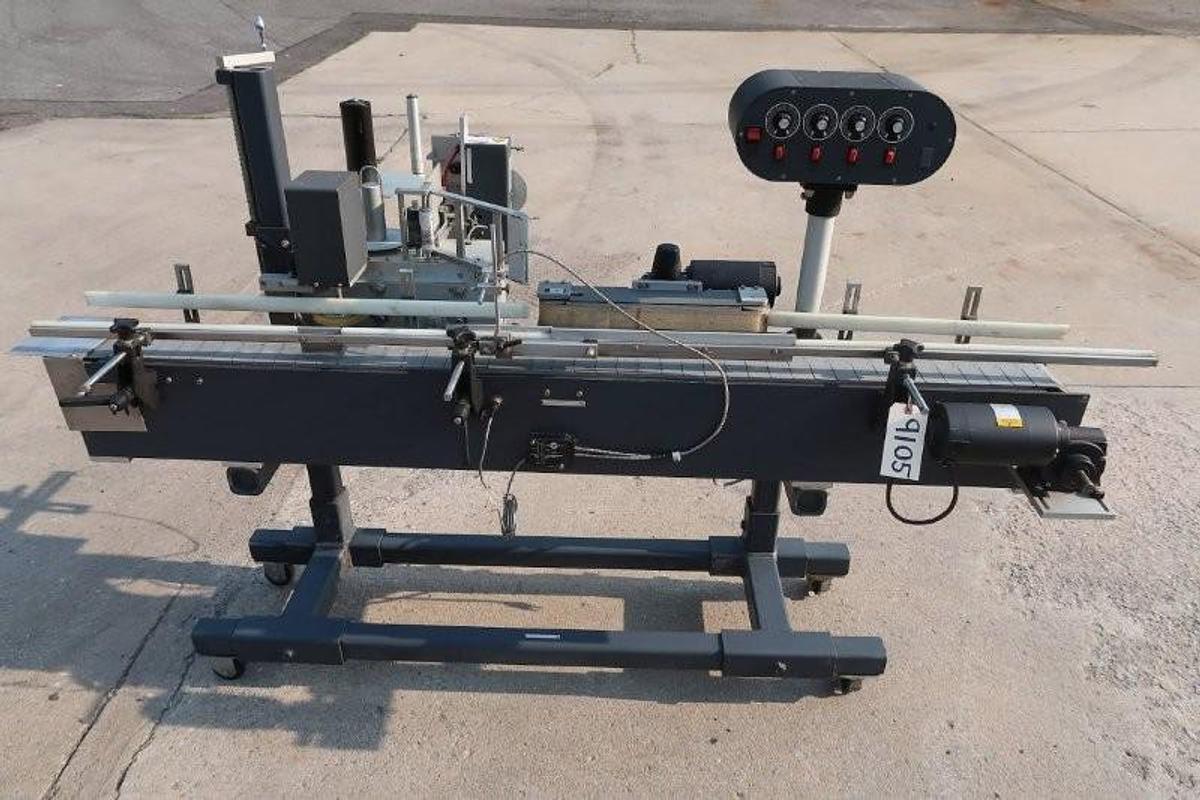
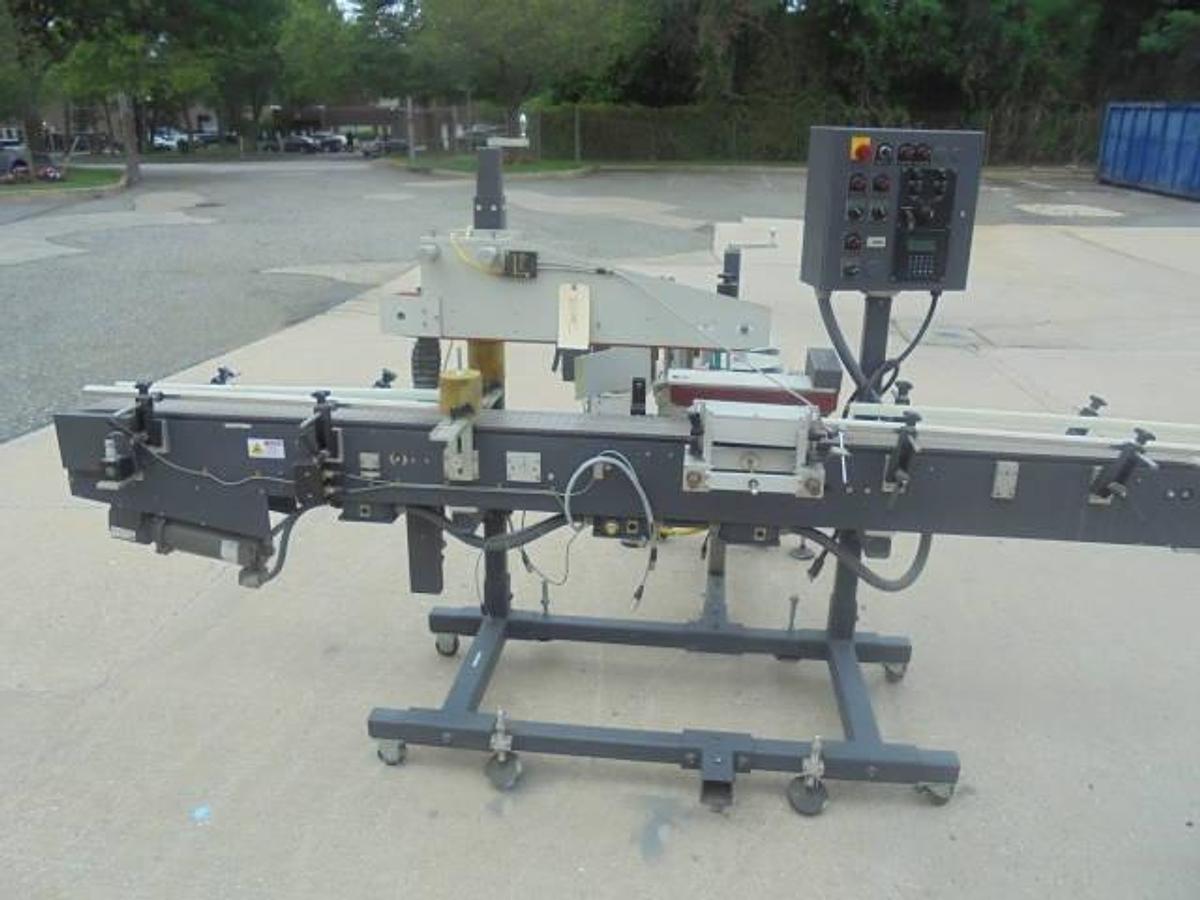
Universal Labeling Systems is a manufacturer known for producing pressure sensitive labeling equipment used across a wide range of packaging and production environments. Their machines are designed to apply pre-printed pressure sensitive labels to containers, bottles, jars, tubes, and other products automatically or semi-automatically. The two most commonly encountered models are the SL-2000 Spot/Wrap Around Pressure Sensitive Labeler and the Automatic Pressure Sensitive Wraparound Labeling Machine, both of which are built to handle cylindrical and non-cylindrical containers with consistent label placement.
Pressure sensitive labelers work by feeding containers through the machine while a label is dispensed from a roll and pressed onto the surface using a wipe-on or tamp mechanism. Wraparound models apply a single label that wraps partially or fully around a container, which is common in food, beverage, pharmaceutical, and personal care applications. Spot labelers apply a label to one specific area of a container rather than wrapping it. Both configurations are valued for their speed, repeatability, and ability to handle high-volume production runs without manual labor.
What is the difference between a spot labeler and a wraparound labeler?
A spot labeler applies a single label to one flat or curved surface of a container, such as the front panel of a bottle or the top of a lid. This is the right choice when a label only needs to cover a portion of the container, or when separate front and back labels are applied in two passes. Spot labelers are common in applications where the label design does not need to encircle the product.
A wraparound labeler, by contrast, applies a label that wraps around the circumference of a cylindrical container, covering a much larger surface area in a single application. This is standard in beverage bottling, sauce production, and many pharmaceutical packaging lines where a single label carries all required product information, including nutritional facts, barcodes, and regulatory text. Some machines, like the Universal SL-2000, are built to handle both spot and wraparound applications, giving operators flexibility to run different product formats on the same piece of equipment. For production environments with multiple SKUs or container shapes, a combination machine can reduce changeover time and the need for multiple dedicated labelers.
What industries typically use Universal Labeling Systems equipment?
Pressure sensitive labeling machines from Universal Labeling Systems are used across a broad range of industries where consistent, high-speed label application is required. Food and beverage manufacturers rely on these machines to label bottles, jars, cans, and containers at production-line speeds. Pharmaceutical and nutraceutical companies use them to meet strict FDA labeling requirements, where label placement accuracy and legibility are critical. Personal care and cosmetics brands use wraparound labelers for bottles, tubes, and pump containers.
Beyond those core markets, chemical manufacturers, household products companies, and contract packagers also run Universal Labeling Systems equipment regularly. Contract packagers in particular value the flexibility of machines like the SL-2000 because they handle multiple container formats across different client accounts without requiring a separate machine for each product line. Industrial and automotive product manufacturers use pressure sensitive labelers for warning labels, part identification, and compliance markings. The common thread across all these applications is the need for accurate, repeatable label placement at volumes that manual application simply cannot match.
What should buyers look for when purchasing a used Universal Labeling Systems machine?
Buying used labeling equipment requires more due diligence than purchasing from a manufacturer, because the machine's history, maintenance record, and current mechanical condition all affect how it will perform in production. Buyers should start by requesting as much documentation as possible, including the model number, serial number, and any available service history. Knowing the age of the machine and how many hours or shifts it has run helps estimate remaining service life on wear components like belts, rollers, and label dispensing mechanisms.
Inspection is the single most important step in the buying process. Reputable used equipment dealers will offer in-person inspections, video walkthroughs, or photo documentation of the machine in its current state. Some machines may still be installed and running at a production facility, which gives buyers an opportunity to see actual operation. Keep in mind that most used equipment dealers do not have the permits or production infrastructure to run test batches with actual product, so inspections typically focus on mechanical condition, electrical function, and visible wear. Buyers should also contact Universal Labeling Systems directly to ask about parts availability and technical support for the specific model they are considering, since support and parts availability can vary by machine age.
What is the typical price range for a used Universal Labeling Systems machine?
Pricing for used pressure sensitive labeling equipment varies considerably based on model, age, condition, and the features included. Entry-level or older semi-automatic pressure sensitive labelers can be found in the range of a few thousand dollars, while fully automatic wraparound labeling machines from established manufacturers like Universal Labeling Systems typically command higher prices reflecting their production capacity and mechanical complexity. A machine like the Universal SL-2000, which handles both spot and wraparound applications automatically, would generally fall in a mid-to-upper price tier for used labeling equipment.
Beyond the purchase price, buyers should factor in the total landed cost of the machine. Shipping and rigging charges can add meaningfully to the final number, particularly for larger or heavier machines that require forklift loading, crating, or specialized freight handling. Changeover parts, replacement wear components, and any electrical or mechanical refurbishment needed before the machine goes into production are additional costs worth budgeting. Getting a clear picture of all these factors before committing to a purchase helps avoid surprises and makes it easier to compare machines across different sellers.
How does shipping and rigging work when buying a used labeling machine?
Shipping a used labeling machine involves more complexity than standard freight because these are heavy, precision pieces of equipment that can be damaged if improperly packaged or handled. Dealers typically arrange palletization or crating based on the size and weight of the machine. Smaller tabletop or semi-automatic labelers may ship on a standard pallet with shrink wrap and corner protection, while larger automatic inline labelers often require custom wooden crates to prevent movement and impact damage during transit.
For heavier equipment, rigging is an added cost that covers the labor and equipment needed to load the machine onto a truck at the seller's location and unload it at the buyer's facility. This may involve forklifts, cranes, or pallet jacks depending on the machine's dimensions and weight. Buyers should ask the dealer for a detailed breakdown of packaging, rigging, and freight costs before finalizing the purchase so they understand the full landed cost. It is also worth confirming whether the buyer's facility has the unloading equipment needed to receive the machine safely, since arranging that in advance avoids delays and damage at delivery.
What label sizes and materials can a pressure sensitive labeling machine handle?
Pressure sensitive labeling machines are generally designed to handle a range of label widths and lengths, with the specific limits defined by the machine's label dispensing head, label roll capacity, and product handling system. Most commercial automatic labelers accommodate label widths from roughly one inch up to several inches, and label lengths from short square labels to longer wraparound formats. The Universal SL-2000, for example, is built to handle both spot and full wraparound applications, which implies a fairly wide range of label dimensions.
In terms of materials, pressure sensitive labelers can typically apply paper labels, film labels (polyester, polypropylene, vinyl), and foil labels as long as the label stock has a pressure sensitive adhesive backing. The machine's ability to handle a specific material depends on the tension control, peel plate angle, and drive system. Thicker or stiffer label materials may require adjustments to the dispensing mechanism. Buyers sourcing a used machine for a specific application should confirm with the seller or manufacturer that the model in question can handle their label stock dimensions and material type before purchasing.
How difficult is it to set up and operate a used automatic labeling machine?
Setup complexity for an automatic pressure sensitive labeler depends on the machine's design and the operator's familiarity with labeling equipment. Most machines in this category require mechanical adjustments to accommodate different container sizes and label dimensions, including changes to guide rails, label head height, and drive belt spacing. Modern machines often have tool-free or quick-change adjustment systems that reduce changeover time, but older models may require more hands-on mechanical adjustment. Documentation, including the operator's manual, is extremely helpful during setup, and buyers of used equipment should request any available manuals from the seller.
Day-to-day operation of an automatic labeler is generally straightforward once the machine is properly set up and calibrated. An operator loads the label roll, threads the web through the dispensing path, sets the label placement sensors, and runs a small test batch to verify placement accuracy before full production. The main ongoing tasks are monitoring label stock levels, clearing occasional jams, and making minor adjustments as container dimensions vary slightly. For facilities without prior experience running labeling equipment, it is worth budgeting time for a learning curve during initial setup, and reaching out to Universal Labeling Systems or a qualified technician for support if the machine requires servicing or calibration.
What questions should buyers ask a used equipment dealer before purchasing a labeling machine?
Before committing to a purchase, buyers should ask the dealer for the complete model number and serial number so they can research the machine's specifications and contact the manufacturer about parts and support availability. It is reasonable to ask how the dealer acquired the machine, how long it has been in storage or out of production, and whether any repairs or modifications were made while in the dealer's possession. Asking for photos or video of the machine powered on, and ideally running through a cycle, gives a clearer picture of its current condition than static images alone.
Buyers should also ask about the full cost of the transaction, not just the listed price. This means getting specifics on packaging, rigging, and freight charges, as well as the dealer's payment terms and accepted payment methods. Most used equipment dealers require full payment before a machine ships, though some extend terms to established customers. Confirming the inspection options available is important as well. Reputable dealers will accommodate in-person visits, video calls, or video recordings of the machine so buyers can make an informed decision. Choosing a dealer with a long track record of selling packaging and labeling equipment specifically is one of the strongest indicators that the transaction will go smoothly.
How do buyers verify that a used labeling machine will be compatible with their production line?
Compatibility comes down to three main factors: container specifications, line speed requirements, and facility infrastructure. Buyers should compare the machine's stated container diameter and height range against the actual containers they run. For wraparound labelers, the container must fall within the machine's minimum and maximum diameter range, and the label length must match the circumference of the container. Most manufacturers publish these specifications in their product documentation, and buyers can often find spec sheets for Universal Labeling Systems models through the manufacturer directly.
Line speed is the second consideration. Automatic labelers are rated in containers per minute, and buyers should confirm that the machine's rated speed matches or exceeds their production requirements. Electrical compatibility is also worth verifying before purchase, since some machines are wired for specific voltage and phase configurations that may not match a given facility's power supply. Finally, buyers should consider how the labeler will integrate physically with upstream and downstream equipment such as fillers, cappers, and conveyors. Confirming infeed and outfeed conveyor heights, overall machine footprint, and any required clearances helps avoid costly surprises during installation.