Category
Manufacturer
Model
Union Pump Co.
Union Pump Co. manufactures a variety of pump solutions for industrial applications, including food processing and chemical manufacturing. Their pumps are designed for durability and efficiency, making them ideal for transferring various fluids in production lines. Union Pump Co. is recognized for their commitment to quality and customer service.
FAQ:
What types of pumps did Union Pump Co. manufacture?
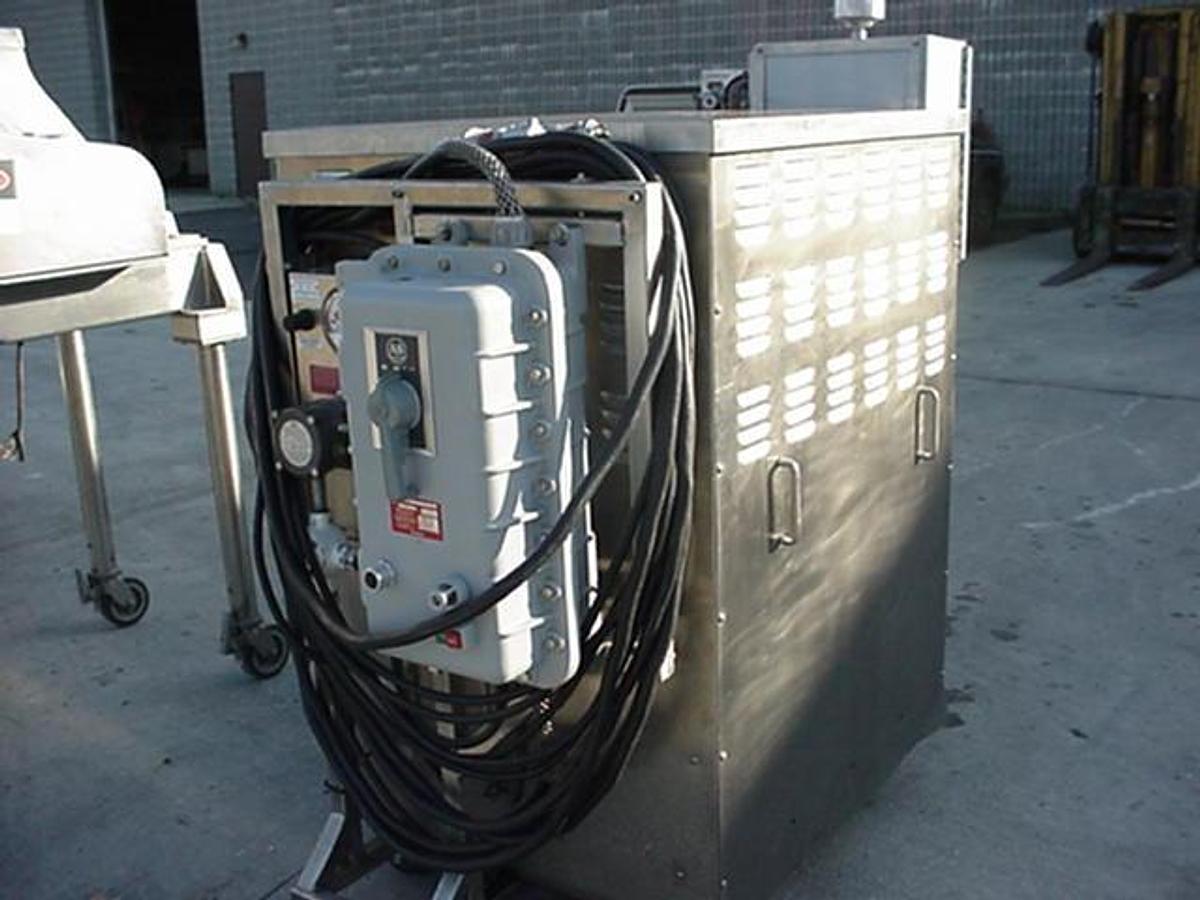
Union Pump Co. was a Michigan-based manufacturer with a broad product line covering centrifugal, reciprocating, and turbine pump designs. Their centrifugal pump lineup included overhung (OH2), between-bearings (BB1 and BB2), and vertical suspended (VS-type) configurations, along with horizontal split-case models. The company also produced homogenizers, with units like the 300 GPH stainless steel homogenizer capable of operating at pressures up to 6,000 PSI showing up on the used equipment market. This range gave Union Pump a presence across a wide spectrum of fluid handling applications.
Beyond the variety of pump types, Union Pump was particularly well regarded for the durability of its construction. Many of their units were built to handle demanding service conditions in heavy industrial settings, and it is common to find equipment from the 1980s and 1990s that remains mechanically sound decades after manufacture. That longevity is a big part of why Union Pump equipment continues to trade actively on the used and surplus market today.
What industries used Union Pump Co. equipment?
Union Pump Co. equipment found its way into some of the most demanding industrial environments in operation. Oil refining, petrochemical processing, and power generation were the core markets the company served, and many of their centrifugal pump models were built to API 610 standards specifically to meet the requirements of hydrocarbon processing facilities. Beyond those heavy industries, Union Pump equipment was also used in food processing and chemical manufacturing, where reliable fluid transfer and hygienic construction materials like stainless steel were priorities.
This cross-industry versatility is one reason used Union Pump units remain attractive to buyers across different sectors. A stainless steel homogenizer originally built for a dairy or beverage application, for example, can often be repurposed for a pharmaceutical or specialty chemical process with relatively straightforward modifications. Buyers sourcing used Union Pump equipment should confirm that the specific model and materials of construction are appropriate for their intended service before purchase.
Are Union Pump Co. pumps API 610 compliant?
Many Union Pump Co. centrifugal pump models were designed and manufactured in compliance with API 610, the industry standard for centrifugal pumps used in petroleum, petrochemical, and natural gas industries. API 610 compliance covers requirements for mechanical seals, bearing housings, casing design, and overall reliability under continuous heavy-duty service. Union Pump's OH2, BB1, BB2, and VS-type models are among those most commonly cited as meeting this standard, which is a primary reason they were specified so frequently in refinery and petrochemical plant builds.
When evaluating a used Union Pump unit for API 610 service, buyers should verify compliance at the individual unit level rather than assuming it based on model type alone. The edition of API 610 in effect at the time of manufacture matters, and some older units may meet earlier revisions of the standard rather than the current one. Consulting the pump's nameplate data and any available documentation, and reaching out to Flowserve (which acquired Union Pump and now supports legacy models) for technical guidance, are both practical steps before committing to a purchase for critical service.
Who supports Union Pump Co. equipment now that the company has been acquired?
Union Pump Co. was acquired by Flowserve Corporation, one of the largest flow control equipment companies in the world. Flowserve has absorbed Union Pump's product lines into its portfolio and provides legacy support for many Union Pump models, including parts, engineering documentation, and service. For buyers of used Union Pump equipment, this is a meaningful advantage compared to purchasing surplus machinery from a manufacturer that has completely ceased operations with no successor entity.
That said, the level of support available for any specific Union Pump model will depend on its age and how it fits within Flowserve's current parts inventory and engineering records. Older or less common models may have limited parts availability. Before purchasing a used Union Pump unit, it is worth contacting Flowserve directly to ask about parts availability, lead times, and whether engineering support is still offered for that particular model and vintage. This due diligence can prevent costly surprises after the equipment has already been installed.
What should I look for when inspecting used Union Pump Co. equipment?
A thorough inspection of used Union Pump equipment should cover both mechanical condition and documentation. On the mechanical side, key areas include the condition of the casing (checking for cracks, corrosion, or erosion), the state of the shaft and bearings, seal chamber condition, and whether the impeller shows signs of cavitation damage or excessive wear. The nameplate should be intact and legible, as it carries critical data including model number, serial number, rated flow, head, speed, and materials of construction. Any available maintenance records, inspection reports, or prior repair history add significant value to the evaluation.
Used equipment dealers will typically accommodate in-person inspections, virtual walkthroughs, or video captures of the machine to help buyers assess condition before committing. Some equipment may still be installed at an operating facility, where an inspection can be arranged at the actual site. Keep in mind that most dealers do not have the permitting or infrastructure to perform live operational tests with actual process fluid, so the inspection will generally focus on visual and mechanical assessment rather than a full performance test. Buyers with critical applications may want to engage a qualified pump service shop to perform a more detailed teardown inspection before the unit is shipped.
What is the typical price range for used Union Pump Co. equipment?
Pricing for used Union Pump Co. equipment varies considerably depending on pump type, size, materials of construction, condition, and how recently the unit was last in service. Smaller process pumps in common configurations might be available for a few thousand dollars, while larger API 610-rated units in good mechanical condition, particularly those with stainless steel or exotic alloy construction, can command significantly higher prices. Specialty equipment like high-pressure homogenizers tends to hold value well on the secondary market given the cost of comparable alternatives.
Buyers should factor in more than just the purchase price when evaluating total cost. Shipping costs for heavy industrial pumps can be substantial, particularly if the unit requires custom crating, rigging for loading, or specialized freight handling. Any refurbishment, seal replacement, or bearing work needed to bring the unit to a desired service condition adds to the landed cost as well. Getting a clear picture of all these elements before finalizing a purchase helps avoid budget surprises and makes it easier to compare the used equipment option against other sourcing alternatives.
How do I identify the model and specifications of a Union Pump Co. unit?
The nameplate attached to the pump casing is the primary source of identification information for any Union Pump Co. unit. It typically includes the model designation, serial number, rated capacity (GPH or GPM), discharge pressure or head, operating speed (RPM), impeller diameter, and materials of construction for wetted parts. The serial number is particularly useful because it can be cross-referenced with Flowserve's legacy records to retrieve the original engineering specifications, bill of materials, and dimensional drawings for that specific pump.
If the nameplate is missing or illegible, identifying the unit becomes more difficult but not impossible. The pump's physical configuration, flange sizes, bearing housing design, and overall dimensions can often be matched against Union Pump's published catalog data or Flowserve's legacy documentation. Reaching out to Flowserve's aftermarket support team with photos and measurements is a reasonable approach in those cases. When purchasing used equipment, always request photos of the nameplate from the dealer before proceeding, and confirm that the listed specifications match your process requirements.
What are the payment terms when buying used industrial pump equipment?
Most used industrial equipment dealers require payment in full prior to releasing equipment for shipment. This is standard practice across the industry and applies to the majority of transactions, particularly for buyers purchasing from a dealer for the first time. Some dealers extend payment terms to established repeat customers with a proven transaction history, but this is not the norm and should not be assumed going in. Wire transfer is the most common payment method for larger transactions, though dealers may accept other forms depending on the purchase amount and relationship.
Buyers should clarify payment expectations early in the purchasing process, ideally before investing significant time in inspection and negotiation. It is also worth confirming exactly what triggers the release of the equipment for shipment, how the dealer handles payment confirmation, and what documentation (such as a bill of sale or paid invoice) will be provided at the time of payment. Having these details in writing protects both parties and helps the transaction move forward without unnecessary delays.
How is used Union Pump Co. equipment typically shipped, and what does it cost?
Shipping costs for used industrial pump equipment depend on the size and weight of the unit, the level of packaging required, the distance to the destination, and whether specialized rigging is needed for loading and unloading. Smaller pumps may ship on standard pallets via LTL (less-than-truckload) freight, while larger units often require custom wooden crating to prevent damage in transit. Very large or heavy pumps may need flatbed trucking and crane or forklift rigging at both the origin and destination, which adds to the overall cost.
Buyers should ask the dealer for a detailed breakdown of all shipping-related charges before finalizing the purchase. This includes packaging and crating fees, rigging costs at the dealer's facility, freight charges to the destination, and any unloading requirements the buyer will need to arrange on their end. Understanding the full landed cost of the equipment, not just the listed sale price, is essential for making an accurate comparison and avoiding unexpected expenses after the purchase is complete.
Why do buyers choose used Union Pump Co. equipment over purchasing comparable new units?
The primary driver is cost. A used Union Pump unit in serviceable condition can be acquired for a fraction of the price of a comparable pump purchased through normal manufacturing and distribution channels. For facilities running tight capital budgets, or for applications where the pump is a backup or redundant unit rather than a primary process-critical machine, the economics of the used market are hard to ignore. Lead times are another factor: used equipment is typically available for immediate purchase and shipment, while new custom-engineered pumps for demanding API 610 applications can have lead times measured in months.
Union Pump equipment in particular holds up well in this comparison because of its reputation for durable construction and long service life. Units manufactured in the 1980s and 1990s are still found in active service or in surplus inventories in mechanically sound condition, which speaks to the quality of the original engineering and materials. Buyers do need to account for the fact that used equipment is sold as-is, so inspection due diligence and a realistic assessment of any refurbishment costs are important parts of the decision. When those factors are weighed carefully, used Union Pump equipment often represents strong value for the right application.