Category
Manufacturer
Model
Unifiller
Unifiller offers a range of filling and portioning solutions, catering to the food and beverage industry. Their machines are particularly popular for their ability to handle different product consistencies, from liquids to viscous pastes. Unifiller’s equipment is designed to enhance productivity and ensure consistency in product quality.
FAQ:
What is a Unifiller depositor and what is it used for?
A Unifiller depositor is a food portioning and filling machine manufactured by Unifiller Systems, a Canadian equipment company with a long-standing reputation in the commercial food production industry. These machines are designed to accurately deposit, fill, or portion a wide variety of food products into containers, molds, trays, or directly onto baking surfaces. They are widely used in commercial bakeries, foodservice operations, and food manufacturing facilities where consistent portioning and high throughput are critical to profitability.
The core value of a Unifiller depositor lies in its precision. By automating the portioning process, these machines reduce product giveaway, lower labor costs, and eliminate the inconsistency that comes with hand-filling. A single operator can typically manage output that would otherwise require multiple people hand-portioning by weight or volume. This makes Unifiller equipment a practical investment for any facility running medium to high-volume production of filled or portioned food products.
What types of food products can a Unifiller depositor handle?
Unifiller depositors are engineered to handle a notably wide range of product viscosities, which is one of the main reasons they are so popular across different food production environments. On the thin end of the spectrum, they can deposit liquid batters, sauces, and dressings with accuracy. On the thicker end, they handle dense doughs, creamy fillings, custards, jellies, and even chunky products that contain inclusions like fruit pieces, nuts, or chocolate chips.
This versatility makes a single Unifiller machine useful across multiple product lines in the same facility, which adds to the overall return on investment. A bakery, for example, might use the same machine to deposit muffin batter in the morning and cream filling for pastries in the afternoon. The key is matching the specific model and nozzle configuration to the product being run, as some models are better suited to high-viscosity or inclusion-heavy products than others. When evaluating a used Unifiller depositor, it is worth confirming which product types the machine was previously used for and whether the appropriate tooling is included with the sale.
What models of Unifiller depositors are commonly available on the used equipment market?
The Unifiller product line spans a broad range of machine types, from compact benchtop units designed for small-batch production to fully automated inline systems built for large-scale industrial output. On the smaller end, models like the Unifiller Mini are popular with artisan bakeries and smaller foodservice operations that need accurate portioning without the footprint or cost of a full production system. Mid-range models, often referred to as Standard configurations, are the most commonly encountered on the used market and are well-suited to medium-volume commercial bakeries and food manufacturers.
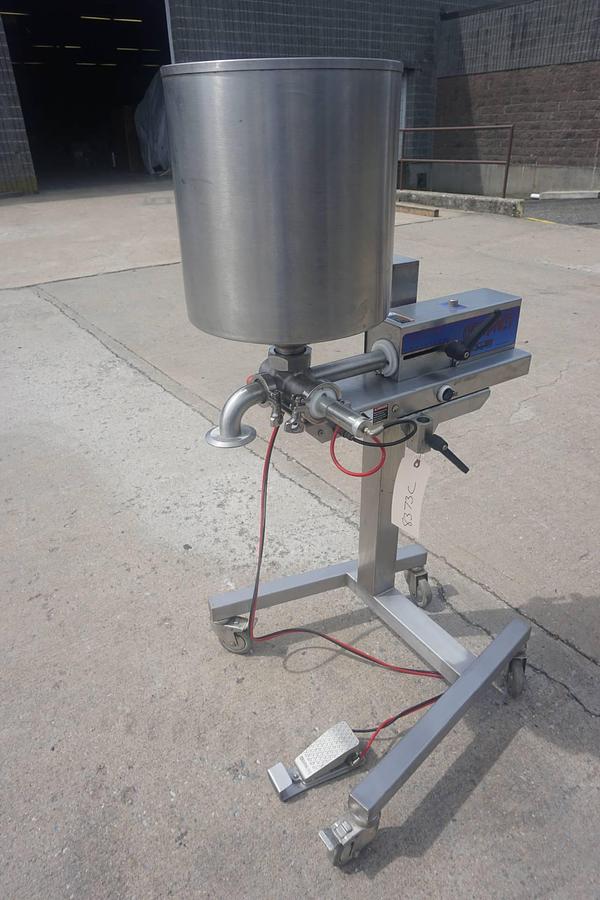
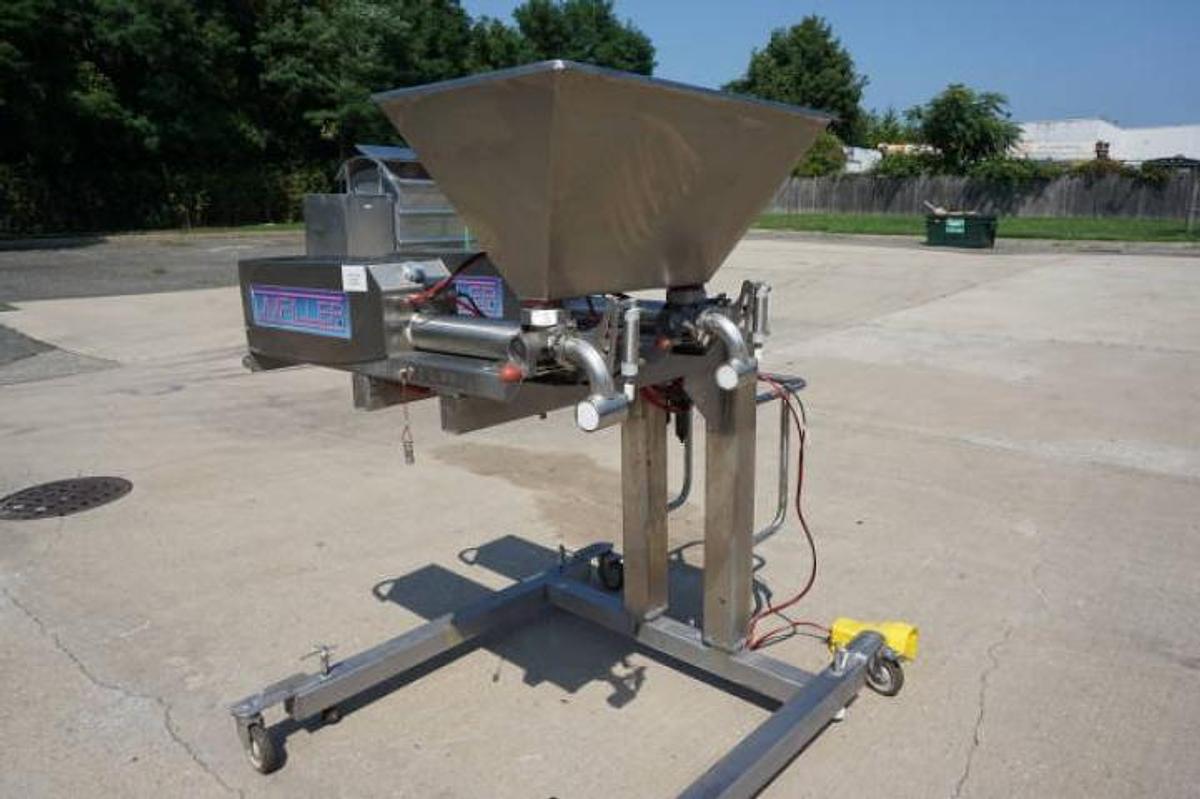
Specific configurations that appear regularly in the used equipment market include single-head piston depositors, such as the Unifiller Compack air-operated model, and dual-head depositors, which are designed for higher output and often configured as portable units that can be moved between production lines. Inline automated depositors represent the upper tier of the product line and are typically found in larger manufacturing facilities. When searching for used Unifiller equipment, the model number and head configuration are the most important details to identify early, as they determine both the machine's production capacity and the availability of compatible parts and tooling.
How does a piston depositor work, and why is that mechanism common in Unifiller machines?
A piston depositor works by drawing product into a cylinder and then pushing a precisely measured volume of that product out through a nozzle or set of nozzles. The piston stroke length controls the deposit volume, which is why these machines can be adjusted to produce consistent portions across an entire production run. This mechanism is well-suited to food products because it handles a wide range of viscosities without relying on gravity or pump pressure alone, and it maintains accuracy even as product consistency changes slightly due to temperature or mixing variation.
Unifillers reliance on piston-based technology is a big part of why the machines have a strong reputation for portion accuracy and durability. Piston depositors have fewer points of mechanical complexity than some alternative filling technologies, which makes them easier to clean, maintain, and troubleshoot. For used equipment buyers, this is a meaningful advantage because the core mechanical components of a piston depositor are generally straightforward to inspect and assess. A dealer should be able to demonstrate or describe the condition of the piston and cylinder assembly, and replacement components for Unifiller piston depositors are available through the manufacturer, though buyers should confirm parts availability for specific models given that older machines may have limited support.
How much does a used Unifiller depositor typically cost?
Pricing for used Unifiller depositors varies considerably depending on the model, age, condition, and included accessories. Entry-level benchtop or single-head models in used condition can be found at price points that are significantly lower than comparable equipment purchased directly from the manufacturer, which is one of the primary reasons food manufacturers and bakeries look to the used market. Mid-range models with dual heads or portable configurations typically sit in a higher price bracket, and fully automated inline systems represent the most substantial investment even in used condition.
Beyond the machine price itself, buyers should factor in additional costs that affect the total landed price. These include packaging and crating fees, freight or shipping charges, and any rigging costs required for loading and unloading heavier equipment. Depending on the machine's configuration and the buyer's production needs, tooling such as nozzles, hoppers, or specialty attachments may also need to be sourced separately if they are not included in the sale. Getting a full breakdown of all costs from the dealer before committing to a purchase is the most reliable way to avoid surprises and accurately compare options.
Are used Unifiller depositors reliable, and what should buyers look for when evaluating one?
Used Unifiller depositors can be very reliable pieces of equipment. Unifiller has a strong reputation for building machines with solid construction and straightforward mechanical systems, which means well-maintained units can continue performing accurately for many years after their initial installation. That said, reliability in a used machine depends heavily on how it was operated and maintained by previous owners, which is why a thorough inspection is essential before any purchase.
Buyers evaluating a used Unifiller depositor should focus on the condition of the piston and cylinder assembly, the integrity of seals and gaskets, the function of the air system if it is a pneumatic model, and the overall cleanliness of the hopper and product contact surfaces. Dealers typically accommodate in-person inspections, virtual walkthroughs, or video captures of the machine so buyers can assess its current condition. Some machines may still be installed and running at the facility where they are being sold, which allows for a more complete evaluation. Keep in mind that most equipment dealers do not have the permitting or setup required to run actual product through a machine during an inspection, so the assessment will generally focus on mechanical condition rather than a live production test. Consulting with Unifiller directly about a specific model's support status and parts availability is also a smart step, particularly for older machines.
What is the difference between a single-head and a dual-head Unifiller depositor?
The number of depositing heads on a Unifiller machine directly affects its output capacity and how it fits into a production line. A single-head depositor deposits one portion at a time with each cycle of the piston. This configuration works well for lower-volume operations, specialty products, or situations where flexibility and simplicity are priorities. The Unifiller Compack, for example, is a single-head air-operated piston depositor that is a practical choice for bakeries and foodservice operations that do not require extremely high throughput.
A dual-head depositor runs two deposit cycles simultaneously, effectively doubling the output per pass compared to a single-head unit running at the same speed. This configuration is often built into portable frames, allowing it to be repositioned between production areas or used with different mold and tray formats. For operations running larger volumes or needing to fill multi-cavity trays efficiently, a dual-head machine can significantly reduce cycle time and labor. When comparing single-head and dual-head models on the used market, buyers should consider not just the price difference but also the space requirements, the types of products being run, and whether the increased output of a dual-head unit actually aligns with current or projected production volumes.
What should buyers know about shipping and delivery when purchasing a used Unifiller depositor?
Shipping costs and logistics for used food equipment like a Unifiller depositor depend on several factors that buyers should clarify with the dealer before finalizing a purchase. The machine's size and weight determine the freight class and whether standard LTL shipping is sufficient or whether specialized rigging is required. Smaller benchtop or portable Unifiller models can often ship on a standard pallet, while larger inline systems may need custom crating and heavy-duty rigging for both loading at the origin and unloading at the destination. These rigging costs are typically not included in the base machine price and should be requested as a separate line item.
Packaging quality matters significantly for used machinery in transit. Dealers should use appropriate palletization or crating to protect the machine from vibration, impact, and moisture during shipping. Buyers should ask specifically how the machine will be packaged and what the estimated freight cost is to their location before agreeing to a purchase. Understanding the full landed cost, which includes the machine price, packaging, freight, and any unloading requirements at the destination, is the only accurate way to compare options across different dealers or machine configurations. Most dealers require full payment prior to releasing equipment for shipment.
Can replacement parts and technical support be obtained for used Unifiller depositors?
Unifiller Systems, as the manufacturer, is generally the primary source for replacement parts and technical documentation for their depositing equipment. For many models, particularly those that are not excessively old, parts such as seals, gaskets, pistons, nozzles, and control components can be sourced directly through the manufacturer or through authorized service channels. This is one advantage of buying from a well-known manufacturer with an established parts infrastructure compared to purchasing equipment from a company that has since gone out of business or discontinued a product line entirely.
That said, parts availability for used equipment is not guaranteed across all models and ages. Older machines or discontinued configurations may have limited or no manufacturer support, which is why buyers are advised to contact Unifiller directly before purchasing a specific used unit to confirm what level of support they can expect. A reputable used equipment dealer specializing in food processing machinery will often be able to provide model and serial number information in advance so buyers can do this due diligence. Having that information also makes it easier to source third-party or fabricated replacement parts if manufacturer support is limited, as a skilled machinist can often reproduce wear components for straightforward piston depositor mechanisms.
What industries and production environments use Unifiller depositors most commonly?
Unifiller depositors are most heavily concentrated in the commercial baking and pastry industry, where accurate portioning of batters, doughs, creams, and fillings is a daily production requirement. Large commercial bakeries use them for muffins, cupcakes, Danish pastries, cream puffs, eclairs, and a wide range of other filled or portioned baked goods. The machines are also common in foodservice commissaries, which produce large quantities of prepared foods for distribution to restaurants, hotels, schools, and institutional kitchens.
Beyond baking, Unifiller depositors are used in broader food manufacturing contexts wherever a consistent deposit of a semi-liquid or viscous product is needed. This includes dairy operations filling yogurt or pudding cups, confectionery producers depositing chocolate or caramel fillings, and prepared food manufacturers portioning sauces, spreads, or dips into retail packaging. The machine's ability to handle products ranging from thin batters to thick, inclusion-heavy mixtures makes it adaptable across a wide range of food categories. For buyers on the used market, understanding the previous application of a specific machine can provide useful context about how it was used and what product residues or wear patterns to look for during an inspection.