Category
Manufacturer
Model
Triangle
Triangle specializes in manufacturing high-quality mixing and blending equipment for the food and chemical industries. Their machines are designed to ensure uniformity and consistency in product formulations.
FAQ:
What is a Triangle mixer and how does it work?
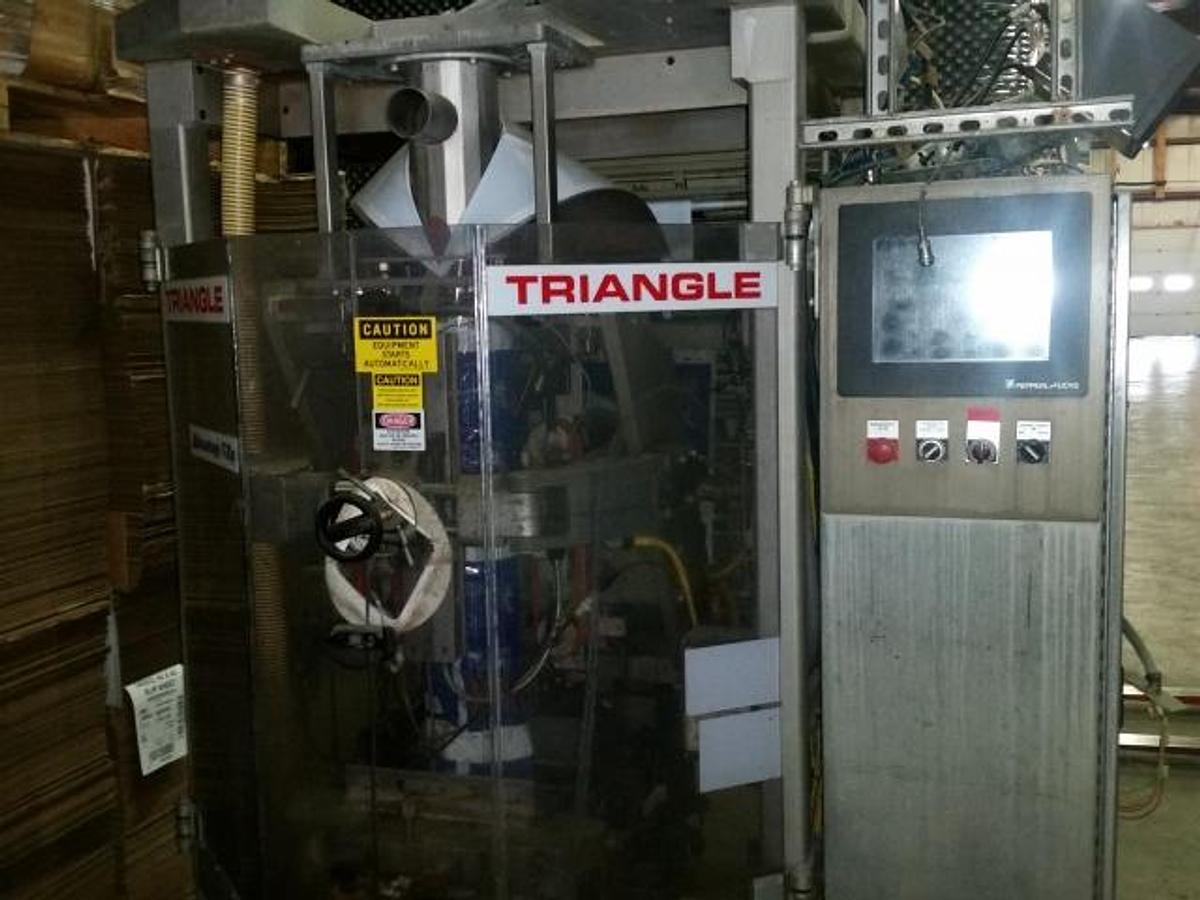
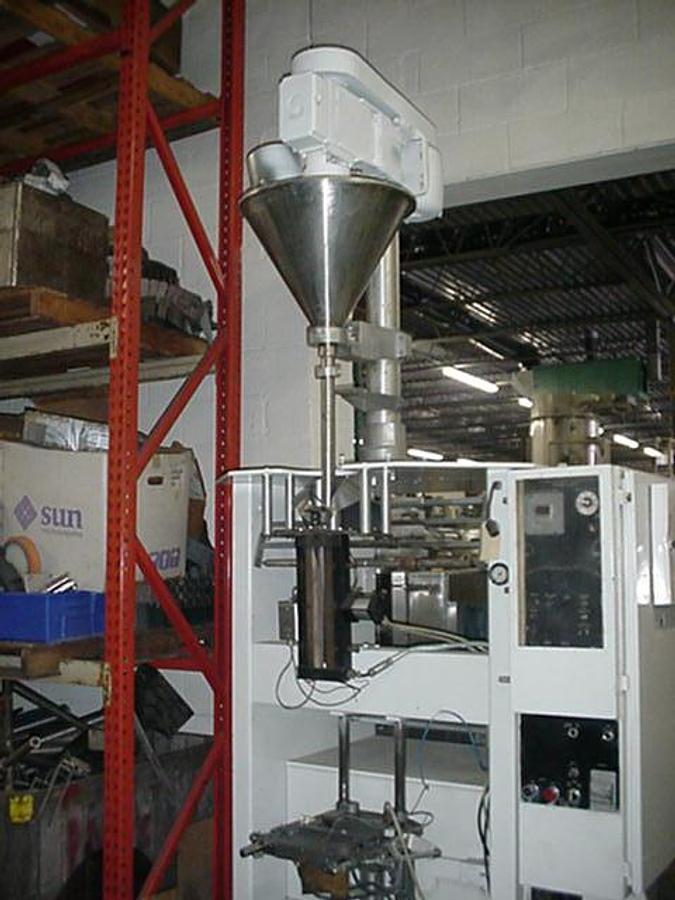
Triangle is a manufacturer that specializes in mixing and blending equipment designed for the food and chemical industries. Their machines are built around the goal of achieving uniformity and consistency in product formulations, which makes them a recognized name among processors who need reliable blending performance batch after batch. The brand produces a range of equipment including vertical baggers, form-fill-seal machines with auger heads, and mixing systems suited to both dry and wet applications.
The core principle behind triangle-style mixing equipment involves a rotating or tumbling motion that moves material through the vessel in multiple directions simultaneously. Unlike single-axis paddle mixers or high-shear blenders, this multi-directional action gently folds and redistributes material without generating excessive heat or mechanical stress. The result is a homogeneous blend that preserves the integrity of fragile granules, powders, and mixed-density ingredients. This gentleness is exactly why the design is so common in industries where product degradation during mixing is a real concern.
What industries commonly use Triangle mixing and blending equipment?
Triangle mixing and blending equipment sees regular use across the food processing, chemical manufacturing, pharmaceutical, nutraceutical, and cosmetics industries. In food production, the machines handle everything from spice blends and dry soup mixes to frozen product applications, which aligns with the vertical bagger and scale systems Triangle produces for frozen goods. Chemical processors rely on the same equipment for blending powders, granules, and bulk solids where consistent particle distribution is critical to product quality.
Pharmaceutical and nutraceutical manufacturers are drawn to Triangle equipment because the gentle tumbling action avoids segregation of ingredients with different particle sizes or densities, a common problem in less sophisticated mixing systems. Cosmetics producers use similar blending technology for face powders, pigments, and dry personal care formulations. The common thread across all these sectors is the need for repeatable, uniform blending without damaging the product, which is the central design objective of Triangle's mixing line.
What materials and products can be processed in Triangle blending equipment?
Triangle blending equipment is suited to a wide range of dry and semi-dry materials. Powders, granules, pellets, flakes, and mixed-density bulk solids are all common candidates. In food applications, this includes spice blends, flour mixes, seasoning coatings, dry beverage bases, and frozen product handling. In chemical and industrial settings, the machines process pigments, fertilizers, plastic resins, detergent powders, and specialty compounds where batch-to-batch consistency matters.
The gentle motion of triangle-style mixers makes them particularly well suited to fragile or abrasion-sensitive materials that would break down under the aggressive action of ribbon blenders or paddle mixers. Pharmaceutical and nutraceutical applications frequently involve active ingredients, excipients, and capsule-fill powders that require careful handling. Cosmetic powders and pigment blends are another strong fit. For wet or paste-like materials, the suitability depends on the specific machine model and configuration, so buyers working with high-moisture products should review the equipment specifications carefully before purchasing.
What size capacities are available for Triangle mixing and blending equipment?
Triangle mixing and blending equipment is produced across a broad range of capacities to serve both small-batch and high-volume production environments. Lab-scale and pilot units typically start in the range of 5 to 50 liters, which allows formulators to develop and test recipes before scaling up. Mid-range production models commonly fall between 100 and 500 liters, covering most contract manufacturing and mid-sized food or chemical processing operations. Large industrial units can exceed 2,000 liters for high-throughput facilities.
When buying used Triangle equipment, the available capacity at any given time depends entirely on what units have come to market from decommissioned production lines or facility upgrades. Used equipment inventories turn over frequently, so buyers with specific capacity requirements benefit from working with dealers who carry a rotating stock of mixing and blending machinery. Checking current listings regularly or setting up notifications with a trusted dealer is the most practical way to find the right size unit for a given application.
What should buyers look for when purchasing used Triangle mixing equipment?
Buying used mixing and blending equipment requires a more careful evaluation process than purchasing from a manufacturer, because the condition of the machine reflects its service history rather than a factory standard. The most important areas to inspect are the interior vessel surface, seals and gaskets, drive components, and any auger or agitator assemblies. Stainless steel vessels should be checked for pitting, corrosion, or weld repairs that could affect sanitary performance. Drive motors and gearboxes should show no signs of excessive wear, leaking, or unusual noise during operation.
Reputable used equipment dealers will typically accommodate in-person inspections at their facility or at the plant where the equipment is still in service. Video inspections and detailed photo documentation are common alternatives when travel is not practical. Buyers should ask specifically about the machine's last known use, the products it processed, and whether any major components have been replaced. It is also worth contacting the Triangle manufacturer directly to ask about parts availability and technical support for the specific model being considered, since older or discontinued models may have limited support options. Used machinery is sold as-is, so thorough due diligence before purchase is the buyer's best protection.
How does triangle-style blending compare to other mixing technologies like ribbon blenders or paddle mixers?
The primary distinction between triangle-style tumble blending and conventional ribbon or paddle mixers comes down to shear force and mixing action. Ribbon blenders use a helical agitator rotating inside a trough to push and pull material in opposing directions, which is efficient for many applications but generates more mechanical stress on the product. Paddle mixers work similarly, using rotating paddles to move material. Both designs can cause particle attrition, heat buildup, or segregation when handling fragile or mixed-density materials.
Triangle-style blending equipment uses a rotating vessel rather than an internal agitator, which means the product tumbles and folds under gravity rather than being pushed by a mechanical element. This results in gentler handling, lower risk of particle breakage, and better performance with ingredients that have significantly different densities or sizes. The tradeoff is that tumble blenders generally have longer cycle times than high-intensity mixers and may not be the right choice for very cohesive or sticky materials that need shear to break apart. For dry, free-flowing powders and granules where blend uniformity and product integrity are both priorities, the triangle-style approach is often the preferred solution.
How long does a typical blending cycle take with triangle mixing equipment?
Blending cycle times for triangle mixing equipment vary depending on the materials being processed, the fill level of the vessel, and the rotation speed of the unit. For most dry powder and granule applications, cycle times typically fall in the range of 5 to 20 minutes. Simple, free-flowing materials with similar particle sizes and densities tend to reach homogeneity quickly, while blends involving fine powders, materials with different bulk densities, or trace-level active ingredients may require longer cycles to achieve the target uniformity.
Fill level has a significant effect on blending efficiency. Most tumble-style blenders perform best when loaded to 50 to 70 percent of their total vessel volume, which gives the material enough room to move and fold during rotation. Overfilling reduces the tumbling action and extends the time needed to reach a uniform blend. Buyers evaluating used equipment for a specific application should consider running small-scale trials or consulting with a mixing specialist to estimate realistic cycle times before committing to a production schedule.
What certifications and construction standards should Triangle mixing equipment meet for food and pharmaceutical use?
For food processing and pharmaceutical applications, the most critical construction standard is the material grade of the contact surfaces. Stainless steel, specifically 304 or 316L grade, is the industry standard for sanitary mixing equipment. Grade 316L offers better corrosion resistance in the presence of chlorides and cleaning chemicals, which is why it is preferred in pharmaceutical and high-hygiene food environments. Interior welds should be smooth and crevice-free to prevent product buildup and facilitate cleaning.
Beyond material grade, buyers should look for equipment that was designed and used in compliance with relevant industry standards such as FDA food contact regulations, cGMP (current Good Manufacturing Practice) guidelines for pharmaceutical production, and 3-A Sanitary Standards for dairy and food equipment. When purchasing used equipment, it is important to verify that the machine's construction actually meets these standards and that it was used in a compliant production environment, not just that the seller describes it in general terms. Asking for documentation of the machine's prior use and requesting a thorough inspection are the most reliable ways to confirm suitability for a regulated application.
What are the typical shipping and logistics considerations when buying used Triangle blending equipment?
Shipping used mixing and blending equipment involves more complexity than standard freight because of the size, weight, and sensitivity of the machinery. Smaller benchtop or pilot-scale units may ship on standard pallets with appropriate blocking and bracing, but mid-sized and large blending systems often require custom crating to prevent damage in transit. The cost of packaging varies based on the level of protection needed, and buyers should ask the dealer specifically what packaging is included in the quoted price versus what carries an additional charge.
Larger industrial blenders frequently require specialized rigging equipment for loading at the origin and unloading at the destination. Forklifts, cranes, or hydraulic lift gates may all be involved depending on the machine's weight and configuration. These rigging services add to the total landed cost of the equipment and should be factored into the purchase budget from the start. Buyers should request a complete breakdown of packaging, rigging, freight, and any applicable fuel or accessorial charges before finalizing a purchase, so there are no surprises when the machine arrives.
What payment terms should buyers expect when purchasing used Triangle mixing equipment from a dealer?
Most used equipment dealers require full payment prior to releasing machinery for shipment. This is standard practice in the industry and reflects the nature of used equipment transactions, where the dealer has already committed to acquiring and holding the machine. Credit card, wire transfer, and ACH are the most commonly accepted payment methods, though the options vary by dealer. Buyers should confirm accepted payment methods early in the process to avoid delays.
Some dealers extend payment terms to established customers with a history of repeat purchases, but this is not the norm for first-time buyers. Financing through third-party equipment lenders is another option that some buyers pursue independently when cash flow is a consideration. Before sending payment, buyers are strongly encouraged to complete any inspections they intend to conduct, review all available documentation on the equipment, and confirm shipping and delivery details in writing. Once payment is made and the machine ships, the transaction is generally considered final.