Category
Manufacturer
Model
Tri-Clover
Tri-Clover manufactures sanitary valves and pumps primarily for the dairy, food, and beverage industries. Their equipment is designed to meet stringent hygiene standards while ensuring efficient fluid handling in production processes.
FAQ:
What is Tri-Clover equipment and what industries use it?
Tri-Clover is a brand that manufactures sanitary valves, pumps, and fittings designed specifically for industries where hygiene and cleanability are critical. The product line covers centrifugal pumps, positive displacement pumps, Tri-Blenders, and the sanitary clamp-style fittings that have made the brand name nearly synonymous with the entire category of tri-clamp connections. Industries that rely on this equipment include dairy processing, food and beverage manufacturing, pharmaceutical production, brewing, and any other sector that handles fluids under strict sanitary requirements.
The design philosophy behind Tri-Clover equipment centers on meeting stringent hygiene standards while maintaining efficient fluid handling throughout a production process. The quick-disconnect clamp connections allow lines and components to be broken down, cleaned, and reassembled rapidly, which is essential in facilities that run multiple product batches or must comply with regular sanitation protocols. Because of this, the equipment is found everywhere from large-scale dairy operations to craft breweries and nutraceutical manufacturers.
What is the difference between Tri-Clover and Tri-Clamp fittings?
Tri-Clover is a specific brand name, while Tri-Clamp (sometimes written as tri-clamp or triclamp) is the generic term for the style of sanitary fitting that Tri-Clover helped popularize. Over decades of widespread use, the Tri-Clover name became so closely associated with this fitting style that many people use both terms interchangeably, much the way a brand name can become a stand-in for an entire product category. In practical terms, a fitting described as Tri-Clamp and one described as Tri-Clover will share the same ferrule dimensions and clamp design, making them physically compatible with each other.
This interchangeability is important for buyers sourcing used equipment, because a Tri-Clover pump or valve will connect directly to fittings and tubing from other sanitary manufacturers that follow the same dimensional standard. The key specs to verify are the ferrule outer diameter and the tube outside diameter, since those determine whether two components will mate correctly. Most sanitary fittings sold in North America follow the same standard, and DIN fittings used more commonly in European systems use a different standard, so buyers mixing equipment from different regions should confirm compatibility before purchasing.
What types of used Tri-Clover equipment are typically available on the market?
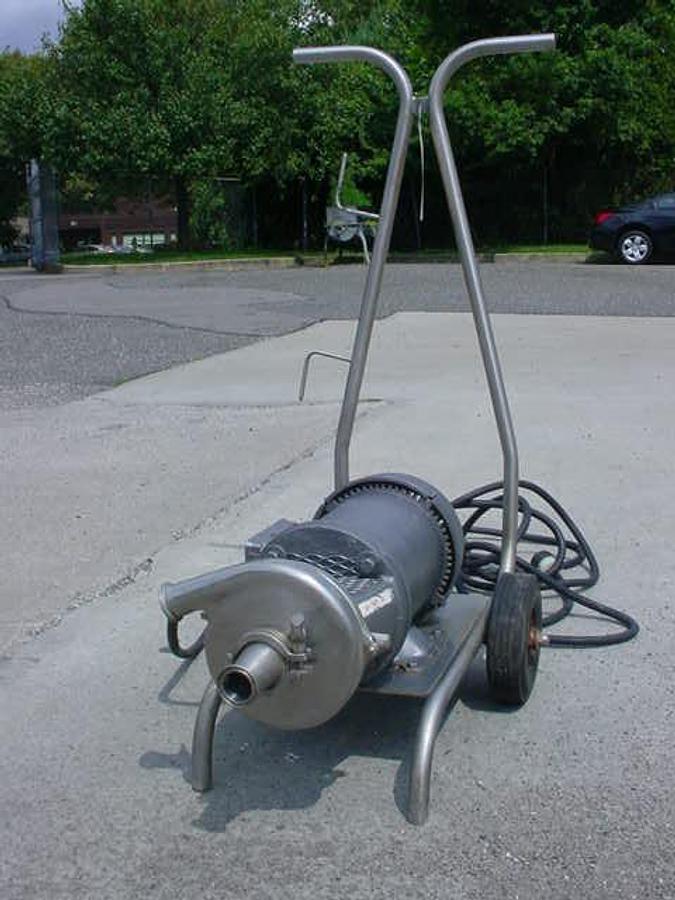
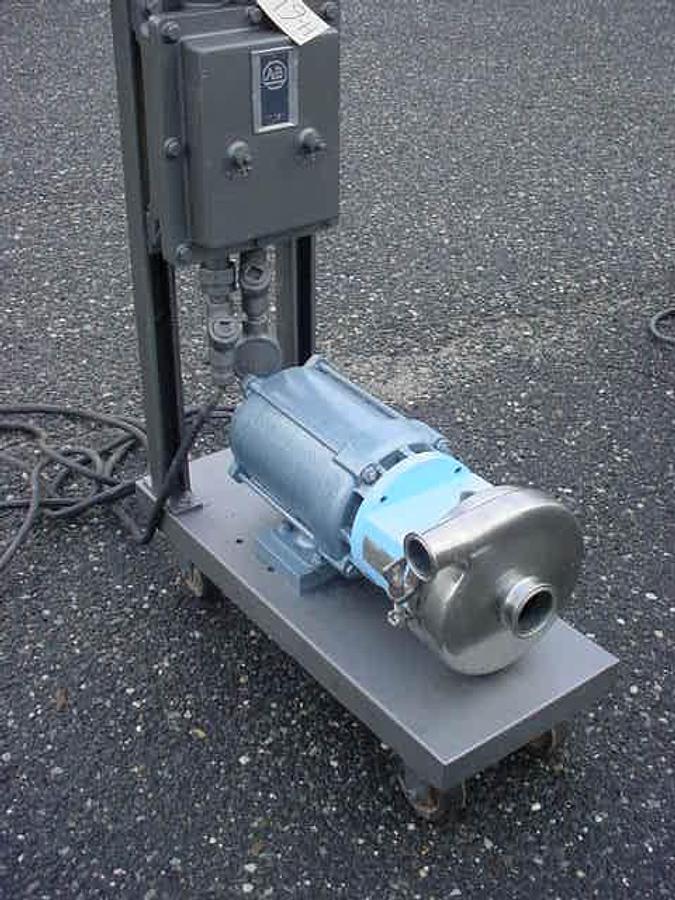
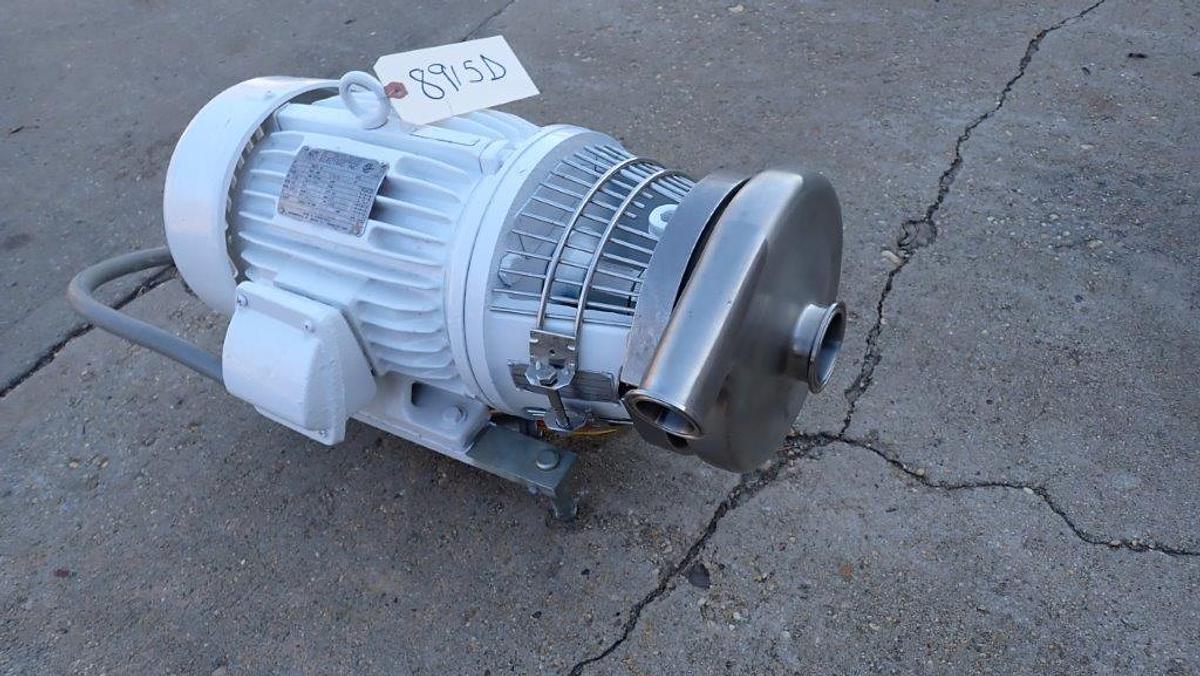
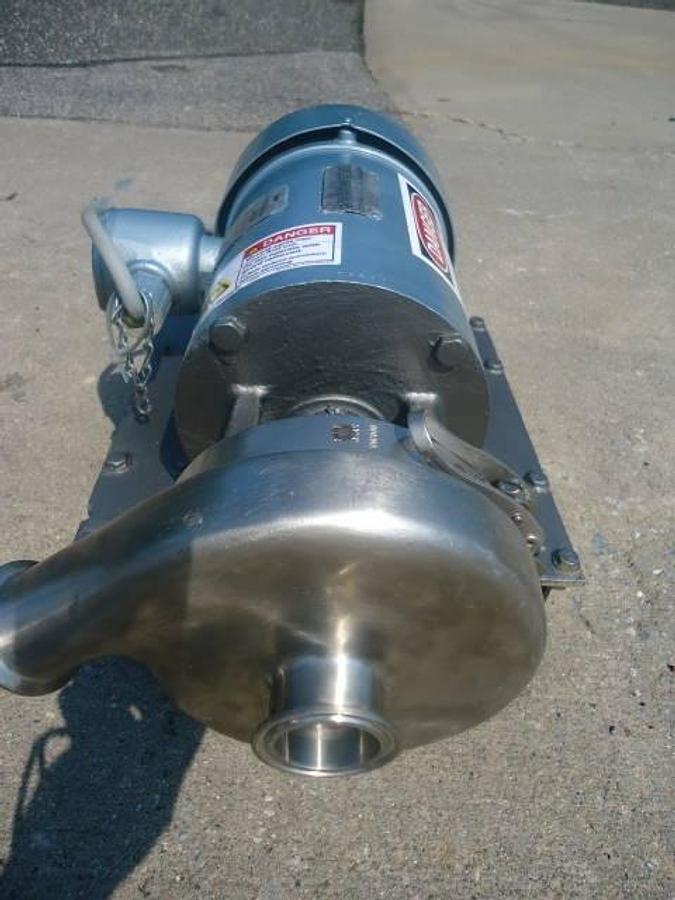
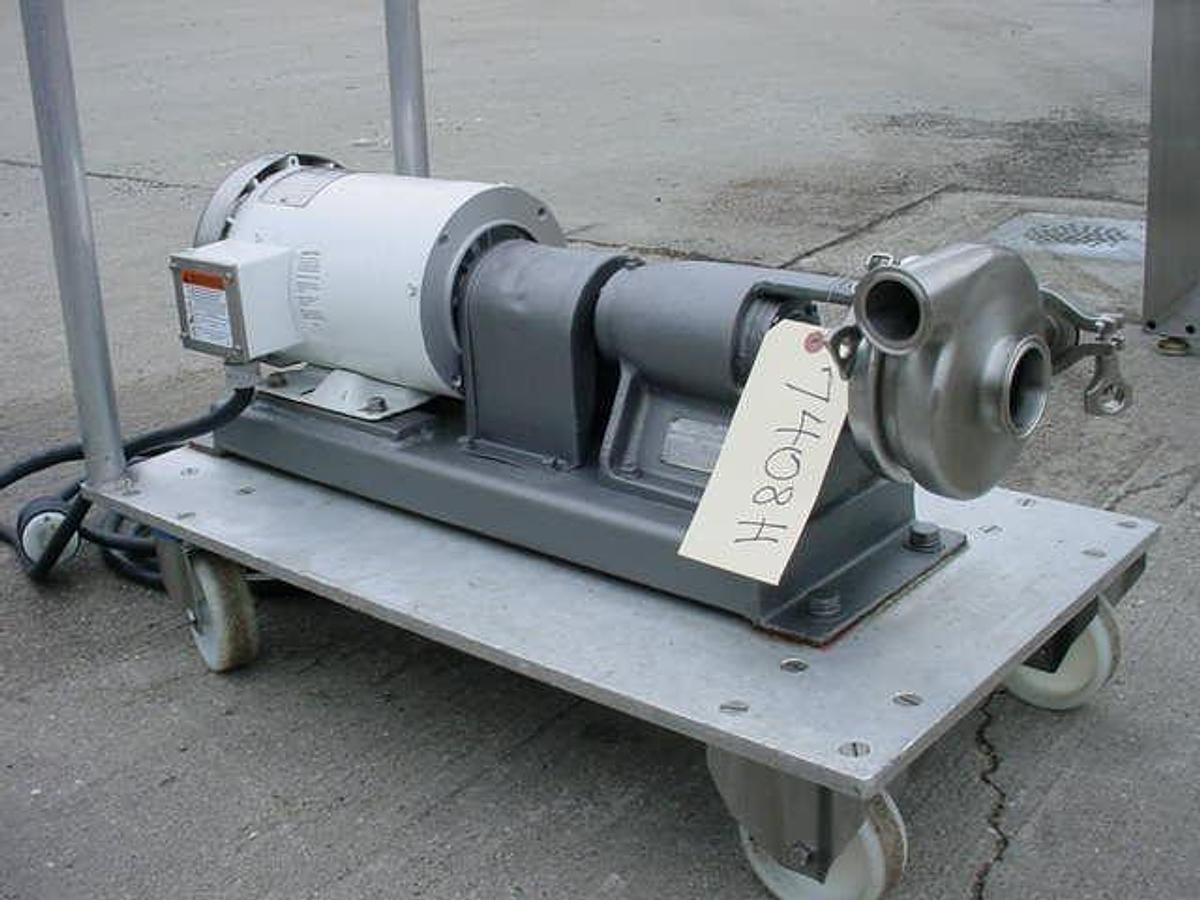
The used Tri-Clover market covers a fairly wide range of sanitary processing equipment. Centrifugal pumps are among the most commonly available, typically in stainless steel construction with sanitary tri-clamp inlet and outlet connections, and they appear in a range of horsepower ratings and port sizes. Positive displacement pumps, which are suited for thicker or more viscous products, also appear regularly. Tri-Blenders, which are high-shear inline mixing units used for incorporating powders into liquid streams, show up less frequently but are highly sought after in dairy and beverage applications. Portable pump units mounted on casters are also available, offering flexibility for facilities that need to move equipment between stations.
Beyond pumps and blenders, the used market includes sanitary valves, fittings, and specialty configurations like explosion-proof motor setups for facilities that handle flammable materials. Horsepower ratings on available pumps can range from fractional HP units up to 20 HP or more for heavy production environments. Port sizes commonly seen include 1.5-inch and 2-inch connections, though other sizes exist. Because this is used equipment, availability changes as inventory turns over, so buyers looking for a specific model or configuration should check listings regularly or contact dealers directly about upcoming inventory.
What materials are Tri-Clover sanitary fittings and pumps made from?
Tri-Clover sanitary equipment is built primarily from stainless steel, with 304 and 316 stainless being the two grades most commonly used. Type 304 stainless is suitable for most food and beverage applications and offers good corrosion resistance in standard processing environments. Type 316 stainless contains molybdenum, which increases its resistance to chlorides and more aggressive cleaning chemicals, making it the preferred choice for pharmaceutical applications, high-purity dairy processing, and any environment where stronger sanitizing agents are used regularly. On used equipment, the grade of stainless is worth confirming with the seller, as it can affect suitability for a given application.
Gaskets and seals used with tri-clamp style fittings come in several elastomer materials, each with different performance characteristics. EPDM gaskets handle a wide temperature range and resist many cleaning chemicals, making them a common general-purpose choice. Silicone gaskets are food-safe and handle high temperatures well but may not hold up to certain solvents. PTFE (Teflon) gaskets offer the broadest chemical resistance and are often used in pharmaceutical or high-purity applications. When purchasing used Tri-Clover equipment, gaskets and seals should be inspected carefully and replaced if there is any sign of wear, compression set, or chemical degradation, since these are the components most likely to need attention after a period of use.
What pressure and temperature ratings should buyers expect from Tri-Clover sanitary equipment?
Tri-Clover sanitary fittings and pumps are engineered for the pressure and temperature ranges typical in food, dairy, and beverage processing. Standard tri-clamp fittings are generally rated for pressures up to 150 PSI at ambient temperatures, though actual ratings depend on fitting size, wall thickness, and the gasket material in use. Larger diameter fittings carry lower pressure ratings than smaller ones at equivalent wall thicknesses, which is a standard relationship in pressure vessel and piping design. For applications involving steam-in-place (SIP) sterilization or elevated process temperatures, buyers should verify that both the fittings and the gasket material are rated for the specific temperature involved.
On used equipment, the original pressure and temperature ratings remain relevant as a starting point, but buyers should also consider the service history of the equipment. Pumps or fittings that have been used in high-pressure or high-temperature service may show wear on sealing surfaces or gasket seats that could affect performance. A thorough inspection, either in person or through detailed video, should include examination of ferrule faces, clamp condition, and any visible wear on pump housings or impellers. Consulting the manufacturer's documentation for a specific model can help buyers understand the rated operating parameters and assess whether a particular piece of used equipment is appropriate for their intended process conditions.
How does the quick-disconnect design of Tri-Clover fittings benefit food and beverage processors?
The tri-clamp connection style used on Tri-Clover equipment is built around fast disassembly. A single clamp band holds two ferrule ends together with a gasket between them, and releasing that clamp takes only seconds without requiring tools in many configurations. For food and beverage processors, this means production lines can be broken down for cleaning-in-place (CIP) or manual cleaning much faster than systems using threaded or flanged connections. Faster teardown translates directly to shorter changeover times between product runs and reduced labor costs associated with sanitation.
Beyond cleaning speed, the quick-disconnect design makes inspection straightforward. Operators can visually check gaskets, sealing surfaces, and the interior of pump housings or valve bodies during each cleaning cycle, catching wear or contamination issues before they become production problems. This level of accessibility is one of the primary reasons tri-clamp style connections became the standard in sanitary processing rather than the threaded fittings common in industrial or plumbing applications. For buyers evaluating used Tri-Clover equipment, the condition of ferrule faces and clamp hardware is worth examining closely, since these surfaces see repeated assembly and disassembly cycles over the life of the equipment.
What is a Tri-Clover Tri-Blender and what is it used for?
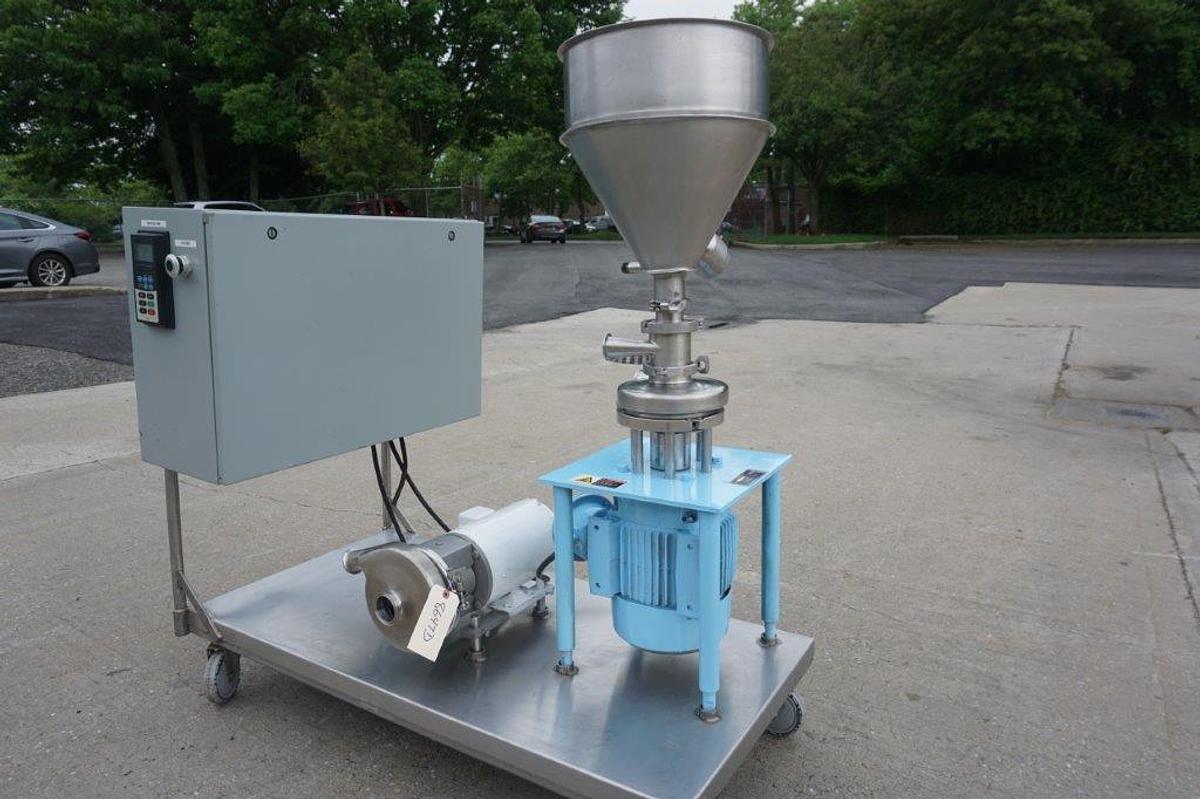
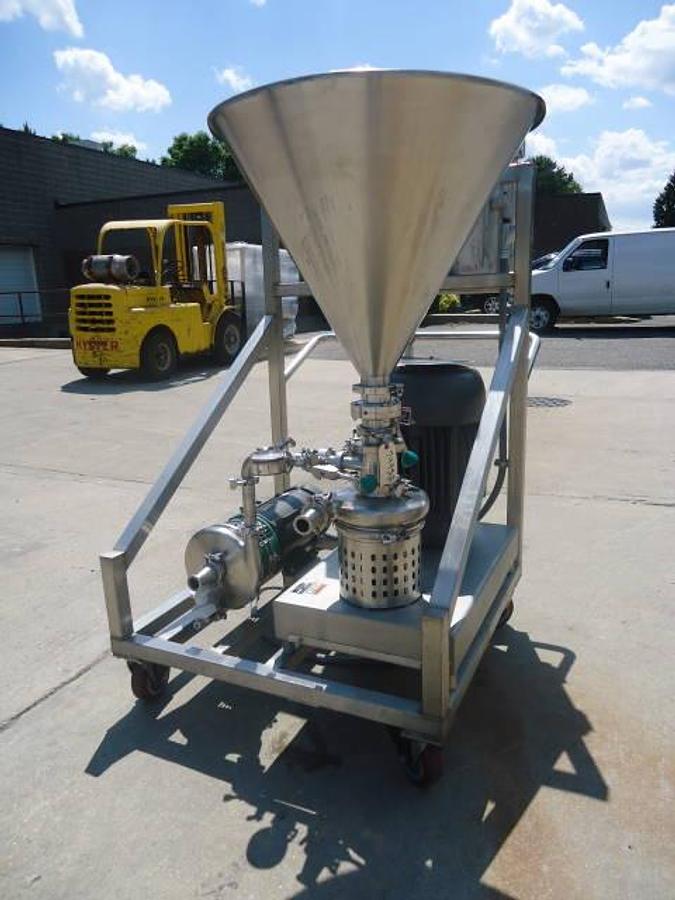
A Tri-Blender is a high-shear inline mixing unit produced by Tri-Clover, designed to incorporate dry powders or other ingredients into a liquid stream without clumping or extended mixing time. The unit draws liquid through a centrifugal pump while simultaneously pulling powder through a separate inlet, combining them in a high-velocity mixing zone that disperses the powder rapidly and uniformly. This approach is far more efficient than tank agitation for applications like reconstituting milk powder, blending protein concentrates, or dissolving stabilizers and thickeners into beverage bases. The result is a smooth, homogeneous mixture produced continuously rather than in batches.
Tri-Blenders are used heavily in dairy processing, sports nutrition manufacturing, infant formula production, and beverage operations where consistent hydration of powdered ingredients is critical to product quality. They are available in different horsepower configurations depending on the volume and viscosity requirements of the application. Explosion-proof motor versions exist for facilities that handle flammable powders or operate in classified electrical environments. On the used equipment market, Tri-Blenders are considered high-value items because of their specialized function and the cost of comparable equipment purchased through other channels. Units mounted on casters offer added flexibility for facilities that need to move the blender between tanks or processing stations.
What is the difference between a centrifugal pump and a positive displacement pump in sanitary processing?
Centrifugal pumps and positive displacement pumps handle fluid in fundamentally different ways, and the right choice depends on the product being processed. A centrifugal pump uses a spinning impeller to impart velocity to the fluid, converting that velocity to pressure as the fluid exits the pump housing. These pumps work well for low-viscosity liquids like water, milk, juice, and thin sauces, and they are generally less expensive and easier to maintain than positive displacement units. Tri-Clover centrifugal pumps in sanitary configurations are among the most commonly available on the used market and are workhorses in dairy and beverage plants.
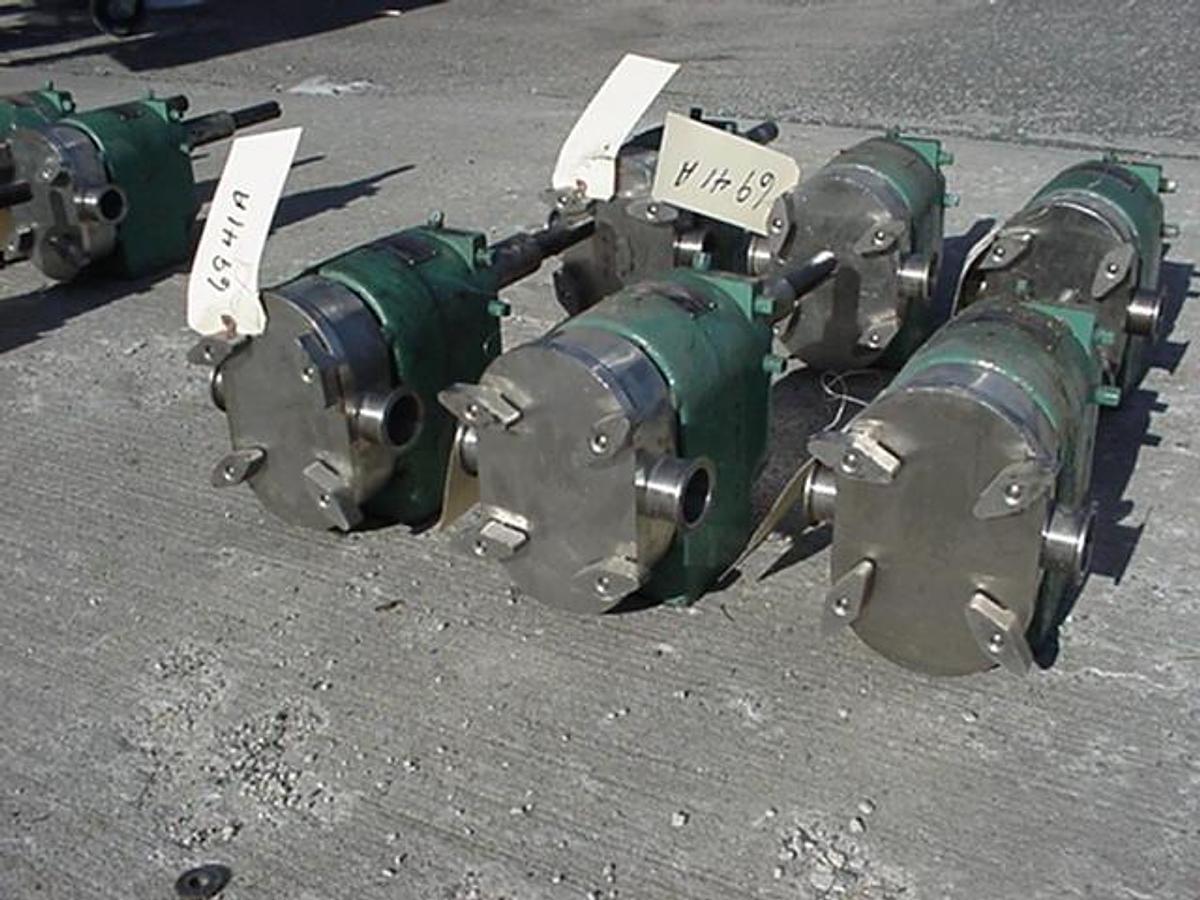
Positive displacement pumps move fluid by trapping a fixed volume and mechanically pushing it through the pump with each rotation or stroke. This design handles viscous products like cream, yogurt, syrups, pastes, and gels far better than centrifugal pumps, which lose efficiency rapidly as product viscosity increases. Positive displacement pumps also deliver a more consistent flow rate regardless of downstream pressure, which matters in metering or dosing applications. The Tri-Clover PR60, for example, is a positive displacement pump available in variable speed configurations, giving operators precise control over flow rate. On the used market, positive displacement pumps tend to carry higher price points than centrifugal units of similar size, reflecting both their mechanical complexity and their value in processing lines that handle thicker products.
What should buyers look for when inspecting used Tri-Clover equipment before purchasing?
A thorough inspection of used Tri-Clover equipment should cover both the mechanical condition of the pump or valve itself and the condition of all sanitary contact surfaces. For pumps, key areas to examine include the impeller or rotor for wear, erosion, or damage; the mechanical seal for signs of leakage or deterioration; and the pump housing interior for pitting, scoring, or product buildup. On positive displacement pumps, the rotors and housing clearances are especially important, since worn clearances reduce efficiency and can allow product to slip back through the pump. Ferrule faces and clamp connections should be checked for damage to the sealing surfaces, since even minor nicks or scratches can compromise sanitary integrity.
Reputable used equipment dealers typically accommodate in-person inspections at their facility or at the plant where the equipment is currently located. Video inspections and detailed photo documentation are also commonly offered for buyers who cannot travel. Keep in mind that most dealers do not have the permitting or production infrastructure to run actual product through the equipment during an inspection, so testing is generally limited to dry runs or water tests at best. For equipment that is still installed and running at a production facility, an inspection can sometimes be arranged while the machine is in active use, which provides the most realistic picture of its condition. Buyers should also consult the manufacturer's documentation for the specific model to understand what wear indicators matter most and what parts availability looks like for that age and configuration.
What should buyers understand about shipping and payment for used Tri-Clover equipment?
Shipping costs for used Tri-Clover equipment vary considerably depending on the size and weight of the unit, the packaging required, and the distance involved. Smaller items like individual pumps can often be palletized and shipped via standard freight carriers, while larger assemblies or units mounted on caster frames may require heavier rigging for loading and unloading. Crating provides better protection than palletizing alone for equipment with exposed fittings or motors, and the cost of proper packaging should be factored into the total landed price. Buyers should ask sellers specifically about what packaging will be used, whether rigging is included in the quoted price, and what carrier will be handling the shipment, since these details directly affect both cost and the likelihood of the equipment arriving undamaged.
On payment terms, most used equipment dealers require full payment before a machine ships. Some dealers extend terms to established repeat customers, but buyers purchasing from a dealer for the first time should expect to pay in full upfront. This makes the inspection process especially important, since payment typically precedes shipment and used equipment is generally sold as-is. Understanding the full landed cost, which includes the equipment price, packaging, rigging, freight, and any local unloading requirements, before committing to a purchase helps avoid surprises and allows for accurate comparison between available options.