Category
Manufacturer
Model
FAQ:
What types of Treif cutting and slicing machines are commonly available on the used equipment market?
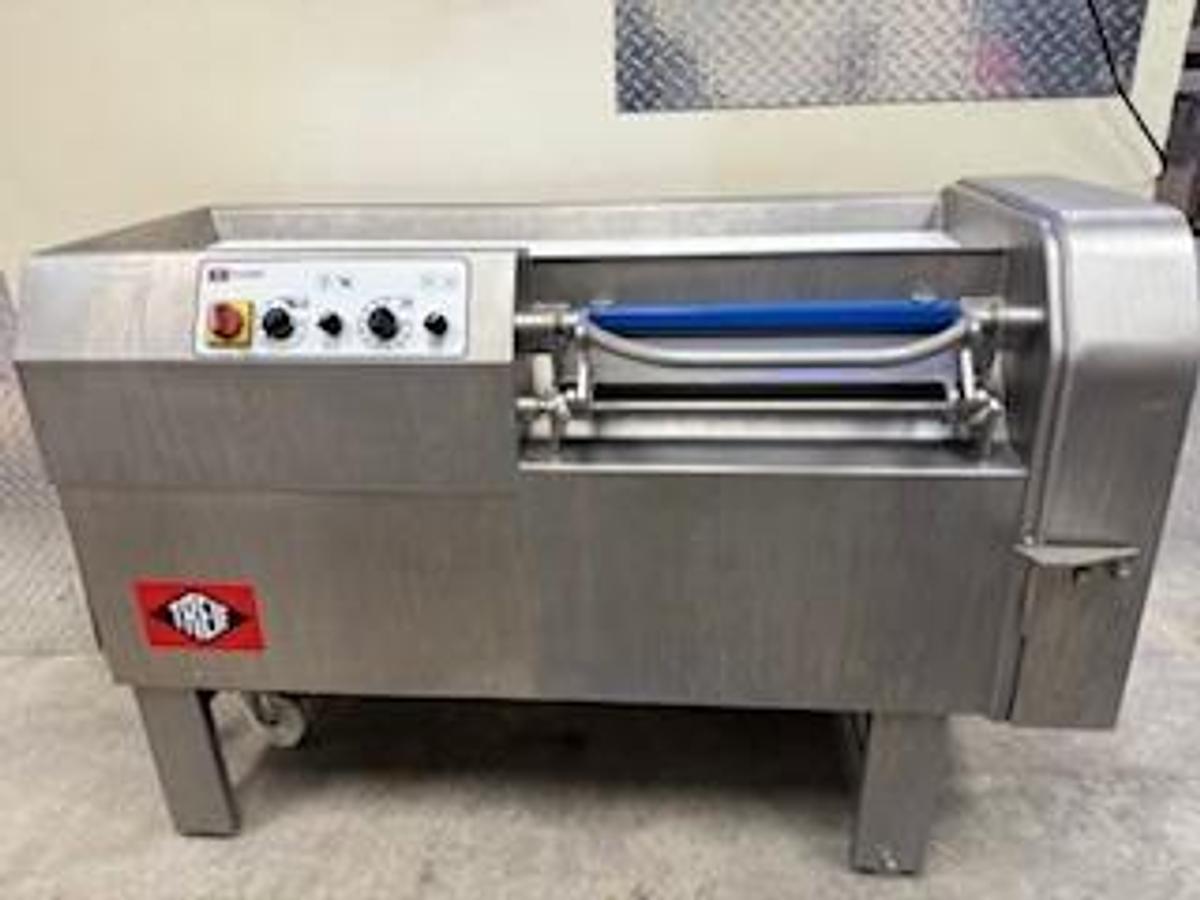
Treif produces several distinct product lines, and all of them surface regularly in the used industrial equipment market. The most frequently traded models include the Treif Panda, a high-speed slicer built for portion-controlled cuts of meat, cheese, and deli products; the Treif Falcon, designed for high-throughput slicing of cooked and cured meats; the Treif Divider, used for portioning whole muscle cuts and fish; and the Treif Cube Cutter/Dicer, which converts whole pieces or slabs into uniform cubes or strips. Each machine targets a different stage or style of food cutting, so buyers typically search by product line based on their specific production need.
Because Treif has been manufacturing industrial food processing equipment for over 75 years, there is a wide range of model generations available through used equipment dealers. Older machines in good mechanical condition can represent strong value, particularly for operations that do not require the latest automation features. Buyers should pay close attention to the specific model number and generation when comparing listings, since cutting capacity, blade configuration, and control systems vary considerably across product generations.
What industries use Treif equipment, and what food products is it best suited for?
Treif machines are found across a broad range of food manufacturing environments. The most common applications include slicing and portioning beef, pork, poultry, lamb, and game meats, as well as processing smoked and cured deli meats, hard and semi-hard cheeses, fish fillets, and seafood. Some models are also used in bread and bakery slicing operations. The brand's reputation was built largely in the meat and deli processing sectors, where cutting precision, consistent portion weights, and high throughput are critical to profitability.
Beyond the food type, Treif equipment is well suited to operations that need to meet strict food safety standards. The machines are engineered with hygienic design principles, featuring smooth surfaces, minimal crevices, and tool-free disassembly of cutting components to simplify sanitation. This makes them a practical choice for facilities subject to USDA, FDA, or CE compliance requirements. Food processors ranging from small-scale artisan producers to large industrial plants have used Treif machines, which is part of why used units remain in demand across such a wide range of buyer profiles.
What should buyers know about purchasing used Treif equipment versus buying from a manufacturer?
Buying used Treif equipment through a reputable dealer is a well-established practice in the food processing industry, and it carries some meaningful advantages. The most obvious is cost: used machines are typically priced significantly below what a comparable machine would cost if purchased directly from a manufacturer. For operations that need reliable cutting capacity without the capital outlay of a brand-new machine, the used market offers access to proven equipment that has often been maintained and operated in real production environments.
The trade-off is that used equipment is sold as-is, meaning there is no manufacturer-backed coverage on the machine's condition. This puts the responsibility of due diligence squarely on the buyer. Inspecting the machine carefully before purchase is critical, and buyers should work with dealers who specialize in food processing equipment and have a long track record in the industry. A dealer who understands Treif equipment specifically will be better positioned to accurately represent the machine's condition, help identify the model and its capabilities, and facilitate a proper inspection. Buyers should also contact Treif directly to understand what level of parts availability and technical support exists for the specific model and age of machine they are considering.
Do used Treif machines come with a warranty?
Used Treif equipment sold through third-party dealers is typically offered on an as-is basis, which is standard practice across the used industrial machinery market. Warranties are generally only issued by the equipment's manufacturer, and once a machine enters the secondary market, that coverage does not transfer with the sale. Buyers should go into a used equipment purchase with a clear understanding that the condition of the machine is their responsibility to verify before committing to a purchase.
This makes the inspection process especially important. Reputable used equipment dealers will accommodate in-person inspections, video walkthroughs, or detailed photo documentation so that buyers can assess the machine's working condition before finalizing a purchase. Buyers are also encouraged to reach out to Treif directly to determine what parts, blade replacements, and service support are available for the specific model they are considering. The age and model of a machine can significantly affect the availability of components and the level of manufacturer support a buyer can realistically expect after the sale.
How can buyers inspect a used Treif machine before purchasing?
Most reputable used equipment dealers offer multiple inspection options to give buyers an accurate picture of a machine's condition. In-person inspections are the most thorough option and are generally preferred for higher-value machines. In cases where the equipment is still installed at a food processing facility, the dealer may be able to arrange a visit to the plant so the buyer can see the machine in its operating environment. Some machines may still be in active production at the time of sale, which can provide a useful real-world reference point.
For buyers who cannot travel, video inspections and detailed photo documentation are common alternatives. A dealer can walk through the machine on camera, demonstrating key components, showing wear points, and capturing the condition of blades, cutting surfaces, and control panels. One important caveat: most used equipment dealers are not permitted to run actual food production through the machines, since that requires food safety permitting that dealers do not hold. Buyers should factor this in when evaluating inspection results and focus their questions on mechanical condition, hours of use if known, and the history of the machine's maintenance and prior application.
Are replacement parts and blades available for used Treif machines?
Parts availability is one of the most practical considerations when buying any used food processing equipment, and Treif is generally regarded as a brand with solid parts support relative to many competitors. Treif has been in operation for over 75 years and maintains an active presence in the food equipment market, which means many models have parts that remain accessible through the manufacturer or authorized service networks. That said, availability does vary by model age and region, so buyers should not assume that parts for every generation of machine are equally easy to source.
Before purchasing a used Treif machine, it is worth contacting Treif or a certified service provider directly to ask about parts availability for the specific model and serial number. Blades in particular are a recurring cost in any slicing or dicing operation, and buyers should confirm that the correct blade specifications are still in production or available through aftermarket suppliers. If a machine is older or a discontinued model, the dealer may be able to provide guidance on known parts challenges. Understanding the parts supply situation upfront helps buyers avoid unexpected downtime after the machine is installed.
What food safety certifications does Treif equipment typically meet?
Treif machines are engineered to meet the food safety and hygiene standards required in commercial food processing environments. Depending on the model and the market it was built for, certifications commonly associated with Treif equipment include CE marking for European market compliance, as well as design standards aligned with FDA and USDA requirements for food contact surfaces and equipment hygiene in the United States market. These certifications reflect the brand's focus on hygienic design, which includes features like smooth stainless steel surfaces, minimal horizontal ledges where food debris can accumulate, and cutting components that can be disassembled without tools for thorough cleaning.
When buying a used Treif machine, buyers should verify which certifications apply to the specific model and production year, since standards and certification requirements have evolved over time. A machine that was certified to a particular standard at the time of manufacture may not automatically meet current regulatory requirements without modification or re-evaluation. Buyers operating in regulated environments should review the machine's documentation with their food safety team or a qualified equipment auditor before putting the machine into production. Dealers who specialize in food processing equipment are often familiar with these compliance considerations and can help buyers locate the relevant technical documentation.
What is the typical price range for used Treif equipment?
Pricing for used Treif machines varies considerably based on the model, age, condition, and configuration of the equipment. Entry-level or older Treif slicers in working condition can be found in the range of a few thousand dollars, while more advanced models such as high-capacity dicers or automated portioning systems in good operating condition can command prices well into the tens of thousands. The Treif Cube Cutter/Dicer, for example, is a specialized machine with a more limited buyer pool, which can affect pricing in either direction depending on current market supply and demand.
Beyond the base price of the machine, buyers should account for the full landed cost of the equipment. This includes packaging and crating fees, freight charges, and any rigging costs required for loading and unloading heavier machines. Larger Treif units may require forklift handling or specialized rigging equipment at both the shipping and receiving ends, which adds to the total acquisition cost. Buyers should request a complete breakdown of all associated costs from the dealer before finalizing a purchase to avoid surprises. Comparing the total landed cost against the cost of alternative equipment or a factory-direct purchase is the most reliable way to evaluate whether a used machine represents good value for a specific application.
Can used Treif machines be integrated into existing food production lines?
Treif equipment is designed for industrial food processing environments and is generally built to work within larger production line configurations. Many models include conveyor infeed and outfeed options, adjustable cutting parameters, and control systems that can be coordinated with upstream and downstream equipment. Whether a specific used machine can be integrated into an existing line depends on several factors: the model's physical footprint, its electrical and utility requirements, the speed and throughput capacity relative to adjacent equipment, and whether the control interface is compatible with any automation systems already in place.
Buyers planning to integrate a used Treif machine into a production line should gather detailed technical specifications for the specific model before purchasing. This includes voltage requirements, phase configuration, air supply needs if applicable, and the dimensions of the machine including any conveyors. If the machine was previously configured for a different production environment, some modifications or additions may be needed. Consulting with a food equipment technician or the machine's service documentation during the evaluation phase can help identify potential integration challenges early, before the machine is purchased and shipped.
What are the shipping and logistics considerations when buying used Treif equipment?
Treif machines range from compact countertop-style slicers to large industrial dicers and portioning systems, and the logistics involved in shipping them vary accordingly. Smaller units can often be palletized and shipped via standard freight carriers with appropriate protective packaging. Larger machines typically require custom crating to prevent damage in transit, and the cost of that crating is usually passed on to the buyer. Buyers should ask the dealer specifically how the machine will be packaged and what the associated costs are before agreeing to a purchase, since packaging quality directly affects whether the machine arrives in the condition it left the dealer's facility.
For heavier industrial units, loading and unloading may require specialized rigging equipment such as forklifts or cranes, and those services carry additional fees at both ends of the shipment. Buyers who do not have receiving equipment capable of handling a heavy machine should make arrangements in advance. International shipments add further complexity, including customs documentation, import duties, and compliance with destination country electrical and safety standards. Getting a complete quote that covers all freight, rigging, and packaging costs upfront is the most reliable way to understand the true cost of acquiring a used Treif machine.