Category
Manufacturer
Model
Traco
Traco specializes in manufacturing high-performance machinery for the food processing sector. Their product line includes slicers and dicing machines that are popular among producers of processed meats and cheeses.
FAQ:
What types of food processing equipment does Traco manufacture?
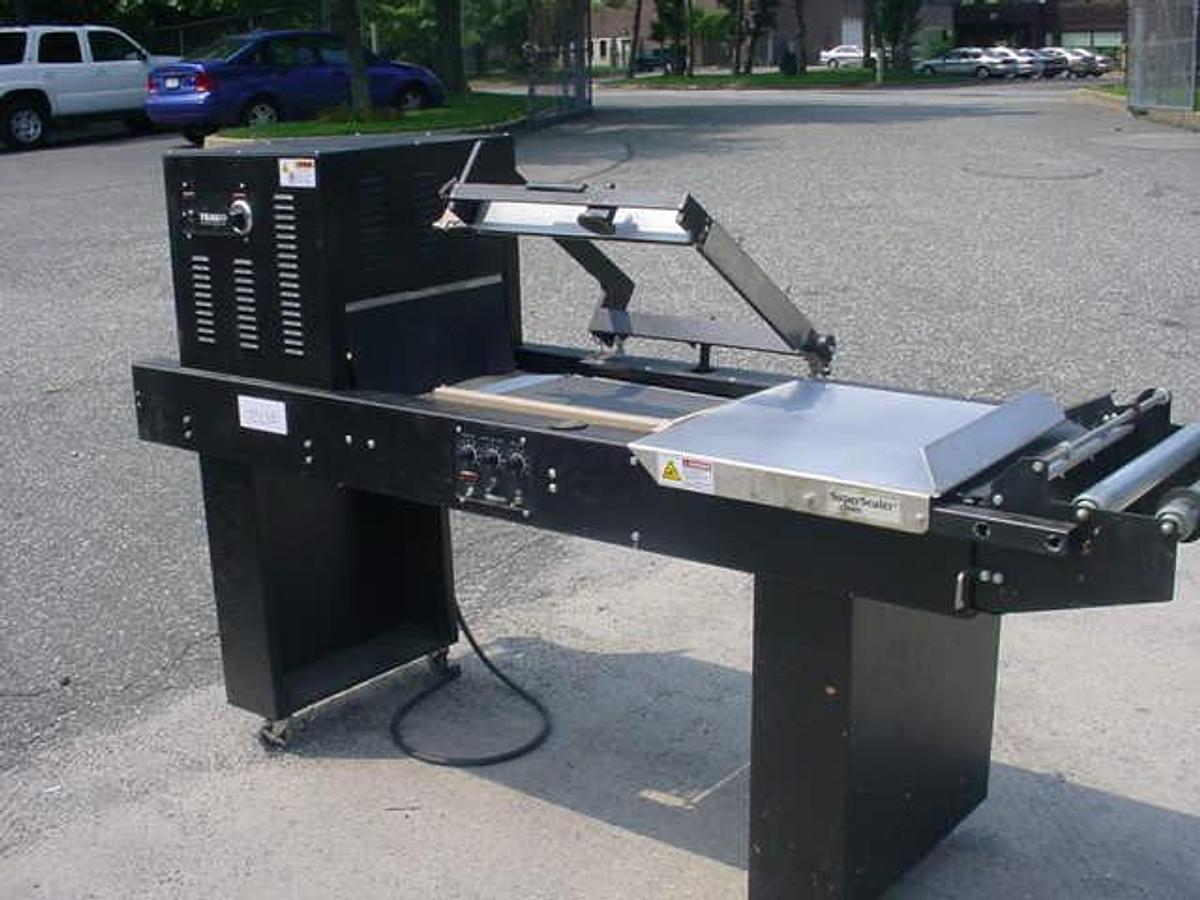
Traco focuses on high-performance machinery for the food processing sector, with a product line that includes slicers, dicing machines, and packaging equipment such as L-bar sealers and shrink tunnels. Their slicing and dicing equipment has earned a strong reputation among producers of processed meats and cheeses, where precise, consistent cuts are critical to product quality and yield. The semi-automatic L-bar sealer and shrink tunnel is another well-known piece of Traco equipment, used to wrap and seal individual food products for retail or distribution.
Because Traco occupies a niche position in the food processing equipment market, the range of models available at any given time, especially in the used market, will vary. Buyers searching for specific Traco models should work with dealers who specialize in food processing machinery, as they are more likely to have access to the right equipment and the technical knowledge to match a machine to a particular production requirement. Reviewing detailed specifications, including throughput capacity, power requirements, and physical footprint, is an important step before committing to a purchase.
What industries and food types is Traco equipment best suited for?
Traco equipment is most commonly associated with processed meat and cheese production, where slicing and dicing machinery plays a central role in portioning, packaging, and maintaining product consistency. Facilities producing deli meats, block cheeses, and similar chilled or refrigerated products have historically been the core users of Traco slicers and dicers. The packaging side of their lineup, including L-bar sealers and shrink tunnels, is broadly applicable across food categories where individual or retail-ready wrapping is needed.
Beyond meat and cheese, food manufacturers working with other firm or semi-firm products, such as certain vegetables, tofu, or portioned seafood, may also find Traco slicing and dicing equipment relevant to their operations. The key factors to evaluate are whether the machine's blade configuration, feed mechanism, and output dimensions match the product being processed. Buyers sourcing used Traco equipment should ask dealers about the prior application of any specific machine, since a unit previously used in a meat plant, for example, may require thorough sanitation and potentially some component inspection before transitioning to a different food type.
What should buyers know about purchasing used Traco food processing equipment?
Buying used food processing equipment requires more due diligence than purchasing from a manufacturer, because the condition, service history, and remaining useful life of the machine are not guaranteed. For Traco equipment specifically, buyers should request as much documentation as possible, including any available maintenance records, prior production environment details, and information about whether the machine was decommissioned or is still actively running at the time of sale. Used equipment dealers who specialize in food processing machinery are generally better positioned to provide accurate condition assessments than general industrial dealers.
One practical step buyers can take is arranging an inspection before purchase, either in person or through a video walkthrough conducted by the dealer. Some machines are still installed in active production facilities, which can allow for a live demonstration, while others have been decommissioned and are in storage. It is also worth consulting with Traco or an authorized service provider to understand what parts and technical support are available for the specific model and age of equipment under consideration, since older models may have more limited support options. Understanding the full landed cost, including shipping, rigging, installation, and any refurbishment needed, is essential for an accurate budget.
How do inspections typically work when buying used food processing equipment?
Used equipment dealers generally offer buyers the option to inspect machinery before finalizing a purchase. Inspections can take several forms: an in-person visit to the dealer's facility or the plant where the equipment is currently located, a live video call walkthrough, or a set of detailed video recordings and photographs captured by the dealer. The goal in any format is to give the buyer a clear, honest picture of the machine's current condition, including visible wear, any known issues, and the overall state of key components.
It is worth noting that most used equipment dealers are not set up to run full production tests with actual food product, since that would require food-grade facility permitting that falls outside the scope of equipment resale. What a buyer can typically observe is whether the machine powers on, how mechanical components move, and the general condition of seals, blades, belts, and frames. For higher-value purchases, some buyers choose to bring in an independent technician or a manufacturer's service representative to participate in the inspection and provide a more technical assessment of the machine's condition and what, if anything, it would need before returning to production.
What are the key technical specifications to review before buying a used food processing machine?
Before committing to any used food processing equipment purchase, buyers should collect and review a complete set of technical specifications for the machine. The most critical data points include throughput or production capacity (typically expressed in units per minute or pounds per hour), power requirements (voltage, phase, and amperage), physical dimensions and weight, and the materials used in construction, particularly whether food-contact surfaces are stainless steel and what grade. For slicing and dicing equipment, blade configuration, cut size range, and feed mechanism type are also important variables.
Beyond the machine itself, buyers should think about how the equipment will integrate into their existing production line. This includes checking whether the power supply at their facility matches the machine's requirements, whether the footprint fits the available floor space, and whether the infeed and outfeed heights are compatible with adjacent equipment. Sanitation design is another factor worth scrutinizing, particularly for food processing applications where thorough cleaning between production runs is non-negotiable. Machines with open frames, smooth surfaces, and minimal crevices are generally easier to clean and more likely to meet food safety standards. Asking the dealer for the original manufacturer's spec sheet, if available, is a good starting point.
Are replacement parts readily available for used Traco food processing equipment?
Parts availability for used food processing equipment depends heavily on the age of the machine and whether the manufacturer is still actively supporting that model. For Traco equipment, buyers should contact the manufacturer or a qualified service provider directly to ask about parts availability for the specific model and serial number they are considering. Older machines or discontinued models may have limited factory support, which means buyers would need to rely on aftermarket parts suppliers or have certain components machined to spec, both of which add cost and lead time to maintenance.
This is one of the more important questions to resolve before purchasing used equipment, because a machine that runs well at the time of sale can become a liability if a critical component fails and cannot be sourced. Dealers who specialize in food processing equipment often have insight into which brands and models have strong aftermarket support and which do not. Asking the dealer about the parts situation for any specific Traco machine being considered is a reasonable and expected part of the buying conversation, and a reputable dealer should be able to give an honest answer or help the buyer find out.
What food safety and sanitation standards should buyers consider when evaluating food processing equipment?
Food processing equipment used in commercial production environments is expected to meet specific sanitation and safety standards, and buyers should verify compliance before integrating any machine into their facility. In the United States, NSF International certification is one of the most recognized standards for food equipment sanitation design, confirming that a machine can be adequately cleaned and will not harbor bacteria or contaminants. USDA acceptance is relevant for meat and poultry processing environments, while CE marking applies to equipment intended for use in European markets. Some facilities also have their own internal sanitation standards or third-party audit requirements that equipment must satisfy.
For used equipment, the original certification of a machine does not necessarily mean it currently meets those standards, particularly if it has been modified, worn, or improperly maintained over time. Buyers should inspect food-contact surfaces for corrosion, cracks, or damage that could create sanitation risks, and evaluate whether gaskets, seals, and other wear components have been maintained or need replacement. Working with a dealer who understands food safety requirements and can speak to the sanitation design of the equipment they sell is a meaningful advantage. Buyers should also loop in their own food safety team or a sanitation consultant if there is any uncertainty about whether a specific machine meets the requirements of their facility or regulatory environment.
What does a Traco L-bar sealer and shrink tunnel do, and what products is it used for?
An L-bar sealer is a packaging machine that uses two sealing bars arranged in an L-shape to cut and seal a film around a product in a single motion, creating a tight package ready for the next stage of processing. When paired with a shrink tunnel, the sealed package passes through a heated chamber that causes the film to contract and conform closely to the product's shape, producing a clean, professional retail-ready appearance. Traco's semi-automatic L-bar sealer and shrink tunnel is designed for food processing environments where consistent, repeatable packaging is needed without the throughput requirements of a fully automated line.
This type of equipment is widely used for packaging individual portions of food products including deli meats, cheeses, poultry, seafood, baked goods, and produce. The semi-automatic designation means an operator is involved in placing products and initiating the seal cycle, making the machine well-suited for small to mid-sized operations or facilities with variable product sizes that require manual positioning. Buyers evaluating a used Traco L-bar sealer and shrink tunnel should pay close attention to the condition of the sealing wires or blades, the heating elements in the tunnel, and the film feed mechanism, as these are the components most subject to wear in day-to-day operation.
How does shipping and rigging work for used food processing equipment purchases?
Shipping used food processing equipment involves more planning and cost than standard freight, particularly for larger or heavier machines. The equipment typically needs to be properly palletized or crated before shipment to prevent damage in transit, and the level of packaging required will affect the overall shipping cost. Smaller machines like countertop slicers may ship on a standard pallet, while larger units such as industrial dicers or shrink tunnels may require custom crating or specialized freight handling. Buyers should ask the dealer specifically how the equipment will be packaged and what that service costs.
For heavier equipment, rigging is often required both at the point of origin for loading and at the buyer's facility for unloading and placement. Rigging involves the use of forklifts, cranes, or other lifting equipment to safely move machinery that cannot be handled manually, and it carries its own cost that varies based on machine weight, facility access, and local labor rates. Buyers should request a complete breakdown of all shipping-related costs, including packaging, freight, and rigging at both ends, before finalizing a purchase. Understanding the total landed cost of the equipment, rather than just the purchase price, is essential for accurate budgeting.
What payment terms do used food processing equipment dealers typically require?
Used equipment dealers generally require full payment before a machine is released for shipment. This is standard practice in the industry and reflects the nature of used machinery transactions, where the dealer needs to confirm funds are secured before incurring the costs of packaging, rigging, and freight. Payment is typically accepted by wire transfer, though some dealers may accept other forms depending on the transaction size and the buyer's relationship with the dealer. Buyers should clarify accepted payment methods early in the process to avoid delays.
Some dealers may offer extended payment terms to repeat customers or established business relationships, but this is not the norm for first-time buyers. Buyers who need financing should explore options through their own banking relationships or equipment financing companies before approaching a dealer, since most used equipment dealers do not offer in-house financing programs. Having financing in place before identifying specific equipment can speed up the purchasing process considerably, particularly when a desirable machine becomes available and other buyers may be interested.