Category
Manufacturer
Model
Torrey Hills Technologies
Torrey Hills Technologies specializes in manufacturing high-quality mixing and milling equipment, primarily for the food and pharmaceutical industries. They are known for their advanced technology that enhances production efficiency and product quality. Torrey Hills’ focus on innovation ensures they meet the diverse needs of their clients.
FAQ:
What types of equipment does Torrey Hills Technologies manufacture?
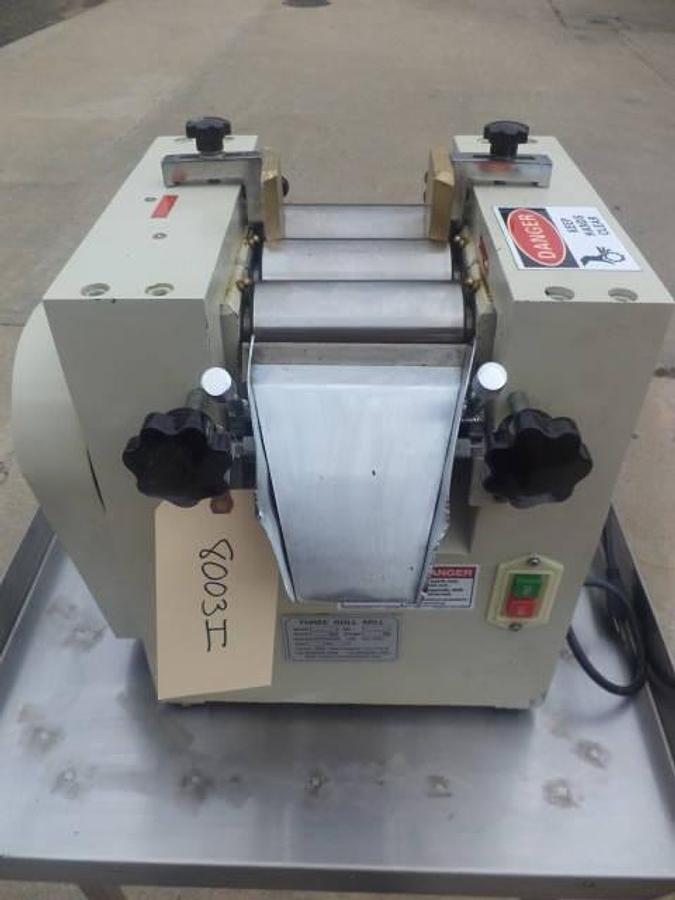
Torrey Hills Technologies is primarily known for producing three-roll mills, planetary centrifugal mixers, tube furnaces, and related laboratory and industrial processing equipment. Their three-roll mills are among their most recognized products and are widely used for mixing, dispersing, and homogenizing viscous materials including adhesives, inks, cosmetics, electronic pastes, and pharmaceutical compounds. The company has built a reputation for offering capable processing equipment at price points that are accessible to small and mid-size operations, making them a popular choice compared to higher-priced European manufacturers.
Beyond three-roll mills, their mixer and milling lineup is designed to serve a range of production scales, from benchtop lab units to more capable industrial configurations. Their equipment is commonly found in R&D labs, university research departments, startups, and small manufacturers that need reliable processing tools without committing to the capital expense of top-tier brand alternatives. The 2.5 inch by 5 inch lab three-roll mill is a good example of their smaller-scale offerings, purpose-built for laboratory environments where precise, repeatable results matter.
What industries commonly use Torrey Hills Technologies three-roll mills?
Three-roll mills from Torrey Hills Technologies are used across a surprisingly broad range of industries. The most common applications include cosmetics and personal care product manufacturing, electronic paste and thick-film processing, adhesive and sealant production, printing ink formulation, and pharmaceutical compound preparation. The core function of a three-roll mill, which is to mix, disperse, and homogenize high-viscosity materials through the shear force generated between counter-rotating rollers, makes it useful in any process where achieving a fine, uniform dispersion is critical to product quality.
In research and development settings, these mills are valued for their ability to process small batch sizes with a high degree of control, which is why universities and R&D labs frequently invest in lab-scale models. On the production side, food manufacturers working with pastes or thick emulsions, as well as electronics manufacturers producing conductive pastes and encapsulants, rely on three-roll mills as a core piece of processing equipment. The relatively straightforward operation and easy-to-clean roller design also make them practical for facilities that run multiple formulations and need fast changeovers between batches.
What should buyers know about purchasing used Torrey Hills Technologies equipment?
Buying used Torrey Hills Technologies equipment can be a cost-effective way to access reliable mixing and milling machinery, but there are a few things worth understanding before committing to a purchase. Used equipment is sold as-is, which means the condition of the machine reflects its service history rather than any factory standard. Buyers should request as much detail as possible about the machine's age, how it was used, and whether it has had any repairs or part replacements. A reputable used equipment dealer with a track record in laboratory and industrial machinery is far more likely to provide an accurate, honest assessment of a machine's condition than a general resale marketplace.
One practical step is to arrange an inspection before purchase, either in person or through a video walkthrough conducted by the dealer. This gives buyers a clear picture of the physical condition of the rollers, the gap adjustment mechanism, the drive system, and any control components. It is also worth contacting Torrey Hills Technologies directly to ask about parts availability and technical support for the specific model being considered, since the level of manufacturer support can vary depending on how old the machine is. Understanding those factors upfront helps buyers make a more informed decision and avoid surprises after delivery.
How does a three-roll mill work and what makes it effective for viscous materials?
A three-roll mill processes material by passing it through the gaps between three horizontally positioned, counter-rotating rollers. The material is fed into the first gap, called the feed gap, where it gets compressed and sheared between the first and second rollers. It then transfers to the second gap between the second and third rollers, where it undergoes additional shearing. This repeated shearing action breaks down agglomerates, disperses pigments or particles, and creates a uniform, homogeneous mixture. The gap between the rollers is adjustable, which allows operators to control the degree of shear and the fineness of the final dispersion.
What makes this design particularly effective for viscous materials is that the shear force is applied mechanically and directly to the material, rather than relying on impact or turbulent flow as other mixing technologies do. High-viscosity pastes, gels, and thick emulsions that would be difficult to process in a conventional mixer respond well to the controlled, consistent shear of a three-roll mill. The open design of the roller system also allows heat to dissipate during processing, which is important for temperature-sensitive formulations. These characteristics explain why three-roll mills remain a standard piece of equipment in industries ranging from cosmetics to electronics manufacturing, decades after the basic design was established.
Are Torrey Hills Technologies lab mills suitable for university and R&D use?
Lab-scale mills from Torrey Hills Technologies have a strong presence in university research departments and corporate R&D environments, largely because they offer capable performance at a price point that fits academic and early-stage research budgets. A benchtop three-roll mill, such as a 2.5 inch by 5 inch model, processes small batch quantities with enough precision to support formulation development, material characterization, and process optimization work. Researchers can adjust roller gaps, control throughput, and reproduce results consistently, which are all important requirements in a research context.
For labs evaluating used equipment, the considerations are similar to any used machinery purchase. The roller surfaces, bearing condition, and gap adjustment mechanism should be inspected carefully, since wear in those components directly affects the quality and repeatability of results. A video inspection or in-person visit to see the machine in its current state is a reasonable request to make of any used equipment dealer. Buyers should also check with the manufacturer about parts availability for the specific model, since some older units may have limited support, while more recent models are likely to have better access to replacement components.
What is the typical price range for used Torrey Hills Technologies equipment?
Pricing for used Torrey Hills Technologies equipment varies depending on the model, size, age, and overall condition of the machine. Lab-scale three-roll mills tend to be among the more affordable options in the used market, reflecting their smaller footprint and the fact that they were positioned as cost-accessible equipment to begin with. Larger or more specialized units, such as production-scale mills or planetary centrifugal mixers, will generally carry higher price tags. The condition of the rollers and drive components has a significant influence on value, since worn rollers reduce the machine's effectiveness and may require replacement before the unit can be put back into productive use.
Buyers comparing used pricing should factor in the full landed cost of the equipment, not just the asking price. Shipping, crating or palletization, and any rigging required for loading and unloading can add meaningfully to the total cost, particularly for heavier machines. It is also worth budgeting for any inspection, cleaning, or minor reconditioning that the machine may need before it goes into service. Getting a clear picture of all those costs upfront allows for a more accurate comparison between different machines and different dealers.
What should buyers expect regarding inspections of used processing equipment?
Inspections are a standard and important part of buying used industrial or laboratory equipment, and most reputable dealers will accommodate them in some form. The options typically include an in-person visit to the dealer's facility, a live video call where a dealer representative walks through the machine in real time, or a detailed video recording that captures the machine's condition, key components, and any visible wear. The goal is to give the buyer an accurate, honest look at what they are purchasing before any money changes hands. For equipment like three-roll mills, an inspection should cover the condition of the roller surfaces, the gap adjustment system, the drive motor and transmission, and any control or safety components.
One important limitation to understand is that most used equipment dealers do not have production permits or the infrastructure to run actual product through a machine during an inspection. They can demonstrate that a machine powers on, that rollers turn, and that mechanical systems function as expected, but a full production trial is generally not possible in a dealer setting. Some equipment may still be installed at the facility where it was last used, in which case the dealer may be able to arrange an inspection at that location. Buyers who need a higher level of confidence in a machine's condition should ask the dealer specifically about what kind of operational demonstration is possible given the machine's current situation.
How does shipping work for used milling and mixing equipment?
Shipping used milling and mixing equipment requires more planning than a typical freight shipment, because these machines often have precision components, heavy roller assemblies, and mechanical systems that can be damaged if the machine is not properly secured during transit. Dealers typically offer different levels of packaging, ranging from basic palletization to full custom crating, and the cost will vary accordingly. For smaller lab-scale mills, a well-built wooden crate with appropriate internal blocking and cushioning is usually sufficient. Larger or heavier machines may require more substantial packaging and professional rigging to load and unload safely.
Buyers should ask the dealer for a detailed breakdown of packaging, rigging, and freight costs before finalizing a purchase, since these charges can vary significantly based on machine weight, destination, and the carrier used. International shipments add another layer of complexity, including customs documentation, import duties, and the need for export-compliant packaging in some cases. Getting a full landed cost estimate, meaning the total of the machine price plus all shipping-related charges, is the only reliable way to compare options and avoid unexpected expenses after the sale is agreed upon.
What payment terms are typical when buying used industrial equipment?
Used equipment dealers generally require full payment before a machine is released for shipping. This is standard practice in the industry and reflects the fact that used equipment transactions do not carry the same financing infrastructure that a manufacturer's sales channel might offer. Wire transfer is the most common payment method for transactions of any significant size, though some dealers may accept other forms of payment depending on the amount and the buyer's relationship with the dealer. Buyers who have an established history with a particular dealer may occasionally be offered more flexible terms, but that is the exception rather than the rule for first-time transactions.
Before sending payment, buyers should make sure they have a clear written agreement that specifies the machine being purchased, the agreed price, the condition as described, the packaging and shipping arrangements, and any other terms relevant to the transaction. This documentation protects both parties and provides a clear record if any questions arise after delivery. It is also worth confirming the dealer's process for handling situations where a machine arrives with shipping damage, since the steps for filing a freight claim are time-sensitive and require documentation at the point of delivery.
How do Torrey Hills Technologies mills compare to higher-end European alternatives?
Torrey Hills Technologies mills are frequently positioned as a cost-effective alternative to European manufacturers, which have historically dominated the high-end market for three-roll mills and similar processing equipment. European brands are generally associated with very precise engineering tolerances, robust construction, and long service lives, but they also carry price tags that can be difficult to justify for smaller operations, startups, or research labs with limited capital budgets. Torrey Hills equipment offers functional performance for many of the same applications at a lower entry cost, which is why it has found a consistent market among universities, small manufacturers, and early-stage companies.
The practical differences tend to show up most in build quality, the availability of application-specific configurations, and long-term durability under heavy production use. For R&D and low-to-medium volume production, many users find that Torrey Hills equipment meets their needs without the additional investment a premium European machine would require. For high-volume production environments where the mill runs continuously and precision is critical to product quality, the calculus may shift toward a higher-specification machine. Buyers evaluating used equipment from either category should focus on the condition of the specific machine rather than brand reputation alone, since a well-maintained mid-tier mill can outperform a neglected premium one.