Category
Manufacturer
Model
Tolan
Tolan provides a range of industrial equipment solutions, primarily serving the food and beverage sectors. They are known for their innovative packaging machinery that enhances production efficiency and product quality. Tolan’s commitment to customer satisfaction ensures they meet the diverse needs of their clients.
FAQ:
What types of industrial equipment does Tolan manufacture?
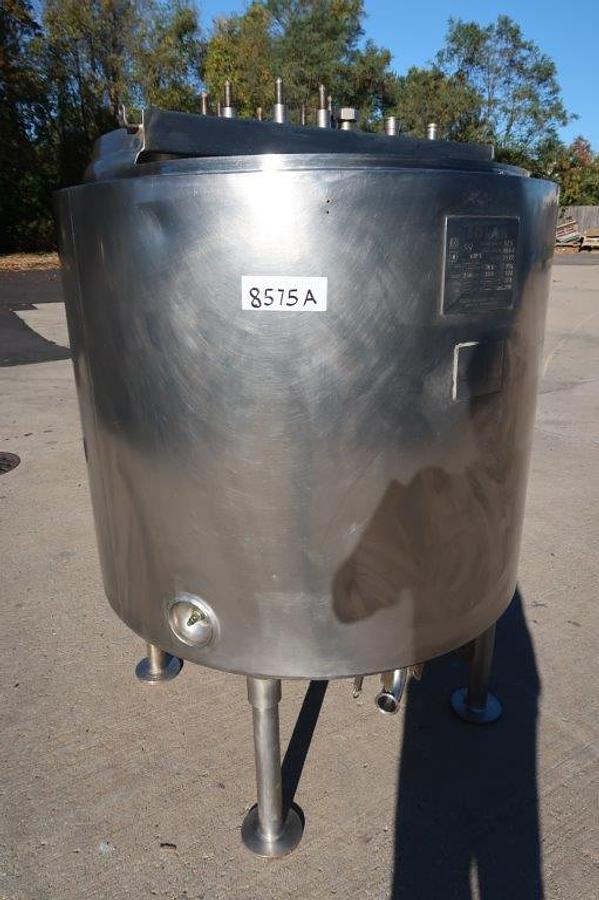
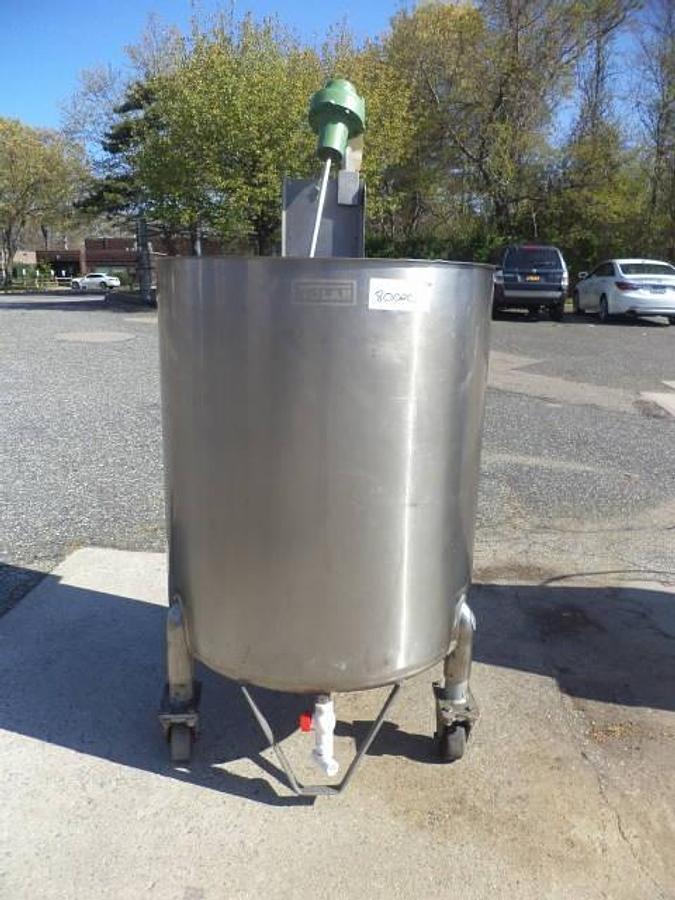
Tolan is known primarily for industrial equipment designed for the food and beverage processing sectors. Their product line includes jacketed kettles, stainless steel tanks, and packaging machinery built to handle the demanding requirements of food-grade production environments. Specific examples include 200-gallon 316 stainless steel jacketed kettles rated for 150 PSI jacket pressure, and 150-gallon portable stainless steel vertical tanks. These are purpose-built pieces of process equipment used in cooking, mixing, storing, and transferring liquids or semi-liquid products in commercial and industrial settings.
Beyond tanks and kettles, Tolan has historically produced packaging machinery aimed at improving production line efficiency and product quality. Their equipment tends to appeal to processors who need reliable, sanitary construction with the durability to handle continuous production cycles. Used Tolan equipment appears regularly in the secondary market because of the brand's reputation for quality builds that hold up well over time, making it a practical choice for buyers looking to equip or expand a processing facility without purchasing brand-new machinery.
What industries commonly use Tolan industrial equipment?
Tolan equipment is most closely associated with the food and beverage industry, where sanitary construction and pressure-rated vessels are essential. Jacketed kettles and stainless steel tanks of the type Tolan produces are used in applications like sauce production, dairy processing, beverage blending, confectionery, and pharmaceutical ingredient mixing. The use of 316 stainless steel in many of their vessels is a strong indicator of food-grade and pharmaceutical-grade suitability, since 316 stainless offers better corrosion resistance to acidic food products and cleaning chemicals than lower grades.
Outside of food and beverage, similar stainless process vessels see use in cosmetics manufacturing, specialty chemical processing, and nutraceutical production. Any industry that requires heated or jacketed mixing, precise temperature control, or sanitary liquid storage could find Tolan equipment applicable to their operation. Buyers from these sectors frequently seek used Tolan equipment because the machines are built to industry standards that translate across multiple processing applications, giving the equipment broad utility even when repurposed from its original production environment.
What should buyers know about purchasing used Tolan equipment versus buying from a manufacturer?
Buying used Tolan industrial equipment from a reputable dealer is a well-established practice in the processing industries. The primary advantage is cost: used process vessels and packaging machinery typically sell for a fraction of what comparable equipment would cost if sourced directly through a manufacturer's sales channel. For buyers equipping a startup facility, scaling up production, or replacing a failed machine quickly, the used market offers access to proven, quality-built equipment at a significantly reduced capital outlay.
The key difference buyers need to understand is that used equipment is sold as-is, which places the responsibility of due diligence squarely on the buyer. There are no manufacturer warranties attached to used machines. This makes the choice of dealer critically important. Buyers should look for dealers with a long track record in industrial and food processing equipment, who can provide detailed inspection opportunities and accurate descriptions of each machine's condition. Checking whether the manufacturer still supports the model in question, including parts availability and technical documentation, is also a smart step before committing to a purchase.
How should buyers inspect used Tolan tanks and kettles before purchasing?
Inspecting used process vessels like jacketed kettles and stainless steel tanks requires attention to both mechanical condition and food-grade integrity. Buyers should look for signs of weld repairs, pitting, corrosion, or damage to the interior lining, since any compromise to the stainless surface can create sanitation problems in food or pharmaceutical applications. For jacketed kettles, the jacket itself should be inspected for leaks, pressure integrity, and the condition of any fittings, valves, or agitator components. Pressure ratings stamped on the vessel and any associated documentation should be verified against the seller's description.
Most reputable used equipment dealers accommodate in-person inspections at their warehouse or, in cases where equipment is still located at a production facility, can arrange access through the selling plant. Video inspections and photo documentation are also commonly offered for buyers who cannot travel to the location. Keep in mind that dealers typically cannot run a full production test on process equipment since operating a food processing line requires separate permitting and production infrastructure. The goal of any inspection is to get an honest, accurate picture of the machine's current mechanical condition so the buyer can make an informed decision.
What does the 316 stainless steel construction on Tolan kettles mean for buyers?
316 stainless steel is a molybdenum-bearing grade of stainless that offers superior resistance to chlorides and acidic substances compared to the more common 304 grade. In practical terms, this means Tolan jacketed kettles built from 316 stainless are better suited for processing tomato-based products, citrus, dairy, brines, and other corrosive food ingredients without degrading over time. It also holds up better to the aggressive cleaning chemicals and sanitizing agents used in food production facilities, which is a significant factor in the long-term serviceability of the vessel.
For buyers in regulated industries, 316 stainless is often a compliance requirement rather than just a preference. FDA food contact regulations, cGMP guidelines in pharmaceutical manufacturing, and various third-party food safety certifications frequently specify 316 stainless for direct-contact surfaces. When purchasing used equipment, confirming the actual grade of stainless used in construction is important, and reputable dealers should be able to confirm this from manufacturer documentation or mill certifications if available. A 200-gallon 316 stainless jacketed kettle rated at 150 PSI is a versatile, high-specification vessel that retains strong value in the used market precisely because of these material properties.
Are replacement parts available for used Tolan industrial equipment?
Parts availability for used industrial equipment depends on several factors, including the age of the machine, the specific model, and whether the manufacturer continues to support that product line. For relatively standard components like valves, fittings, gaskets, agitator seals, and pressure gauges on stainless tanks and kettles, buyers often have the advantage that these are commodity parts available through industrial supply channels regardless of the original equipment manufacturer. A 150 PSI-rated jacketed kettle, for example, uses standard tri-clamp fittings, sanitary valves, and other components that are widely stocked by sanitary process equipment suppliers.
For more specialized components specific to Tolan's packaging machinery or proprietary assemblies, buyers should contact Tolan or their authorized service network directly before purchasing a used machine to confirm what level of parts support is available for that particular model. Age matters significantly here. Older machines may have discontinued parts, while more recent models are more likely to have active support. A good used equipment dealer will be upfront about the model's production era and can often help buyers research parts availability as part of the pre-sale process.
What are typical shipping and delivery considerations for used industrial tanks and kettles?
Shipping large process vessels like jacketed kettles and stainless steel tanks involves more logistical complexity than standard freight. These machines are heavy, often have protruding fittings or agitator assemblies, and require proper blocking, bracing, and packaging to prevent damage during transit. Depending on the size and configuration of the equipment, it may need to be crated rather than simply palletized. Buyers should ask dealers specifically about how the equipment will be packaged, since the level of crating required directly affects shipping costs and the likelihood that the machine arrives in the condition it was inspected.
For larger or heavier equipment, rigging is an added cost that buyers need to factor into the total landed price. Loading a 200-gallon jacketed kettle onto a freight carrier requires proper rigging equipment and experienced riggers, and the same applies on the receiving end if the buyer's facility is not equipped with a loading dock or forklift rated for the weight. Buyers should request a complete breakdown of packaging, rigging, and freight costs from the dealer before finalizing a purchase so there are no surprises. Freight costs vary considerably based on distance, carrier, and the specific dimensions and weight of the equipment.
What payment terms do used industrial equipment dealers typically require?
The standard practice among used industrial equipment dealers is to require payment in full before the equipment is released for shipping. This applies to most transactions, particularly for buyers purchasing from a dealer for the first time. The reasoning is straightforward: used equipment inventory is finite, and dealers need to confirm cleared funds before allocating a specific machine and scheduling it for packaging and pickup. Wire transfer is the most common payment method for larger transactions, though dealers may accept other forms of payment depending on the purchase amount.
Some dealers extend payment terms to established customers with a history of repeat purchases, but this is the exception rather than the rule and is typically arranged on a case-by-case basis. Buyers who need financing should explore third-party equipment financing options through banks or specialty lenders that focus on industrial and manufacturing equipment. Lease-to-own arrangements are also available through some financing companies for qualified buyers, which can make higher-value equipment more accessible without requiring full capital outlay upfront. Buyers should clarify payment expectations with the dealer early in the process to avoid delays once a purchase decision is made.
How do buyers evaluate the condition of a used jacketed kettle or process tank?
Evaluating a used jacketed kettle or stainless process tank goes beyond a visual check. Buyers should request documentation on the vessel's rated working pressure, the condition of the jacket, and the integrity of any agitator, motor, or drive components if included. Interior surface condition is particularly important for food and pharmaceutical applications. Pitting, deep scratches, or compromised welds on the product-contact surface can harbor bacteria and may disqualify the vessel from use in regulated environments without remediation. Any previous repairs to the shell or jacket should be disclosed by the seller.
For pressure-rated vessels, buyers should ask whether the equipment has any current or recent pressure certification documentation, though it is common for used vessels to require re-certification by an authorized inspector before being put back into service at a new facility. The age of the machine, its service history if known, and the type of products it previously processed are all relevant factors. A kettle that processed corrosive materials for many years may show more wear than one used for lower-acidity applications. Thorough inspection, either in person or through detailed video and photo documentation provided by the dealer, is the most reliable way to assess condition before purchase.
What documentation should buyers request when purchasing used Tolan industrial equipment?
Documentation is one of the most valuable things a buyer can obtain alongside used process equipment. For jacketed kettles and pressure vessels, the most important documents include the original manufacturer's spec sheet or data plate information confirming materials of construction, working pressure ratings, and vessel capacity. If available, ASME certification documentation for pressure vessels is highly useful, as it confirms the vessel was built to recognized engineering standards. Manuals covering operation, maintenance, and cleaning procedures are also worth requesting, as they simplify integration into a new facility and help maintenance staff understand the equipment properly.
For packaging machinery and more mechanically complex Tolan equipment, wiring diagrams, parts lists, and any available service records can significantly reduce the learning curve and help buyers source replacement parts when needed. Not every used machine will come with a complete documentation package, particularly older equipment that has changed hands multiple times. In those cases, buyers can sometimes obtain documentation directly from the manufacturer by providing the machine's model and serial number. A reputable dealer will provide whatever documentation they have and be transparent about what is and is not available for a given machine.