Category
Manufacturer
Model
Tokushu Kika
Tokushu Kika is a key player in the manufacturing of specialized machinery for the food and beverage industry. They are known for their advanced processing and packaging systems that enhance production efficiency. Tokushu Kika’s focus on quality and innovation makes them a trusted partner for manufacturers.
FAQ:
What types of machinery does Tokushu Kika manufacture?
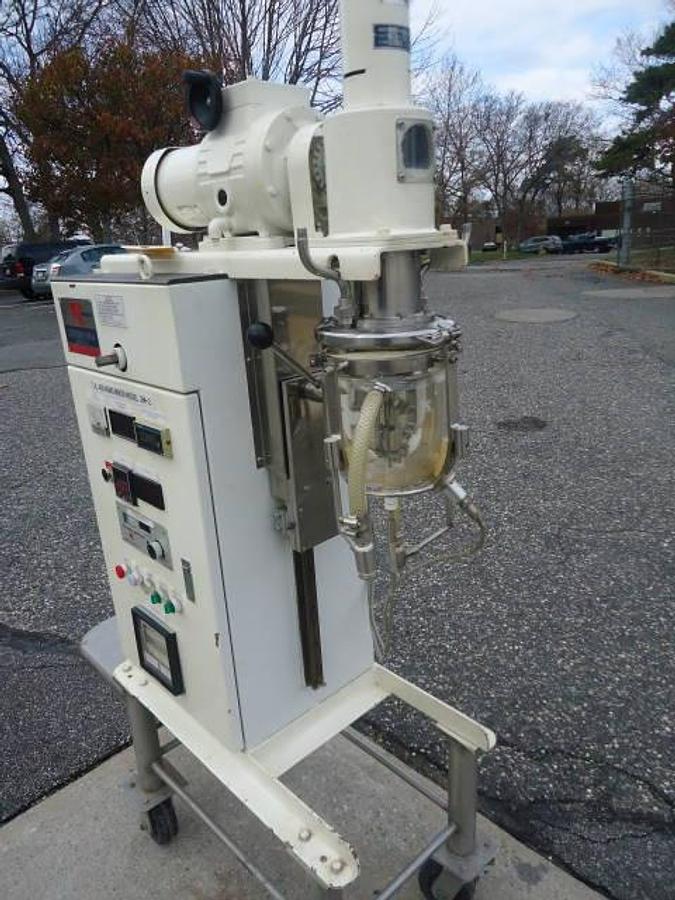
Tokushu Kika is a Japanese industrial machinery manufacturer that specializes in processing and packaging equipment, with a strong focus on the food and beverage industry. Their product lineup includes advanced mixing, blending, and homogenizing systems, along with other specialized production machinery designed to improve throughput and consistency in manufacturing environments. One well-known example is the T.K. "Agi-Homo" Mixer, a triple-motion lab-size mixer that reflects the brand's engineering precision. Tokushu Kika equipment is built to handle demanding production conditions, and the brand has developed a reputation for quality that extends well beyond Japan's domestic market.
Beyond food and beverage, Tokushu Kika machinery is also used in chemical processing and other industrial manufacturing sectors where precision mixing, emulsification, and homogenization are critical. The company's focus on specialized, high-performance equipment means their machines tend to serve niche but important roles on production lines. Buyers in the secondary market are often drawn to Tokushu Kika equipment specifically because of this precision engineering heritage, which makes even older models attractive for facilities that need reliable, purpose-built machinery without the cost of purchasing equivalent equipment outright.
What industries commonly use Tokushu Kika equipment?
Tokushu Kika machinery is most closely associated with the food and beverage industry, where their mixing, homogenizing, and processing systems are used to handle everything from sauces and dairy products to emulsified beverages and specialty food formulations. Their equipment is designed to meet the rigorous hygiene and consistency standards that food manufacturers require, which has made the brand a trusted name among production facilities that prioritize quality output. The triple-motion mixing technology found in certain Tokushu Kika models, for example, is particularly valued in applications where thorough blending and uniform texture are essential.
Outside of food and beverage, Tokushu Kika equipment sees regular use in chemical manufacturing, cosmetics production, and pharmaceutical processing, all of which share a need for precise emulsification and mixing capabilities. Industrial manufacturers in these sectors often seek out used Tokushu Kika machines because the equipment's build quality translates well across different material types and production scales. Lab-size models are especially popular in research and development settings, where smaller batches need to be processed with the same level of control as full-scale production runs.
How do I verify the condition of a used Tokushu Kika machine before purchasing?
Verifying the condition of any used industrial machine before committing to a purchase is one of the most important steps a buyer can take, and Tokushu Kika equipment is no exception. Reputable used machinery dealers will typically offer inspection options that include in-person visits, live video walkthroughs, or recorded video documentation of the machine's current state. The goal is to get an accurate picture of the equipment's working order, including visible wear, component integrity, and any signs of prior repairs or modifications. If a machine is still installed at a production facility, some dealers can arrange an inspection at the actual plant, where the equipment may even be running in active use.
It's worth noting that most used equipment dealers are not set up to run full production tests, since that level of operation requires different permitting and infrastructure than a typical dealer facility maintains. What buyers can realistically expect is a thorough visual and mechanical inspection, along with any available service history or documentation. For Tokushu Kika machines, buyers should also be aware that technical documents and manuals may be in Japanese, so factoring in translation support or consulting with someone familiar with the equipment is a practical step before finalizing a purchase. Selecting a dealer with a long track record of selling industrial machinery in the food processing or chemical sectors adds another layer of confidence to the process.
Are spare parts readily available for Tokushu Kika machinery?
Spare parts availability for Tokushu Kika equipment can vary depending on the age and model of the machine, and this is a factor buyers should investigate before completing a purchase. As a Japanese manufacturer producing specialized industrial machinery, Tokushu Kika's parts supply chain is primarily centered in Japan. For buyers outside Japan, sourcing replacement components may require working directly with the manufacturer, engaging a Japanese industrial parts broker, or identifying compatible third-party alternatives. The older the machine, the more important it becomes to confirm parts availability upfront, since some models may have limited or discontinued support from the manufacturer.
Before purchasing a used Tokushu Kika machine, it's a good idea to contact the manufacturer directly to ask about parts availability and the level of technical support they can offer for a specific model and serial number. Manufacturers can often provide clarity on whether a machine is still within a supported product generation or whether it has aged out of active parts production. Buyers who skip this step can find themselves with capable equipment that becomes difficult to maintain over time. A reputable used machinery dealer should be able to provide the machine's model information and specifications to help facilitate that conversation with the manufacturer.
Is used Tokushu Kika machinery available to international buyers?
Used Tokushu Kika machinery does reach international buyers, and the brand's reputation for precision engineering drives demand well outside Japan. Specialized used industrial equipment dealers in North America, Europe, and other regions periodically list Tokushu Kika machines, particularly mixing and processing equipment suited to food, chemical, and pharmaceutical applications. International buyers should be prepared to account for additional logistics considerations, including export documentation, customs clearance, and the cost of international freight, all of which can add meaningfully to the total landed cost of the equipment.
Shipping heavy industrial machinery across borders requires careful planning. Machines need to be properly packaged, crated, or palletized to prevent damage in transit, and larger equipment may require specialized rigging for both loading at the origin and unloading at the destination. These services carry additional costs that vary based on machine size, weight, and destination country. Buyers should ask dealers for a detailed breakdown of packaging, rigging, and freight costs before making a purchasing decision, so there are no surprises when the equipment arrives. Working with a dealer experienced in international machinery sales can simplify much of this process.
What is the typical price range for used Tokushu Kika machines?
Pricing for used Tokushu Kika machinery varies considerably based on the type of equipment, its age, condition, and how specialized the application is. Smaller lab-size units, such as bench-top mixers or compact processing systems, tend to be priced lower than full-scale production equipment. Larger industrial systems designed for high-volume food or chemical processing can carry significantly higher price tags, reflecting both the original manufacturing cost and the ongoing demand for reliable used equipment in these sectors. Because Tokushu Kika is known for precision engineering, even older machines in good working condition often hold their value reasonably well on the secondary market.
Buyers should also factor in costs beyond the machine's listed price. Shipping, rigging, crating, customs duties for international purchases, and any refurbishment or parts replacement needed after delivery can all affect the total cost of ownership. Getting a clear picture of these additional expenses before committing to a purchase helps avoid budget surprises. Contacting a dealer directly for a quote on a specific machine, along with a full breakdown of estimated delivery costs, is the most reliable way to understand what a particular piece of Tokushu Kika equipment will actually cost to put into service.
How does shipping work when purchasing heavy used industrial machinery?
Shipping used industrial machinery, including larger Tokushu Kika processing and mixing systems, is a logistics-intensive process that requires more planning than standard freight. The machine must first be properly prepared for transport, which typically involves draining fluids, securing moving parts, and packaging the equipment with appropriate palletization or custom crating to prevent damage during handling and transit. The level of packaging required depends on the machine's size, fragility, and the distance it needs to travel. Buyers should ask dealers specifically what preparation is included in the sale price and what may be billed separately.
For heavier equipment, specialized rigging is often required to safely load the machine onto a truck or container at the dealer's location, and again to unload it at the buyer's facility. This rigging work adds to the overall cost and requires coordination between the dealer, the freight carrier, and the receiving site. International shipments add another layer of complexity, including export documentation, customs brokerage fees, and import duties at the destination country. Buyers are strongly encouraged to request a full landed cost estimate from the dealer before finalizing a purchase, so the total investment, including freight and handling, is clearly understood from the start.
What should buyers know about payment terms when purchasing used industrial equipment?
Payment practices in the used industrial machinery market differ from typical retail transactions. Most used equipment dealers require payment in full before a machine is released for shipping. This protects the dealer from non-payment on high-value items and is standard practice across the industry. Buyers who are purchasing from a dealer for the first time should expect to pay the full invoice amount prior to the equipment leaving the dealer's facility. Wire transfer is the most common payment method for transactions of this size, though dealers may accept other forms depending on the circumstances.
Some dealers extend payment terms or other arrangements to repeat customers with an established purchasing history, but this is not the norm for first-time buyers. Before making a payment, buyers should confirm the machine's condition through inspection, clarify all associated costs including shipping and rigging, and ensure they have reviewed any available documentation on the equipment. Since used machinery is typically sold as-is, conducting due diligence before payment is made, rather than after, is the most practical way to protect the investment.
Can buyers get technical support for Tokushu Kika machinery after purchase?
Technical support for used Tokushu Kika equipment after purchase generally depends on two sources: the machinery dealer and the manufacturer. Used equipment dealers typically sell machinery as-is and are not set up to provide ongoing technical service or application support, so buyers should not expect post-sale maintenance coverage from the dealer. That said, a dealer with deep experience in food processing or industrial equipment may be able to offer practical guidance or help connect buyers with relevant resources based on their familiarity with the equipment.
For more substantive technical support, buyers should reach out directly to Tokushu Kika or their regional representatives to understand what manufacturer-level assistance is available for a specific model. The level of support can vary based on the machine's age and whether it falls within a product generation that the manufacturer still actively supports. Buyers should also be aware that technical documentation for Tokushu Kika equipment may be available primarily in Japanese, so having access to translation resources or a bilingual technical contact can be helpful for setup, operation, and troubleshooting. Establishing this support infrastructure before the machine arrives on-site is a practical step that can prevent delays when the equipment is being commissioned.
What is the T.K. Agi-Homo Mixer and what is it used for?
The T.K. "Agi-Homo" Mixer is a lab-size, triple-motion mixing unit produced by Tokushu Kika. The triple-motion design refers to a mixing mechanism that combines multiple simultaneous movement patterns, typically including revolution, rotation, and high-speed homogenizing action, to achieve thorough blending and emulsification of materials in a single vessel. This type of mixer is particularly well-suited for applications that require uniform particle distribution, stable emulsions, or consistent texture across a batch. Lab-size models are scaled for smaller volumes, making them appropriate for research and development work, pilot batch testing, or small-scale specialty production.
In practical use, the Agi-Homo Mixer is found in food processing facilities working with products like dressings, sauces, creams, and other emulsified goods, as well as in cosmetic and pharmaceutical labs where mixing precision is critical. The triple-motion approach reduces the need for multiple separate pieces of equipment by handling agitation and homogenization in one unit, which can simplify workflow and reduce floor space requirements. Used lab-size units like this are popular on the secondary market because they offer a cost-effective entry point into high-quality Japanese mixing technology for facilities that don't need full production-scale equipment.