Category
Manufacturer
Model
Thermovac
Thermovac is known for its vacuum packaging solutions, primarily serving the food processing and packaging industries. Their machines are designed to extend the shelf life of products while maintaining quality and freshness. Thermovac’s innovative technology provides manufacturers with efficient and reliable packaging options.
FAQ:
What is Thermovac vacuum packaging equipment used for?
Thermovac is a brand focused on vacuum packaging solutions for the food processing and packaging industries. Their machines are built to extend the shelf life of products by removing air from packaging before sealing, which slows oxidation and microbial growth. Common applications include meat packing, deli operations, seafood processing, cheese packaging, and prepared food production. The technology is designed to maintain product quality and freshness through the distribution and storage chain.
Beyond standard food items, Thermovac equipment is well suited for packaging liquids, marinades, and irregularly shaped products. This is largely because chamber-style vacuum sealers, which are the type Thermovac is associated with, pull a vacuum around the entire bag rather than just suctioning from the outside. That design difference makes them far more capable than external suction models for wet or loose products. Industrial and commercial food manufacturers rely on this type of equipment for consistent, repeatable results across high-volume production runs.
What types of Thermovac vacuum packaging machines are available on the used equipment market?
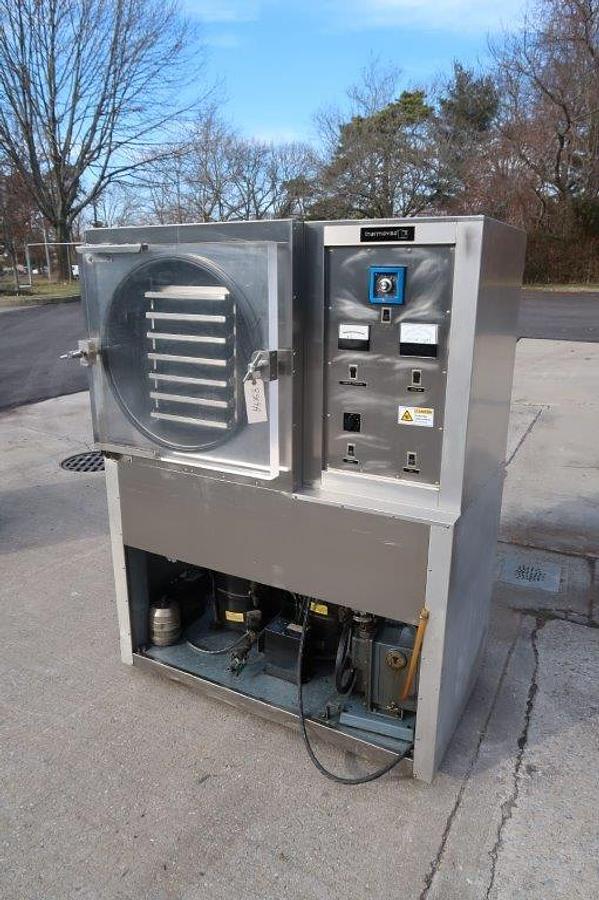
The used market for Thermovac equipment includes chamber vacuum sealers in a range of sizes, from countertop single-chamber units suited for smaller operations to large floor-standing double-chamber models built for high-throughput production environments. Freeze dryers with stainless steel cabinetry are also available under the Thermovac brand, which speaks to the breadth of their vacuum-based processing solutions beyond standard bag sealing. Buyers will find machines with varying sealing bar lengths, chamber dimensions, and vacuum pump capacities depending on what was previously used in the selling facility.
When shopping used Thermovac equipment, it helps to know the specific model number and its original specifications, including vacuum pump capacity measured in cubic meters per hour, cycle time, and whether the control panel is analog or digital. Programmable vacuum and sealing cycles are a feature buyers frequently prioritize, as they allow a single machine to handle different product types and bag thicknesses without manual adjustment between runs. Checking these specifications against your production requirements before purchase will help ensure the machine fits your application.
Why do food processors prefer chamber vacuum sealers over external suction models?
Chamber vacuum sealers create a full vacuum inside an enclosed chamber, which means the air is evacuated from both the bag and the surrounding space simultaneously. When the vacuum cycle ends, atmospheric pressure seals the bag uniformly. This approach handles liquids, marinades, and wet products without pulling liquid into the sealing mechanism, which is a persistent problem with external suction machines that only evacuate air from inside the bag itself. For meat packing, deli operations, and prepared food production, the chamber design is essentially the industry standard.
Practically speaking, chamber machines also tend to produce more consistent seals across varying bag thicknesses and materials. They support a wider range of compatible bag types, including multilayer barrier films, which are important for long shelf life applications. The trade-off is that chamber machines are larger and heavier than external suction units, but for commercial and industrial food processing, that footprint is generally acceptable given the performance advantages. Used chamber vacuum sealers from established brands like Thermovac are a common choice for operations looking to add capacity without the cost of purchasing equipment directly from a manufacturer.
What should buyers look for when evaluating used Thermovac vacuum packaging equipment?
The most important mechanical components to assess are the vacuum pump and the sealing bar assembly. The pump is the heart of the machine, and its condition directly affects cycle time and the quality of the vacuum achieved. Ask about the pump's service history, oil condition if it's an oil-lubricated model, and whether it reaches the vacuum level specified for that unit. Sealing bar wires and Teflon tape are wear items that need periodic replacement, so inspecting their current state gives you a sense of how recently the machine was serviced.
Beyond the mechanical side, pay attention to the chamber and cabinetry condition. Stainless steel construction is a major selling point in food-industry equipment because it resists corrosion and meets hygiene standards, but dents, deep scratches, or signs of rust on seams can indicate heavy use or poor maintenance. Request an in-person or video inspection so you can see the machine operate through a complete cycle. Reputable used equipment dealers will typically accommodate video walkthroughs or live demonstrations, and some machines may still be installed at production facilities where an in-person inspection can be arranged. Understanding the full picture of the machine's current working order before purchase is the buyer's responsibility with used equipment sold as-is.
What materials and bag types are compatible with Thermovac vacuum packaging machines?
Thermovac chamber vacuum sealers are generally compatible with a broad range of vacuum packaging films and bags, including standard polyethylene pouches, multilayer barrier bags, nylon-poly combinations, and embossed vacuum bags. The specific compatibility depends on the machine's sealing bar temperature range and the thickness of the material, so checking the machine's specifications against your bag supplier's recommendations is always a good step. Multilayer barrier films are particularly common in food processing applications where extended shelf life and resistance to moisture or oxygen transmission are priorities.
For specialty applications like modified atmosphere packaging (MAP) or skin packaging, additional equipment or specific machine configurations may be required beyond what a standard Thermovac chamber sealer provides. Buyers sourcing used equipment should confirm whether the machine they are evaluating supports the specific bag dimensions and film types used in their operation. Chamber size is a practical limiting factor as well, since the bag must fit flat within the chamber for a proper seal. Knowing your bag dimensions before evaluating a used machine will help narrow the search considerably.
How difficult is it to operate and maintain Thermovac vacuum packaging equipment?
Chamber vacuum sealers are generally considered straightforward to operate once the basic cycle settings are established. Operators set the vacuum level, seal time, and in some models the gas flush parameters, then run consistent cycles without significant adjustment between bags of the same product. Machines with digital control panels offer programmable presets that make it easier to switch between product types, while analog models require manual adjustment of dials and timers. For most food processing environments, training an operator on a chamber vacuum sealer takes a matter of hours rather than days.
Maintenance requirements are modest but consistent. Oil-lubricated vacuum pumps need regular oil checks and changes on a schedule determined by run hours and operating conditions. Sealing bar components, including the wire element and Teflon cover tape, are consumable parts that wear with use and need periodic replacement. The chamber lid seal and gasket should be inspected regularly for cracks or deformation, as a compromised gasket will prevent the machine from reaching proper vacuum levels. When sourcing a used Thermovac machine, it is worth consulting the manufacturer directly to understand parts availability for the specific model and age of the equipment, as older models may have limited support or discontinued components.
Are replacement parts and accessories available for used Thermovac vacuum packaging machines?
Parts availability for used vacuum packaging equipment varies based on the age of the machine and the manufacturer's current support policies. For commonly used components like sealing bar elements, Teflon tape, gaskets, and vacuum pump oil, third-party suppliers often carry compatible parts that fit multiple brands and models, which can reduce dependency on the original manufacturer's parts catalog. These consumable items are typically straightforward to source regardless of machine age.
For more machine-specific components like control boards, vacuum pumps, or proprietary chamber parts, availability becomes more model-dependent. Buyers considering a used Thermovac machine should contact the manufacturer directly before purchasing to ask which parts are still stocked and what level of technical support is available for that particular model. This step is especially important for older equipment. A reputable used equipment dealer will often have this information on hand or can help facilitate the inquiry. Understanding parts availability upfront avoids situations where a machine is functional at purchase but difficult to keep running if a specific component fails later.
What is the typical price range for used Thermovac vacuum packaging equipment?
Pricing for used vacuum packaging equipment varies considerably based on machine type, size, age, condition, and included accessories. Smaller countertop chamber sealers in the used market can range from a few hundred to a few thousand dollars, while larger floor-standing industrial chamber machines with longer sealing bars and higher-capacity vacuum pumps typically command prices in the range of several thousand to tens of thousands of dollars depending on their specifications and condition. Freeze dryers, which involve more complex vacuum and refrigeration systems, generally sit at the higher end of the price spectrum.
Beyond the purchase price, buyers should factor in the full landed cost of the equipment. Shipping costs for heavy industrial machines can be substantial, particularly if the machine requires crating, rigging for loading, or specialized freight handling. Some machines may need electrical modifications to match the buyer's facility voltage and phase requirements, which adds to the total cost of ownership. Requesting a detailed quote that includes packaging, rigging, and freight before committing to a purchase gives a more accurate picture of what the equipment will actually cost to put into service.
What should buyers understand about inspecting used vacuum packaging equipment before purchase?
Inspections are a critical part of buying used industrial equipment, and reputable dealers will typically offer in-person visits, live video walkthroughs, or recorded video of the machine in operation. The goal is to get an accurate picture of the equipment's current working condition before any money changes hands. For vacuum packaging machines specifically, a useful inspection includes watching the machine complete a full cycle, checking the vacuum level it achieves, inspecting the sealing bar components, and examining the chamber and exterior for signs of wear or damage.
Some machines may still be installed and running at the facility where they are being sold, which allows for an inspection under actual production conditions. Others may be decommissioned and sitting in storage, in which case a powered-on test of the vacuum and sealing functions is still possible even without running product through the machine. Keep in mind that most equipment dealers do not have food production permits, so testing with actual product is generally not something a dealer can accommodate. Buyers should use the inspection to assess mechanical function and physical condition, then make their own determination about production readiness based on what they observe.
What are the typical payment and shipping terms when buying used vacuum packaging equipment?
Most used equipment dealers require full payment before a machine is released for shipping. This is standard practice in the industry, though some dealers extend payment terms to repeat customers or buyers with established relationships. Payment is typically accepted by wire transfer, and buyers should clarify accepted payment methods early in the process to avoid delays. Confirming all transaction details in writing before payment is sent is a straightforward way to protect both parties.
Shipping costs for vacuum packaging equipment depend heavily on the machine's size and weight, the distance it is traveling, and the level of packaging required to protect it in transit. Smaller machines may ship on a standard pallet, while larger industrial units often require custom crating and heavy-duty rigging for safe loading and unloading. Buyers should request a detailed breakdown of packaging, rigging, and freight costs from the dealer before finalizing the purchase, as these charges can add meaningfully to the total cost. For very large machines, confirming that the receiving facility has appropriate unloading equipment, such as a forklift or loading dock, is also an important logistical step.