Category
Manufacturer
Model
The Whole Package
The Whole Package delivers comprehensive packaging solutions, primarily targeting the food and consumer goods industries. They are known for their innovative packaging machinery, including filling, sealing, and labeling equipment. Their ability to provide tailored solutions makes them a valuable partner for manufacturers looking to streamline their production processes.
FAQ:
What types of packaging machinery does The Whole Package manufacture?
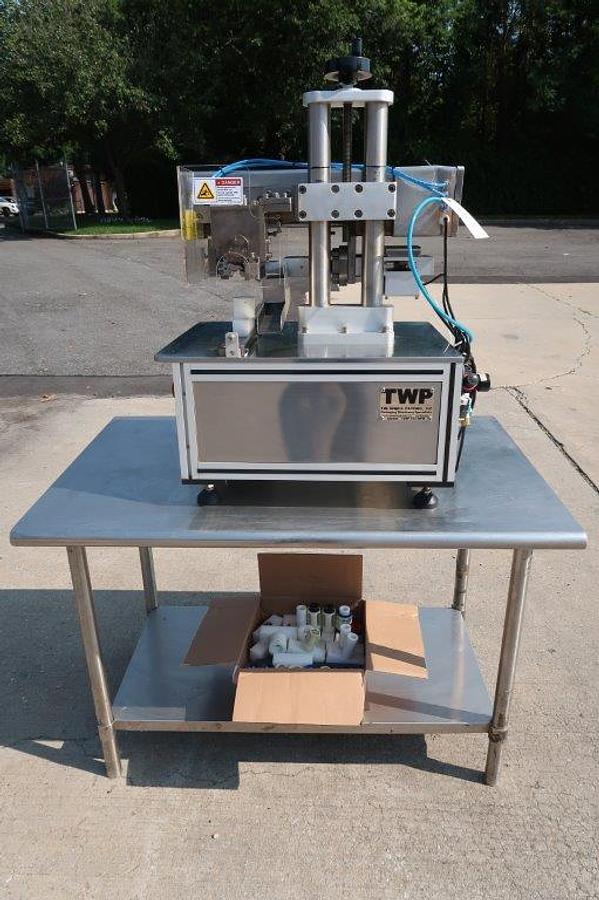
The Whole Package specializes in packaging machinery designed primarily for the food and consumer goods industries. Their equipment lineup includes filling machines, sealing equipment, and labeling machinery, with a focus on solutions that help manufacturers streamline production lines. One specific machine available in the used market is the TWP Semi-Automatic Ultrasonic Tube Sealer and Trimmer, which is a good example of the kind of specialized, application-specific equipment they produce.
Ultrasonic tube sealers are particularly valued in industries like cosmetics, pharmaceuticals, and food packaging because they create clean, consistent seals without heat-related distortion. The Whole Package built a reputation for delivering tailored packaging solutions rather than one-size-fits-all equipment, which means their machines tend to be well-suited to specific production environments. Buyers searching for used The Whole Package machinery should look for equipment that matches their container type, fill volume, and throughput requirements, and confirm with the seller that the machine configuration aligns with their production needs before purchasing.
What is an ultrasonic tube sealer and what is it used for?
An ultrasonic tube sealer is a packaging machine that uses high-frequency sound waves to generate localized heat at the point of contact between two layers of tube material, bonding them together into a clean, airtight seal. Unlike conventional heat sealers, ultrasonic sealing does not rely on external heating elements, which means it produces less thermal stress on the surrounding material and can handle a wider range of tube substrates including laminate, plastic, and some foil-lined tubes. Many models also incorporate a trimming function that cuts the sealed end to a uniform length for a finished, shelf-ready appearance.
These machines are widely used in the cosmetics, personal care, pharmaceutical, and food industries for sealing products like toothpaste, lotions, creams, ointments, and condiments. Semi-automatic versions, like the TWP model from The Whole Package, require an operator to load and position the tube but automate the sealing and trimming cycle itself. This makes them a practical choice for small to mid-size production runs where full automation is not yet justified. When evaluating a used ultrasonic tube sealer, buyers should ask about the seal jaw condition, generator functionality, and whether the machine can be tested or demonstrated prior to purchase.
What should buyers know about purchasing used packaging machinery instead of buying from a manufacturer?
Buying used packaging machinery is a well-established practice across the food, beverage, pharmaceutical, and consumer goods industries. The primary advantage is cost: used equipment can be purchased at a fraction of the price of comparable manufacturer-direct machinery, freeing up capital for other parts of the operation. For companies scaling up production, adding a secondary line, or testing a new packaging format, used machinery offers a low-risk way to expand capacity without a major capital commitment.
The tradeoffs are worth understanding clearly. Used machines are sold as-is, meaning the buyer takes on responsibility for the machine's condition and any repairs or upgrades needed after purchase. This puts a premium on the inspection process. Buyers should request in-person or video inspections, ask detailed questions about the machine's service history, and if possible, observe it running. It is also worth contacting the manufacturer directly to understand what level of technical support, spare parts, and documentation is still available for that specific model and age of machine. Selecting a used equipment dealer who specializes in packaging machinery and has a long track record in the industry is one of the most reliable ways to reduce risk in the buying process.
How do I inspect a used packaging machine before buying it?
Inspecting a used packaging machine thoroughly before committing to a purchase is one of the most important steps in the buying process. Reputable used equipment dealers typically offer buyers the option to inspect machines in person, via live video call, or through detailed video recordings of the equipment. In some cases, machines are still installed at the facility where they were used, and an inspection can be arranged at that location, sometimes with the machine still in operation. Buyers should ask specifically whether the machine can be powered on and cycled during the inspection, even if running actual product is not possible.
During an inspection, focus on the mechanical condition of wear components like sealing jaws, belts, sensors, and actuators, as well as the condition of electrical panels and wiring. Ask the seller about the machine's age, how many production hours it has logged, what maintenance was performed, and whether any parts have been replaced. For specialized equipment like ultrasonic sealers, confirm that the ultrasonic generator is functioning correctly, as this is typically the most costly component to replace. Keep in mind that dealers generally do not have production permits that would allow them to run full product trials, so buyers should factor in the possibility of commissioning costs once the machine arrives at their facility.
What industries most commonly buy used packaging machinery?
The food and beverage industry is consistently the largest buyer of used packaging machinery, driven by the need to manage costs while keeping up with high production volumes and frequent packaging format changes. Consumer goods companies, including personal care and household products manufacturers, are also major buyers, particularly for filling, sealing, and labeling equipment. Pharmaceutical and nutraceutical companies purchase used packaging equipment as well, though they tend to apply more rigorous validation requirements and often focus on machines with documented service histories and available technical documentation.
Cosmetics manufacturers are frequent buyers of tube sealing equipment specifically, given the prevalence of tube-format products in that category. Contract packagers, or co-packers, represent another significant buyer segment because they often need to add equipment quickly to handle new client contracts without the lead times associated with ordering manufacturer-direct machinery. For all of these industries, the decision to buy used is usually driven by a combination of budget constraints, speed of availability, and the ability to source equipment that is no longer in production but still well-suited to the task at hand.
What factors affect the total cost of owning used packaging equipment?
The purchase price of a used packaging machine is only one part of the total cost of ownership. Buyers should budget for shipping and rigging, which can vary significantly depending on the size and weight of the machine, the distance it needs to travel, and the level of crating or palletization required to protect it in transit. Larger machines may require specialized rigging equipment for loading and unloading, which adds to the landed cost. Getting a clear breakdown of these charges from the seller before finalizing a purchase helps avoid surprises.
Once the machine arrives, installation, commissioning, and operator training are additional cost considerations. If spare parts or wear components need to be sourced, their availability and pricing depend heavily on the age and model of the machine and the manufacturer's current support posture. Older or discontinued models may require sourcing parts from third-party suppliers or fabricating custom components, both of which take time and money. Downtime costs should also factor into the calculation: a machine that requires significant repair before it can run reliably may cost more in lost production than the savings on the purchase price suggested. Buyers who account for all of these variables upfront are better positioned to make sound purchasing decisions.
How does semi-automatic packaging equipment differ from fully automatic machinery?
Semi-automatic packaging machines require an operator to perform one or more steps in the packaging cycle manually, such as loading containers, positioning product, or initiating each cycle. The machine then handles the mechanical process, whether that is sealing, filling, labeling, or trimming, automatically. This approach works well for lower to mid-volume production runs where the cost of full automation is not justified, or where product variety requires frequent changeovers that would be cumbersome on a fully automated line.
Fully automatic machines handle the entire process from feeding to finished output with minimal human intervention, making them better suited to high-volume, consistent production environments. The tradeoff is cost, both upfront and in terms of maintenance complexity. For many small and mid-size manufacturers, semi-automatic equipment like the TWP Semi-Automatic Ultrasonic Tube Sealer and Trimmer represents a practical middle ground: it reduces labor compared to fully manual processes while keeping capital expenditure manageable. When evaluating which level of automation is appropriate, buyers should consider their current production volume, anticipated growth, product mix, and the skill level of their operators.
What should I ask a used packaging equipment dealer before making a purchase?
Before committing to a used packaging machine purchase, there are several questions worth asking the dealer. Start with the machine's history: How old is it? How many hours has it run? Was it in continuous production or intermittent use? Has it been serviced or refurbished, and if so, what work was done? Ask whether any components have been replaced and whether documentation like manuals, wiring diagrams, or maintenance records are available. These details give a clearer picture of what condition the machine is actually in and what it might need after delivery.
Also ask about the inspection process. Can the machine be powered on and demonstrated, either in person or via video? If it is still installed at a production facility, can an in-person visit be arranged? Ask for a full breakdown of shipping, crating, and rigging costs so you understand the total landed price. Clarify payment terms, since most used equipment dealers require full payment prior to shipping. Finally, reach out to the machine's manufacturer to understand what parts and technical support are still available for that model, because the dealer's ability to answer that question accurately will tell you a lot about their expertise in the category.
What are the typical payment terms when buying used packaging machinery?
Most used packaging equipment dealers require full payment before a machine is released for shipping. This is standard practice in the industry and reflects the fact that used equipment transactions carry more inherent variability than purchases from a manufacturer with established credit terms. Buyers should be prepared to wire funds or arrange another form of verified payment prior to the machine leaving the seller's facility. Some dealers may offer payment terms to repeat customers with whom they have an established relationship, but this is the exception rather than the rule for first-time buyers.
Buyers who need financing for equipment purchases typically arrange it independently through equipment financing companies or their own banking relationships rather than through the dealer directly. It is worth exploring these options before beginning your equipment search so that you are ready to move quickly when the right machine becomes available, since desirable used equipment can sell fast. Understanding the full payment picture upfront, including the machine price, shipping, rigging, and any applicable taxes or import duties, allows buyers to make accurate budget decisions and avoid delays in closing a transaction.
How is used packaging machinery typically shipped, and what should buyers expect?
Shipping used packaging machinery involves more planning than standard freight because of the size, weight, and mechanical sensitivity of the equipment. Smaller machines are typically palletized and wrapped, while larger or more complex equipment may require custom crating to prevent damage during transit. The level of packaging required affects the shipping cost, and buyers should ask the dealer specifically what preparation will be done before the machine is handed off to the carrier. Inadequate packaging is one of the most common causes of transit damage, so it is a detail worth confirming in writing.
Larger machines may also require specialized rigging for loading at the origin and unloading at the destination. This includes forklifts, cranes, or other heavy-lift equipment, and the cost of rigging is typically separate from the freight charge. Buyers should factor in unloading requirements at their own facility and arrange appropriate equipment in advance. Freight costs vary based on distance, machine dimensions and weight, and the shipping method chosen. Getting a full landed cost estimate from the dealer before finalizing the purchase, covering crating, rigging, freight, and any applicable fuel surcharges, is the best way to avoid unexpected expenses after the sale.