Category
Manufacturer
Model
FAQ:
What is a TGM machine and what is it used for?
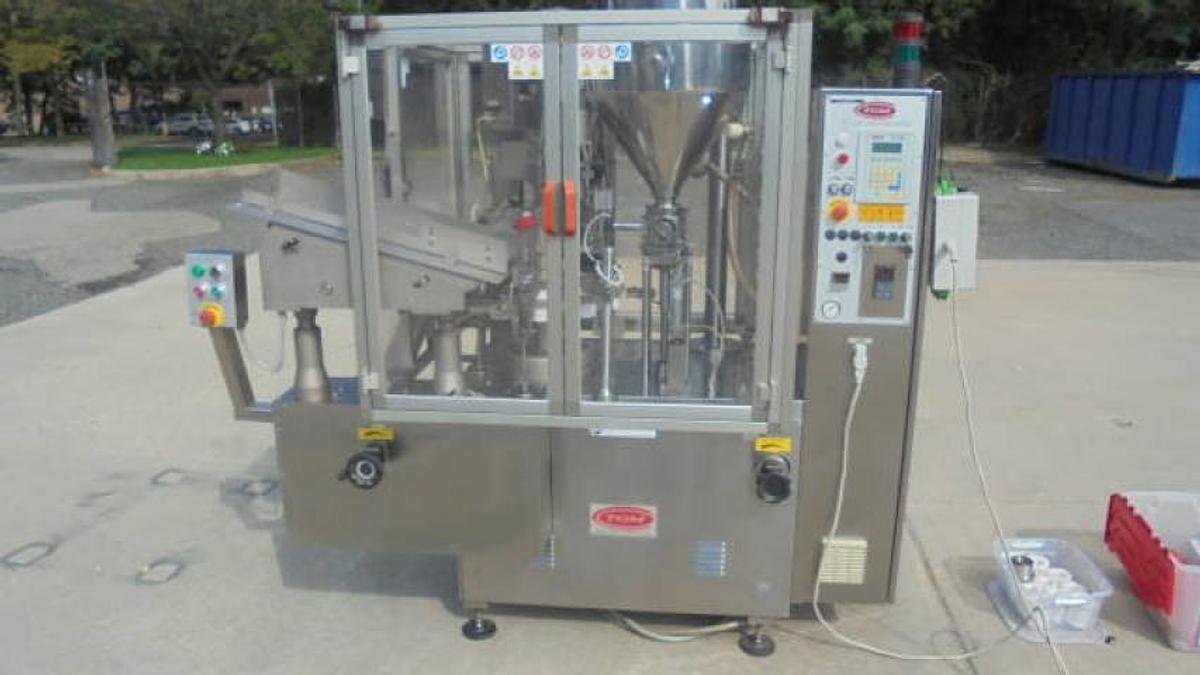
TGM is an Italian manufacturer known for producing tube filling and sealing machines used across a range of industries, including cosmetics, pharmaceuticals, food production, and personal care. Their machines are designed to fill plastic or laminate tubes with creams, gels, pastes, ointments, and similar viscous products, then seal and trim the tubes automatically as part of a continuous production line. TGM equipment is generally considered industrial-grade, built to handle high-volume output with consistent results.
A commonly available model on the used market is the TGM Hot Air Automatic Plastic Tube Filling and Sealing Machine, which uses hot air to create a clean, tamper-evident seal on plastic tubes. This type of machine is valued for its speed, precision, and ability to handle a variety of tube diameters and fill volumes with relatively quick changeovers. Manufacturers across multiple sectors rely on TGM equipment because the machines are built to run in demanding production environments over long service lives, which also makes them a practical choice when sourced as used equipment.
What types of TGM machines are commonly available on the used market?
The used machinery market most frequently sees TGM tube filling and sealing machines, with hot air sealing models being among the most sought-after. These machines vary in output speed (measured in tubes per minute), tube diameter range, fill volume capacity, and the type of sealing mechanism used, such as hot air, ultrasonic, or hot jaw sealing. Some models are semi-automatic, requiring an operator to load tubes manually, while others are fully automatic with integrated tube loading, filling, sealing, and discharge systems.
Buyers shopping for used TGM equipment should pay close attention to the specific model number and its listed specifications, since production capacity and compatibility with tube materials can vary significantly between generations of the same machine line. It is worth requesting the machine's original documentation or spec sheet from the seller when available, as this helps confirm fill range, cycle speed, electrical requirements, and any tooling or format parts included with the machine. Knowing exactly which tube sizes and materials a given unit is configured for can save considerable time and expense after purchase.
What should I inspect before buying a used TGM tube filling and sealing machine?
Buying used industrial equipment requires a more thorough pre-purchase review than buying new machinery, because the condition of mechanical and electrical components can vary widely depending on how the machine was operated and maintained. Key areas to inspect on a used TGM machine include the filling nozzles and dosing system for wear or corrosion, the sealing jaw or hot air components for signs of heat damage, the tube feeding and discharge mechanisms for worn parts, and the overall condition of the electrical panel and controls. Asking the seller for maintenance records or a service history, if available, gives useful context about how the machine was cared for.
Reputable used equipment dealers will typically accommodate in-person inspections at their facility, or arrange video inspections and detailed photo documentation if travel is not practical. In some cases, a machine may still be installed at the plant where it was used, and an inspection can be arranged there directly. Keep in mind that most dealers do not have the production permits required to run a full product trial, so inspections generally focus on mechanical function, movement of components, and visual condition rather than a live production run. Having a qualified technician or someone familiar with TGM equipment present during the inspection adds an important layer of due diligence.
What warranty or after-sale support can I expect when buying a used TGM machine?
Used machinery is typically sold on an as-is basis, which is standard practice across the industry. Unlike purchasing directly from a manufacturer, buying a used TGM machine through a dealer does not normally include a manufacturer's warranty or any formal guarantee on the equipment's condition or performance. This makes the inspection process especially important, since the buyer takes on responsibility for confirming the machine's condition before completing the purchase.
To reduce risk, buyers should prioritize dealers with a long track record of selling used packaging and processing equipment, and ideally dealers who specialize in the type of machinery being purchased. It is also worth contacting TGM directly to ask about parts availability and technical support for the specific model under consideration, since older or discontinued models may have limited manufacturer support. A knowledgeable seller should be transparent about the machine's age, any known issues, and whether documentation such as manuals or electrical schematics is available, all of which affect how serviceable the machine will be after purchase.
What is the typical price range for used TGM machines?
Pricing for used TGM tube filling and sealing machines depends on several factors: the model, its production speed and capacity, the age of the machine, its overall condition, and what tooling or format parts are included. Entry-level or older semi-automatic models may be available at a fraction of the cost of a comparable current-production machine, while fully automatic, high-speed models in good working condition command significantly higher prices. In general, used TGM equipment can represent substantial savings compared to sourcing equivalent new machinery, which is a primary reason buyers seek out the used market.
Beyond the purchase price, buyers should factor in the full landed cost of the machine before committing. This includes shipping and freight charges, any rigging or crating required for safe transport, import duties if applicable, installation costs, and the cost of any tooling or spare parts needed to get the machine running for a specific tube format. Requesting a detailed quote from the seller that breaks out all of these costs gives a much clearer picture of the total investment and helps avoid surprises after the sale.
Are used TGM machines a practical choice for small or mid-sized manufacturers?
Used TGM tube filling and sealing machines can be a very practical fit for small and mid-sized manufacturers, particularly those producing cosmetics, topical pharmaceuticals, or food products in tubes. The used market allows smaller operations to access industrial-grade equipment at a cost that would be difficult to justify if purchasing new. A well-maintained used TGM machine can deliver the same output quality and speed as when it was first built, making it a cost-effective way to increase production capacity without a major capital outlay.
That said, smaller operations should be realistic about their maintenance capabilities before purchasing. TGM machines are precision-built equipment, and keeping them running reliably requires access to spare parts and someone with the technical knowledge to service them. Buyers should confirm parts availability for the specific model they are considering, and factor in the cost of any consumables or wear items that will need regular replacement. For businesses without in-house maintenance staff, identifying a qualified service technician familiar with tube filling equipment before the machine arrives is a smart step.
How are used TGM machines typically shipped, and what should buyers expect for freight costs?
Shipping a used TGM tube filling and sealing machine is not the same as shipping standard freight. These are heavy, precision machines that require careful preparation to prevent damage in transit. Depending on the size and weight of the unit, the seller will typically palletize or crate the machine before shipment. Larger or heavier machines may require custom crating and professional rigging to load safely onto a flatbed or into a container, and these services add to the overall shipping cost.
Buyers should ask the dealer for a complete breakdown of packaging, rigging, and freight charges before finalizing a purchase, since these costs can be significant and vary based on the machine's size, the origin point, and the destination. For international shipments, import duties, customs clearance fees, and any local delivery or unloading costs at the destination should also be factored in. Getting a full landed cost estimate upfront prevents unexpected expenses and allows for an accurate comparison between machines listed at different price points.
What are the key specifications to review when evaluating a used TGM tube filling machine?
The most important specifications to review are output speed (tubes per minute), the range of tube diameters the machine can handle, minimum and maximum fill volumes, the type of sealing system (hot air, ultrasonic, or hot jaw), and the electrical requirements (voltage, phase, and frequency). These specs determine whether a given machine is actually compatible with the tubes and products a buyer intends to run. A machine listed at an attractive price is not a good deal if it cannot accommodate the tube sizes or fill weights required for the buyer's products.
Beyond the core specs, it is worth asking about the condition and completeness of the format parts included with the machine, such as tube holders, filling nozzles, and sealing tooling. Format parts are often specific to tube diameter and can be expensive to source or fabricate separately. Buyers should also ask about the machine's control system, since older machines may use outdated PLCs or relay logic that can be difficult to troubleshoot or repair. If the seller has the machine's original documentation or operator manual available, requesting a copy before purchase is strongly recommended.
Are spare parts and consumables readily available for used TGM machines?
Parts availability for TGM machines depends largely on the model and its age. TGM has been manufacturing tube filling equipment for decades, and for many of their more widely used models, parts can still be sourced either directly from the manufacturer or through third-party suppliers that specialize in packaging machinery components. Commonly replaced items such as filling nozzles, sealing elements, O-rings, and belts are generally easier to find than model-specific structural components or proprietary electronic parts.
Before purchasing a used TGM machine, it is worth contacting TGM or a qualified service provider to ask specifically about parts support for that model. Older or discontinued models may have limited availability for certain components, which can affect the machine's long-term serviceability. Some buyers also choose to purchase a used machine that comes with a stock of spare parts from the previous owner, which can be a meaningful advantage. Understanding the parts situation in advance helps buyers avoid a scenario where a minor mechanical issue becomes a prolonged downtime problem due to a difficult-to-source component.
What maintenance does a TGM tube filling and sealing machine require?
Regular maintenance on a TGM tube filling and sealing machine generally covers lubrication of moving parts, inspection and replacement of wear items like sealing elements and O-rings, cleaning of the filling system to prevent product buildup, and periodic checks of the electrical and pneumatic systems. The frequency of these tasks depends on how intensively the machine is used. In a high-volume production environment, some maintenance tasks may be required daily or weekly, while lower-volume operations may follow a less frequent schedule.
For a used machine, it is good practice to perform a thorough mechanical review and replace any worn consumables before putting the machine into production, regardless of what the seller reports about its condition. This baseline service gives the buyer a known starting point and reduces the risk of unexpected downtime early in operation. Having the machine's original maintenance manual is helpful here, as it will outline the manufacturer's recommended service intervals and lubrication points. If the manual is not available, a technician experienced with TGM or similar tube filling equipment can usually assess the machine's service needs based on a physical inspection.