Category
Manufacturer
Model
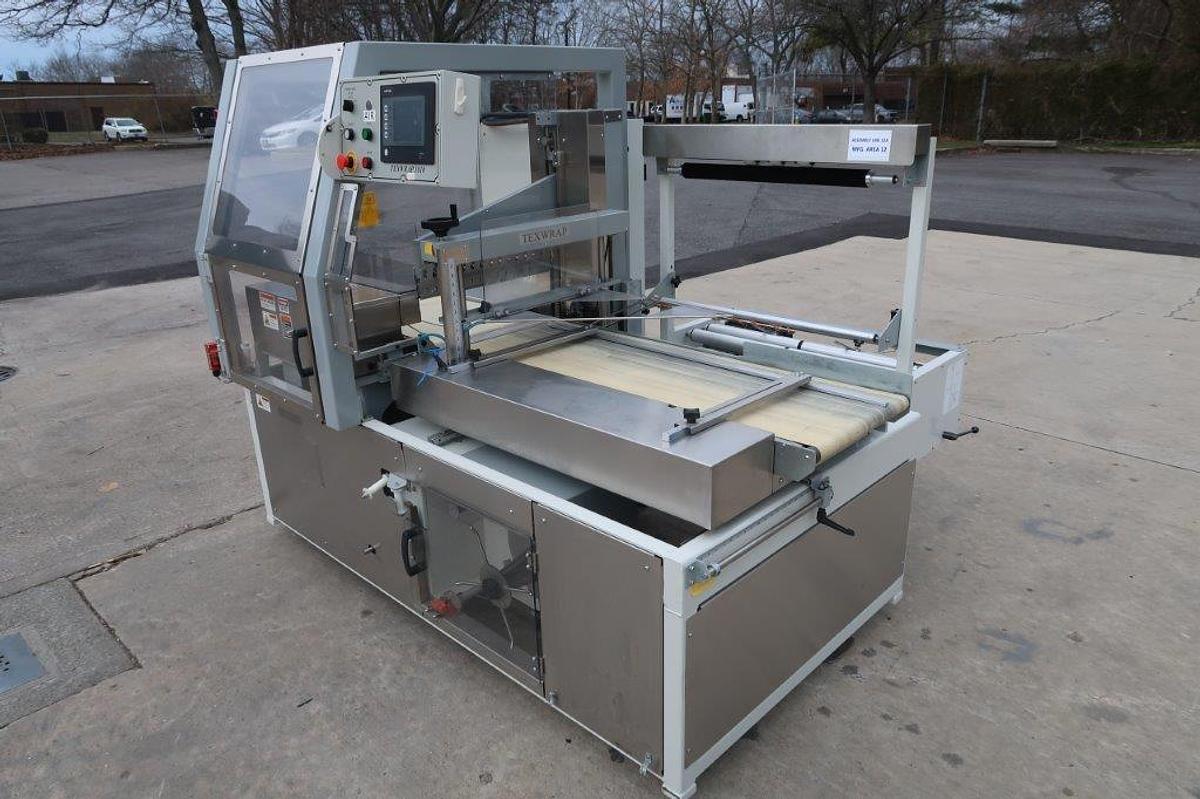
Texwrap
Texwrap is recognized for its advanced shrink wrapping and bundling solutions, catering to a variety of industries including food, beverage, and consumer goods. Their product line features a range of shrink wrappers and heat tunnels designed to enhance packaging efficiency and product presentation. Texwrap’s commitment to quality and innovation positions them as a trusted partner in packaging machinery.
FAQ:
What types of Texwrap shrink wrap machines are available on the used market?
Texwrap produces several categories of shrink wrapping equipment, and used models tend to reflect the brand's core strengths in side-seal and L-bar configurations. Side-seal machines like the Texwrap 1810EH are among the more commonly available used models, designed for automatic, continuous-motion wrapping that suits higher-volume production lines. L-bar sealers are also part of the Texwrap lineup and are typically used for lower-to-mid volume applications where versatility across product sizes is a priority. Both configurations are paired with heat tunnels that shrink the film tightly around the product after sealing.
Beyond the sealing mechanism, Texwrap machines span both semi-automatic and fully automatic configurations. Semi-automatic models require an operator to manually feed products into the machine, making them a practical fit for smaller operations or facilities with variable product runs. Fully automatic models integrate product infeed, sealing, and heat tunnel functions into a continuous process, which is better suited for high-throughput packaging lines. When shopping for used Texwrap equipment, buyers will typically find machines that served industries such as food and beverage, publishing, pharmaceuticals, and general consumer goods, so the available inventory reflects that range of applications.
What industries commonly use Texwrap shrink wrappers?
Texwrap shrink wrappers have been widely deployed across a broad range of industries, largely because the machines handle diverse product shapes and sizes without requiring extensive retooling. Food and beverage is one of the most common applications, where shrink wrapping provides tamper evidence, moisture resistance, and a clean retail-ready appearance for items like multipacks, trays, and individual products. Consumer goods manufacturers also rely on Texwrap equipment to bundle products, add promotional overwrap, or simply protect items during distribution.
Beyond food and consumer goods, Texwrap machines have a solid presence in publishing and print media, where books, magazines, and catalogs are shrink-wrapped for retail display or direct mail. The pharmaceutical and personal care sectors use these machines for tamper-evident packaging and bundling. This cross-industry versatility is one reason used Texwrap equipment retains its appeal on the secondary market. A machine that previously ran food products can often be cleaned and reconfigured for a different product category, giving buyers flexibility when sourcing used equipment.
What shrink film types are compatible with Texwrap shrink wrap machines?
Texwrap shrink wrappers are designed to run both polyolefin (POF) and PVC shrink films, which covers the two most widely used shrink packaging materials in commercial production. Polyolefin film is the more popular choice in food packaging because it is FDA-compliant, produces minimal odor when sealed, and delivers a clear, glossy finish. It also tends to be stronger and more puncture-resistant than PVC at similar gauges, which reduces film breaks and packaging line downtime. POF is available in centerfold and single-wound rolls in a range of gauges, typically between 45 and 100 gauge for most shrink wrapping applications.
PVC film remains in use for non-food applications like retail products, stationery, and software packaging, where its lower cost and easy handling are advantages. However, PVC produces fumes when heated, so proper ventilation is required. When purchasing a used Texwrap machine, buyers should confirm the specific film width and roll diameter specifications the machine was designed to accommodate, as these vary by model. Matching the machine's film compatibility to the buyer's existing film supply is an important step before finalizing a purchase, and reputable used equipment dealers can typically provide the machine's original specifications to assist with this evaluation.
How fast can a Texwrap shrink wrapper process products?
Throughput on Texwrap shrink wrappers varies considerably depending on the model, configuration, and the size of the products being packaged. Fully automatic Texwrap side-seal machines are capable of processing anywhere from roughly 30 to over 100 packages per minute under optimal conditions, making them well-suited for high-volume production environments. Semi-automatic models operate at lower speeds, typically in the range of 10 to 30 packages per minute, since an operator is involved in the feeding process. The heat tunnel speed, film type, and product dimensions all influence the practical throughput achievable on any given line.
When evaluating a used Texwrap machine, buyers should ask the dealer for the machine's rated speed and, if possible, review any available documentation or specifications for the specific model. Keep in mind that actual production speeds on used equipment may differ from published specs depending on the machine's age, maintenance history, and current condition. Requesting a video inspection or in-person walkthrough of the machine in operation can give buyers a more realistic sense of what to expect before committing to a purchase.
Are used Texwrap shrink wrappers suitable for small businesses, or are they primarily industrial machines?
Used Texwrap equipment covers a wide enough range of models that both small businesses and large industrial operations can find suitable options. Semi-automatic Texwrap models are a reasonable fit for smaller operations, craft producers, or businesses that package products in batches rather than on a continuous line. These machines tend to have a smaller footprint, lower power requirements, and simpler operation than their fully automatic counterparts, which lowers the barrier to entry for businesses that are new to shrink wrapping or have modest volume needs.
For larger operations, fully automatic Texwrap machines with integrated heat tunnels represent a significant step up in speed, consistency, and labor efficiency. Buying used rather than purchasing new equipment can make these higher-end machines accessible to mid-sized businesses that might not have the budget for a factory-direct purchase. The key is matching the machine's production capacity to the buyer's actual volume requirements. Buying more machine than a business needs leads to underutilization, while buying a machine that is too small creates bottlenecks. A knowledgeable used equipment dealer can help buyers identify which Texwrap model aligns with their production volumes and product specifications.
What should buyers know about inspecting a used Texwrap shrink wrapper before purchasing?
Inspecting a used shrink wrapper before purchase is one of the most important steps a buyer can take to avoid surprises after delivery. Reputable used equipment dealers typically offer inspection options that include in-person visits, live video calls, or pre-recorded video walkthroughs of the machine. The goal is to get an accurate picture of the machine's current condition, including the state of the sealing components, the heat tunnel elements, the conveyor belt, and the control panel. Buyers should look for signs of excessive wear on the sealing bars and wires, as these are consumable parts that affect seal quality and may need replacement.
One important caveat is that most used equipment dealers do not run live production tests with actual film and product, since operating a full packaging line requires different permitting and facility setup than a machinery dealership typically maintains. Some machines may still be in service at a production facility, in which case the dealer may be able to arrange an inspection at the plant where the equipment is still running. For decommissioned machines, buyers should ask detailed questions about the machine's service history, the reason it was taken out of service, and whether any components have been replaced. Consulting with Texwrap's parent company, ProMach, can also give buyers a sense of parts availability and service support for the specific model they are considering.
What is the price range for used Texwrap shrink wrappers?
Pricing for used Texwrap shrink wrappers varies based on the model, configuration, age, and overall condition of the machine. Entry-level semi-automatic models in working condition can be found in the range of a few thousand dollars, making them accessible for smaller operations or businesses just starting to add shrink wrapping to their packaging line. Fully automatic side-seal machines with integrated heat tunnels, which are designed for high-volume continuous production, typically command higher prices, often ranging from $10,000 to $30,000 or more depending on the model's capabilities and condition.
Buyers should factor in more than just the purchase price when budgeting for used equipment. Shipping, rigging, and any necessary reconditioning or replacement parts can add meaningfully to the total cost of acquisition. Larger machines require heavier-duty rigging for loading and unloading, which adds to logistics costs. It is worth asking the dealer for a full breakdown of all costs, including packaging, freight, and any required installation services, to arrive at an accurate landed cost before making a buying decision.
What are the typical payment terms when buying used Texwrap equipment?
Payment practices in the used industrial equipment market are fairly consistent across dealers. In most cases, full payment is required before a machine is released for shipping. This is standard practice for used equipment transactions because the machines are sold as-is, and dealers need to confirm cleared funds before arranging logistics. Some dealers may offer payment terms or financing arrangements to repeat customers or buyers with established relationships, but this is not the norm for first-time transactions.
Buyers should clarify payment expectations early in the purchasing process to avoid delays. Wire transfer is the most common payment method for equipment transactions of this size, though some dealers accept other forms of payment depending on the purchase amount. If financing is a consideration, buyers may also want to explore third-party equipment financing options, as some lenders specialize in used machinery and can provide terms that make larger purchases more manageable. Getting clarity on payment terms upfront, alongside shipping and inspection details, helps ensure a smooth transaction from agreement to delivery.
How does Texwrap's background under ProMach affect parts and service availability for used machines?
Texwrap operates as a brand within the ProMach group of companies, one of the larger packaging machinery manufacturers and integrators in North America. This affiliation is meaningful for buyers of used Texwrap equipment because ProMach's broader service and parts network can provide support across a range of Texwrap models. Buyers looking for replacement sealing wires, heating elements, conveyor components, or control parts have a more established channel to source those items compared to brands with less organized aftermarket support.
That said, the availability of parts and technical support for any used machine depends on the model's age and whether that specific model is still within the manufacturer's supported range. Older or discontinued models may have limited parts availability, which is why buyers are encouraged to contact Texwrap or ProMach directly before finalizing a purchase on an older machine. Getting a clear picture of what support is available for a specific model number helps buyers anticipate ongoing maintenance costs and avoid situations where a machine becomes difficult to keep running due to parts scarcity.
What should buyers expect for shipping and delivery of a used Texwrap shrink wrapper?
Shipping used packaging machinery requires more planning than standard freight because the machines are heavy, sometimes bulky, and susceptible to damage if not properly secured for transit. Texwrap shrink wrappers, particularly fully automatic models with integrated heat tunnels, can be substantial in size and weight. Dealers typically arrange for the machine to be palletized or crated before shipment, with the level of packaging affecting the overall shipping cost. Buyers should ask the dealer specifically what packaging method will be used and whether custom crating is recommended for their destination or transit conditions.
For larger machines, rigging is often required at both the origin and destination points. This involves specialized equipment and labor to safely move heavy machinery onto and off of transport vehicles, and these costs are usually separate from standard freight charges. Buyers should request a full cost breakdown that includes packaging, rigging, freight, and any fuel surcharges to understand the true landed cost of the equipment. Lead times for shipping can vary based on the dealer's location, the buyer's location, and carrier availability, so it is worth discussing estimated delivery timelines early in the process to align with any production planning needs.