Category
Manufacturer
Model
FAQ:
What is a Teel pump and what was it used for?
Teel is a legacy industrial pump brand that was historically sold through Grainger industrial supply and became widely recognized as a dependable workhorse across a broad range of pumping applications. The brand built its reputation over decades by producing durable, cast iron construction pumps that could handle demanding conditions in agricultural, industrial, commercial, and residential settings. Common applications included water transfer, sump pumping, utility pumping, irrigation, and both shallow and deep well jet pumping. The variety of models Teel produced made it a go-to choice for facilities managers, contractors, and farm operators who needed reliable fluid handling equipment without a lot of complexity.
Teel pump types spanned centrifugal pumps, submersible pumps, utility pumps, and jet pumps, covering a wide spectrum of flow rates and head pressures. Many models featured cast iron housings and impellers, which contributed to their longevity and made them well-suited for continuous-duty or heavy-use environments. That durability is a big reason why used Teel pumps continue to circulate in the secondary market long after the brand itself was absorbed into the Dayton product line under the Grainger umbrella. For buyers who are familiar with the brand from past installations or who need a replacement unit that matches existing system specifications, finding a used Teel pump can be a practical and cost-effective solution.
Are Teel pumps still being manufactured?
Teel pumps have largely been discontinued as a standalone brand. Over time, the product line was absorbed into the Dayton brand, which is also distributed through Grainger. This means that if you walk into a Grainger branch today looking for a Teel pump, you are unlikely to find one listed under that name. The transition happened gradually, and many of the pump designs and specifications carried over into the Dayton lineup, so in some cases a Dayton equivalent may serve as a functional replacement for an older Teel unit.
Because Teel pumps are no longer in production under that brand name, the used and surplus equipment market has become the primary source for buyers specifically seeking Teel units. This is particularly relevant for facilities or operations that already have Teel pumps installed and want to maintain consistency across their equipment, or for buyers who have prior experience with a specific Teel model and trust its performance characteristics. Used industrial equipment dealers who specialize in pumps and fluid handling equipment are the most reliable places to locate Teel pumps for sale. When purchasing through the secondary market, buyers should verify the model number, condition, and compatibility with their system requirements before committing to a purchase.
What types of used Teel pumps are most commonly available on the secondary market?
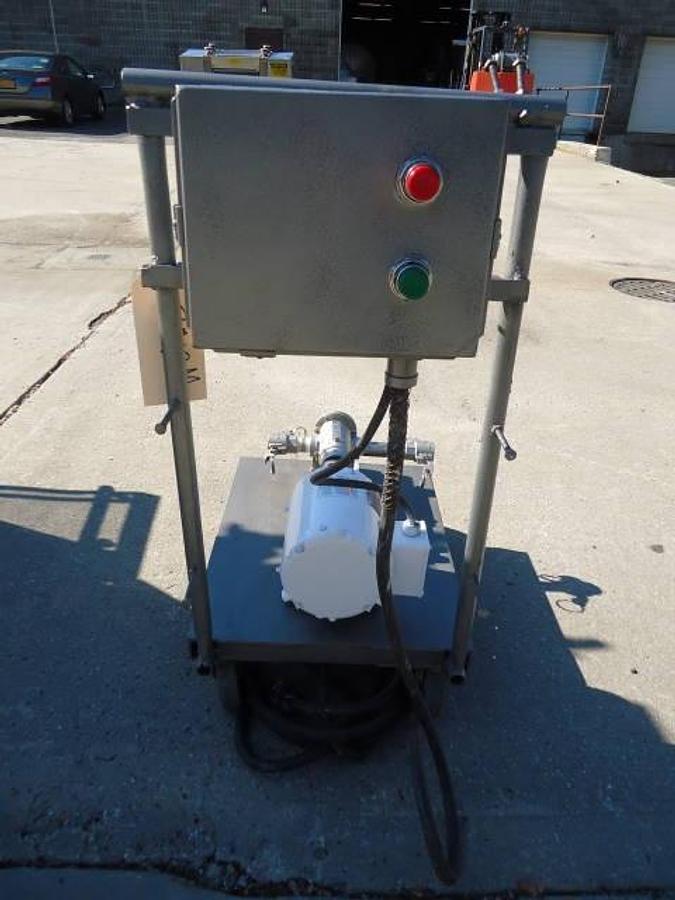
The used equipment market tends to surface a fairly consistent range of Teel pump types, reflecting the models that were most widely deployed during the brand's active production years. Centrifugal pumps are among the most frequently available, given how broadly they were used in industrial and agricultural water transfer applications. Rotary pumps, utility pumps, and jet pumps also appear with regularity, and submersible models show up periodically depending on what surplus inventory dealers have acquired. A specific example of what turns up in the used market is the Teel 1.25 inch by 1.25 inch rotary pump paired with a 0.75 HP motor, a compact unit suited for lower-volume transfer tasks.
Cast iron construction models tend to be the most sought after because of their durability and resistance to wear over long service lives. Buyers sourcing used Teel pumps should pay attention to the port sizes, horsepower rating, and pump type to confirm compatibility with their specific application. It is also worth cross-referencing the Teel model number against Dayton equivalents, since parts and technical documentation may be more accessible under the Dayton designation. Reputable used equipment dealers who specialize in pumps and industrial machinery are generally the best source for accurate model information and condition assessments before purchase.
What should I inspect when buying a used Teel pump?
Buying a used pump requires a more hands-on evaluation process than purchasing equipment directly from a manufacturer. The most important areas to examine are the pump housing, impeller, and seals. Cast iron housings should be checked for cracks, pitting from corrosion, or evidence of prior repairs. The impeller condition directly affects pump performance, so any visible wear, erosion, or damage to the impeller vanes is worth noting. Shaft seals and mechanical seals are wear items that may need replacement, so understanding their current condition helps estimate the cost to bring the pump back to full operating status.
Reputable used equipment dealers typically accommodate in-person inspections, virtual walkthroughs, or video captures of the machine so buyers can get an accurate picture of its current condition before committing to a purchase. Some equipment may still be installed and operating at a facility, in which case the dealer can arrange an inspection at the actual site. Keep in mind that most dealers do not have the permitting or production setup to run a pump through a full operational test simulating real process conditions, so visual and mechanical inspections are the standard approach. Buyers should ask specific questions about the pump's service history, the reason it was decommissioned, and whether any components have been replaced or repaired. This information, combined with a thorough visual inspection, gives a much clearer picture of what the pump will need before it goes back into service.
Are used Teel pumps worth buying?
For the right buyer and the right application, a used Teel pump can represent solid value. The brand earned a strong reputation for durability during its production years, and cast iron models in particular tend to age well when they have been properly maintained. Because Teel is no longer manufactured under that name, the used market is the only way to acquire one, which makes condition and sourcing all the more important. Buyers who have existing Teel installations and want a matching replacement, or those who are familiar with a specific model's performance characteristics, often find that a well-maintained used unit meets their needs at a fraction of what comparable new equipment would cost.
The key to getting value from a used pump purchase is selecting a reputable dealer with a track record in industrial fluid handling equipment. Dealers who specialize in pumps understand the technical details that matter, can provide accurate condition assessments, and are better positioned to answer questions about a specific model's history and suitability for a given application. Since used equipment is sold as-is, the burden of inspection falls on the buyer, which is why working with a knowledgeable specialist rather than a general surplus dealer makes a meaningful difference. Taking the time to inspect the pump thoroughly, understanding what reconditioning may be needed, and factoring those costs into the total price will determine whether a specific used Teel pump is a good investment for your situation.
How do I find replacement parts for a Teel pump?
Finding parts for a discontinued brand like Teel requires a bit more legwork than sourcing parts for actively manufactured equipment, but it is not impossible. The first step is to identify the exact model number, which is typically stamped on the pump housing or listed on a nameplate. Once you have that, it is worth cross-referencing the Teel model against the Dayton product line, since many Teel designs were carried forward under the Dayton brand. Grainger, which distributes Dayton products, may be able to confirm whether a Dayton equivalent exists and whether parts are available for it. Manufacturers of common pump components such as seals, impellers, and bearings may also be able to supply compatible parts based on the pump's dimensional specifications rather than the brand name alone.
For older or more obscure Teel models, the secondary market for pump parts can be a useful resource. Industrial surplus dealers, pump repair shops, and online marketplaces that specialize in used machinery components sometimes carry Teel-specific parts or can source them from decommissioned units. Contacting the manufacturer directly (or Grainger as the historical distributor) to ask about parts availability for a specific model and age of pump is also a reasonable step. The response you get will give you a realistic picture of how much ongoing support to expect. Buyers considering a used Teel pump should factor parts availability into their decision, particularly for older models where sourcing components may require custom fabrication or substitution with compatible aftermarket parts.
What is the typical price range for used Teel pumps?
Pricing for used Teel pumps varies considerably depending on the pump type, horsepower, size, condition, and the specific model. Smaller utility and rotary pumps with fractional horsepower motors tend to fall at the lower end of the price spectrum, while larger centrifugal or jet pump units with higher horsepower ratings command higher prices. Condition is a major pricing factor. A pump that has been recently decommissioned from a well-maintained facility and shows minimal wear will typically be priced higher than one that has been in storage for years or shows signs of significant use.
Because Teel is a discontinued brand, pricing is driven by supply and demand in the used equipment market rather than any manufacturer list price. Buyers should research comparable listings across multiple used equipment dealers to develop a realistic sense of market value for the specific model they are seeking. It is also important to account for the full landed cost of the equipment, which includes shipping, any required rigging for loading and unloading, and the cost of any reconditioning or parts replacement needed before the pump goes back into service. A lower purchase price can quickly be offset by high freight costs or the need for significant repairs, so evaluating total cost of ownership rather than sticker price alone leads to better purchasing decisions.
What size Teel pump do I need for my application?
Selecting the right pump size involves matching the pump's flow rate, head pressure, and port size to the demands of your specific application. Flow rate is measured in gallons per minute (GPM) and tells you how much fluid the pump can move within a given time period. Head pressure, measured in feet of head or PSI, reflects the pump's ability to push fluid against resistance, whether that is vertical lift, pipe friction, or system back pressure. These two parameters together define the pump's performance curve, and the right pump is one whose curve aligns with your system's operating requirements at the most efficient point.
For Teel pumps specifically, port size is another practical consideration. A 1.25 inch inlet and outlet, for example, suits lower-volume transfer tasks, while larger port sizes accommodate higher flow applications. Horsepower is a related factor but should not be used as the sole selection criterion. A pump with more horsepower than the application requires will consume excess energy, while an undersized pump will struggle to meet demand and may wear out faster. If you are replacing an existing Teel pump, matching the model number or at minimum the key specifications of the outgoing unit is the most straightforward approach. For new installations or system changes, consulting with a pump specialist or using the manufacturer's pump selection charts to match the unit to your system curve will produce the best results.
How does shipping work when buying a used Teel pump?
Shipping costs and logistics for used pumps depend on the size and weight of the unit, the packaging required to protect it in transit, and the destination. Smaller fractional horsepower rotary or utility pumps can often be palletized and shipped via standard freight carriers at relatively modest cost. Larger pumps or those with motors attached may require more substantial crating to prevent damage during handling, and that added packaging work is typically reflected in the shipping cost. Buyers should ask the dealer specifically what packaging method will be used and whether crating is included in the quoted price or billed separately.
For heavier or larger units, rigging may be required to safely load the pump onto a truck at the dealer's facility and unload it at the destination. Rigging is a specialized service that adds to the total cost and should be discussed upfront so there are no surprises when the equipment arrives. Most used equipment dealers require full payment before a machine ships. Once you have a shipping quote, calculate the full landed cost by adding the purchase price, packaging, freight, and any unloading or rigging costs at your end. That total figure is what the pump actually costs you, and comparing landed costs across different dealers or listings gives a more accurate basis for evaluating which offer represents the best value.
How do I verify the condition of a used Teel pump before purchasing?
Verifying condition before purchase is one of the most important steps in buying used industrial equipment, and reputable dealers will generally support the process in several ways. In-person inspections are the most thorough option, allowing a buyer or their representative to physically examine the pump housing, check shaft play, inspect visible seals and gaskets, look for corrosion or cracks in the casting, and assess the condition of the motor if one is included. For buyers who cannot travel to the dealer's location, virtual inspections via video call or detailed video walkthroughs of the machine are a common alternative. These can cover much of the same ground as an in-person visit when the dealer is willing to show specific areas of the pump on request.
It is worth understanding that most used equipment dealers do not have the production setup or permitting to run a pump through a full operational test under process conditions. Inspections are therefore primarily visual and mechanical rather than performance-based. Buyers should ask the dealer about the pump's history, including how long it was in service, what fluid it was handling, and the reason it was taken out of service. That context helps interpret what you see during the inspection. If the pump was decommissioned from an active facility, it may be possible to arrange an inspection at the plant while the equipment is still installed, which can provide additional confidence about its operating condition. Choosing a dealer who specializes in pumps and fluid handling equipment, rather than a general surplus dealer, also increases the likelihood of getting accurate and complete condition information.