Category
Manufacturer
Model
Tecnicoll
Tecnicoll specializes in providing machinery for the textile and apparel industries. They are known for their cutting and sewing equipment that enhances production efficiency. Tecnicoll’s commitment to quality ensures that their machines meet the rigorous demands of textile manufacturing.
FAQ:
What types of machinery does Tecnicoll produce?
Tecnicoll is an Italian brand that specializes in textile bonding and laminating equipment, with a particular focus on hot melt adhesive application systems, laminating lines, and coating equipment for textiles. Their machines are built to handle the precise demands of technical textile manufacturing, where consistent adhesive control and material compatibility are critical to production quality. The brand is well regarded in the nonwoven fabric sector, where their equipment supports high-volume, repeatable output.
Beyond laminating and bonding lines, Tecnicoll also produces cutting and sewing equipment designed to improve throughput in apparel and textile operations. Some of their equipment, such as stainless steel electric mix kettles and tanks, serves auxiliary production roles in facilities that work with adhesives, coatings, or chemical compounds used in textile finishing. This range makes Tecnicoll a recognizable name across multiple stages of the textile manufacturing process.
What industries use Tecnicoll textile machinery?
Tecnicoll machinery is used across a broad range of industries that rely on bonded, laminated, or coated textile materials. Common applications include automotive textiles, where precision laminating is required for headliners, door panels, and insulation components. Hygiene product manufacturing, filtration material production, and apparel interlining are also well-established markets for Tecnicoll equipment, as these sectors demand consistent adhesive application and tight process control.
Technical fabrics represent another significant area of use. Manufacturers producing geotextiles, medical textiles, or protective fabrics frequently rely on laminating and coating lines similar to those Tecnicoll offers. The equipment's ability to handle diverse material types, from lightweight nonwovens to heavier technical substrates, makes it adaptable across these varied production environments. Buyers sourcing used Tecnicoll machinery should confirm that the specific model they are considering is suited to their substrate type and production speed requirements before purchase.
What should buyers know about purchasing used Tecnicoll machinery?
Buying used Tecnicoll textile machinery differs meaningfully from purchasing equipment directly from a manufacturer. Used machines are sold as-is, which places the responsibility of due diligence squarely on the buyer. This makes it essential to work with dealers who have a verifiable track record in the textile machinery sector, since industry-specific expertise helps ensure the equipment is accurately described and appropriately priced for its condition and age.
Before committing to a purchase, buyers should request a thorough inspection, either in person, via video call, or through detailed video footage of the machine in its current state. Some equipment may still be in active production at a facility, allowing for a live demonstration, while other machines may be decommissioned. Keep in mind that most used equipment dealers are not set up for full production testing, as that requires separate permitting and operational infrastructure. Consulting the manufacturer directly is also advisable to understand what level of technical support and parts availability can be expected for the specific model and age of the machine.
Are spare parts available for used Tecnicoll machines?
Parts availability for used Tecnicoll machinery depends largely on the age and model of the equipment. Tecnicoll, as an established Italian manufacturer, has maintained a presence in the technical textile industry for many years, which generally works in buyers' favor when sourcing components for more recent models. However, for older machines, certain proprietary parts may be harder to find, and lead times from the manufacturer or third-party suppliers can vary considerably.
Before purchasing a used Tecnicoll machine, it is worth contacting Tecnicoll directly to ask about parts support for that specific model. This conversation can reveal whether the machine is still within an active support window or whether it has been phased out of the manufacturer's parts catalog. Third-party machining and aftermarket suppliers sometimes fill gaps for discontinued models, but buyers should factor potential parts sourcing challenges into their total cost of ownership calculation. A reputable used equipment dealer with textile industry experience can often provide guidance on which models tend to have better long-term parts support.
How does the inspection process work when buying used textile machinery?
Inspections are a standard and expected part of any used textile machinery purchase. Reputable dealers typically offer buyers the option to inspect equipment in person, through a live video call, or by reviewing recorded video footage that captures the machine's current condition. The goal is to give the buyer an accurate picture of the machine's working order, visible wear, and any components that may need attention before or after installation.
In some cases, the equipment being sold is still installed and running at a production facility. When that is the situation, dealers can often coordinate a visit or video session at the actual plant so the buyer can see the machine operating under real conditions. It is worth noting that even in these circumstances, dealers generally cannot run full production trials on behalf of a buyer, since operating a production line requires facility-specific permitting and setup. Buyers should use the inspection opportunity to document the machine's condition thoroughly, ask specific questions about its maintenance history, and if possible, have a qualified technician review the footage or attend the inspection.
What are typical payment terms when purchasing used textile machinery?
Most used textile machinery dealers require full payment before a machine is released for shipping. This is standard practice in the industry and reflects the logistical and financial risks involved in moving large, specialized equipment. Payment is generally expected via wire transfer or another verifiable method, and buyers should confirm the accepted payment methods with the dealer early in the process to avoid delays.
Some dealers extend more flexible terms to repeat customers with whom they have an established relationship, but this is not the norm for first-time buyers. Financing through third-party equipment lenders is another avenue some buyers explore, particularly for higher-value purchases. If financing is a consideration, it is best to arrange approval before entering into a purchase agreement, since dealers typically will not hold equipment for extended periods without a deposit or confirmed payment. Buyers should also request a clear written invoice that itemizes the machine price separately from any shipping, rigging, or crating costs, so there is no ambiguity about what is included in the agreed price.
What does shipping used textile machinery typically involve?
Shipping used textile machinery is a logistically involved process that goes well beyond standard freight. Machines must be carefully prepared for transit, which usually means palletizing, crating, or custom packaging depending on the size, weight, and fragility of the equipment. The level of packaging required directly affects shipping costs, so buyers should ask dealers for a detailed breakdown of what preparation is included and what may be quoted separately.
Larger or heavier Tecnicoll machines, such as full laminating lines or industrial mixing tanks, may require specialized rigging for loading and unloading at both ends of the shipment. Rigging services, which involve cranes or forklifts operated by certified riggers, are typically an added cost that buyers need to account for when calculating the total landed price of the equipment. International shipments add further complexity, including customs documentation, import duties, and coordination with freight forwarders familiar with industrial machinery. Getting a complete landed cost estimate before finalizing a purchase helps avoid unexpected expenses after the deal is done.
What key features should buyers evaluate on a used Tecnicoll laminating or bonding machine?
When assessing a used Tecnicoll laminating or bonding machine, several technical factors deserve close attention. Adhesive control precision is one of the most important, since inconsistent application directly affects product quality in end markets like automotive textiles or hygiene materials. Buyers should ask about the condition of the adhesive delivery system, including pumps, nozzles, and temperature regulation components, as these parts experience significant wear over time and can be costly to rebuild or replace.
Production speed capability and material compatibility range are also worth evaluating carefully. A machine rated for a certain substrate width or line speed when it was built may perform differently after years of use, so asking for maintenance records or recent service documentation is a reasonable request. Energy efficiency, ease of maintenance access, and the availability of the machine's control system documentation are additional factors that experienced buyers typically investigate. If the machine uses proprietary software or a discontinued control platform, that can complicate future troubleshooting and should be weighed against the purchase price.
What is the difference between buying Tecnicoll machinery through a dealer versus directly from the manufacturer?
Purchasing used Tecnicoll machinery through a specialized dealer and buying directly from the manufacturer are fundamentally different transactions. Dealers source machines from facilities that are upgrading, consolidating, or closing, and resell them based on their assessed condition and market value. The pricing reflects the used nature of the equipment, and the transaction is conducted as-is, without the support structure that comes with a factory purchase. Dealers bring value through their knowledge of the equipment, their ability to facilitate inspections, and their experience handling the logistics of machinery transfers.
Buying directly from Tecnicoll as a manufacturer would involve factory-built equipment, which is a separate category entirely. For buyers specifically in the market for used equipment, the dealer relationship is the relevant path. Choosing a dealer who specializes in textile machinery rather than a generalist reseller is worth the extra effort, since industry-specific dealers are better positioned to accurately represent the machine's condition, provide context on its suitability for specific applications, and connect buyers with service resources. Verifying a dealer's history and reputation in the textile machinery space is one of the most practical steps a buyer can take before committing to a purchase.
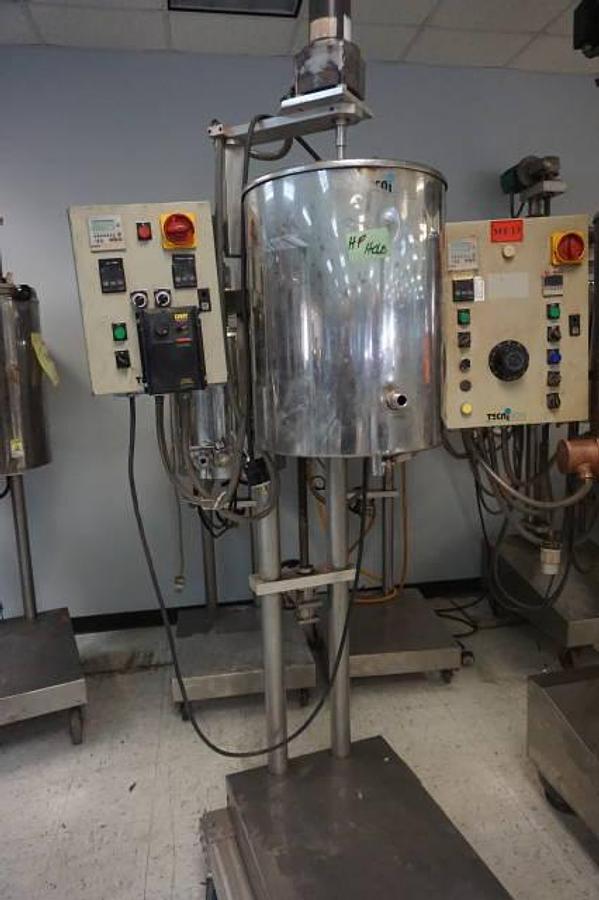
What is a Tecnicoll stainless steel electric mix kettle used for in textile production?
Stainless steel electric mix kettles, such as the 65-liter units associated with Tecnicoll, serve as auxiliary processing equipment in textile and apparel manufacturing environments. Their primary role is to heat, mix, and hold adhesives, coatings, or chemical compounds used in bonding and finishing processes. In facilities that work with hot melt adhesives or thermoplastic materials, these kettles maintain precise temperature control to keep materials at the correct viscosity for application, which is critical for consistent output quality.
The stainless steel construction is well suited to textile chemical environments because it resists corrosion from adhesives, solvents, and cleaning agents, and it is easy to clean between batches or material changes. Electric heating elements eliminate the need for open-flame heating, which simplifies safety compliance in production settings. Used mix kettles in good condition can offer significant cost savings compared to sourcing similar equipment from other channels, but buyers should inspect the heating elements, thermostat accuracy, and interior surface condition carefully, as these components directly affect the kettle's functional reliability.