Category
Manufacturer
Model
FAQ:
What is a TEA screener and what is it used for?
TEA stands for Trace Explosive Analysis. A TEA screener is a specialized detection instrument designed to identify trace quantities of explosive compounds on surfaces such as luggage, cargo, personal belongings, and even human skin or clothing. The technology works by collecting a small sample, typically through swabbing or air sampling, and then analyzing it using techniques such as ion mobility spectrometry (IMS) or mass spectrometry to identify chemical signatures associated with explosive materials. These machines are sensitive enough to detect residue at the parts-per-billion level, making them one of the most reliable tools available for explosive threat detection.
TEA screeners are deployed across a wide range of high-security environments. Airports are the most common application, where they supplement X-ray and physical screening at checkpoints and baggage handling areas. Beyond aviation, they are used at government buildings, military installations, border crossing facilities, courthouses, embassies, and large public venues. The machines can be configured for different screening scenarios, including passenger screening, checked baggage, air cargo, and vehicle inspection. A used TEA screener in good working condition can serve the same detection functions as when it was first manufactured, making the used equipment market a practical option for organizations that need proven detection capability without the lead times or cost associated with procuring brand-new units.
What should buyers know about purchasing used TEA screener equipment?
Buying a used TEA screener requires more due diligence than purchasing most other types of industrial equipment, largely because the machine's performance history, calibration status, and service records directly affect its reliability in a security-critical role. Prospective buyers should request as much documentation as possible, including maintenance logs, calibration certificates, and any records of repairs or component replacements. Understanding how many operational hours the machine has logged, and in what environment it was used, gives a clearer picture of remaining service life. A machine that operated in a climate-controlled airport checkpoint will typically be in better condition than one used in a dusty cargo facility.
Used TEA screeners are sold on an as-is basis by equipment dealers, which places the responsibility for condition assessment squarely on the buyer. Reputable dealers with a track record in security or industrial equipment will typically accommodate in-person or video inspections so buyers can evaluate the machine's physical condition and, where possible, observe its operation. Before finalizing a purchase, it is also worth contacting the manufacturer directly to confirm whether the specific model and serial number are still supported, whether replacement consumables such as swabs and filters are available, and whether the unit is eligible for factory recalibration or software updates. Some older models may no longer be on active approved vendor lists for certain government procurement programs, which is a critical consideration for institutional buyers.
What is a three-separation screener, and how does it differ from a standard TEA screener?
A three-separation screener refers to a machine capable of classifying or separating materials into three distinct categories or fractions during the screening process. In the context of TEA and trace detection equipment, this type of design allows the instrument to simultaneously analyze and differentiate between multiple substance classes, which can improve throughput and reduce the need for secondary screening. The three-separation architecture is particularly useful in environments where mixed material streams are common, such as cargo inspection or bulk material handling, because it reduces the chance that a benign substance will mask or interfere with the detection of a threat compound.
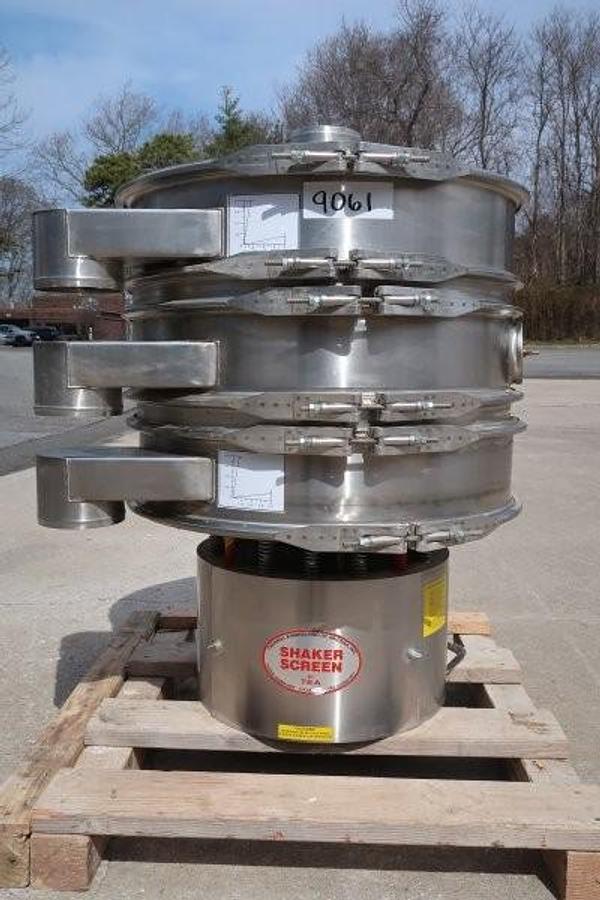
The 30-inch diameter stainless steel construction found on certain TEA three-separation screeners indicates a unit built for durability in demanding environments. Stainless steel housings resist corrosion, are easier to decontaminate, and hold up better in industrial or high-traffic settings compared to painted steel or polymer enclosures. The 30-inch diameter also suggests a relatively large sample throughput capacity, which matters in high-volume screening operations. Buyers evaluating a used three-separation TEA screener should pay particular attention to the condition of the separation chambers and any internal filters or membranes, as these components bear the most wear during regular operation and may require replacement before the unit is returned to service.
How much does a used TEA screener typically cost?
Pricing for used TEA screeners varies considerably depending on the manufacturer, model, age, condition, and the specific detection capabilities of the unit. Entry-level or older-generation trace detection equipment can be found in the range of a few thousand dollars, while more sophisticated multi-mode systems from major manufacturers like Smiths Detection, Morpho (now part of IDEMIA), or Implant Sciences can command prices in the tens of thousands of dollars even on the secondary market. The original procurement cost for high-end TEA systems often exceeds $100,000, so used units can represent significant savings for buyers who have the technical resources to evaluate and maintain the equipment.
It is important to think beyond the purchase price when budgeting for a used TEA screener. Consumables such as detector swabs, ionization sources, and internal filters are ongoing costs that can add up quickly in high-throughput environments. Calibration services, software licensing (where applicable), and any refurbishment work needed to bring the unit to operational standards should all be factored into the total cost of ownership. Some buyers underestimate these downstream costs and find that a lower-priced unit ends up being more expensive to operate than a slightly higher-priced machine in better condition. Getting a clear picture of parts availability and service support for the specific model before purchasing is one of the most important steps a buyer can take.
What compliance standards and approvals are relevant for TEA screeners used in aviation security?
TEA screeners used in commercial aviation security in the United States must meet standards set by the Transportation Security Administration (TSA). The TSA maintains an Approved Products List (APL) that identifies trace detection equipment qualified for use at airport checkpoints and in baggage screening operations. Equipment on the APL has undergone independent laboratory testing to verify detection sensitivity, false alarm rates, throughput speed, and resistance to environmental interference. Procurement officers at airports and TSA-regulated facilities are generally required to select equipment from this list, which means that a used machine's model and firmware version need to be confirmed against current APL qualifications before purchase for aviation use.
In Europe, the European Civil Aviation Conference (ECAC) maintains its own testing and approval framework under Document 30, which governs security equipment standards for member states. Equipment used in EU airports must typically appear on ECAC-approved lists, and the standards can differ from TSA requirements in meaningful ways, particularly around detection thresholds for specific explosive families. For non-aviation applications such as military installations, government buildings, or private security operations, the compliance requirements are less standardized but buyers should still verify that the equipment's detection capabilities align with their threat assessment and internal security protocols. Consulting with the manufacturer about a specific unit's qualification status is strongly recommended before committing to a purchase for any regulated environment.
What types of explosive compounds can a TEA screener detect?
Modern TEA screeners are designed to detect a broad library of explosive compounds, including military-grade explosives such as RDX, PETN, HMX, and TNT, as well as commercial explosives like ANFO (ammonium nitrate/fuel oil) and dynamite-based materials. Many systems also include detection capability for improvised explosive precursors and peroxide-based explosives such as TATP and HMTD, which have been used in terrorist attacks and present a particular challenge because they do not contain nitrogen-based compounds that older detection technologies were optimized to find. The detection library in a TEA screener is typically stored as software and can sometimes be updated to add new threat signatures as they are identified.
Detection capability is one of the most scrutinized specifications when evaluating TEA equipment, and for good reason. False negatives represent a direct security failure, while false positives create operational disruption and erode confidence in the screening process. Sensitivity levels are usually expressed in nanograms or picograms, with higher-end systems capable of detecting explosive residue at the picogram level. Buyers of used equipment should verify whether the unit's detection library and sensitivity thresholds are current, as older firmware versions may not include signatures for more recently identified threat compounds. Where possible, requesting a demonstration or asking for documentation of the machine's last calibration and library update is a reasonable step before finalizing a purchase.
What are the maintenance requirements for a TEA screener?
TEA screeners require regular maintenance to sustain detection accuracy and minimize false alarm rates. Routine tasks include replacing consumables such as detector swabs, cleaning ion trap or drift tube components, and inspecting air handling systems and internal filters for contamination or blockage. The frequency of these tasks depends heavily on the volume of samples processed and the cleanliness of the operating environment. In high-throughput airport settings, some consumables may need replacement daily or weekly, while lower-volume installations might go months between consumable changes. Keeping a log of maintenance activities is important both for performance tracking and for demonstrating due diligence in any security audit.
Beyond routine consumable replacement, TEA screeners typically require periodic calibration to ensure that detection thresholds remain accurate. Calibration is usually performed using certified reference standards and may need to be done by a factory-trained technician or authorized service provider, depending on the manufacturer's requirements. Annual preventive maintenance visits are common for institutionally operated systems and typically include a more thorough inspection of electronic components, software verification, and performance testing against known standards. Buyers of used TEA screeners should ask about the service history of the specific unit and confirm with the manufacturer whether factory calibration services are still available for that model, since support availability varies significantly by age and product generation.
What training is required to operate a TEA screener?
Operating a TEA screener competently requires more than basic equipment familiarization. Operators need to understand proper swabbing technique, sample collection protocols, and how to interpret alarm results accurately. Incorrect swabbing, for example, collecting a sample from the wrong surface or using a contaminated swab, is one of the leading causes of both false negatives and false positives in trace detection operations. Most manufacturers provide operator training programs that cover these fundamentals, and for regulated environments like commercial airports, TSA and equivalent international bodies often mandate specific training completion and recurrent qualification for screeners who use this equipment.
For buyers of used TEA screeners, it is worth clarifying whether operator training materials, manuals, or software are included with the machine. Manufacturer-led training may still be available for purchase depending on the model's support status, and some dealers can connect buyers with third-party training providers familiar with specific platforms. In security-critical deployments, it is also advisable to designate a technical lead who understands the machine at a deeper level, including basic troubleshooting, alarm adjudication, and the process for escalating unresolved alarms. Operators who understand why the machine works the way it does, not just how to run it, tend to produce more reliable screening outcomes and are better equipped to recognize when the equipment may be malfunctioning.
How should a used TEA screener be inspected before purchase?
A thorough pre-purchase inspection of a used TEA screener should cover both the physical condition of the unit and its operational status. On the physical side, buyers should look for signs of corrosion, impact damage, or evidence of repairs to the housing and internal components. For stainless steel units, check weld integrity and surface condition around high-wear areas. Inspect the sample inlet, swab tray, and any desorption heater components, as these parts are subject to the most direct contact with samples and can show wear or contamination that affects performance. Asking the dealer for photographs or a video walkthrough is a reasonable starting point, but an in-person or live video inspection is preferable for any significant purchase.
On the operational side, the ideal scenario is observing the machine power up, run a self-diagnostic, and produce a clean baseline reading. Some used TEA screeners are still in production at the facility where they are being sold, which can allow for a live demonstration in an actual operating environment arranged between the dealer and the current equipment owner. Keep in mind that most equipment dealers do not have the permitting or controlled substance access needed to run actual explosive samples through the machine, so operational verification is typically limited to confirming that the unit powers on, completes its startup sequence, and does not display fault codes. Buyers should also ask about the last calibration date and request any available service records, as this documentation provides meaningful insight into how the machine has been maintained over its service life.
What are the typical shipping and logistics considerations when buying a used TEA screener?
TEA screeners are precision instruments with sensitive internal components, and they require careful packaging to survive transit without damage. Depending on the size and weight of the unit, shipping may involve standard freight palletization or a custom crate built to protect the machine's most vulnerable components, such as detector assemblies, electronic modules, and sample handling mechanisms. The level of packaging required will directly affect shipping costs, and buyers should ask the dealer specifically what packaging method will be used and whether crating is included in the quoted price or billed separately. For larger or heavier units, professional rigging may be needed to safely load and unload the equipment, which adds to the total landed cost.
Buyers should request a complete breakdown of all costs before committing to a purchase, including the equipment price, any refurbishment or preparation fees, packaging and crating, freight charges, and rigging at both the origin and destination if applicable. International shipments add additional complexity, including export licensing requirements for security equipment, customs duties, and compliance with import regulations in the destination country. Some TEA screener models may be subject to export controls under the Export Administration Regulations (EAR) or similar frameworks in other countries, so buyers outside the United States should verify export eligibility with the dealer before proceeding. Payment for used equipment is typically required in full prior to shipment, which makes resolving all of these logistics questions before payment an important part of the buying process.