Category
Manufacturer
Model
FAQ:
What types of Syntegon packaging machines are available on the used equipment market?
Syntegon produces a wide range of packaging machinery across several categories, and all of these machine types can surface on the used equipment market as production facilities upgrade, consolidate, or change product lines. The major categories include horizontal and vertical wrapping machines, filling and sealing equipment, cartoning machines, blister packaging lines, and end-of-line systems. One example of what buyers commonly encounter is the Syntegon Pack 102, a horizontal wrapping machine capable of running up to 150 packages per minute, which gives a sense of the throughput capacity these machines are built to deliver.
Syntegon serves a broad range of industries, so the type of used machine available at any given time reflects that diversity. Pharmaceutical-grade equipment designed to meet GMP and FDA compliance requirements shows up alongside food and confectionery machinery, consumer goods packaging lines, and beverage sector equipment. Buyers should clarify with the dealer exactly which model and configuration is being offered, since Syntegon machines within the same product family can vary significantly in speed, format range, and optional features depending on how they were originally specified.
What industries use Syntegon packaging machines?
Syntegon has built a particularly strong reputation in the pharmaceutical sector, where its machines are engineered to comply with strict regulatory frameworks including GMP standards, FDA requirements, and EU pharmaceutical directives. Blister packaging lines, bottle filling systems, and cartoning machines from Syntegon are common fixtures in pharmaceutical and nutraceutical manufacturing plants around the world. The precision engineering and documentation capabilities built into these machines make them especially well suited to regulated production environments where traceability and hygiene are non-negotiable.
Beyond pharma, Syntegon machinery is widely used in food and beverage, confectionery, and consumer goods manufacturing. Horizontal flow wrappers, for instance, are heavily used in confectionery and bakery applications, while filling and sealing equipment serves liquid food, dairy, and beverage producers. This cross-industry versatility means that a used Syntegon machine originally running in a food plant could, with the right configuration and cleaning validation, potentially be adapted for a different application, though buyers should always confirm compatibility with their specific product and regulatory requirements before purchasing.
What should buyers know about purchasing used Syntegon packaging machines versus buying directly from the manufacturer?
Buying a used Syntegon machine through a reputable equipment dealer is a common path for manufacturers looking to access premium packaging technology at a significantly lower upfront cost than purchasing through the manufacturer's sales channel. Syntegon is a globally recognized brand, formerly operating as Bosch Packaging Technology, and its machines are known for long service lives and precision engineering. That durability is exactly what makes the used market attractive: a well-maintained Syntegon machine can continue delivering reliable performance for many years after its first production run.
The key trade-off is that used machines are sold as-is, without manufacturer warranties, which places more responsibility on the buyer to thoroughly evaluate the machine's condition before committing. Buyers should work with dealers who specialize in packaging equipment and have a verifiable track record, and they should take full advantage of inspection opportunities, whether in person, via video walkthrough, or through documented machine history. Consulting directly with Syntegon about parts availability and technical support for a specific model and serial number is also a smart step, since the level of manufacturer support can vary depending on how old the machine is.
How should buyers inspect a used Syntegon machine before purchasing?
Inspection is one of the most critical steps in buying any used packaging machine, and reputable dealers will typically offer several options: an in-person visit to the dealer's facility or, in some cases, to the plant where the machine is still installed, a live video walkthrough with a technician, or pre-recorded video footage showing the machine's condition and, where possible, its mechanical operation. For a machine as sophisticated as a Syntegon packaging line, buyers should look closely at the condition of the drive systems, sealing components, electrical panels, and any tooling or format parts that come with the machine. Wear on contact parts and the state of the HMI controls are particularly telling indicators of how heavily the machine was used.
One important reality of buying from a used equipment dealer is that most dealers do not have the permitting or infrastructure to run actual production trials with real product. This means buyers may see a machine run empty or go through mechanical cycles, but a full production test under real conditions is rarely possible in a dealer environment. Buyers who need that level of validation may want to explore whether the machine is still installed at an operating facility, where the dealer can potentially arrange an observation visit. Bringing a qualified maintenance technician or packaging engineer to any inspection adds significant value and helps identify issues that a general inspection might miss.
What factors affect the price of used Syntegon packaging machines?
Several variables drive pricing on the used Syntegon market. Age and model generation are the most obvious factors, since older machines or those from discontinued product lines tend to be priced lower, partly because parts sourcing can be more challenging. Machine condition plays a major role as well: a Syntegon Pack 102 that was lightly used in a single-shift food production environment will command a different price than one that ran three shifts for a decade in a high-volume facility. The presence of original tooling, format change parts, and documentation such as manuals and maintenance logs also adds to the value of a used machine.
Syntegon's brand positioning as a premium manufacturer means that even used machines tend to carry higher price tags compared to equivalent equipment from lesser-known brands. That premium is generally justified by the engineering quality, the availability of a global service network, and the total cost of ownership benefits that come from machines designed for durability and reduced downtime. Buyers evaluating price should factor in not just the purchase price but also shipping, rigging, installation, any necessary reconditioning, and the cost of spare parts to bring the machine to their required operating standard.
What are the shipping and logistics considerations for used Syntegon packaging machines?
Syntegon packaging machines range considerably in size and weight, from compact tabletop units to large multi-section production lines, and the logistics requirements scale accordingly. Smaller machines may be palletized and shipped via standard freight, while larger systems typically require professional rigging for loading and unloading, custom crating, and flatbed or specialized transport. Buyers should ask the dealer for a detailed breakdown of packaging, rigging, and freight costs before finalizing a purchase, since these can add meaningfully to the total landed cost of the equipment.
International shipments add another layer of complexity, including customs documentation, import duties, and compliance with any country-specific import regulations for industrial machinery. For pharmaceutical-grade Syntegon equipment, there may also be documentation requirements related to the machine's regulatory history that need to travel with the shipment. It is worth confirming with the dealer exactly what documentation will be provided, including any available maintenance records, calibration logs, or validation documentation, as these can save significant time and expense during reinstallation and requalification at the buyer's facility.
What payment terms are typical when buying used packaging machinery?
Most used equipment dealers require payment in full prior to releasing a machine for shipment. This is standard practice across the industry and reflects the nature of used equipment transactions, where machines are often unique items that cannot simply be restocked if a sale falls through. Wire transfer is the most common payment method for transactions of this size, though dealers may accept other forms depending on the specifics of the deal. Buyers should confirm payment expectations early in the negotiation process to avoid surprises at the time of closing.
Some dealers extend payment terms to established customers with a history of repeat purchases, but this is the exception rather than the rule for first-time buyers. Buyers who need financing may want to explore third-party equipment financing options, as some lenders specialize in industrial machinery and can structure loans or leases around used equipment purchases. Regardless of how the transaction is funded, it is good practice to ensure that all agreed-upon terms, including any representations about machine condition, included accessories, and documentation, are clearly spelled out in writing before any payment is made.
How does Syntegon's background as Bosch Packaging Technology affect the used machine market?
Syntegon Technology was spun off from Bosch in 2020, having previously operated as Bosch Packaging Technology for decades. This history matters in the used equipment market because a large installed base of machines was manufactured and sold under the Bosch Packaging Technology name, and many of those machines are still in active service or available through used equipment channels. Buyers searching for Syntegon equipment should also search using the Bosch Packaging Technology name and associated model designations to avoid missing relevant listings. The engineering lineage is continuous, so machines built under the Bosch brand carry the same quality standards associated with the Syntegon name today.
The brand transition also has practical implications for parts and service. Some older machines may have components that were originally sourced through Bosch supplier networks, and buyers should verify with Syntegon's service organization whether parts for a specific model are still actively supported. Syntegon maintains a global service network with regional offices and certified technicians, which is a meaningful advantage over lesser-known brands where after-sale support can be difficult to access. That said, buyers of older machines should always do their due diligence on parts availability before purchasing, since support levels can vary by model age and geography.
What is a Syntegon Pack 102 and what applications is it used for?
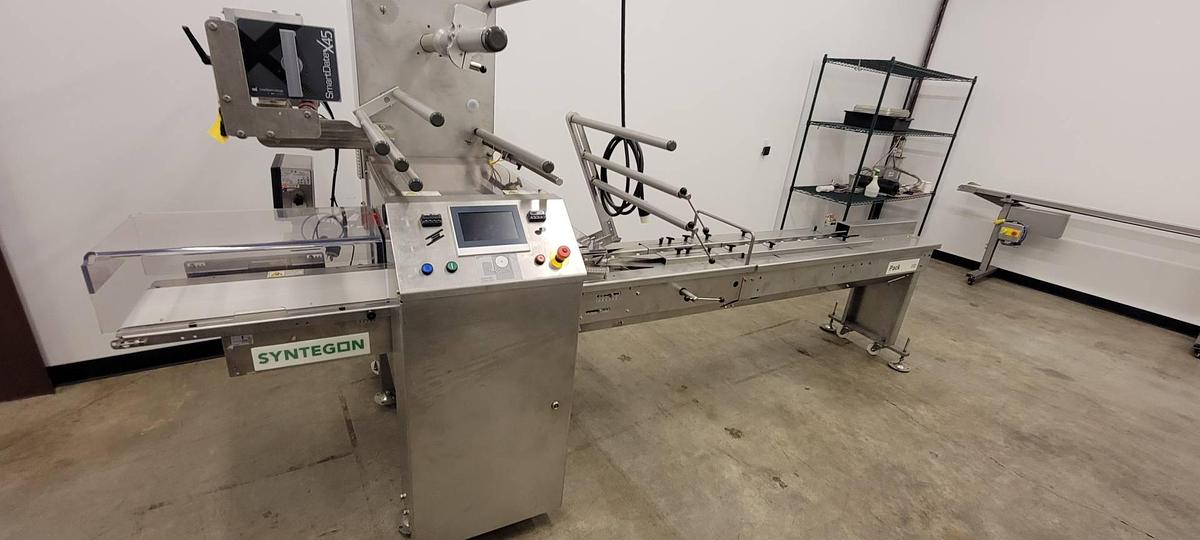
The Syntegon Pack 102 is a horizontal flow wrapping machine designed for high-speed primary packaging applications. It is capable of running at speeds up to 150 packages per minute, which positions it as a mid-to-high throughput solution suitable for production environments where consistent output and reliable sealing quality are priorities. Horizontal flow wrappers like the Pack 102 create a sealed, pillow-style package around a product by feeding it through a forming tube and sealing the film on three sides, producing a finished package in a single pass.
This type of machine is commonly used in confectionery, bakery, snack food, and other food manufacturing applications where individually wrapped products are the standard format. The Pack 102 can handle a variety of product shapes and sizes depending on the tooling and film specifications, making it adaptable across different production needs. Buyers considering a used Pack 102 should confirm which format parts and tooling are included with the machine, as these components are critical to running specific product sizes and can be costly to source separately if they are not part of the sale.
How should buyers evaluate a used equipment dealer selling Syntegon machinery?
The dealer's track record and specialization are the most important factors to assess. A dealer who has been selling industrial packaging machinery for many years and focuses specifically on that category is going to have a much deeper understanding of Syntegon equipment than a general industrial surplus dealer who handles everything from forklifts to lathes. Longevity in the business matters because it signals that the dealer has built relationships with buyers and sellers over time and has a reputation worth protecting. Buyers should look for verifiable history, including how long the dealer has been operating, what types of machines they regularly carry, and whether they can provide references from past buyers.
Transparency during the sales process is another strong signal of a reputable dealer. A trustworthy dealer will provide clear, detailed information about a machine's condition, history, and any known issues, and will actively facilitate inspections rather than discouraging them. They should be able to provide whatever documentation exists for the machine, answer technical questions accurately or connect buyers with someone who can, and give clear answers about what is and is not included in the sale. Buyers should be cautious of dealers who are vague about machine history, reluctant to allow inspections, or unwilling to provide documentation.