Category
Manufacturer
Model
Symex
Symex provides specialized equipment for the pharmaceutical and chemical industries, focusing on mixing and blending solutions. They are known for their high-shear mixers and homogenizers, which are essential for achieving uniform product consistency. Symex’s commitment to quality ensures compliance with stringent industry regulations.
FAQ:
What types of Symex equipment are available on the used market?
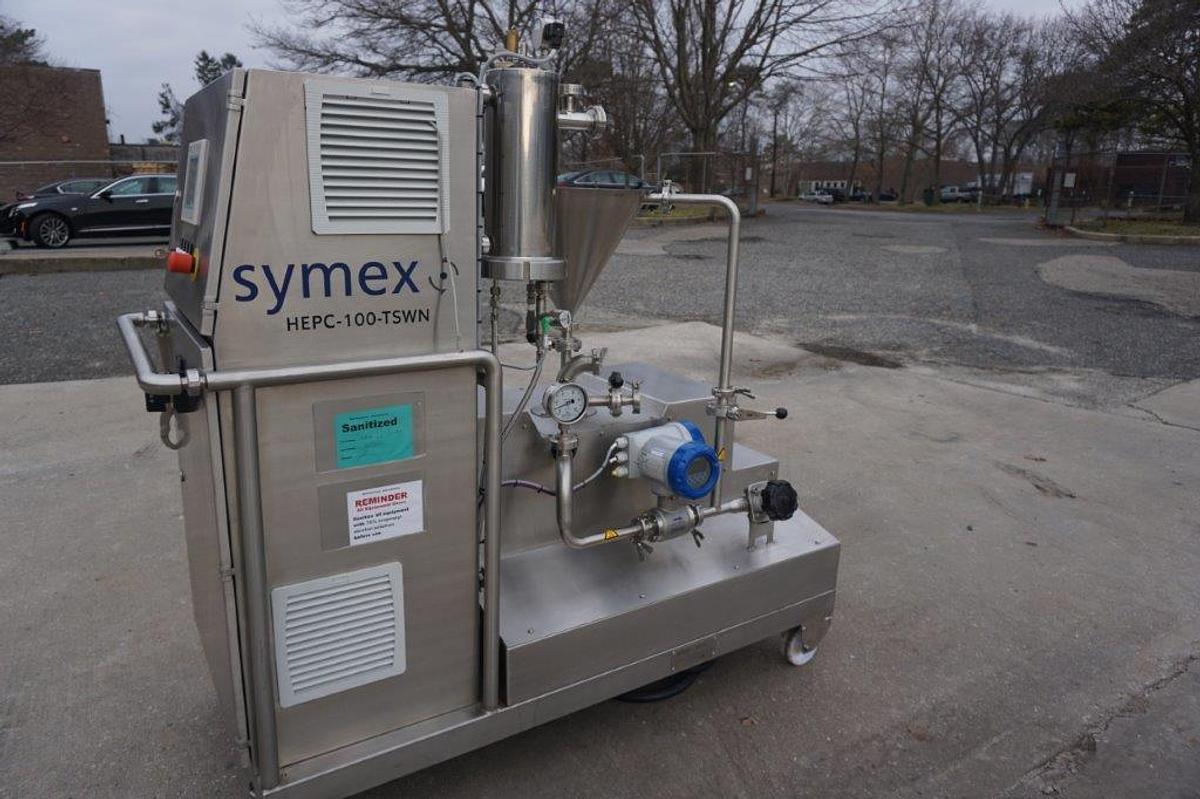
Symex produces specialized equipment for the pharmaceutical and chemical industries, with a particular focus on mixing and blending technology. The product line includes high-shear mixers, homogenizers, and inline processing units designed to achieve uniform product consistency across batch and continuous production environments. One example that appears regularly on the used market is the Symex HEPC-100 Inline Stainless Steel Homogenizer, a portable unit built for demanding processing applications where hygiene and precision are critical.
Because Symex equipment is purpose-built for regulated industries, the machines tend to have long service lives and retain their utility well after leaving the first production facility. Buyers sourcing used Symex equipment will typically find units that were previously deployed in pharmaceutical manufacturing, cosmetics production, food processing, or chemical blending operations. Checking listings carefully for model numbers, configuration details, and any available service history will help buyers match a specific unit to their processing requirements.
What industries use Symex high-shear mixers and homogenizers?
Symex high-shear mixers and homogenizers are primarily associated with the pharmaceutical and chemical industries, where strict product consistency and regulatory compliance are non-negotiable. In pharmaceutical manufacturing, these machines are used for emulsification, dispersion, and homogenization of active ingredients into creams, gels, suspensions, and liquid formulations. The equipment is engineered to meet the stringent cleanliness and documentation standards that govern drug production.
Beyond pharmaceuticals, Symex mixing equipment finds application in cosmetics and personal care manufacturing, specialty chemical blending, food and beverage processing, and laboratory research environments. The stainless steel construction common to Symex units makes them suitable for any application where product contact surfaces must be easy to clean and resistant to corrosion. Buyers from any of these sectors can often adapt a used Symex machine to their process with relatively minor modifications, provided they confirm the unit's specifications match their production parameters.
What should buyers know about purchasing used Symex equipment instead of sourcing it through a manufacturer?
Purchasing used Symex equipment from a reputable dealer is a practical way to access high-quality processing machinery at a significantly lower cost than sourcing comparable technology through other channels. Symex machines are built to industrial standards for regulated industries, which means they are generally constructed with durability in mind. A well-maintained unit can perform reliably for many years after its initial deployment, making the used market a legitimate sourcing option for pharmaceutical and chemical processors who need proven technology without the lead times or costs associated with procuring comparable equipment elsewhere.
The key considerations for buyers center on due diligence. Used equipment is sold as-is, so the condition of the machine at the time of purchase is what the buyer receives. Requesting detailed inspection opportunities, asking for photos or video of the equipment in its current state, and reviewing any available maintenance records are all steps that reduce risk. Selecting a dealer who specializes in pharmaceutical and chemical processing equipment is also important, as they are better positioned to accurately describe a machine's condition and answer technical questions about the specific Symex model being offered.
Does used Symex equipment come with a warranty?
Used equipment is typically sold as-is, which means manufacturer warranties are generally not transferable to secondary market buyers. This is standard practice across the used machinery industry, not specific to Symex. The responsibility for assessing a machine's condition falls on the buyer, which is why thorough pre-purchase inspection is so important. Buyers should not assume any coverage exists unless a dealer explicitly states otherwise in writing.
To protect themselves, buyers should prioritize dealers with a long track record in pharmaceutical and chemical equipment sales, as reputation is the primary accountability mechanism in the used machinery market. It is also worth contacting Symex directly before purchasing a specific model to understand what level of technical support, documentation, and parts availability they can expect for that unit's age and configuration. Older or discontinued models may have limited manufacturer support, which is a meaningful factor in assessing the total cost of ownership for a used machine.
How can buyers inspect used Symex equipment before committing to a purchase?
Reputable used equipment dealers typically offer buyers several inspection options: in-person visits to the dealer's facility, video calls where a technician walks through the machine in real time, or pre-recorded video documentation of the equipment's condition. For Symex homogenizers and mixers that are still installed at a production facility, it may be possible to arrange an inspection at the plant where the machine is currently located, and in some cases the unit may still be in active production use, which allows buyers to observe it running under real conditions.
Buyers should use inspections to assess the condition of wetted parts and seals, the integrity of stainless steel contact surfaces, the condition of motors and drive components, and any visible signs of wear, corrosion, or prior repairs. Keep in mind that most dealers do not have the permits or production infrastructure to run actual product through a machine during an inspection, so functional testing is typically limited to dry runs or no-load operation. Asking the dealer to confirm the machine's last known service date and any repairs performed adds another layer of useful context before making a purchase decision.
What specifications should buyers review when evaluating a used Symex homogenizer or mixer?
Matching equipment specifications to the buyer's process requirements is one of the most critical steps in purchasing used Symex machinery. Key technical parameters to review include the machine's processing capacity (expressed in liters per hour for inline units or batch volume for tank-based systems), motor power output, operating speed range, and the viscosity range the unit is designed to handle. For inline homogenizers like the Symex HEPC-100, buyers should also confirm inlet and outlet connection sizes and whether the unit's flow path is compatible with their existing piping.
Beyond process performance specs, buyers in regulated industries should verify the materials of construction for all product-contact surfaces, typically 316L stainless steel for pharmaceutical applications, and confirm whether the unit carries any relevant certifications such as CE marking or compliance documentation relevant to their regulatory environment. Physical dimensions and weight matter too, particularly for portable units that need to fit within an existing facility layout. Electrical requirements, including voltage, phase, and frequency, should be confirmed against the buyer's local power supply before finalizing any purchase.
Are replacement parts and consumables available for used Symex equipment?
Parts availability is one of the most practical factors to investigate before purchasing any used processing equipment, and Symex machinery is no exception. Seals, gaskets, rotor-stator assemblies, and other wear components in high-shear mixers and homogenizers require periodic replacement, and the ability to source those parts quickly has a direct impact on production uptime. Buyers should contact Symex directly to ask about parts availability for the specific model and serial number they are considering, as support levels can vary depending on how long a particular model has been in production.
For older Symex models, third-party seal and gasket suppliers may be able to provide compatible components based on published dimensions, which can be a viable alternative if manufacturer parts are no longer stocked. Buyers should factor parts sourcing into their total cost of ownership assessment before purchase, not after. Dealers who specialize in pharmaceutical and chemical processing equipment are often familiar with parts availability for the machines they sell and can provide guidance on what to expect for a given unit.
What are the shipping considerations for used Symex equipment?
Shipping used processing equipment requires more planning than standard freight because machines like Symex homogenizers and mixers contain precision components that can be damaged if not properly secured during transit. Dealers will typically palletize or crate equipment before shipment, and the level of packaging required depends on the size, weight, and fragility of the specific unit. Portable inline homogenizers may require only basic palletization, while larger mixing systems may need custom crating to protect motors, drive assemblies, and product-contact components from shock and vibration during transport.
Buyers should ask dealers for a detailed breakdown of packaging, rigging, and freight costs before agreeing to a purchase, as these charges can add meaningfully to the total landed cost of the equipment. For international shipments, additional considerations include customs documentation, import duties, and compliance with the destination country's import regulations for used industrial equipment. Larger or heavier Symex units may require specialized rigging equipment for loading and unloading at both ends of the shipment, which is typically an additional cost that buyers should confirm in advance.
What payment terms are typical when purchasing used Symex equipment from a dealer?
The standard practice in the used equipment industry is for dealers to require full payment before a machine is released for shipment. This applies to most transactions, particularly for buyers who are purchasing from a dealer for the first time. Some dealers may extend payment terms to established customers with a history of prior purchases, but this is the exception rather than the rule and is typically negotiated on a case-by-case basis.
Buyers should clarify payment terms, accepted payment methods, and the timeline between payment and shipping before signing any purchase agreement. It is also worth confirming what happens in the event that a machine cannot be shipped as described due to logistics or condition issues, as these scenarios are best addressed in writing before funds are transferred. Working with dealers who have a transparent, documented sales process reduces the risk associated with paying in full prior to receiving equipment.
How does a buyer verify that a used Symex equipment listing is accurate and from a trustworthy source?
Evaluating the credibility of a used equipment dealer is as important as evaluating the machine itself. Buyers should look for dealers who have been operating in the pharmaceutical and chemical equipment space for a significant period of time, as longevity in a specialized market is a meaningful indicator of reliability. A dealer's ability to provide detailed specifications, clear photographs, and accurate descriptions of a machine's condition is another signal of professionalism. Vague listings with minimal technical detail or no inspection options are red flags worth taking seriously.
Before purchasing, buyers can cross-reference the model number and serial number of a listed Symex unit by contacting Symex directly to confirm the machine's specifications and production history. Asking the dealer for references from prior buyers in the same industry is also a reasonable step for high-value purchases. For buyers in regulated industries, confirming that the dealer understands pharmaceutical-grade equipment standards and can speak to the machine's compliance history adds another layer of confidence in the transaction.