Category
Manufacturer
Model
Surdry
Surdry is recognized for its innovative drying solutions, catering to industries such as food, pharmaceuticals, and chemicals. Their drying equipment, including spray dryers and fluid bed dryers, is designed for optimal moisture removal while preserving product quality. Surdry’s technology focuses on energy efficiency and scalability.
FAQ:
What types of drying equipment does Surdry manufacture?
Surdry is a Spanish industrial equipment manufacturer with a product range built around continuous and batch drying systems. Their lineup includes tunnel belt dryers, tray dryers, conveyor dryers, spray dryers, and fluid bed dryers. Each design addresses a different combination of material type, moisture content, and throughput requirement. Tunnel belt dryers, for example, are engineered for continuous production environments where large volumes of product move through a controlled heat zone on a conveyor belt. Fluid bed dryers, by contrast, suspend particles in an upward airstream, making them well suited for granular or powdered materials that benefit from highly uniform moisture removal.
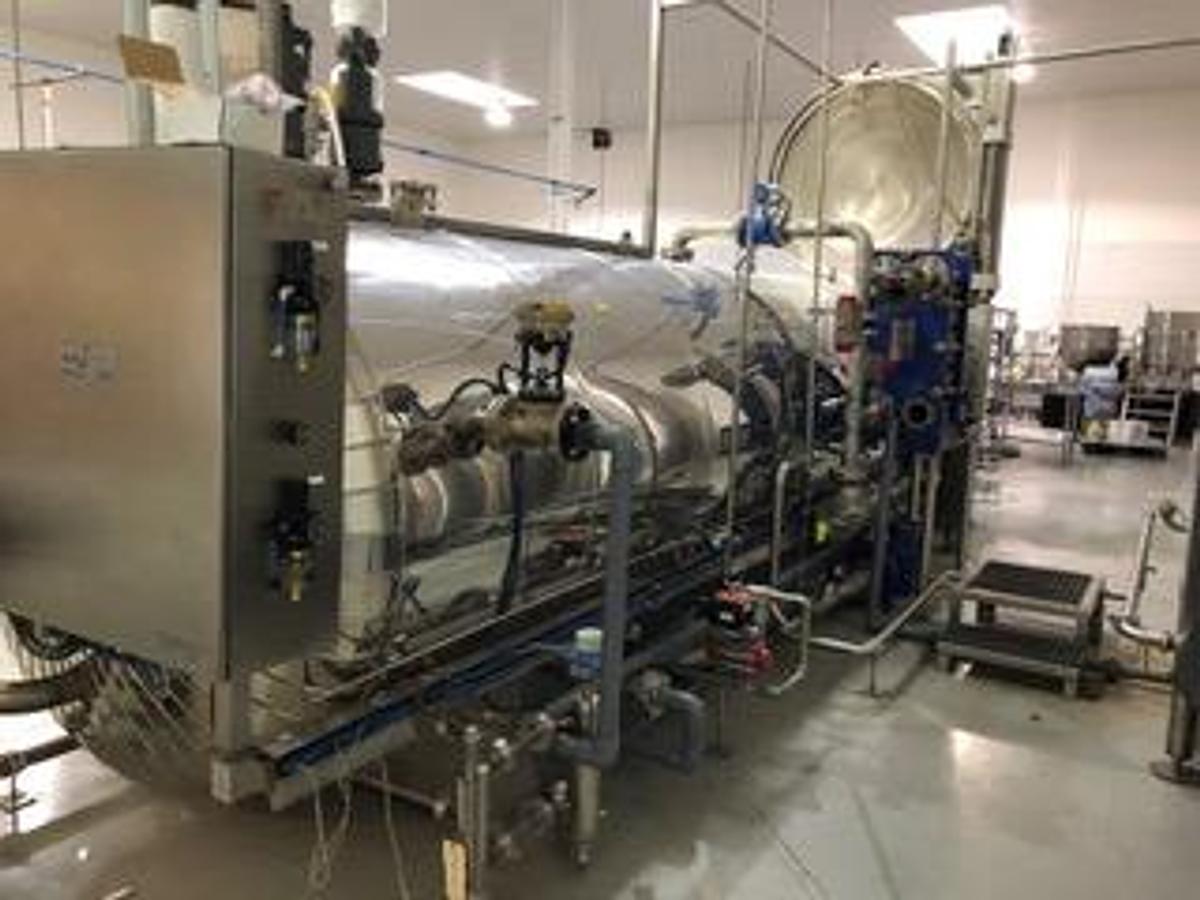
Surdry also produces retort and autoclave-style horizontal processing equipment, which appears in the used market alongside their dryer lines. The modular approach to their dryer configurations means that capacity, temperature range, and belt or tray systems can often be matched to a specific product or production line. Buyers sourcing used Surdry equipment should identify the specific model and configuration carefully, since the mechanical and thermal specs vary considerably across the product range.
What industries use Surdry drying equipment?
Surdry drying systems are found across several process-intensive industries. Food processing is one of the most common applications, where tunnel and conveyor dryers handle products like vegetables, fruits, pasta, snack foods, and meat products that require precise moisture reduction without compromising texture or nutritional value. The pharmaceutical and chemical industries also rely on Surdry equipment, particularly fluid bed and spray dryer configurations, where consistent particle size and controlled drying conditions are critical to product quality and regulatory compliance.
Beyond food and pharma, Surdry dryers are used in ceramics manufacturing and wood processing, where high-volume continuous drying is essential to production throughput. The ceramics sector, for instance, uses tunnel dryers to remove moisture from formed clay products before firing, a step where uneven drying can cause cracking or dimensional defects. The common thread across all these industries is the need for thermal efficiency and uniform drying at scale, both of which are design priorities in Surdry equipment. Buyers from any of these sectors regularly seek used Surdry machines as a cost-effective way to add or expand drying capacity.
What should buyers know about purchasing used Surdry drying equipment?
Buying used industrial drying equipment is meaningfully different from buying new machinery, and Surdry dryers are no exception. Used machines are sold as-is, which means the condition, wear history, and remaining service life are factors the buyer needs to evaluate directly rather than rely on manufacturer assurances. The practical implication is that inspection is not optional. Buyers should request an in-person visit, a live video walkthrough, or at minimum detailed video footage of the machine in its current state. Some equipment may still be installed and running at a facility, which creates an opportunity to observe actual operating conditions before committing to a purchase.
It is also worth contacting Surdry or their regional representatives before finalizing a purchase on an older model. The manufacturer can give guidance on parts availability, whether the control system is still supported, and what level of technical assistance to expect post-purchase. Older models or discontinued configurations may have limited parts supply, which affects long-term operating costs. Choosing a used equipment dealer who specializes in industrial drying or food and chemical processing machinery adds another layer of confidence, since a specialist dealer is more likely to accurately represent the machine's condition and history than a general reseller.
How does Surdry drying technology achieve energy efficiency?
Surdry's dryer designs are built around high thermal efficiency, which in practice means maximizing the amount of moisture removed per unit of energy consumed. Tunnel dryers accomplish this partly through counterflow or cross-flow air circulation systems that keep the drying air in contact with product for as long as possible before exhausting it. Heat recovery systems are also commonly integrated, recapturing thermal energy from exhaust air and redirecting it back into the drying zone rather than venting it entirely. The result is a lower operating cost per kilogram of dried product compared to older or less sophisticated dryer designs.
Fluid bed dryers achieve efficiency through a different mechanism. By suspending product particles in a controlled airstream, the entire surface area of each particle is exposed to the drying medium simultaneously, which dramatically reduces the time and energy needed to reach target moisture levels. For buyers evaluating used Surdry equipment, energy efficiency is a practical financial consideration, not just a specification on paper. A dryer that consumes less energy per production cycle directly affects operating margins, especially in high-volume food or chemical processing environments where dryers run continuously. Reviewing the original technical documentation for a specific used model is the best way to understand its designed thermal performance.
What is the typical price range for used Surdry drying equipment?
Pricing for used Surdry drying equipment varies considerably depending on the machine type, size, age, configuration, and condition. Smaller or older units in basic configurations can be found at the lower end of the industrial dryer market, while large continuous tunnel dryers or complete spray drying systems with ancillary equipment can represent a significant capital investment even in the used market. As a general reference point, used industrial dryers across major manufacturers tend to range from tens of thousands of dollars for compact or older units to several hundred thousand dollars for large-scale, well-maintained continuous systems.
The best way to get an accurate price is to contact a reputable used equipment dealer directly with the specific model and configuration in mind. Dealers factor in the machine's age, operational history, any refurbishment work completed, and current market demand when pricing used equipment. Buyers should also account for the full landed cost, which includes rigging, packaging, freight, and any site preparation or installation work required. A machine listed at an attractive price can carry substantial additional costs before it is running in a facility, so getting a complete cost picture before committing is essential.
What is the difference between a tunnel dryer and a fluid bed dryer?
Tunnel dryers and fluid bed dryers are both continuous drying systems, but they work through fundamentally different mechanisms and are suited to different product types. A tunnel dryer moves product through an enclosed heated chamber on a conveyor belt or in trays. Hot air flows over, under, or through the product bed as it travels the length of the tunnel. This design handles a wide range of product forms, including whole or sliced food products, formed ceramic pieces, and wood components, because the product sits on a surface and does not need to be fluidized. Tunnel dryers are well suited to fragile or irregular-shaped materials that cannot be suspended in an airstream without damage.
Fluid bed dryers work by directing heated air upward through a perforated plate at a velocity sufficient to suspend the product particles in a moving air column. This creates intimate contact between the drying air and every particle surface, resulting in fast and highly uniform moisture removal. The trade-off is that fluid bed dryers are limited to free-flowing granular or powdered materials, such as pharmaceutical granules, food powders, or chemical intermediates. Products that clump, are too heavy, or have irregular shapes that prevent fluidization are not good candidates. When evaluating used Surdry equipment, matching the dryer type to the intended product is the most important technical decision a buyer will make.
What routine maintenance does Surdry drying equipment require?
Industrial dryers require consistent preventive maintenance to sustain performance and avoid unplanned downtime, and Surdry equipment follows the same general requirements as comparable drying systems. Belt and conveyor systems need periodic inspection for wear, tension, and alignment, since a belt that tracks incorrectly can cause uneven drying and accelerated mechanical wear. Heat exchangers and air distribution components should be cleaned on a scheduled basis to prevent fouling, which reduces thermal efficiency over time. Burner systems and temperature controls require calibration checks to ensure the dryer is operating within its designed parameters.
For buyers acquiring used Surdry equipment, the maintenance history of a specific machine is an important due diligence item. A dryer that has been well maintained will typically show consistent wear patterns and clean internal surfaces, while a neglected machine may have corroded components, damaged insulation, or worn drive systems that require attention before it can be put back into production. Requesting service records or maintenance logs from the seller is reasonable, though not all used equipment will come with complete documentation. Consulting with a qualified technician familiar with industrial drying systems to conduct a pre-purchase inspection is a practical way to identify any deferred maintenance before finalizing a purchase.
How should used Surdry drying equipment be inspected before purchase?
A thorough inspection is the single most important step in buying used industrial drying equipment. For Surdry dryers, this means evaluating the mechanical condition of the conveyor or belt system, the integrity of the insulated enclosure, the state of the heat source and air handling components, and the condition of any electrical controls or automation systems. Buyers who can visit the equipment in person get the clearest picture, particularly if the machine is still installed and operational at a plant, where it may be possible to observe it running under production conditions. If travel is not practical, many reputable dealers will arrange a live video walkthrough or provide detailed video footage of the machine operating.
It is important to understand that used equipment dealers generally do not have the permitting or infrastructure to run full production trials, so testing with actual product is rarely an option in a dealer's facility. The inspection is therefore focused on mechanical and operational condition rather than product output. Buyers should pay particular attention to the age and condition of the control system, since older programmable logic controllers or proprietary automation can be expensive to repair or replace if parts are no longer available. Contacting Surdry directly to confirm parts and support availability for the specific model being considered adds useful context to the inspection findings.
What should buyers understand about shipping and logistics for used Surdry dryers?
Industrial drying equipment, particularly large tunnel or continuous dryer systems, presents real logistical complexity. These machines are heavy, often dimensionally oversized, and sensitive to damage from improper handling during transit. Proper packaging is essential. Depending on the size and configuration of the equipment, this can range from standard palletization with protective wrapping to custom-built wooden crates or steel frames designed to support the machine's weight distribution during transport. Buyers should ask the dealer specifically what packaging will be used and whether the machine will be partially disassembled for shipping, since reassembly requirements affect installation costs on the receiving end.
Larger Surdry dryer systems may require specialized rigging for both loading at the origin and unloading at the destination. Rigging involves cranes, forklifts, and experienced personnel who understand how to move heavy industrial equipment without damaging it or creating safety hazards. These services carry additional costs that are separate from freight charges. Buyers should request a complete breakdown of all shipping-related costs, including palletization or crating, rigging, freight, and any export documentation if the equipment is crossing international borders. Understanding the full landed cost before purchase avoids surprises that can significantly affect the economics of the acquisition.
What payment terms are typical when buying used industrial drying equipment?
Used equipment transactions in the industrial machinery market generally follow straightforward payment terms. Most dealers require payment in full before the equipment is released for shipping. This protects the seller against non-payment on a transaction where the asset has already been packaged and prepared for transport. Wire transfer is the most common payment method for transactions of this size, though other arrangements may be available depending on the dealer and the buyer's relationship with them.
Buyers who have an established history with a particular dealer may occasionally be offered extended terms or other arrangements, but this is the exception rather than the rule for first-time transactions. For buyers concerned about the condition of equipment relative to how it was represented, the practical protection is a thorough pre-purchase inspection rather than payment contingencies after the fact. Confirming all inspection findings and agreeing on the machine's described condition in writing before sending payment is a reasonable precaution. Buyers financing the purchase through a third-party lender should clarify the dealer's requirements around payment timing and documentation early in the process to avoid delays.