Category
Manufacturer
Model
FAQ:
What types of food processing machinery does Superior Food Machinery manufacture?
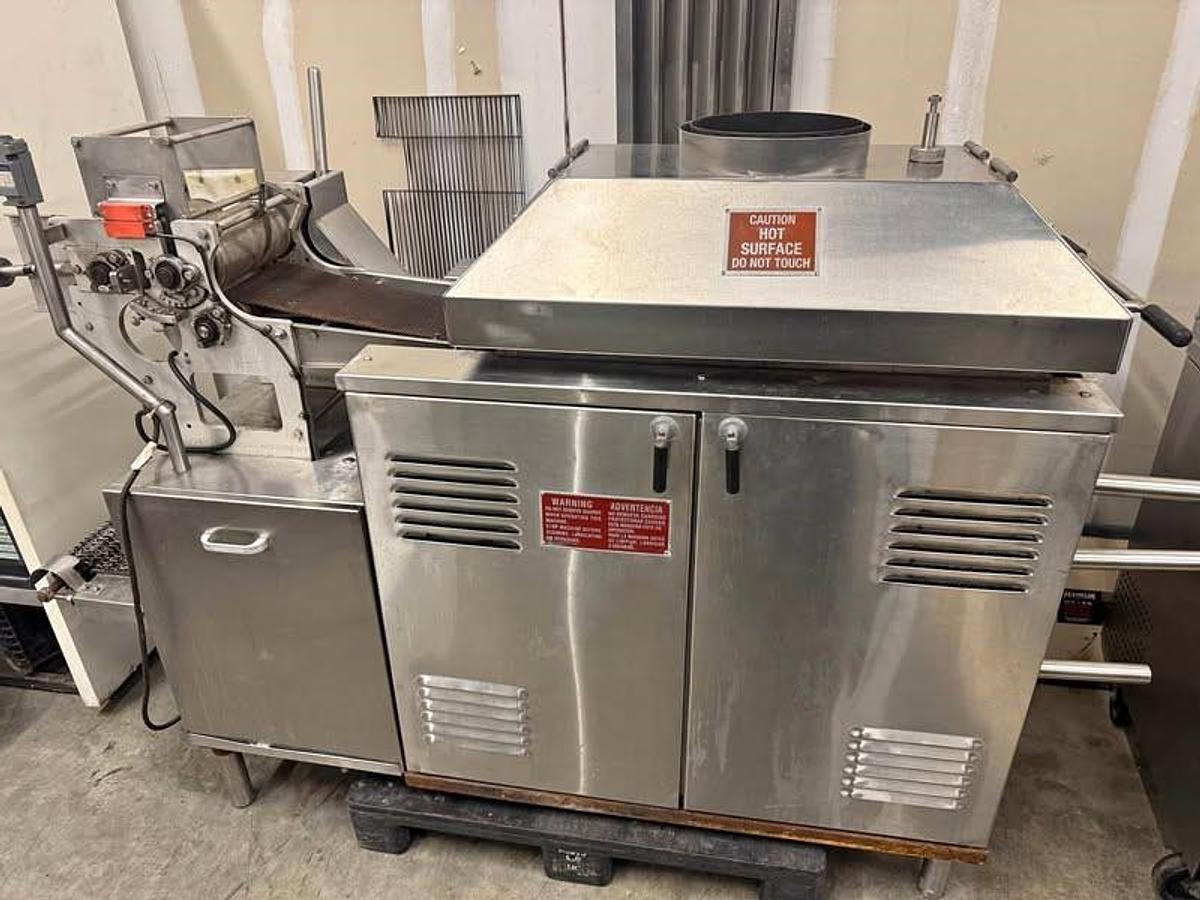
Superior Food Machinery is known primarily for tortilla production equipment, including corn tortilla ovens and gas-fired soft tortilla and tortilla chip manufacturing lines. Their equipment is designed for continuous production environments and covers the core stages of tortilla manufacturing, from dough processing through baking. A corn tortilla oven capable of 350 dozen per hour and a soft tortilla and tortilla chip gas-fired line rated at 100 lbs per hour are examples of the kinds of equipment that come up regularly in the used machinery market.
Beyond tortilla-specific equipment, Superior Food Machinery has produced a range of food processing systems suited to high-volume production facilities. Buyers in the snack food, flatbread, and Mexican food manufacturing segments tend to seek out this brand because of its reputation for durable construction and output capacity. When shopping for used Superior equipment, it pays to review the specific model and production rating carefully, since capacity and configuration can vary significantly from one machine to the next.
What should buyers know about purchasing used food processing machinery versus buying from a manufacturer?
Buying used food processing machinery is a well-established practice in the industry, particularly for smaller producers, startups, or facilities looking to expand capacity without the capital outlay of purchasing a machine direct from a manufacturer. Used equipment can offer substantial savings, and in many cases the machines available on the secondary market are robust, well-built pieces that have years of productive life remaining. The trade-off is that used equipment is typically sold as-is, meaning there is no manufacturer-backed warranty, and the buyer takes on responsibility for verifying the machine's condition before purchase.
This makes the selection of a reputable dealer critically important. Buyers should look for dealers who specialize in food processing equipment specifically, have a verifiable track record, and are willing to facilitate thorough inspections. A dealer with deep knowledge of the category will be able to provide accurate information about the machine's history, current condition, and any known issues. Consulting the original manufacturer directly is also advisable, since the manufacturer can clarify parts availability, service support, and whether a given model is still supported, which can vary considerably based on the age of the machine.
How should a buyer inspect used food machinery before purchasing?
Inspections are one of the most important steps in any used food machinery purchase. Reputable dealers will typically offer in-person inspections, virtual walkthroughs, or detailed video captures of the equipment so buyers can assess its condition before committing. In some cases, the equipment may still be installed and running at a production facility, which gives the buyer the opportunity to see the machine operating under real conditions. In other cases, the machine may have been decommissioned, in which case a static inspection is the norm.
It is worth understanding that most used equipment dealers do not have the permitting or infrastructure to run actual production tests with food product. What a buyer can reasonably expect is a mechanical inspection confirming that the machine powers on, that major components are intact and functional, and that there are no obvious signs of damage or excessive wear. Buyers should prepare a checklist of key components specific to the machine type, ask about the machine's maintenance history if available, and if possible, have a qualified technician or mechanic accompany them during the inspection. The goal is to arrive at as accurate a picture of the machine's working order as possible before finalizing the purchase.
What is a realistic price range for used Superior Food Machinery equipment?
Pricing for used Superior Food Machinery equipment varies widely depending on the type of machine, its production capacity, age, condition, and any ancillary components included in the sale. A complete gas-fired tortilla manufacturing line, for example, represents a significantly larger investment than a standalone oven or a single-stage processing unit. In the used market, complete production lines from established food machinery brands can range from tens of thousands of dollars into the six-figure range for larger, higher-capacity systems.
Beyond the listed sale price, buyers should factor in the full landed cost of the equipment. This includes shipping, rigging, crating or palletization, and any installation or recommissioning expenses at the destination facility. These costs can add up quickly for large or heavy machinery. Asking the dealer for a detailed breakdown of all associated costs before agreeing to a purchase is a straightforward way to avoid surprises and accurately compare options.
What are typical payment terms when buying used food processing equipment?
Most used equipment dealers require payment in full before the machinery is released for shipping. This is standard practice across the industry and reflects the logistical reality that once a machine ships, the dealer has limited recourse if payment issues arise. Some dealers will extend terms to repeat buyers or established customers with whom they have an existing relationship, but this is the exception rather than the rule for first-time transactions.
Buyers should clarify payment expectations early in the negotiation process and confirm exactly when payment is due relative to shipping. Wire transfer is the most common payment method for transactions of this size. Buyers should also confirm whether any deposit is required to hold equipment while an inspection is arranged, and whether that deposit is refundable if the inspection reveals issues that make the purchase untenable. Getting these terms in writing before any money changes hands is straightforward due diligence.
How is used food processing machinery typically shipped, and what costs should buyers anticipate?
Shipping food processing machinery requires careful planning, particularly for larger or heavier equipment like tortilla ovens or full manufacturing lines. Machines need to be properly palletized, crated, or otherwise secured to prevent damage in transit. The level of packaging required depends on the size and fragility of the equipment, and the associated cost will reflect that. For very large machines, heavy-duty rigging may be needed for both loading at the dealer's location and unloading at the buyer's facility, and those rigging costs are typically separate from the freight charge itself.
Buyers should ask dealers for a complete breakdown of shipping costs before finalizing a purchase. This includes the freight rate, any crating or palletization fees, and rigging charges at both ends of the shipment. For international shipments, customs clearance, import duties, and compliance documentation add another layer of cost and complexity. Understanding the full landed cost of the equipment, not just the sticker price, is essential for accurate budgeting and for comparing the true cost of different purchasing options.
Are replacement parts readily available for used Superior Food Machinery equipment?
Parts availability is one of the most practical considerations when buying any used food processing equipment, and it is worth investigating before committing to a purchase. For equipment from established manufacturers like Superior Food Machinery, parts may be available directly from the manufacturer, through third-party suppliers, or fabricated by a qualified machine shop for components that are no longer in production. The age and model of the machine are the primary factors that determine how straightforward parts sourcing will be.
The best approach is to contact the manufacturer directly and ask specifically about parts support for the model you are considering. Manufacturers can usually tell you whether a machine is still supported, which components are commonly replaced, and what lead times look like for critical parts. This conversation can also reveal whether the machine uses proprietary components or more standard parts that can be sourced from multiple suppliers, which has a direct impact on long-term maintenance costs and downtime risk. A dealer with experience in food processing equipment can often provide guidance on this as well, since they will have seen how various models hold up over time.
What food safety and construction standards should buyers look for in used food processing machinery?
Food processing equipment is subject to strict hygiene and safety requirements, and those requirements do not change simply because a machine is purchased used. Buyers should verify that any equipment they are considering was built to recognized standards such as NSF (National Sanitation Foundation) certification, CE marking for machines intended for use in European markets, or compliance with FDA guidelines for food contact surfaces. Stainless steel construction is a baseline expectation for most food contact components, as it resists corrosion, is non-porous, and can withstand the repeated cleaning and sanitizing cycles that food production demands.
When evaluating used equipment, buyers should inspect the condition of all food contact surfaces carefully. Worn coatings, cracks, or corrosion on surfaces that contact product are red flags from both a food safety and a maintenance cost perspective. It is also worth confirming that the machine can be disassembled and cleaned to the standard required by the buyer's facility and any applicable regulatory body. If the equipment will be subject to third-party audits or HACCP plan reviews, verifying that the machine's design supports those compliance requirements before purchase is far easier than trying to retrofit or modify it afterward.
What industries and production types is Superior Food Machinery equipment suited for?
Superior Food Machinery equipment is primarily associated with tortilla and flatbread production. Their ovens and manufacturing lines are designed for facilities producing corn tortillas, soft flour tortillas, and tortilla chips at commercial scale. The equipment is built for continuous, high-volume operation, making it most appropriate for dedicated tortilla manufacturers, snack food producers, and Mexican food product companies rather than small-batch or artisan operations.
That said, buyers in adjacent categories sometimes evaluate this equipment for adapted uses. Gas-fired conveyor ovens, for example, have applications beyond tortillas in the right production context. Any buyer considering using the equipment for a purpose other than its intended design should consult with a qualified food equipment technician and, where possible, with the manufacturer, to confirm that the machine can be appropriately configured and that food safety compliance can be maintained for the intended product.
How do buyers choose a reputable used food machinery dealer?
The used food machinery market includes a wide range of sellers, from large established dealers with decades of experience to individual brokers with little specialized knowledge. The most reliable indicator of a dealer's credibility is their track record: how long they have been in business, whether they specialize in food processing equipment specifically, and whether they have verifiable references or a history of transactions in the category. A dealer who focuses on food machinery will have meaningfully better knowledge of the equipment they are selling than a generalist who handles all types of industrial machinery.
Buyers should also pay attention to how a dealer handles the inspection process. A reputable dealer will actively facilitate inspections, be transparent about known issues, and provide whatever documentation is available on the machine's history and condition. Dealers who are evasive about inspections or unwilling to provide details about a machine's current state are a concern. Checking for any industry affiliations, customer reviews, or references from past buyers is worthwhile due diligence before entering into a transaction for equipment in this price range.