Category
Manufacturer
Model
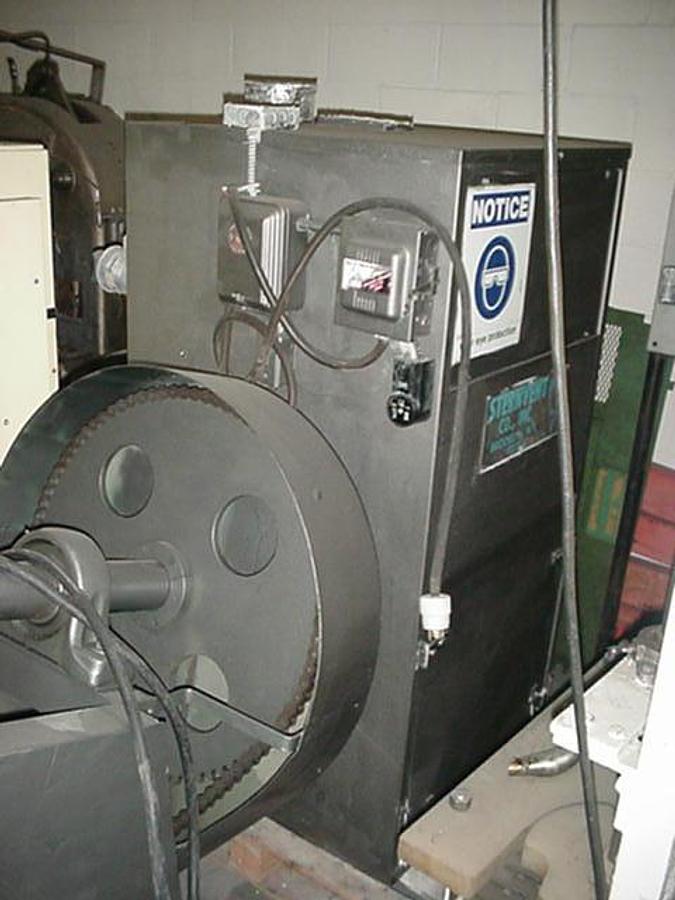
Sternvent
Sternvent focuses on providing dust and fume extraction systems for the manufacturing sector, particularly in food processing. Their solutions help maintain a safe and clean working environment.
FAQ:
What is a Sternvent dust collector and what industries is it designed for?
Sternvent is a manufacturer that specializes in dust and fume extraction systems built for the manufacturing sector. The brand has a particular focus on food processing environments, where airborne particulate control is critical for both worker safety and regulatory compliance. Their dust collectors are engineered to maintain clean, safe working conditions in facilities where fine dust and fumes are a byproduct of daily operations.
Beyond food processing, Sternvent dust collection equipment is well-suited for a range of industrial applications including woodworking shops, metalworking facilities, and general manufacturing environments. The DS-150 is one of the models that surfaces in the used equipment market, making Sternvent a viable option for buyers sourcing pre-owned industrial dust collection equipment. Because Sternvent occupies a more specialized position in the market compared to mainstream brands, buyers should take time to research the specific model they are considering and verify that it fits their production requirements before purchasing.
What should buyers look for when evaluating a used Sternvent dust collector?
The two most critical technical specifications to evaluate on any used dust collector are CFM (cubic feet per minute) and static pressure. CFM tells you how much air volume the unit can move, which directly determines whether the collector can handle the dust load generated by your specific machines and shop size. Static pressure indicates how effectively the unit pulls air through ductwork and filters. A used Sternvent unit should be matched to your actual production needs based on these figures, not just purchased because the price is attractive.
Beyond performance specs, condition assessment is essential when buying used. Buyers should closely inspect the filter media for tears, clogging, or excessive wear, since a compromised filter defeats the entire purpose of the machine. The housing, intake ports, collection bags or bins, and any motorized components should all be examined for signs of damage or heavy wear. Asking the seller for photos, video, or an in-person inspection before committing to a purchase is strongly recommended. Used equipment is typically sold as-is, so the burden of due diligence falls entirely on the buyer.
What types of dust and particulate can an industrial dust collector like the Sternvent handle?
Industrial dust collectors in this class are generally designed to handle a wide range of airborne particulate, including wood dust, grain dust, fine food processing byproducts, plastic dust, and light metal shavings depending on the specific model and filtration setup. Sternvent's focus on food processing environments means their systems are built to manage fine organic particulate that can pose both health hazards and explosion risks if not properly controlled.
The suitability of any specific unit for a given material depends heavily on its filtration rating and airflow capacity. Fine particulate below 10 microns, which poses the greatest respiratory health risk, requires filters rated to capture sub-micron particles. Buyers dealing with combustible dust, such as wood flour or certain food powders, should also confirm that the equipment meets relevant NFPA standards for dust collection in explosive environments. When purchasing a used machine, it is worth consulting with the manufacturer directly to understand what materials the specific model was rated to handle and whether replacement filter media is still available for that unit.
What filtration efficiency should buyers expect from an industrial dust collector, and why does it matter?
Filtration efficiency is one of the most important performance factors in any dust collection system. Industrial buyers typically look for units capable of capturing particles at 1 micron or smaller, with HEPA-level filtration (rated at 99.97% efficiency for 0.3-micron particles) being the gold standard for environments where worker respiratory health is a priority. Dust particles in the 0.5 to 10 micron range are considered the most hazardous because they penetrate deepest into the lungs and are not visible to the naked eye.
For food processing and similar regulated industries, filtration efficiency is not just a performance preference but a compliance requirement. OSHA and other regulatory bodies set permissible exposure limits (PELs) for various types of airborne dust, and the dust collection system must be capable of keeping concentrations below those thresholds. When evaluating a used dust collector, buyers should identify the filter type installed, its rated micron capture level, and whether replacement filters for that model are still being manufactured and sold. A unit with excellent airflow specs is only as good as its filtration media.
How do you determine the right CFM capacity for a dust collector in your facility?
Sizing a dust collector correctly starts with calculating the total CFM demand of all the machines that will be connected to the system simultaneously. Each piece of equipment, whether it is a planer, sander, CNC router, or mixing system, has a recommended CFM requirement at the point of capture. These figures are typically listed in the equipment's technical documentation. You add up the CFM requirements of all machines that could be running at the same time, then factor in ductwork losses due to length, bends, and fittings, which can reduce effective airflow by a meaningful percentage.
As a general rule of thumb, buyers are advised to select a dust collector with at least 20 to 25 percent more capacity than their calculated minimum requirement. This buffer accounts for filter loading over time, which reduces airflow as particulate accumulates on the filter media, and for any future expansion of the shop's machine inventory. For used equipment purchases, it is also wise to verify that the unit's motor and impeller are in good working condition, since a worn motor may not deliver the CFM rating listed on the original specification sheet.
What is the typical price range for used industrial dust collectors?
Pricing for used industrial dust collectors varies considerably based on capacity, filtration type, brand, age, and overall condition. Small portable or single-machine units can sell in the range of a few hundred dollars, while mid-size units designed for multi-machine shop environments typically fall in the $1,000 to $5,000 range. Larger centralized systems with high CFM ratings, advanced filtration, and pulse-jet cleaning mechanisms can run significantly higher, sometimes into the tens of thousands of dollars depending on the configuration.
Buyers should factor in more than just the purchase price when budgeting for a used dust collector. Shipping and rigging costs for heavy industrial equipment can add hundreds or even thousands of dollars to the total landed cost. Replacement filters, any needed repairs, and installation costs should also be accounted for. Purchasing from a reputable used equipment dealer who specializes in industrial machinery, and who can provide accurate condition information and facilitate inspections, is one of the best ways to avoid unexpected costs after the sale.
Do used dust collectors come with a warranty?
Used industrial equipment, including dust collectors, is almost universally sold on an as-is basis by equipment dealers. Warranties are a feature of purchases made directly from manufacturers for new production equipment. When a machine changes hands in the secondary market, the original manufacturer's warranty does not transfer, and used equipment dealers do not typically offer their own warranty coverage.
This makes pre-purchase inspection critically important. Buyers should request an in-person visit, a video walkthrough, or at minimum detailed photographs that show the machine's current condition, including the motor, filter housing, collection vessel, and any control components. It is also worth contacting the manufacturer directly before purchasing a used unit to ask about parts availability and technical support for that specific model and age. Older or discontinued models may have limited parts availability, which can affect long-term serviceability. Choosing a dealer with a strong track record in industrial equipment sales is one of the most reliable ways to reduce risk in an as-is transaction.
What should buyers know about inspecting a used dust collector before purchase?
A thorough inspection of a used dust collector should cover both the mechanical and filtration components of the machine. On the mechanical side, buyers want to verify that the motor runs smoothly without unusual noise or vibration, that the impeller or fan wheel shows no signs of erosion or imbalance, and that all seals and gaskets are intact. Leaks in the housing or duct connections reduce suction efficiency and can allow fine particulate to escape back into the facility air.
On the filtration side, the condition of the filter cartridges or bags is critical. Torn, saturated, or heavily loaded filter media will need to be replaced before the machine can perform as intended, and replacement filters for some older or specialized models can be expensive or difficult to source. Reputable used equipment dealers will typically accommodate in-person inspections at their facility, or arrange video inspections for remote buyers. In some cases, equipment may still be installed and operating at a production facility, allowing buyers to see the machine running under real conditions before committing to the purchase. Either way, getting a clear, honest picture of the machine's current working order before finalizing the transaction is essential.
What are the typical shipping and logistics considerations for buying a used dust collector?
Industrial dust collectors range from compact portable units to large centralized systems, and the shipping requirements vary accordingly. Smaller units may ship on a standard pallet via LTL (less-than-truckload) freight, while larger machines often require specialized crating to protect components during transit. The level of packaging required directly affects shipping costs, and buyers should ask dealers specifically how the machine will be prepared for shipment before agreeing to a purchase.
Larger or heavier units may also require rigging services for loading at the seller's facility and unloading at the buyer's location. Rigging involves the use of forklifts, cranes, or other heavy equipment to safely move machinery that cannot be handled manually, and this service typically carries an additional cost. Buyers should request a full breakdown of packaging, rigging, and freight charges to understand the true landed cost of the equipment before finalizing the deal. It is also worth confirming whether the buyer is responsible for arranging their own unloading equipment on the receiving end, since many freight carriers will only deliver to the curb for heavy industrial shipments.
Are replacement filters and spare parts available for used Sternvent dust collectors?
Parts and filter availability is one of the most practical concerns when purchasing any used industrial equipment, and dust collectors are no exception. For a brand like Sternvent, which occupies a more specialized position in the market, buyers should proactively contact the manufacturer before completing a purchase to ask about parts support for the specific model and production year they are considering. Manufacturers can typically advise on whether filter cartridges, bags, motors, and other wear components are still being produced and sold for a given unit.
If the manufacturer no longer supports a particular model, buyers may still have options through third-party filter suppliers who produce compatible media based on dimensional specifications. However, this requires additional research and introduces some uncertainty about fit and performance. The age of the machine is a meaningful factor here. A used dust collector that is five to ten years old is far more likely to have active parts support than one that is twenty or more years old and based on a discontinued platform. This is worth investigating before purchase, since a machine with no available replacement filters has a limited useful life regardless of its current condition.