Category
Manufacturer
Model
Sterlco
Sterlco specializes in providing heating and cooling systems for various industrial applications, including food processing. Their reliable temperature control solutions are essential for maintaining product quality.
FAQ:
What types of industrial processes is Sterlco heating and cooling equipment best suited for?
Sterlco temperature control equipment has a strong track record in plastics processing, particularly injection molding, blow molding, and extrusion. In these applications, precise and consistent temperature control directly affects cycle times, part quality, and scrap rates, making a reliable heating and cooling unit a critical piece of production infrastructure. Beyond plastics, Sterlco units are also used in food processing and other industrial applications where maintaining specific process temperatures is essential to product consistency and safety.
The brand's broad product line, which includes mold temperature controllers, process chillers, hot oil units, and central temperature control systems, means that facilities with varied heating and cooling demands can often source compatible equipment from a single manufacturer. This versatility is one reason Sterlco has remained a recognized name in industrial temperature control for several decades. Buyers sourcing used Sterlco equipment should confirm that the specific model they are considering matches the temperature range and flow requirements of their intended process.
What temperature ranges can Sterlco temperature control units handle?
The temperature range a Sterlco unit can achieve depends largely on whether it is a water-based or oil-based system. Water-based temperature control units from Sterlco are generally rated to handle process temperatures up to approximately 250°F, which covers the majority of standard injection molding and general industrial heating applications. Oil-based units are designed for higher-temperature processes and can exceed that threshold, making them suitable for demanding applications where water-based systems would be inadequate or unsafe.
When evaluating a used Sterlco unit, it is important to review the original equipment specifications for that specific model, since temperature ratings, pump capacity, and heating element wattage vary across the product line. The model number is typically the most reliable starting point for confirming performance specs. Consulting directly with the equipment dealer and, where possible, with the manufacturer's technical support team can help buyers verify whether a particular used unit is appropriate for their process requirements, especially given that age and prior use can affect actual operating performance.
Does Sterlco make both water-based and oil-based temperature control systems?
Yes, Sterlco manufactures both water-based and oil-based temperature control units, and the choice between them is driven primarily by the process temperature requirements of the application. Water-based units circulate heated or cooled water through the process and are well-suited for applications where temperatures stay at or below approximately 250°F. They are common in standard injection molding, food processing, and general industrial heating where moderate temperatures are sufficient.
Oil-based units, sometimes referred to as hot oil units, use a thermal fluid instead of water as the heat transfer medium. This allows them to reach significantly higher process temperatures without the pressure concerns associated with high-temperature water systems. These units are typically used in processes that require sustained elevated temperatures, such as certain rubber molding or chemical processing applications. When sourcing used equipment in either category, buyers should pay close attention to the condition of seals, hoses, and heat exchangers, as these components are subject to wear and can affect performance on a used machine.
What capacity options are available for Sterlco industrial heating and cooling equipment?
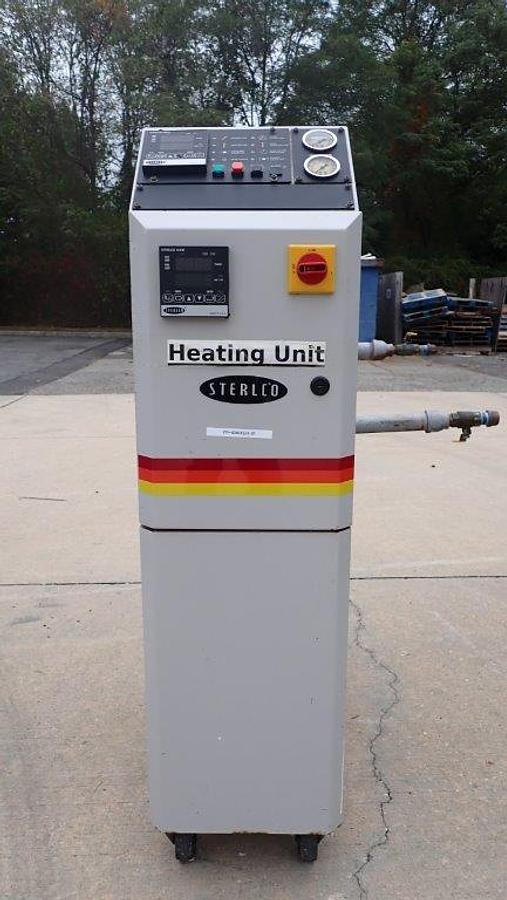
Sterlco has historically offered temperature control equipment across a wide range of capacities, from smaller portable units designed for single-zone mold temperature control up to larger central systems capable of serving multiple process zones simultaneously. Portable units, like the Sterlco G2012-CX Electric Heating Unit, are compact and designed for flexibility on a production floor, allowing them to be moved between machines or processes as needed. Larger multi-zone configurations are better suited for facilities running high-volume production where several molds or process points need independent temperature control from a centralized system.
When buying used Sterlco equipment, capacity is one of the most important specifications to match to the intended application. Key figures to evaluate include heating capacity in kilowatts or BTUs, cooling capacity, pump flow rate in gallons per minute, and the number of zones the unit supports. A unit that is undersized for the application will struggle to maintain set-point temperatures under load, while an oversized unit may represent unnecessary capital expenditure. Dealers selling used Sterlco equipment should be able to provide model specifications, and buyers can cross-reference those specs with the manufacturer's published data for that model.
What is the typical lifespan of a Sterlco industrial temperature control unit?
Sterlco equipment is generally regarded as well-built for industrial use, and units that have been properly maintained can remain in productive service for 20 years or more. The actual service life of any individual unit depends heavily on the operating environment, the consistency of preventive maintenance, the quality of the process fluid used, and whether the unit was operated within its rated parameters. Components like pumps, heating elements, and temperature sensors tend to be the first to require attention, but these are also the parts most commonly available through industrial supply channels.
For buyers considering used Sterlco equipment, understanding the service history of a specific unit is more meaningful than the age of the machine alone. A well-maintained unit that is 15 years old may be a better purchase than a newer unit that was run hard without regular maintenance. Requesting maintenance records, asking about prior applications, and arranging a thorough inspection before purchase are all practical steps to assess the remaining useful life of a used unit. Consulting with the manufacturer about parts availability for a specific model and serial number is also advisable, since support levels can vary based on how long ago a particular model was produced.
Are replacement parts readily available for used Sterlco temperature control equipment?
Parts availability for Sterlco equipment varies depending on the model and how long ago it was manufactured. For many of their widely produced models, common wear components such as pump seals, heating elements, thermocouples, and solenoid valves are available through industrial parts distributors and, in some cases, directly from the manufacturer or authorized service centers. Sterlco's long history in the temperature control market means that many of their designs have been in circulation long enough for a secondary market of compatible parts to develop.
Buyers of used Sterlco equipment should do their parts research before completing a purchase, not after. The model number and serial number are the key details needed to identify compatible replacement parts. It is worth contacting the manufacturer directly to ask about parts support for that specific unit, since older or discontinued models may have limited availability for certain components. Some buyers also work with industrial repair shops that can fabricate or source equivalent parts for older equipment. Factoring in parts availability as part of the total cost of ownership is a sound practice when evaluating any used industrial temperature control unit.
What should buyers look for when inspecting a used Sterlco temperature control unit?
A thorough inspection of a used Sterlco unit should cover both the mechanical and electrical condition of the machine. On the mechanical side, key areas to examine include the pump for signs of leaks or bearing wear, hoses and fittings for cracking or corrosion, the heat exchanger for scale buildup or damage, and any visible seals for deterioration. On the electrical side, heating elements should be checked for proper resistance values, and temperature sensors and controllers should be verified for accurate readings. If the unit has a refrigeration circuit for cooling, the condition of the compressor and refrigerant charge are also important.
Dealers selling used industrial equipment will typically accommodate in-person inspections, virtual walkthroughs, or video captures of the machine to give buyers an accurate picture of its current condition. Some units may still be installed and operating at a production facility, which can allow for observation under actual working conditions. Keep in mind that most equipment dealers do not have the permitting or infrastructure to run production processes themselves, so functional testing may be limited to powering the unit and observing basic operation rather than running it under full process load. Buyers with specific concerns should discuss what level of inspection is feasible with the dealer before committing to a purchase.
What are the typical shipping and logistics considerations for buying used Sterlco equipment?
Shipping used industrial temperature control equipment requires more planning than standard freight. Smaller portable units like a single-zone electric heating unit can often be palletized and shipped via standard LTL freight, but the packaging needs to be adequate to protect the unit from damage during transit. Larger or heavier Sterlco systems may require custom crating, and the loading and unloading process at both ends may require a forklift or other rigging equipment, which adds to the overall cost. Buyers should ask dealers specifically about how the equipment will be packaged and what rigging will be needed, so there are no surprises on the receiving end.
Shipping costs for used industrial equipment are rarely fixed and depend on the size and weight of the machine, the origin and destination, the level of packaging required, and whether specialized rigging is needed. Buyers should request a full breakdown of all costs involved, including packaging, freight, and any loading or unloading charges, to understand the true landed cost of the equipment before finalizing a purchase. Payment for used equipment is typically required in full prior to shipment, which is standard practice in the used machinery industry.
How does buying used Sterlco equipment compare to buying from the manufacturer?
Purchasing used Sterlco temperature control equipment from a reputable dealer typically offers a significant cost advantage over buying equivalent equipment through standard commercial channels. Used units are often available at a fraction of the price of comparable equipment, which can make it practical for facilities to add temperature control capacity, replace aging units, or equip a new production line without the lead times and costs associated with procuring equipment through standard channels. This price difference can be particularly meaningful for smaller operations or facilities managing tight capital budgets.
The trade-off with used equipment is that buyers take on more responsibility for evaluating condition and fitness for purpose. Used industrial equipment is typically sold as-is, without the assurances that come with purchasing from a manufacturer. This puts the burden of due diligence squarely on the buyer, which is why selecting a dealer with a solid track record in industrial equipment and a specialty in process temperature control is important. Buyers should also factor in the potential cost of any refurbishment, parts replacement, or service needed to bring a used unit to their required operating standard before comparing the total cost against other options.
Are used Sterlco units compatible with existing plumbing and electrical systems in a facility?
Compatibility with existing facility infrastructure depends on the specific Sterlco model and the specifications of the facility's plumbing and electrical systems. Sterlco units are generally designed around standard industrial connection types, but buyers need to verify the electrical requirements of a specific unit, including voltage, phase, and amperage draw, against what their facility can supply. A three-phase 460V unit, for example, cannot simply be plugged into a single-phase circuit, and running the wrong voltage to a used unit can cause serious damage. Plumbing connections, including inlet and outlet sizes and thread types, should also be confirmed before installation.
For used equipment specifically, it is worth noting that previous owners may have modified connections or controls to suit their own facility setup. Inspecting the unit carefully or asking the dealer about any known modifications is a reasonable precaution. If the unit is still installed at a production facility, an in-person or video inspection can reveal how it was connected and what infrastructure it was running on, which gives buyers a clearer picture of what integration at their own facility will require. Consulting with a qualified electrician and a plumbing or mechanical contractor familiar with process equipment before finalizing an installation plan is always advisable.