Category
Manufacturer
Model
FAQ:
What types of Steriline equipment are commonly available on the used market?
Steriline manufactures a focused range of aseptic processing and sterile filling machinery for pharmaceutical and biotech production. The product portfolio includes vial filling and closing machines, rotary filling systems, isolators, visual inspection systems, freeze-drying loading and unloading systems, and stainless steel jacketed mix tanks in various capacities. Because pharmaceutical facilities periodically upgrade or decommission production lines, a range of these machine types does appear on the secondary market.
When browsing used Steriline equipment listings, buyers will typically encounter machines that were previously installed in licensed pharmaceutical manufacturing environments. This means the equipment was built to strict cleanroom and aseptic processing standards, which makes used Steriline machinery attractive even after decommissioning. Specific configurations, vessel sizes, and filling speeds will vary from listing to listing, so it pays to review the full specifications of each machine rather than comparing by model name alone.
Is used Steriline equipment still suitable for pharmaceutical-grade sterile filling applications?
Used Steriline equipment was purpose-built for aseptic and sterile filling environments, so the underlying engineering is designed to meet pharmaceutical-grade requirements. Steriline machines are constructed to comply with cGMP principles, FDA 21 CFR Part 11 data integrity requirements, EU Annex 1 guidelines, and ISO cleanroom classifications. That design intent does not disappear when a machine changes hands, but the buyer carries the responsibility of verifying the machine's actual condition and confirming it can be requalified for their specific application.
Before purchasing, prospective buyers should conduct a thorough inspection, review any available maintenance and calibration records, and consult with a qualified validation engineer about the requalification pathway. EU Annex 1 (revised in 2022) places increased emphasis on RABS and isolator integration for sterile manufacturing, so buyers should confirm whether a given used Steriline unit already incorporates those barrier systems or can be retrofitted. Engaging the manufacturer directly to understand parts availability and technical support for the specific model and age of the machine is also a prudent step before committing to a purchase.
What should buyers expect to pay for used Steriline equipment?
Pricing for used Steriline equipment varies considerably depending on the machine type, age, configuration, and overall condition. A smaller ancillary item like a stainless steel jacketed mix tank will sit at a very different price point than a fully configured vial filling and closing line with isolator integration. In general, used pharmaceutical-grade filling and aseptic processing equipment commands a premium over general industrial machinery because of the specialized materials, cleanroom construction, and regulatory documentation that typically accompanies it.
Buyers should factor in more than just the purchase price. Shipping, rigging, reinstallation, requalification, and any necessary replacement parts all contribute to the true landed cost of a used machine. Requesting a detailed quote from the dealer that covers packaging, freight, and loading or unloading rigging will help avoid surprises. Comparing the total cost against the lead time and expense of sourcing equivalent equipment through other channels is often what makes a well-priced used Steriline machine a sound investment for a pharmaceutical operation.
What regulatory standards does Steriline equipment meet?
Steriline designs its equipment to comply with a layered set of international pharmaceutical manufacturing regulations. The core standards include cGMP (current Good Manufacturing Practice), FDA 21 CFR Part 11 for electronic records and audit trails, EU Annex 1 for the manufacture of sterile medicinal products, and relevant ISO cleanroom classifications. These are not optional design choices for pharmaceutical filling equipment; they are baseline requirements that Steriline builds into the machine architecture from the start.
The 2022 revision of EU Annex 1 introduced stricter requirements around contamination control strategies and placed greater emphasis on RABS and isolator technology for sterile fill-finish operations. Steriline has incorporated both Restricted Access Barrier Systems and isolator options into its product line to address this regulatory shift. Buyers of used Steriline equipment should confirm which regulatory standards the specific unit was validated against during its prior service life, and work with their quality and validation teams to determine what additional documentation or testing may be needed to bring the machine into compliance within their facility.
How does an inspection work when buying used Steriline equipment?
Inspections are a standard part of buying used pharmaceutical machinery, and reputable dealers typically accommodate them in several formats. An in-person inspection is the most thorough option and allows a buyer or their technical representative to physically examine the machine, check the condition of contact surfaces, review any available maintenance logs, and assess components like seals, sensors, and control systems. When in-person visits are not practical, dealers can often arrange video inspections or provide detailed video walkthroughs that cover the same ground remotely.
In some cases, a used Steriline machine may still be installed and operating at the facility where it was originally used. When that is the situation, the dealer can sometimes coordinate an inspection at the actual production site, giving the buyer a chance to see the equipment running under real conditions. It is worth keeping in mind that most equipment dealers do not hold manufacturing permits, so they are generally not in a position to run full production trials or test the machine with actual pharmaceutical product. The inspection is focused on mechanical condition, completeness, and visible wear rather than a full operational qualification, which the buyer would need to complete after installation.
Are spare parts and technical support available for used Steriline machines?
Parts availability and manufacturer support are practical concerns that deserve attention before purchasing any used pharmaceutical equipment. Steriline is an active Italian manufacturer with an ongoing product line, which generally works in favor of buyers seeking spare parts for machines that are not excessively old. However, the level of support available for a specific unit will depend on its age and model, since older or discontinued configurations may have limited parts availability compared to more recent designs.
The most reliable way to gauge support expectations is to contact Steriline directly with the machine's model number and serial number before finalizing a purchase. The manufacturer can advise on parts availability, whether the machine is still within a supported generation, and what documentation or service resources exist for that specific unit. Third-party engineering firms that specialize in pharmaceutical filling equipment can also be a resource for parts sourcing and technical support, particularly for older machines where manufacturer support may be more limited.
What validation documentation typically comes with used Steriline equipment?
The documentation package associated with a used Steriline machine can vary significantly depending on how the previous owner maintained their records and what the dealer has been able to collect. In the best cases, a used pharmaceutical machine will come with factory acceptance test (FAT) records, site acceptance test (SAT) records, installation qualification (IQ) and operational qualification (OQ) protocols, calibration certificates, and maintenance logs. This kind of documentation history is genuinely valuable because it gives a buyer a starting point for requalification rather than treating the machine as entirely undocumented.
Buyers should ask the dealer specifically what documentation is available before committing to a purchase, and should not assume that a complete validation package will be included by default. Even with partial documentation, a used Steriline machine can often be requalified through a risk-based approach, but the scope of that work will depend on what records exist and the requirements of the buyer's regulatory environment. Consulting with a validation specialist early in the evaluation process helps set realistic expectations for the qualification effort that will follow installation.
What is a stainless steel jacketed mix tank, and what is it used for in pharmaceutical manufacturing?
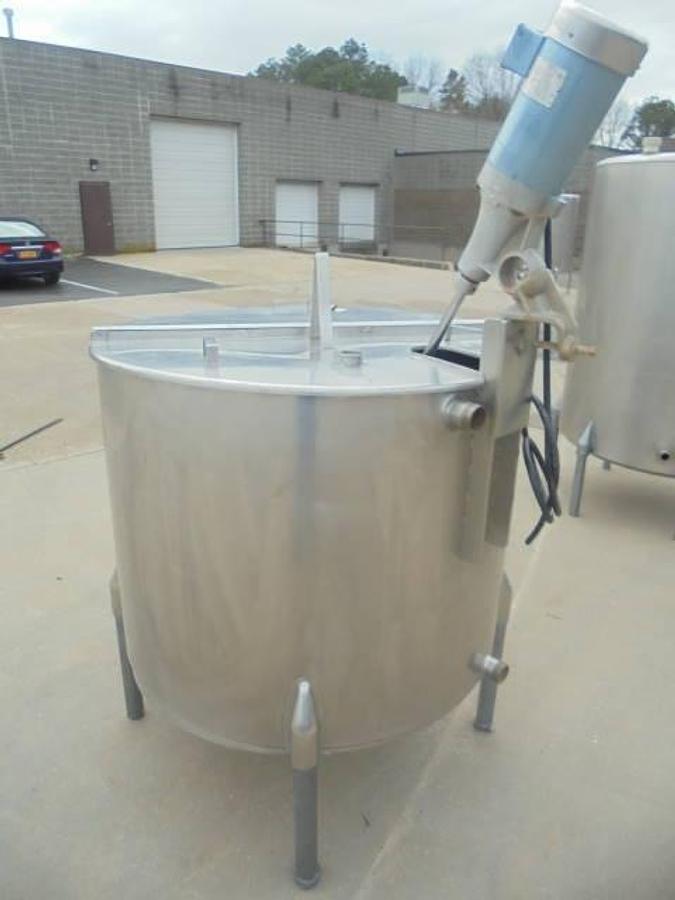
A stainless steel jacketed mix tank is a vessel designed to hold, mix, and temperature-control liquid or semi-liquid materials during pharmaceutical, biotech, or food-grade production processes. The jacket refers to an outer layer surrounding the main vessel wall, through which a heating or cooling medium (typically water, steam, or glycol) is circulated to maintain precise temperature control of the contents. This makes jacketed tanks essential for processes that require controlled heating, cooling, or temperature holding, such as dissolving active pharmaceutical ingredients, preparing liquid formulations, or maintaining viscosity during mixing.
In pharmaceutical manufacturing environments, these tanks are fabricated from 316L stainless steel to meet cleanability and corrosion-resistance requirements, and they are typically designed for CIP (clean-in-place) and SIP (sterilize-in-place) compatibility. Used jacketed mix tanks from pharmaceutical-grade manufacturers like Steriline are sought after because they are built to a higher standard of surface finish and documentation than general industrial vessels. Buyers should verify the tank's capacity, jacket rating, agitator configuration, and surface finish (measured in Ra values) to confirm the unit fits their specific process requirements.
What should buyers know about shipping and rigging costs for used Steriline equipment?
Shipping costs for used pharmaceutical filling equipment are rarely simple to estimate without knowing the specific machine dimensions, weight, destination, and the level of packaging required to protect the equipment in transit. Smaller items like mix tanks may require standard palletization, while larger filling lines, isolators, or rotary machines typically need custom crating and heavy-duty rigging for safe loading and unloading. The cost of that rigging, both at the point of origin and at the buyer's facility, is a separate line item that should be clarified upfront.
Buyers should ask the dealer for a complete breakdown of all costs involved in getting the equipment to their facility, including packaging, domestic freight, port fees if applicable for international shipments, and any specialized unloading equipment required on the receiving end. The goal is to understand the full landed cost before agreeing to a purchase, since freight and rigging can represent a meaningful percentage of the total transaction value for large pharmaceutical machinery. Dealers experienced in pharmaceutical equipment will be familiar with these logistics and should be able to provide detailed estimates.
What payment terms are typical when purchasing used pharmaceutical equipment?
Most used equipment dealers require payment in full before a machine is released for shipping. This is standard practice in the secondary machinery market and reflects the dealer's need to confirm funds before incurring the costs of packaging, rigging, and freight coordination. Wire transfer is the most common payment method for transactions of this size, though the specific options available will vary by dealer.
In some cases, dealers may offer extended terms or other arrangements to established repeat customers with whom they have a prior business relationship. Buyers who are new to a particular dealer should expect to pay in full upfront and plan their purchasing timeline accordingly. It is also worth confirming with the dealer exactly when payment is due relative to inspection, since some buyers prefer to complete their inspection and review any available documentation before releasing funds. Getting clarity on the payment schedule and the process for releasing the equipment is a straightforward conversation to have before any purchase agreement is signed.