Category
Manufacturer
Model
Star
Star specializes in manufacturing packaging equipment for the food, beverage, and pharmaceutical industries. Their product range includes advanced filling and sealing machines known for their precision and reliability.
FAQ:
What is a Star filter press and how does it work?
Star is a manufacturer known for producing filter press equipment used primarily in the food, beverage, and pharmaceutical industries, where precise solid-liquid separation is critical to product quality. Their filter presses work by forcing a liquid slurry through filter media under pressure, trapping solid particles as a filter cake while allowing clarified liquid to pass through. The filter media sits between a series of plates or discs, and as pressure builds, solids accumulate until the chamber is full and the cycle is complete.
The plate-and-frame or disc-style design that Star uses is well-suited to batch processing operations where consistent filtration results are needed across multiple runs. Liquid is pumped into the press, pressure is applied, and the clarified filtrate exits through outlet ports. Once the cycle finishes, the press is opened and the accumulated cake is discharged. This straightforward operating principle makes filter presses one of the most reliable and widely understood solid-liquid separation technologies in industrial use, and Star's food and pharmaceutical focus means their equipment is typically built with sanitary construction standards in mind.
What Star filter press models are available on the used equipment market?
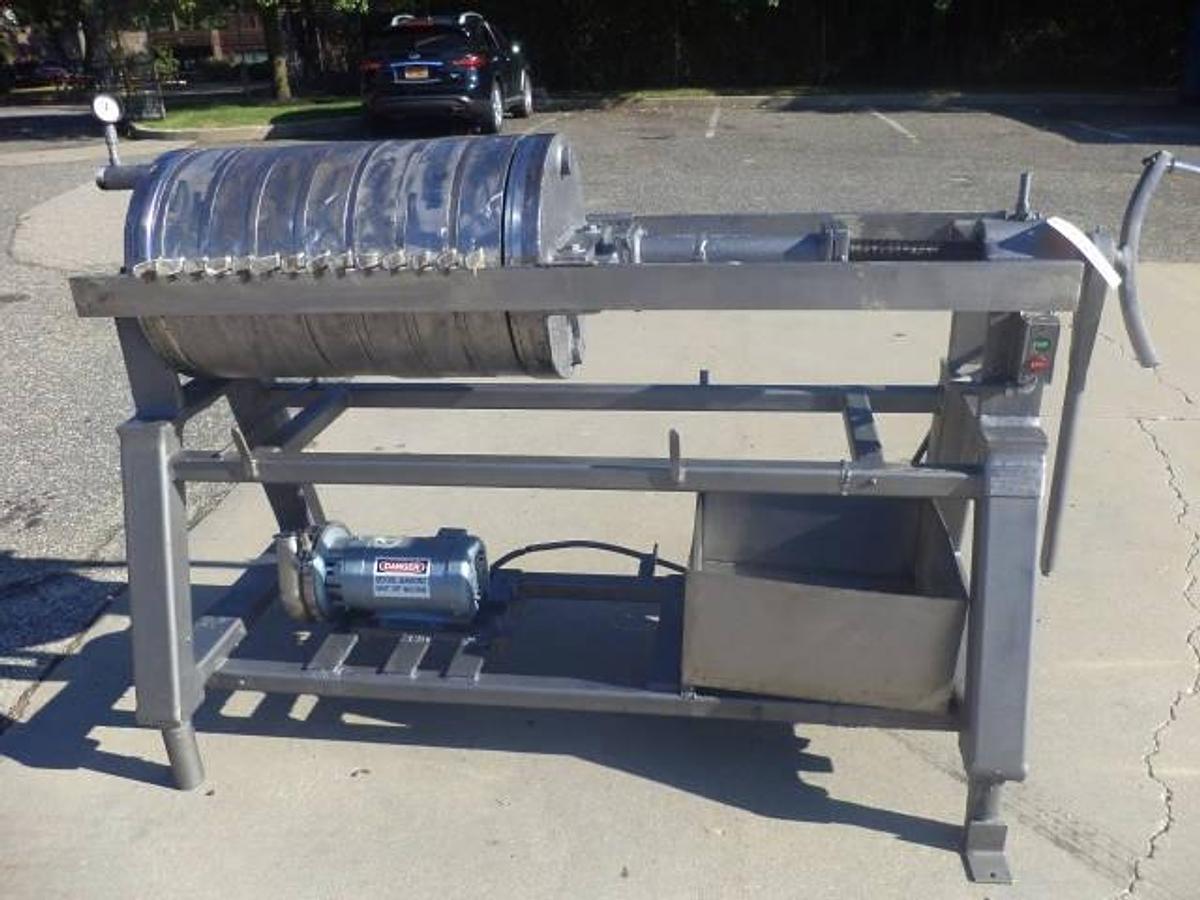
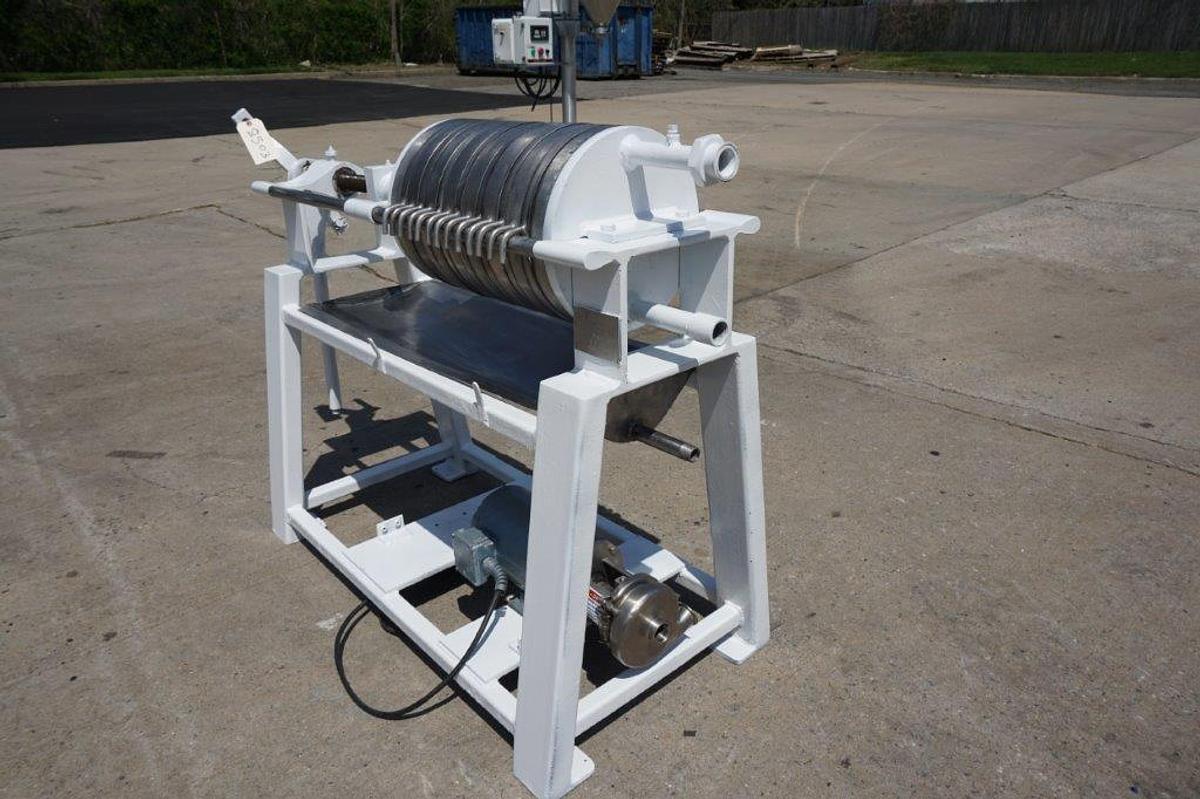
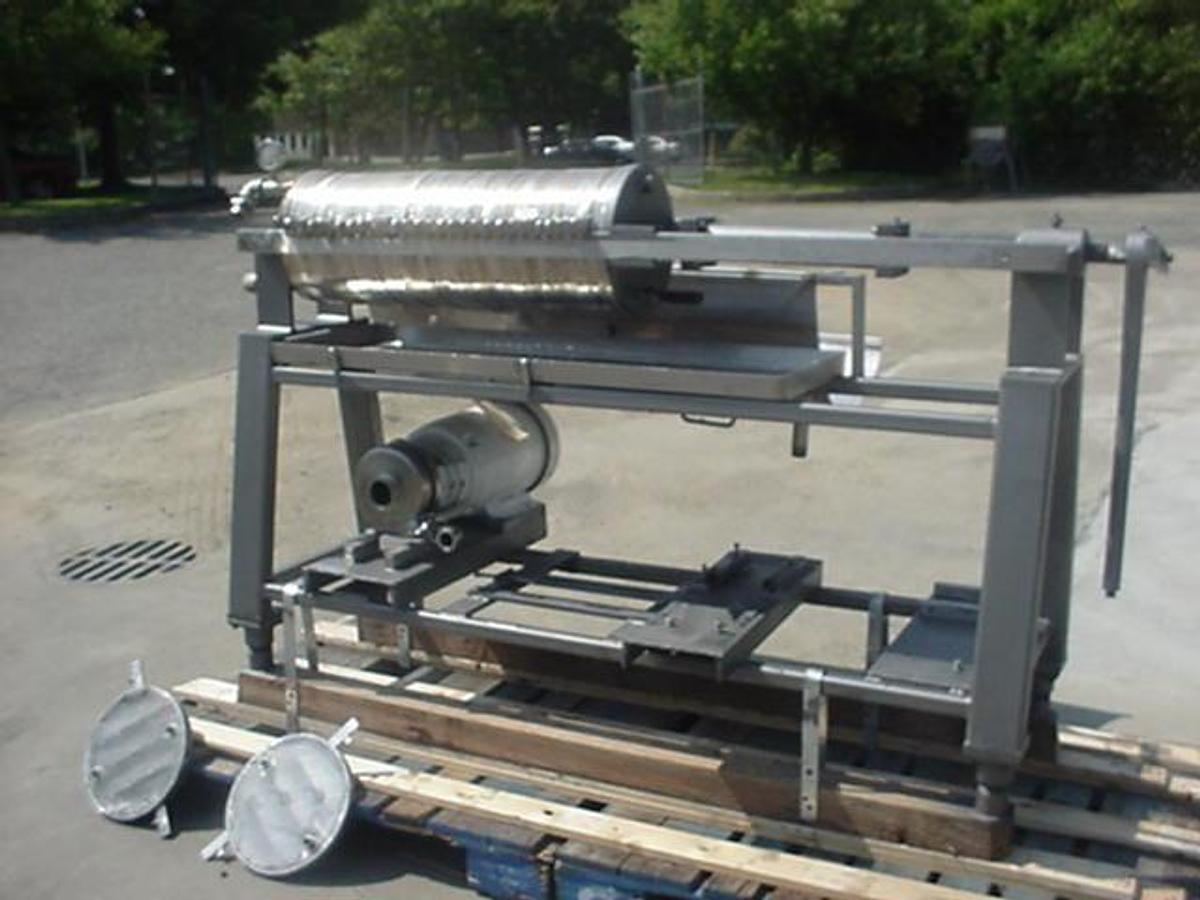
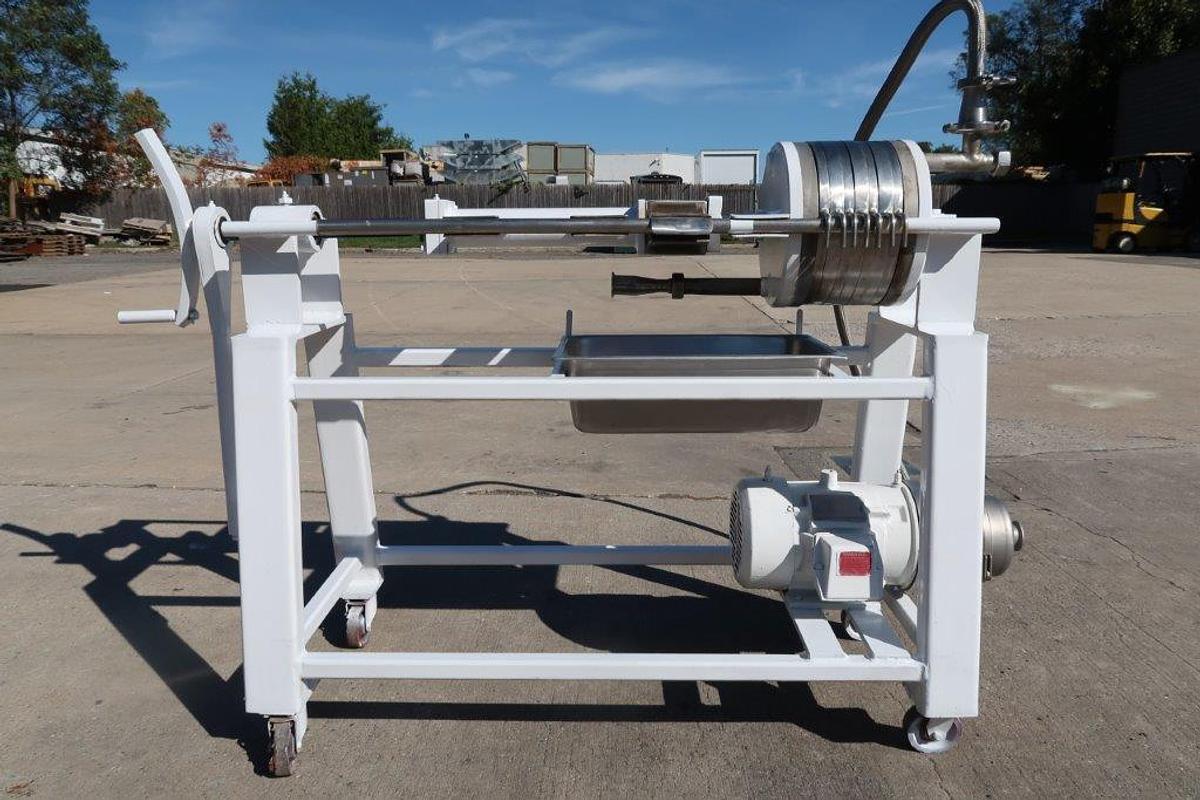
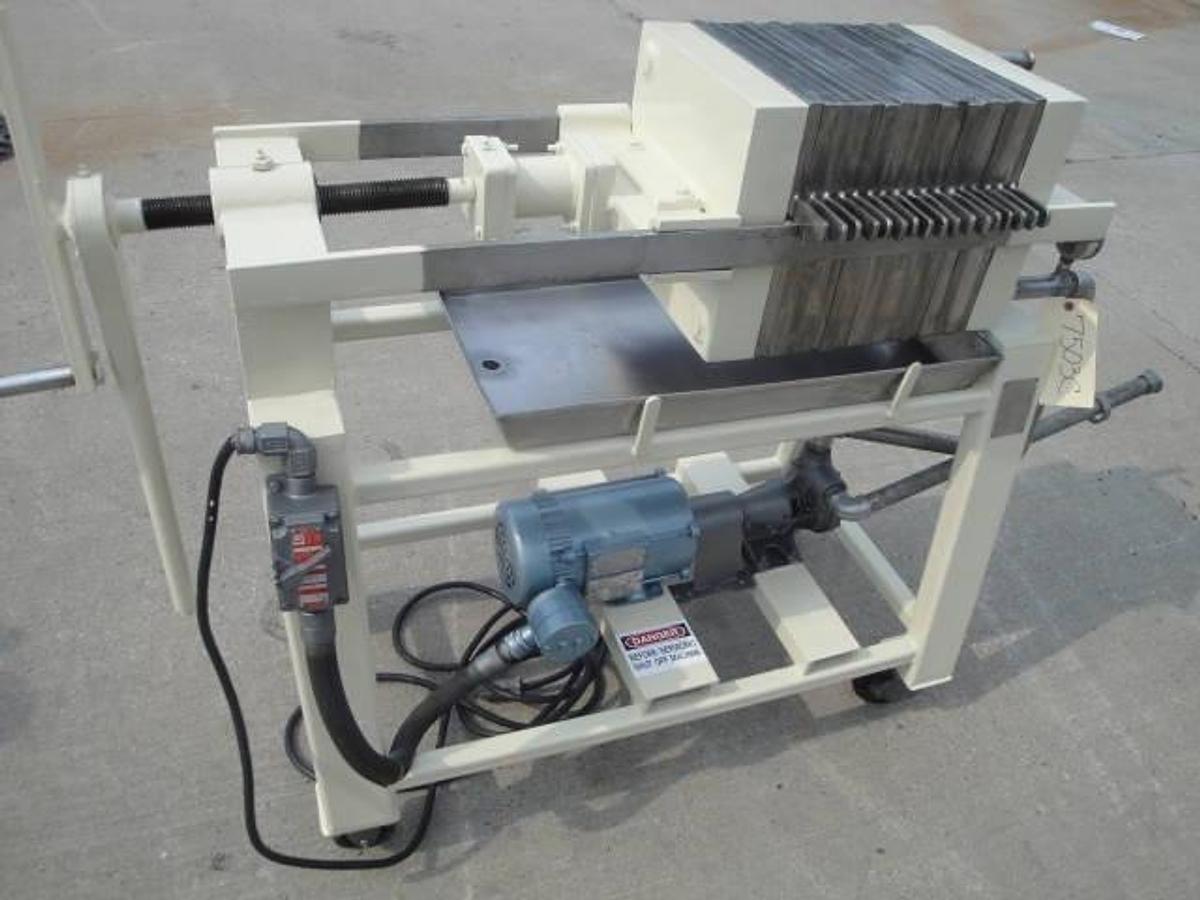
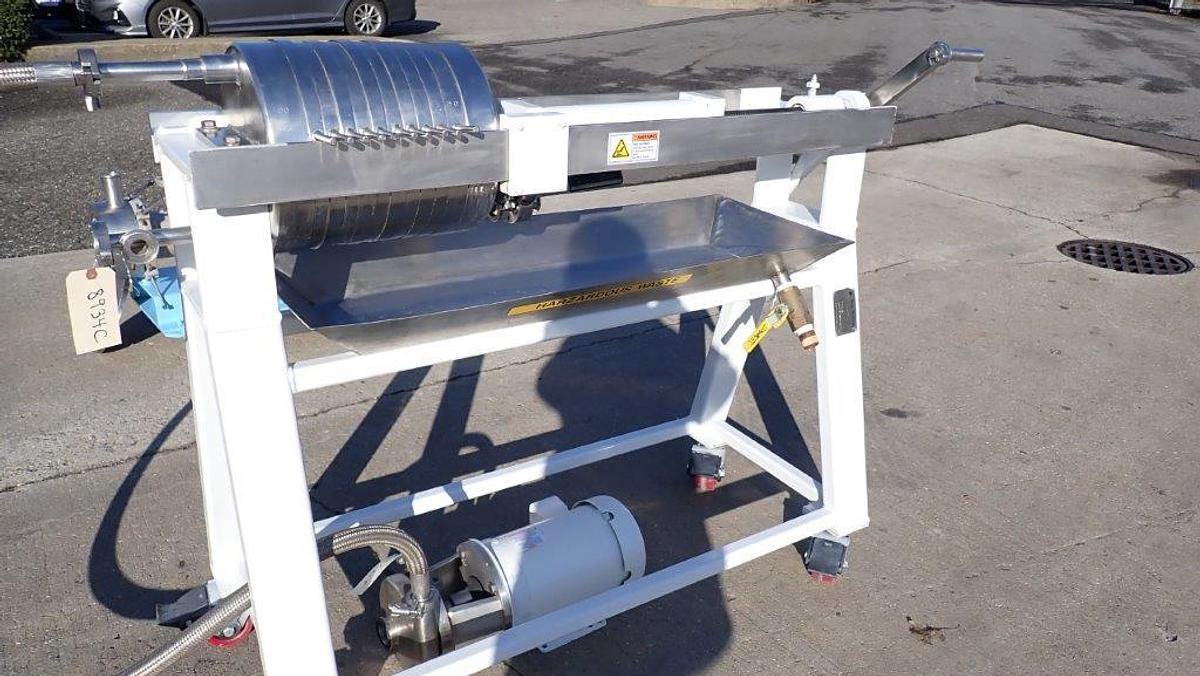
Used Star filter presses appear in several configurations, with plate diameters and disc counts being the primary variables that define each model's capacity. Common models found on the used market include 12-inch diameter stainless steel units with disc counts ranging from 8 to 28, as well as 12-inch by 12-inch square plate configurations with 18 discs. Larger 18-inch stainless steel models with integrated pumps also surface periodically, offering higher throughput for facilities with greater production demands.
The disc or plate count directly affects how much filter area is available per cycle, which in turn determines how much liquid can be processed before the press needs to be opened and the cake discharged. A 28-disc unit will generally handle significantly more volume per cycle than an 8-disc unit of the same plate diameter. Buyers evaluating used Star filter presses should match the disc count and plate size to their actual production volumes, keeping in mind that used equipment condition varies and a thorough inspection is important before committing to a purchase.
What industries use filter press equipment like the Star models?
Filter presses are used across a broad range of industries wherever separating solids from liquids is part of the production or treatment process. Star's equipment is specifically designed for food, beverage, and pharmaceutical applications, where sanitary construction, corrosion-resistant materials, and consistent filtration results are non-negotiable. In these industries, filter presses are commonly used to clarify juices, wines, and edible oils, to separate active pharmaceutical ingredients from process liquids, and to remove particulates from process streams before filling or packaging.
Beyond Star's core markets, filter press technology in general is also widely applied in mining and minerals processing, chemical manufacturing, and municipal or industrial wastewater treatment. The operating principle is the same across industries, but the materials of construction, filter media selection, and pressure ratings vary depending on the application. A stainless steel press designed for food-grade use differs meaningfully from a cast iron or polypropylene press built for mining slurries, so buyers should confirm that any used press they consider was built for a compatible application before purchasing.
What should buyers look for when inspecting a used Star filter press?
Inspecting a used filter press requires attention to several mechanical and structural details that directly affect performance. The condition of the plates or discs is one of the most important things to assess, since warped, cracked, or heavily worn plates can cause bypassing and uneven filtration. The frame, closing mechanism, and hydraulic or screw-closing system should operate smoothly without signs of excessive wear or corrosion. On stainless steel units like those Star produces, look carefully for pitting, weld repairs, or surface contamination that could affect sanitary compliance.
Filter cloths are a consumable item and are almost always replaced when a press changes hands, so their condition at the time of inspection matters less than the condition of the plates and frame. Buyers should also check inlet and outlet ports, manifolds, and any integrated pump components for wear or damage. Reputable used equipment dealers will typically accommodate in-person inspections at their facility, or arrange video walkthroughs if travel is not practical. For equipment still installed at a production facility, some dealers can coordinate an inspection at the plant where the press is currently or was recently in service, which can provide additional context about how the machine was operated and maintained.
What filter cloths and media are compatible with Star filter presses?
Filter cloth selection is one of the most application-specific decisions in filter press operation. The cloth must match both the physical configuration of the press (plate size, sealing surface geometry, and inlet hole placement) and the characteristics of the slurry being filtered (particle size, chemical compatibility, and required clarity of the filtrate). Common filter cloth materials include polyester, polypropylene, and nylon, each offering different chemical resistance and temperature tolerance profiles. Micron ratings typically range from very fine (1 to 5 microns for pharmaceutical or fine chemical applications) to coarser weaves used in food processing where larger particles are being captured.
For Star filter presses used in food and beverage applications, filter cloths and sheet-style filter media must be food-safe and capable of withstanding cleaning and sanitizing cycles. When purchasing a used Star press, buyers should confirm the plate or disc dimensions and sealing configuration so they can source compatible replacement media before putting the machine into service. Filter cloth suppliers can usually match cloth specifications to a press model given the plate size and application details, and some used equipment dealers can advise on media sourcing based on their familiarity with the equipment they sell.
How does plate size and disc count affect filter press performance?
Plate size and disc count together determine the total filtration area of a press, which is the single biggest factor in throughput capacity. A larger plate diameter means more filter area per disc, and a higher disc count multiplies that area across the full press. For example, a 12-inch diameter press with 28 discs will have roughly 3.5 times the filtration area of the same diameter press with 8 discs, which translates directly into how much liquid can be processed per cycle before the press needs to be opened and cleaned.
Cycle time is also affected by filtration area relative to the volume of slurry being fed. A press with more area will reach its cake capacity more slowly, allowing longer uninterrupted runs, which is particularly valuable in continuous production environments where frequent press openings slow throughput. Buyers should calculate their required filtration area based on their target flow rate, solids loading, and acceptable cycle time before selecting a used press. Sizing a press too small for the application leads to frequent cycling and higher labor demands, while oversizing adds unnecessary capital cost. Consulting with a knowledgeable used equipment dealer who specializes in filtration equipment can help narrow down the right configuration.
Is a Star filter press suitable for batch or continuous processing?
Filter presses are inherently batch-processing equipment. Liquid slurry is pumped into the press, pressure builds as solids accumulate between the plates or discs, and the cycle ends when the chambers are full or target pressure is reached. At that point, the press must be opened, the filter cake discharged, and the media cleaned or replaced before the next cycle begins. This batch cycle is a fundamental characteristic of the plate-and-frame or disc filter press design, and Star's models follow this same operating pattern.
For production lines that require continuous filtration, a filter press is typically used alongside surge tanks or multiple presses operating in staggered cycles so that one press is always in filtration mode while another is being discharged and reset. In food, beverage, and pharmaceutical applications where Star equipment is commonly used, batch processing often aligns naturally with production schedules, making filter presses a practical fit. Buyers considering a used Star press for a continuous-flow application should plan their system layout accordingly, factoring in cycle times and downtime for cake discharge when calculating overall system throughput.
How should a used Star filter press be cleaned and maintained?
Proper cleaning is especially important for filter presses used in food, beverage, and pharmaceutical applications, where residual product or microbial buildup can compromise future batches. After each cycle, filter cloths or sheets should be flushed or washed to remove retained solids, and the plates or discs should be inspected for buildup in corners or around sealing surfaces. Stainless steel construction, which is standard on Star filter presses, makes cleaning easier and more effective than cast iron or painted steel alternatives, and it supports the use of common sanitizing agents without corrosion concerns.
Beyond routine cleaning, a preventive maintenance schedule should include inspecting the closing mechanism (hydraulic cylinder seals, screw threads, or toggle components depending on the model), checking gaskets and sealing surfaces for wear or deformation, and monitoring inlet and outlet connections for leaks. Filter cloths are consumable items and should be replaced on a schedule based on flow resistance and visual condition rather than waiting for a failure. When purchasing a used press, it is worth asking the seller about the machine's service history if available, and budgeting for a full inspection and any necessary refurbishment of seals and media before the press goes into service.
What should buyers understand about shipping and rigging a used filter press?
Filter presses vary considerably in size and weight, and shipping logistics depend heavily on the specific model. Smaller 12-inch disc presses can often be palletized and shipped via standard freight carriers, but larger units like an 18-inch press with an integrated pump may require specialized crating or skidding to prevent damage in transit. The cost of packaging, crating, and freight should be factored into the total landed cost of the equipment before comparing prices between sellers. Buyers should ask the dealer specifically what packaging is included in the listed price and what additional charges apply.
Larger or heavier presses may also require forklift or crane rigging at both the shipping origin and the receiving facility. Rigging is typically an added cost that the buyer arranges or that the dealer can coordinate for an additional fee. Buyers should confirm the weight and footprint of the press before delivery so that their facility is prepared to receive and position the equipment safely. Freight damage claims on machinery can be complicated, so proper packaging by the seller is worth confirming in advance rather than assuming it is included.
What are typical payment terms when purchasing used filter press equipment?
Most used industrial equipment dealers require full payment prior to releasing equipment for shipment. This is standard practice in the used machinery industry and applies to filter presses and similar capital equipment. Payment is typically accepted by wire transfer, and some dealers may accept other forms of payment on a case-by-case basis. Buyers should confirm accepted payment methods and any processing timelines before finalizing a purchase, particularly if they need the equipment by a specific date.
Some dealers extend payment terms to repeat customers or buyers with established relationships, but this is not the norm for first-time transactions. Buyers should also be aware that the purchase price of the equipment is separate from freight, rigging, and any applicable taxes or import duties, all of which contribute to the final landed cost. Getting a clear breakdown of all costs before committing to a purchase helps avoid surprises and allows for accurate budgeting. If financing is needed, buyers typically arrange that independently through their own banking relationships, as most used equipment dealers do not offer in-house financing.