Category
Manufacturer
Model
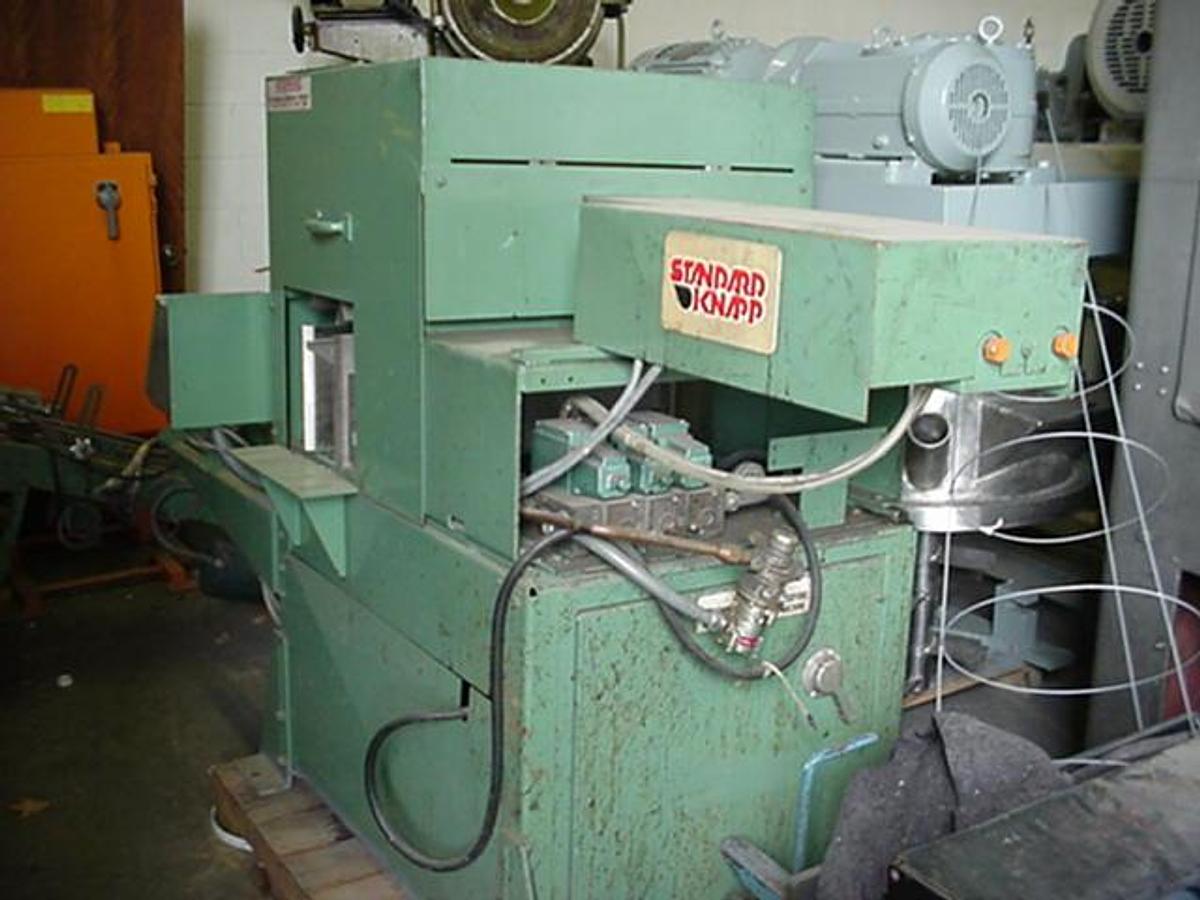
Standard Knapp
Standard Knapp is a leader in the packaging machinery sector, primarily serving the food and beverage industries. They are well-known for their innovative case packing and cartoning solutions that enhance production line efficiency.
FAQ:
What types of Standard Knapp packaging machinery are typically available on the used equipment market?
Standard Knapp produces a focused range of secondary packaging equipment, and the used market reflects that specialization well. The most commonly available machines include case packers, tray packers, shrink wrappers, cartoners, and conveyor systems. The Standard Knapp 806 Case Packer is one model that shows up with some regularity among used equipment dealers. These machines were built for high-speed production environments, with certain models capable of handling hundreds of units per minute, which is part of why they hold their value and remain in demand long after their initial installation.
Because Standard Knapp focused heavily on the food and beverage sectors, much of the used inventory originates from bottling plants, breweries, dairy operations, and consumer goods manufacturers that have upgraded or closed production lines. Buyers looking for a specific model or configuration should work with dealers who specialize in packaging machinery, as they are more likely to source and accurately represent the condition of these machines compared to general industrial surplus sellers.
What industries are Standard Knapp packaging machines best suited for?
Standard Knapp built its reputation primarily in the beverage industry, where its case packers and tray packers became workhorses for bottling lines handling glass, PET, and can formats. Breweries, soft drink bottlers, water bottlers, and juice producers have historically been among the heaviest users of Standard Knapp equipment. The machines are engineered for the kind of continuous, high-volume throughput that those environments demand, which is why they tend to have long service lives even in demanding production settings.
Beyond beverages, Standard Knapp equipment is also well suited for food processing, dairy, household products, and general consumer goods packaging. Any operation that needs reliable secondary packaging, meaning grouping products into cases, trays, or wrapped bundles at speed, will find Standard Knapp machines relevant. When buying used equipment, it is worth asking the dealer about the machine's prior application, since a machine that spent years on a dry goods line will have experienced very different wear conditions than one used in a wet or refrigerated environment.
What should buyers know about purchasing used Standard Knapp machinery instead of buying from the manufacturer?
Buying used Standard Knapp equipment offers a meaningful cost advantage over acquiring equivalent capacity through other means, particularly for operations that need proven, production-ready machinery without the lead times associated with custom-built systems. Standard Knapp machines have a reputation for durable construction, and many units remain fully functional after decades of service. That longevity is a key reason the secondary market for these machines stays active. Buyers can often acquire a capable, well-built case packer or shrink wrapper at a fraction of what comparable new capacity would cost.
The tradeoff is that used equipment comes without the protections that accompany a direct manufacturer purchase. Used machines are sold as-is, meaning the buyer takes on the responsibility of verifying condition before committing. This makes the inspection process critical. Reputable used equipment dealers will typically offer in-person, virtual, or video inspections so buyers can assess the machine's current state. It is also worth contacting Standard Knapp directly to understand what level of parts availability and technical support exists for the specific model and age of machine under consideration, since older models may have more limited support options.
Does used Standard Knapp equipment come with a warranty?
Warranties on used industrial machinery work very differently from what buyers might expect with manufacturer-direct purchases. Manufacturers typically provide warranty coverage on equipment they sell directly. Used equipment dealers, by contrast, generally sell machinery on an as-is basis, which means there is no warranty coverage transferring to the buyer. The responsibility for assessing condition and fitness for purpose falls entirely on the buyer prior to purchase.
Given that reality, selecting a dealer carefully matters a great deal. Buyers should look for dealers with a long track record in packaging and processing equipment specifically, not just general industrial surplus. A dealer who understands Standard Knapp machinery can provide more meaningful information about a machine's history, condition, and likely service needs than one treating it as generic metal. Taking full advantage of available inspection options, whether in person or through detailed video, and consulting with Standard Knapp's aftermarket support team about parts and service availability for the specific model, are the most practical ways to protect a used equipment purchase.
Are replacement parts and technical support available for older Standard Knapp models?
Standard Knapp has historically maintained aftermarket support for many of its legacy models, which is a meaningful advantage compared to some other packaging machinery manufacturers. Spare parts, field service, and technical documentation have remained available for a range of older equipment, though the level of support can vary depending on the age and specific model in question. Before purchasing a used Standard Knapp machine, it is worth reaching out to the manufacturer directly to confirm what parts are currently stocked or available to order, and whether field technicians are still familiar with that model's service requirements.
For machines where manufacturer support has become limited, the broader market for used Standard Knapp parts can also be a resource. Because these machines were widely deployed across the beverage and food industries, decommissioned units sometimes become parts sources. Buyers purchasing used equipment should ask the selling dealer whether any spare parts, manuals, or electrical schematics are included with the machine, as that documentation can significantly reduce the time and cost of future maintenance.
What does the inspection process look like when buying used Standard Knapp packaging equipment?
Inspection is the most important step in any used packaging machinery purchase, and reputable dealers will accommodate it in several forms. In-person inspections allow a buyer or their technician to physically examine the machine, check mechanical components, review wear points, and get a direct sense of overall condition. Virtual inspections conducted over video call are a practical alternative for buyers who cannot travel, and many dealers also offer pre-recorded video walkthroughs that cover the machine from multiple angles and demonstrate key functions.
One important nuance with used industrial equipment is that most dealers are not set up to run actual production trials. Running a machine with live product requires production permits and infrastructure that a typical equipment dealer does not maintain. What an inspection can realistically show is the mechanical and electrical condition of the machine, evidence of prior maintenance, visible wear on components like guides, belts, and sealing elements, and whether the machine powers up and cycles correctly. Some machines may still be in active production at the original facility when they are listed for sale, in which case the dealer may be able to arrange an inspection at that plant, which offers the best possible view of the equipment in working condition.
What is the typical price range for used Standard Knapp packaging machinery?
Pricing for used Standard Knapp equipment varies considerably based on the machine type, model, age, condition, and how much demand exists for that particular configuration at the time of purchase. Entry-level or older conveyor and tray packing equipment might be available in the lower five-figure range, while more complex high-speed case packers or shrink wrap systems in good working condition can reach well into the mid to upper five figures. Machines that are more recent, have lower hours, or come with documented maintenance histories tend to command higher prices.
Buyers should also factor in costs beyond the sticker price when evaluating used Standard Knapp equipment. Rigging, crating, freight, and any refurbishment or integration work needed at the destination facility can add meaningfully to the total landed cost. Getting a clear breakdown of all those ancillary costs from the dealer before committing is a standard part of the purchasing process. Comparing total landed cost against the cost of alternative solutions, including other used equipment options, gives the most accurate picture of value.
What are the shipping and logistics considerations when purchasing used Standard Knapp machinery?
Standard Knapp machines are industrial-grade secondary packaging systems, and many of them are large, heavy pieces of equipment that require careful handling throughout the shipping process. Proper packaging is essential to prevent damage in transit. Depending on the size and weight of the machine, this can range from standard palletization with protective wrapping to full custom crating. Dealers typically offer different levels of packaging, and the cost will reflect the level of protection required. Buyers should ask specifically what packaging method will be used and whether it is appropriate for the machine's size and fragility.
For larger machines, professional rigging is usually required for both loading at the origin and unloading at the destination. Rigging involves specialized equipment and trained crews to safely move heavy machinery, and it is an additional cost that buyers need to account for. Freight costs themselves will vary based on distance, carrier, and whether the machine ships via flatbed, enclosed trailer, or container. Getting a full quote that covers rigging, packaging, freight, and any required permits for oversized loads gives buyers an accurate picture of total delivered cost before the purchase is finalized.
What are the installation and integration requirements for Standard Knapp packaging systems?
Standard Knapp machines are designed to integrate into existing production lines, which means installation involves more than simply placing the machine on the floor and connecting power. The equipment needs to be positioned correctly relative to upstream and downstream line components, leveled, and mechanically connected to adjacent conveyors or feeding systems. Electrical connections must match the facility's power supply specifications, and pneumatic systems, if the machine uses them, need to be connected to an adequate compressed air source. Buyers should obtain the machine's electrical and mechanical specifications from the dealer before purchase to confirm compatibility with their facility.
Line integration also involves configuring the machine for the specific product formats and packaging configurations the buyer intends to run. Standard Knapp case packers and tray packers are often adjustable for different container sizes and pack patterns, but changeover parts or guides may be needed for formats that differ from the machine's prior setup. Having a qualified packaging machinery technician or systems integrator involved in the installation is advisable, particularly for buyers who are not already familiar with the specific model. Standard Knapp's aftermarket service team may also be able to provide installation support or guidance, depending on the model and its service history.
What payment terms should buyers expect when purchasing used Standard Knapp equipment?
Payment practices in the used industrial machinery market tend to be fairly consistent across dealers. The standard expectation is full payment prior to the machine being released for shipping. This is the norm rather than the exception, and buyers should plan accordingly when budgeting for a purchase. Some dealers extend payment terms or financing options to repeat customers or buyers with established relationships, but those arrangements are the exception rather than the rule for first-time transactions.
Buyers who are unfamiliar with a particular dealer should take the time to verify the dealer's reputation and track record before sending payment. Checking how long the dealer has been in business, whether they specialize in packaging and processing equipment, and whether they have references or verifiable transaction history are all reasonable steps. Because used equipment is sold as-is and payment is typically required upfront, the credibility and transparency of the dealer carrying the machine matters as much as the condition of the machine itself.