Category
Manufacturer
Model
FAQ:
What is a St. Regis CP kettle and what is it used for?
St. Regis CP kettles are industrial-grade processing vessels designed for large-scale food, beverage, pharmaceutical, and chemical manufacturing operations. The "CP" designation refers to a specific construction series within the St. Regis product line, typically associated with jacketed and scraped-surface configurations built to handle viscous, heat-sensitive, or high-volume materials. These kettles are engineered for continuous mixing, heating, cooling, and agitation of product batches in demanding production environments.
In food processing specifically, scraped surface kettles like those in the St. Regis CP line are commonly used for products such as sauces, soups, confections, dairy items, and other thick or particulate-laden materials that require uniform heat transfer and constant wall contact to prevent scorching or uneven cooking. The jacketed design allows steam, hot water, or chilled water to circulate around the vessel walls, giving operators precise control over product temperature throughout the batch cycle. Given their size and construction, these are strictly commercial and industrial machines, not residential equipment.
What does "scraped surface" mean on a jacketed kettle?
A scraped surface kettle uses a rotating agitator fitted with blades or scrapers that continuously wipe the interior walls of the vessel during processing. This constant contact serves two purposes: it prevents product from sticking or burning onto the heated walls, and it promotes uniform heat transfer throughout the batch. For viscous products like caramel, cheese sauce, tomato paste, or pudding, this mechanical action is essential because these materials do not flow freely enough to self-circulate away from the hot surface.
The scraper blades are typically made from food-grade materials such as UHMW polyethylene or stainless steel, depending on the application and the abrasiveness of the product being processed. In a jacketed scraped surface kettle, the jacket surrounding the vessel carries the heating or cooling medium, while the agitator handles product movement simultaneously. This combination makes the design highly efficient for batch processing of thick, sticky, or shear-sensitive materials that would be damaged or unevenly processed in a conventional stirred tank.
What is a cone bottom kettle and why does it matter for food processing?
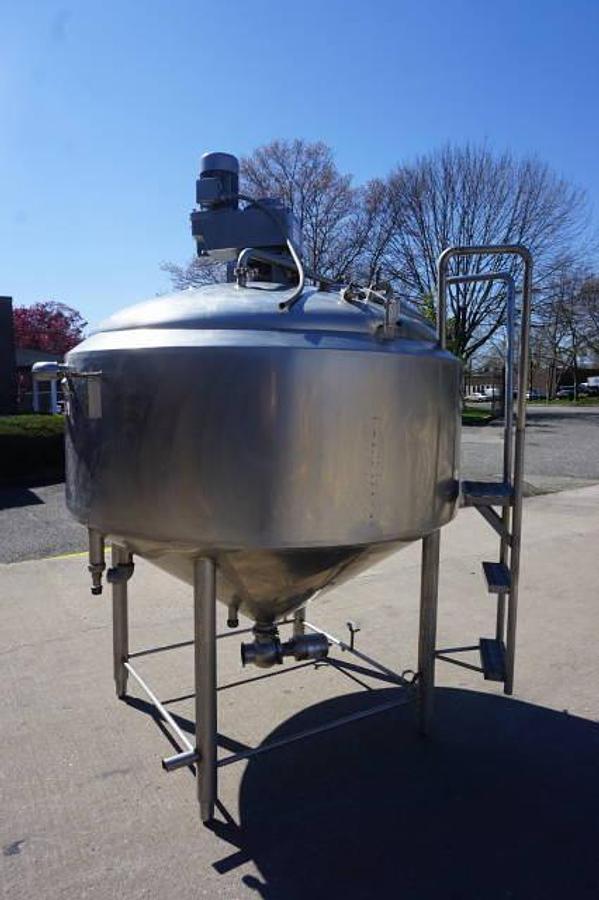
A cone bottom kettle features a conical or tapered lower section rather than a flat or dished bottom. This geometry is specifically designed to facilitate complete product discharge at the end of a batch cycle. Because the cone directs all material toward a central drain valve at the lowest point, operators can empty the vessel more thoroughly with less manual intervention and less product waste. For food manufacturers processing expensive or perishable ingredients, this translates directly into improved yield and easier sanitation between batches.
Cone bottom designs also reduce the amount of residual product left clinging to the vessel interior, which shortens cleaning time and lowers the risk of cross-contamination between batches. In high-volume production environments where a kettle may be cycled multiple times per shift, that efficiency adds up significantly. The 500-gallon St. Regis CP stainless jacketed scraped surface kettle with a cone bottom combines all of these features, making it a capable option for processors handling sauces, soups, confections, or similar products that require complete and sanitary discharge after each production run.
What sizes do St. Regis CP jacketed kettles typically come in?
St. Regis CP jacketed kettles are manufactured across a range of capacities suited to different production scales, from smaller pilot or specialty batch sizes up to large-volume production vessels. In the used equipment market, listings commonly include units in the range of 100 gallons up through several hundred gallons, with 500-gallon configurations representing a common size for mid-to-large scale food and beverage processing operations. Capacity selection depends heavily on batch size requirements, production frequency, and the physical constraints of the facility.
Buyers sourcing used St. Regis CP kettles should pay close attention to the stated working capacity versus the total vessel volume, as these figures can differ. Jacketed vessels also have minimum fill requirements to ensure the agitator and scrapers function properly and the heating jacket makes adequate contact with the product. When evaluating a specific unit, it is worth confirming the vessel dimensions, agitator configuration, and jacket pressure rating alongside the stated gallon capacity to make sure the machine fits the intended application.
What materials are St. Regis CP kettles typically constructed from?
St. Regis CP jacketed scraped surface kettles are generally constructed from stainless steel, with the grade and finish specified based on the intended application. Stainless steel is the standard material of choice for food, dairy, pharmaceutical, and beverage processing equipment because of its corrosion resistance, ease of cleaning, and compatibility with a wide range of products and sanitizing chemicals. The interior product-contact surfaces are typically polished to a sanitary finish to meet food safety requirements and facilitate thorough cleaning.
The jacket surrounding the vessel may be constructed from the same stainless alloy or a compatible material rated for the operating pressures involved. Buyers evaluating used St. Regis CP kettles should ask for documentation on the stainless grade (such as 304 or 316), the jacket pressure rating, and the condition of any gaskets, seals, or agitator components. On used equipment, surface condition, weld integrity, and the state of the scrapers and agitator shaft are all practical inspection points that affect how quickly the machine can be put back into production after purchase.
What should buyers inspect when purchasing a used St. Regis CP kettle?
Purchasing a used industrial kettle requires a methodical inspection of both the vessel itself and its mechanical components. On the vessel side, buyers should look closely at the interior stainless steel surface for pitting, deep scratches, weld repairs, or signs of chemical damage that could compromise sanitation or structural integrity. The jacket should be checked for any evidence of leaks, corrosion, or prior repairs, and the jacket pressure rating should be confirmed against the buyer's intended operating conditions. The cone bottom outlet valve and any associated fittings should be inspected for wear and proper sealing.
On the mechanical side, the agitator drive, gearbox, shaft seals, and scraper blades all deserve careful attention. Worn scraper blades reduce heat transfer efficiency and can contaminate product. A seized or noisy gearbox may require costly rebuilding before the unit is operational. Most reputable used equipment dealers will accommodate in-person inspections or video walkthroughs of the machine, and some units may still be installed at a production facility where a live inspection can be arranged. Keep in mind that dealers generally cannot run actual product through the machine during an inspection, as operating a food production line requires facility-level permits that equipment dealers do not hold. Buyers should factor inspection findings into their total cost assessment alongside shipping, rigging, and any reconditioning work needed.
Do used St. Regis CP kettles come with a warranty?
Used industrial equipment, including St. Regis CP kettles, is typically sold on an as-is basis by used equipment dealers. Warranties of the kind offered by original manufacturers are generally not extended to used machinery, which means the responsibility for evaluating the condition of the equipment rests with the buyer prior to purchase. This is standard practice across the used industrial equipment market and is not specific to any one dealer or brand.
Because of the as-is nature of these transactions, buyers are strongly encouraged to work only with dealers who have a well-established track record in food processing and industrial equipment, and to take full advantage of any inspection opportunities offered before committing to a purchase. It is also worth contacting the manufacturer directly to understand what level of technical support, documentation, or parts availability can be expected for the specific model and age of the unit being considered, as older or discontinued models may have more limited support options than more recent configurations.
What are typical shipping and rigging considerations for a 500-gallon industrial kettle?
A 500-gallon stainless jacketed scraped surface kettle is a substantial piece of equipment, and moving it safely from seller to buyer requires careful planning. The vessel itself carries significant weight, and the agitator drive assembly, gearbox, and jacketed walls add to the overall mass. Proper crating or skidding is essential to prevent damage to the vessel walls, fittings, and mechanical components during transit. The level of packaging required, from basic skidding to full crating, directly affects shipping costs, and buyers should ask the dealer specifically what packaging is included in any quoted freight price.
Loading and unloading a kettle of this size typically requires a forklift or crane, and in some cases specialized rigging equipment depending on the installation location. Rigging costs are generally separate from freight charges and should be confirmed upfront so buyers have a clear picture of the total landed cost before committing to a purchase. Buyers receiving the equipment at a facility without a loading dock or overhead crane access should arrange for appropriate equipment in advance. It is worth discussing all of these logistics with the dealer early in the process, as the specifics of the machine's current location and the buyer's receiving conditions both affect what rigging and transport arrangements are needed.
What payment terms are typical when buying used industrial kettles?
Used equipment dealers in the industrial machinery space generally require full payment prior to releasing equipment for shipment. This is the standard practice across the industry and applies to most transactions regardless of the buyer's size or purchasing history. The rationale is straightforward: once a large piece of equipment is loaded and shipped, the dealer has limited recourse if payment issues arise, so full payment upfront protects both parties and keeps the transaction clean.
Some dealers extend payment terms to established customers with a prior purchasing history, but this is typically negotiated on a case-by-case basis rather than offered as a standard option. Buyers who are purchasing used equipment for the first time from a particular dealer should expect to pay in full before the machine ships. It is also worth clarifying accepted payment methods early in the process, as wire transfers are common for large equipment transactions and some dealers may not accept credit cards for high-value purchases. Getting clarity on payment terms, along with shipping and rigging costs, before finalizing any agreement helps avoid surprises at the close of the transaction.
Are replacement parts still available for St. Regis CP kettles?
Parts availability for St. Regis CP kettles depends largely on the age and specific model of the unit in question. For mechanical components like agitator blades, scraper assemblies, shaft seals, and gearboxes, buyers have a few avenues to explore. Contacting the manufacturer or their authorized service network is the first step to determine whether factory parts are still produced or stocked for a given model. Older or discontinued configurations may have limited direct support, but many standard components such as seals, bearings, and drive parts can often be sourced through industrial supply channels using the original specifications.
For used equipment specifically, it is a practical exercise to research parts availability before finalizing a purchase, not after. A kettle that is mechanically sound but requires a proprietary component that is no longer manufactured presents a different risk profile than one using industry-standard parts. Buyers should ask the dealer what they know about the service history of the unit and whether any components have been recently replaced or are showing wear. Connecting with the manufacturer directly, even for an older machine, can give useful guidance on what support to realistically expect and whether any technical documentation such as manuals or parts diagrams is still available for that model.