Category
Manufacturer
Model
FAQ:
What types of SPX Waukesha Cherry Burrell pumps are typically available on the used equipment market?
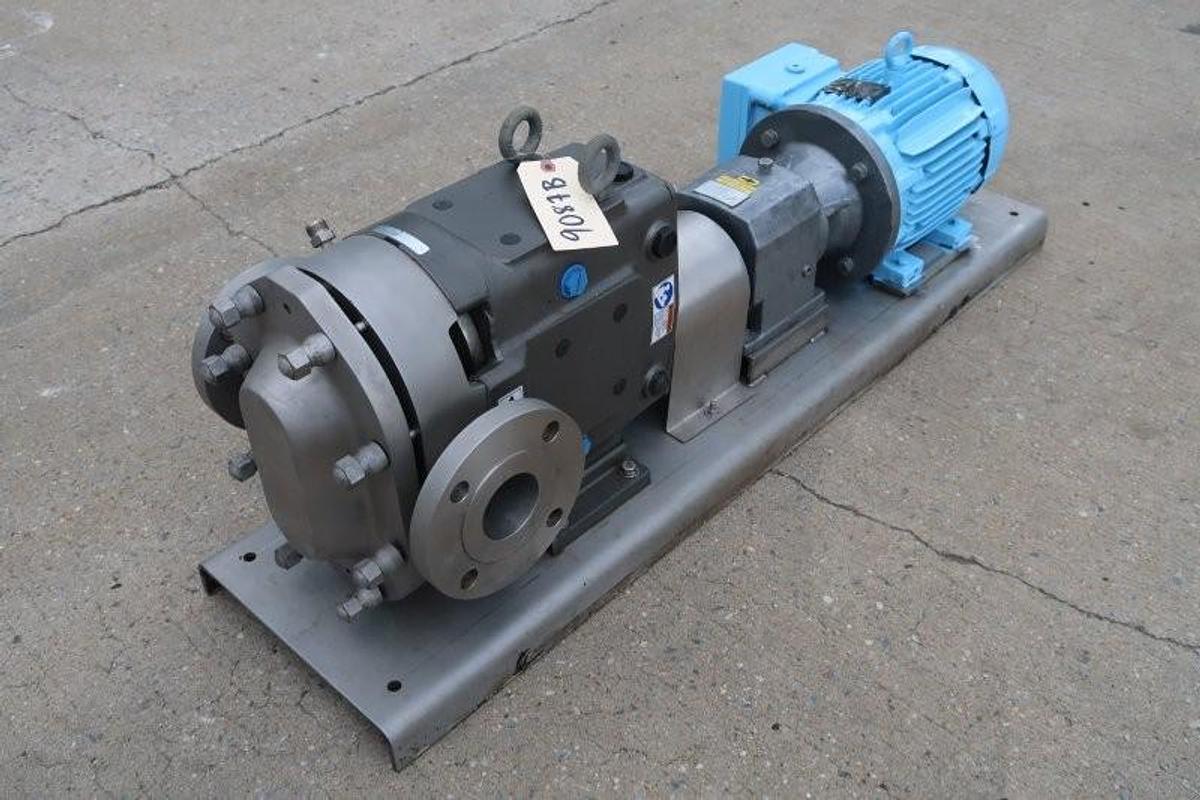
SPX Waukesha Cherry Burrell produces several distinct pump lines, and all of them surface on the used market with reasonable regularity. The most common types include positive displacement pumps, centrifugal pumps, and rotary lobe pumps. Within those categories, the Waukesha Universal Series is particularly prevalent because it was manufactured in large quantities for food, dairy, and pharmaceutical processing facilities over many decades. The Cherry Burrell C-Series is another line buyers frequently encounter. Jacketed pump models, like the 060U2 with flanged ports, also appear on the used market and are sought after for applications requiring temperature-controlled product handling.
Buyers shopping for used SPX Waukesha Cherry Burrell pumps should pay close attention to the model designation, as it encodes critical information about pump size, configuration, and port type. Flanged ports versus threaded ports, jacketed versus non-jacketed bodies, and single versus double mechanical seals all affect whether a particular used pump fits a given application. Reputable used equipment dealers who specialize in sanitary processing equipment will typically list these specifications in detail, making it easier to match the right pump to the right process line.
What industries use SPX Waukesha Cherry Burrell pumps?
SPX Waukesha Cherry Burrell pumps were designed from the ground up for hygienic processing environments, which is why they appear across a wide range of industries where product purity and cleanability are non-negotiable. The food and beverage industry is the largest user base, covering applications like fruit purees, sauces, dressings, juices, and confectionery products. Dairy processing is another major sector, with these pumps handling everything from raw milk and cream to yogurt, cheese curd, and ice cream mixes. Breweries and distilleries also rely on this equipment for transferring wort, yeast slurries, and finished product.
Beyond food and beverage, SPX Waukesha Cherry Burrell pumps are widely used in pharmaceutical manufacturing, biotechnology, and personal care product processing. In pharma and biotech, the ability to meet strict sanitary standards and support clean-in-place (CIP) and steam-in-place (SIP) protocols makes these pumps a preferred choice. Cosmetics and personal care manufacturers use them for lotions, gels, and creams that require gentle, low-shear handling. This cross-industry applicability is one reason used SPX Waukesha Cherry Burrell pumps hold their value and remain in demand long after leaving their first production facility.
What is the difference between the Waukesha Universal Series and Cherry Burrell C-Series pumps?
The Waukesha Universal Series and the Cherry Burrell C-Series are both positive displacement rotary pump lines, but they were developed with somewhat different design philosophies and target applications. The Waukesha Universal Series is particularly well known for its parts interchangeability across multiple pump sizes. This means that rotors, seals, and other wear components from one Universal Series pump size can often be used in other sizes within the same series, which significantly reduces the spare parts inventory a facility needs to maintain. That interchangeability has made the Universal Series extremely popular in large-scale food, dairy, and pharmaceutical plants where multiple pump sizes run simultaneously.
The Cherry Burrell C-Series pumps, on the other hand, were engineered with a focus on handling more demanding viscosities and particulate-laden products. They are known for their tight tolerances and ability to maintain consistent flow rates even as product viscosity changes. When evaluating used pumps from either line, buyers should consider which product characteristics matter most for their application, such as shear sensitivity, viscosity range, and required flow rates. Both lines carry strong reputations for sanitary construction and long service life, which is why used examples of both remain actively traded on the secondary market.
Are SPX Waukesha Cherry Burrell pumps 3-A Sanitary Standards certified, and why does that matter for used equipment buyers?
SPX Waukesha Cherry Burrell pumps are widely recognized for compliance with 3-A Sanitary Standards, which is one of the most important third-party certification programs for equipment used in dairy, food, and pharmaceutical processing in North America. 3-A certification requires that equipment meet specific design criteria for surface finish, material composition, and cleanability, all aimed at preventing bacterial contamination and ensuring the equipment can be thoroughly sanitized between production runs. For buyers in regulated industries, purchasing a pump that was built to 3-A standards is often a baseline requirement, not an optional feature.
For buyers shopping the used market specifically, the 3-A certification of a pump model is tied to its original design and construction, not to its current condition. A used pump that was built to 3-A standards still carries that design heritage, but buyers should inspect the actual condition of product-contact surfaces, seals, and ports to confirm the pump has been maintained in a way that preserves its sanitary integrity. Surface pitting, worn seals, or damaged port connections can compromise sanitary performance even on a pump that was originally 3-A compliant. Asking the seller for photos or a video inspection of internal surfaces is a reasonable step before purchasing.
Can SPX Waukesha Cherry Burrell pumps handle high-viscosity or shear-sensitive products?
Handling high-viscosity and shear-sensitive products is one of the defining strengths of SPX Waukesha Cherry Burrell positive displacement pumps. Unlike centrifugal pumps, which rely on high rotational speed and can break down delicate product structures, positive displacement pumps move product by trapping a fixed volume and displacing it through the pump with each rotation. This gentle, low-shear action makes these pumps well suited for products like yogurt, sour cream, cheese sauces, fruit preserves with whole pieces, and pharmaceutical gels where maintaining product texture and integrity is critical to quality.
The pumps are also capable of handling products with significant viscosity variation, which is common in food and personal care manufacturing where formulations change seasonally or by batch. Flow rate remains relatively consistent across a wide viscosity range, which makes process control more predictable. Some models are also designed to handle products containing particulates, such as fruit chunks, seeds, or granules, without excessive mechanical damage to those inclusions. Buyers evaluating used SPX Waukesha Cherry Burrell pumps for these demanding applications should confirm that the rotor clearances and seal condition are appropriate for the specific viscosity and particulate load they plan to run.
What should buyers look for when inspecting a used SPX Waukesha Cherry Burrell pump before purchasing?
Inspecting a used positive displacement pump like those in the SPX Waukesha Cherry Burrell lineup requires attention to several key areas. The condition of product-contact surfaces is the most critical starting point. Internal pump body surfaces, rotors, and port connections should be free of pitting, corrosion, and excessive wear marks. Any surface degradation in product-contact areas can harbor bacteria and compromise sanitary performance. Seal condition is equally important since worn or damaged mechanical seals will leak and may require immediate replacement, adding to the total cost of the purchase. Buyers should also examine the pump casing for cracks, weld repairs, or signs of impact damage.
Reputable used equipment dealers will typically offer in-person inspections, virtual walkthroughs, or detailed video captures of the machine to help buyers assess condition before committing. Some pumps may still be installed in an operating facility, in which case the dealer can often arrange an inspection at the plant, and the pump may even be observed running in production. Keep in mind that most used equipment dealers do not have the permitting or production infrastructure to run actual product through a pump during an inspection, so functional testing is generally limited to mechanical checks rather than full production trials. Buyers should also contact the manufacturer directly to assess parts availability and support for the specific model and age of pump they are considering.
What are the typical flow rate and pressure specifications for SPX Waukesha Cherry Burrell positive displacement pumps?
SPX Waukesha Cherry Burrell positive displacement pumps span a wide range of flow capacities, which is one reason they appear in applications from small-batch specialty food production all the way to large-scale dairy and pharmaceutical manufacturing. Smaller Universal Series models can handle flows in the range of a few gallons per minute, while larger models in the same series are capable of moving well over 100 gallons per minute depending on rotor size and operating speed. Flow rate in a positive displacement pump is primarily a function of rotor displacement per revolution and shaft speed, so actual output can be adjusted by varying the drive speed, often through a variable frequency drive.
Pressure capabilities vary by model and configuration, but SPX Waukesha Cherry Burrell pumps are generally capable of operating at differential pressures sufficient for most sanitary processing pipelines, typically ranging from moderate to relatively high pressure depending on the specific pump size and the viscosity of the product being handled. Buyers evaluating used pumps should cross-reference the model number against published specification sheets from the manufacturer to confirm that the pump's rated capacity matches their process requirements. Because these are used machines, buyers should also factor in that wear over time can affect volumetric efficiency, meaning actual output may differ slightly from the published specifications for a pump in like-new condition.
What does CIP and SIP compatibility mean for SPX Waukesha Cherry Burrell pumps, and why is it valuable?
CIP stands for clean-in-place, and SIP stands for steam-in-place. Both are sanitation protocols used in food, dairy, pharmaceutical, and biotech processing to clean and sterilize equipment without disassembling it. CIP involves circulating cleaning solutions, rinse water, and sanitizing agents through the pump and connected piping at controlled temperatures and flow rates. SIP involves introducing pressurized steam to sterilize product-contact surfaces. SPX Waukesha Cherry Burrell pumps are designed with smooth internal surfaces, appropriate seal materials, and construction that can withstand the thermal and chemical demands of these protocols, which is a significant design consideration compared to pumps built for non-sanitary industrial applications.
For processing facilities, CIP and SIP compatibility translates directly into reduced labor costs and less production downtime. A pump that can be cleaned in-line does not need to be disassembled, cleaned manually, and reassembled between production runs or product changeovers. This can save hours of labor per cleaning cycle and reduces the risk of contamination from improper reassembly. When buying a used SPX Waukesha Cherry Burrell pump, buyers should verify that the seals and internal components are still in good enough condition to maintain CIP and SIP integrity, since worn seals or damaged surface finishes can undermine the effectiveness of these cleaning protocols even on a pump that was originally designed to support them.
What should buyers understand about shipping and rigging costs when purchasing a used SPX Waukesha Cherry Burrell pump?
Shipping costs for used industrial pumps like those in the SPX Waukesha Cherry Burrell lineup depend on several variables that buyers should clarify with the seller before finalizing a purchase. The size and weight of the pump are the primary factors, but packaging method matters significantly as well. Smaller pumps may ship adequately on a standard pallet, while larger or more fragile configurations may require custom crating to prevent damage in transit. The level of packaging the seller provides will affect both the shipping cost and the risk of damage during transport, so buyers should ask specifically how the pump will be prepared for shipment.
For larger pumps, loading at the seller's facility and unloading at the destination may require specialized rigging equipment such as forklifts or cranes, and those services carry additional costs that are not always included in a quoted shipping price. Buyers should ask sellers for a complete breakdown of packaging, rigging, and freight costs to understand the full landed cost of the equipment before making a decision. International shipments add customs, duties, and import fees to that calculation. Getting clarity on all of these costs upfront avoids surprises and allows for a more accurate comparison between different used pump options on the market.
What payment terms do used equipment dealers typically require for SPX Waukesha Cherry Burrell pumps?
Most used equipment dealers require full payment before a machine ships, and that practice applies broadly to used SPX Waukesha Cherry Burrell pumps as well. This is standard across the used industrial equipment industry and reflects the nature of the transaction, since dealers typically do not hold inventory on extended terms and need to confirm funds before releasing equipment for shipment or pickup. Payment is commonly accepted by wire transfer, though some dealers may accept other methods depending on the transaction size and the buyer's location.
Some dealers extend payment terms to established repeat customers with a track record of purchases, but first-time buyers should expect to pay in full prior to shipment as the default. Buyers who are unfamiliar with a particular dealer should take the time to research the seller's reputation, years in business, and specialization in sanitary processing equipment before sending payment. Choosing a dealer with a long history in the food, dairy, or pharmaceutical equipment space provides meaningful assurance that the transaction will be handled professionally and that the equipment description accurately reflects the machine's actual condition.