Category
Manufacturer
Model
Spx/Waukesha
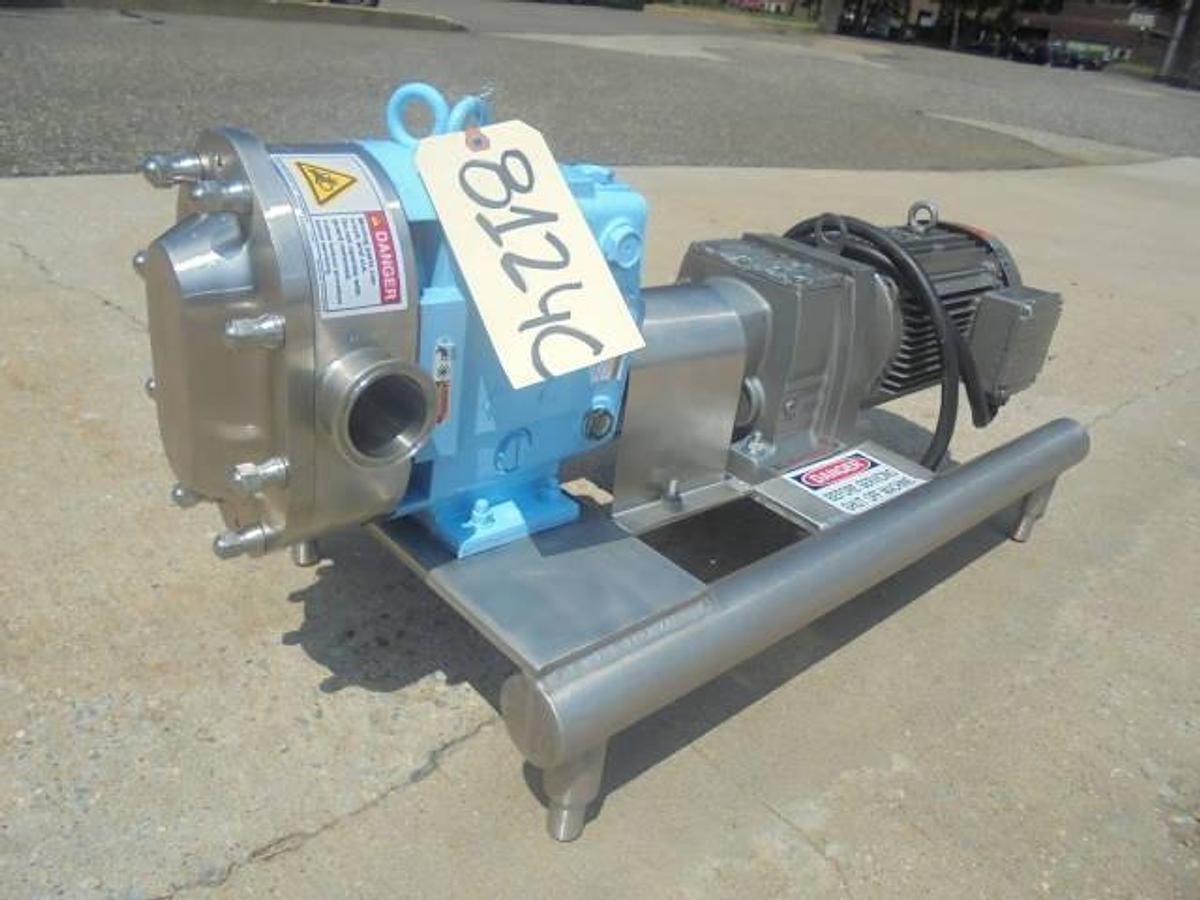
Spx/Waukesha is renowned for its high-quality pumps and sanitary equipment, primarily serving the food and beverage, dairy, and pharmaceutical industries. Their positive displacement pumps are particularly popular for their reliability and efficiency in transferring viscous liquids.
FAQ:
What types of SPX Waukesha pumps are available on the used equipment market?
SPX Waukesha produces several distinct pump families, and all of them surface regularly in the used equipment market. The most commonly traded models include the Universal Series positive displacement pumps (such as the Waukesha 5, 15, 18, 30, 60, 130, and 220), rotary lobe pumps, and sanitary centrifugal designs. Each series is engineered for a specific range of flow rates, pressures, and fluid viscosities, so buyers generally have a good selection to choose from depending on their process requirements. Jacketed versions, like the Cherry Burrell 040 U2, are also available used and are particularly sought after for applications requiring temperature-controlled product transfer.
When shopping for used SPX Waukesha pumps, it helps to know the specific model number and configuration you need before you start. Key variables include port size, motor horsepower, whether the pump body is jacketed for heating or cooling, and the seal type. Used dealers who specialize in sanitary process equipment tend to carry a rotating inventory of these pumps, so checking back periodically or setting up an alert with a reputable dealer is a practical approach if a specific model is not immediately available.
What industries use SPX Waukesha pumps?
SPX Waukesha pumps are built around sanitary design principles, which makes them a natural fit for industries where product purity and cleanability are non-negotiable. The food and beverage sector is the largest user, relying on these pumps to transfer everything from thin juices and dairy products to thick sauces, creams, and confectionery fillings. Dairy processors in particular have long favored Waukesha equipment because the pumps handle shear-sensitive fluids gently and clean up efficiently during CIP (clean-in-place) cycles.
Beyond food and beverage, SPX Waukesha pumps are widely used in pharmaceutical and biotechnology manufacturing, where compliance with FDA material requirements and hygienic standards like 3-A and EHEDG is mandatory. Personal care and cosmetics manufacturers also use them for transferring lotions, gels, and other viscous formulations. Because of this cross-industry versatility, used Waukesha pumps tend to hold their value well and find buyers across a broad range of process industries.
What certifications and sanitary standards do SPX Waukesha pumps meet?
SPX Waukesha pumps are designed to comply with some of the most demanding sanitary standards in process manufacturing. The most cited are 3-A Sanitary Standards, which govern the design and materials of equipment used in dairy and food processing, and EHEDG (European Hygienic Engineering and Design Group) guidelines, which are widely recognized in pharmaceutical and food applications across Europe. Compliance with FDA material requirements for product-contact surfaces is also a standard feature across the Waukesha pump line.
These certifications matter significantly when buying used equipment, because they confirm that the pump was originally built to a recognized hygienic standard. Buyers in regulated industries should verify that the specific used unit they are considering retains its original configuration and that product-contact components have not been substituted with non-compliant materials over the course of its service life. Consulting with the manufacturer directly about a specific model and serial number can help clarify what standards that unit was built to and what level of parts support remains available.
How do SPX Waukesha positive displacement pumps work?
Positive displacement pumps move fluid by trapping a fixed volume in a cavity and then forcing it through the discharge port with each rotation or cycle. In the case of SPX Waukesha rotary and universal series pumps, two counter-rotating lobes or gears create expanding and contracting chambers that pull product in on the suction side and push it out on the discharge side. Because the flow rate is directly tied to shaft speed rather than pressure differential, these pumps deliver a consistent, predictable output even as downstream pressure changes. This characteristic makes them especially well suited for dosing, filling, and metering applications.
One practical advantage of positive displacement operation is the ability to handle high-viscosity products that would stall or cavitate a centrifugal pump. Waukesha's Universal Series, for example, is rated for fluids ranging from water-thin liquids all the way up to very thick pastes and gels. The gentle, low-shear action also preserves the integrity of delicate products like cultured dairy, emulsions, and certain pharmaceutical compounds, which is a key reason these pumps became a standard choice in sanitary processing environments.
What flow rates and pressure ratings do SPX Waukesha pumps handle?
Flow capacity across the Waukesha pump range varies considerably by model. Smaller units in the Universal Series, such as the Model 5 and Model 15, are designed for lower-volume applications and pilot-scale production, while larger models like the 130 and 220 are built for high-throughput production lines. Actual flow rates depend on rotor speed, rotor size, and fluid viscosity, so published specifications should always be cross-referenced against the specific operating conditions of the intended application.
Pressure ratings similarly vary by model and configuration. Most sanitary positive displacement pumps in the Waukesha line are capable of handling the moderate differential pressures typical of food and beverage processing, though certain models and seal configurations can accommodate higher-pressure duties. When evaluating a used pump, it is worth confirming the rated pressure for that specific model and checking whether the pump was operated within those limits during its prior service life. A reputable used equipment dealer should be able to provide model documentation or direct buyers to manufacturer resources for technical specifications.
What materials are used in SPX Waukesha pump construction?
Product-contact components in SPX Waukesha sanitary pumps are typically constructed from 316L stainless steel, which offers the corrosion resistance and surface finish quality required for food, dairy, and pharmaceutical applications. Pump bodies, rotors, and end covers are generally investment-cast or machined to tight tolerances to minimize dead zones where product could accumulate. Seals and elastomers are available in several materials, including EPDM, Buna-N, and PTFE, each suited to different chemical compatibility and temperature requirements.
The external pump housing and frame components are usually fabricated from 304 stainless steel. Some models, including jacketed versions, incorporate carbon steel or stainless jacketing around the pump body to allow hot water or steam circulation for maintaining product temperature during transfer. When purchasing a used Waukesha pump, it is good practice to inspect the condition of seals and elastomers, as these wear components are most likely to need replacement after a period of service. Replacement seal kits and rotors are generally available through authorized service providers and parts distributors.
What should a buyer inspect when considering a used SPX Waukesha pump?
A thorough inspection of a used Waukesha pump should cover both mechanical and cosmetic condition. On the mechanical side, the key areas are the pump body bore for wear or scoring, the condition of the rotors (checking for pitting, corrosion, or dimensional wear), the mechanical seal or packing for signs of leakage, and the bearing housing for any play or roughness. The motor should also be checked for proper amperage draw and bearing condition. If the pump is still installed in a facility, an in-person or video inspection during operation can reveal a great deal about its current state.
Reputable used equipment dealers will typically accommodate in-person visits, live video calls, or recorded video walkthroughs of the machine. Some pumps may still be in active production at a plant, in which case the dealer can often arrange an inspection at the facility with the current owner. Keep in mind that most dealers do not have the production permitting required to run actual product through a pump during an inspection, so functional testing is generally limited to dry runs or motor checks. Buyers should ask specifically about what inspection options are available and request as much documentation as possible, including any service history the seller has on hand.
Are replacement parts available for used SPX Waukesha pumps?
Parts availability is one of the practical considerations that makes Waukesha pumps a relatively safe choice in the used equipment market. SPX has maintained a broad parts ecosystem for the Waukesha line over many years, and authorized service centers as well as third-party suppliers carry seal kits, rotors, end covers, and wear components for most of the commonly traded models. Before purchasing a used pump, it is worth contacting the manufacturer or an authorized distributor to confirm parts availability for the specific model and approximate age of the unit you are considering, since very old or discontinued models may have more limited support.
The age and condition of wear parts is directly relevant to the total cost of ownership for a used pump. Seals, elastomers, and rotors are the components most likely to need attention after a machine changes hands. Factoring in the cost of a seal kit and a rotor inspection into the purchase decision gives a more realistic picture of what the pump will cost to put into service. Many buyers treat a seal replacement as routine maintenance when commissioning any used sanitary pump, regardless of its apparent external condition.
How are used SPX Waukesha pumps typically shipped, and what should buyers expect for costs?
Shipping costs for used Waukesha pumps depend on the size and weight of the unit, the destination, and the level of packaging required to protect the equipment in transit. Smaller pump units can often be palletized and shipped via standard LTL freight, while larger or heavier configurations may require custom crating to prevent damage. Buyers should ask the seller specifically about how the pump will be packaged and whether crating is included in the quoted price or billed separately, since packaging requirements can add meaningful cost to the transaction.
For larger pumps or those still mounted on base frames with motors, rigging for loading and unloading becomes a factor. Heavy-duty rigging at either end of the shipment adds to the total landed cost and should be discussed upfront. Most used equipment dealers require full payment before a machine ships. Getting a complete breakdown of packaging, rigging, freight, and any applicable fees before committing to a purchase is the best way to avoid surprises and accurately compare the total cost of acquiring the equipment.
How do you select the right SPX Waukesha pump model for a specific application?
Selecting the right Waukesha pump model starts with defining the process parameters as precisely as possible. The most important variables are the required flow rate (in gallons per minute or liters per hour), the viscosity of the product at operating temperature, the differential pressure the pump needs to overcome, and the inlet and outlet port sizes required to connect to existing piping. Fluid temperature, CIP requirements, and whether the product is shear-sensitive also influence which model and seal configuration is appropriate. Waukesha's published model selection guides map these parameters to specific pump sizes and rotor configurations.
For buyers sourcing used equipment, the process is slightly different because the available inventory is finite at any given time. A common approach is to identify two or three models that fall within the acceptable range for the application and then search for whichever becomes available first at a reasonable price. Working with a used equipment dealer who specializes in sanitary process equipment can speed this up considerably, since they tend to have broader knowledge of the model range and can flag suitable units as they come in. Cross-referencing the pump's nameplate data against manufacturer specifications is always a good final check before committing to a purchase.