Category
Manufacturer
Model
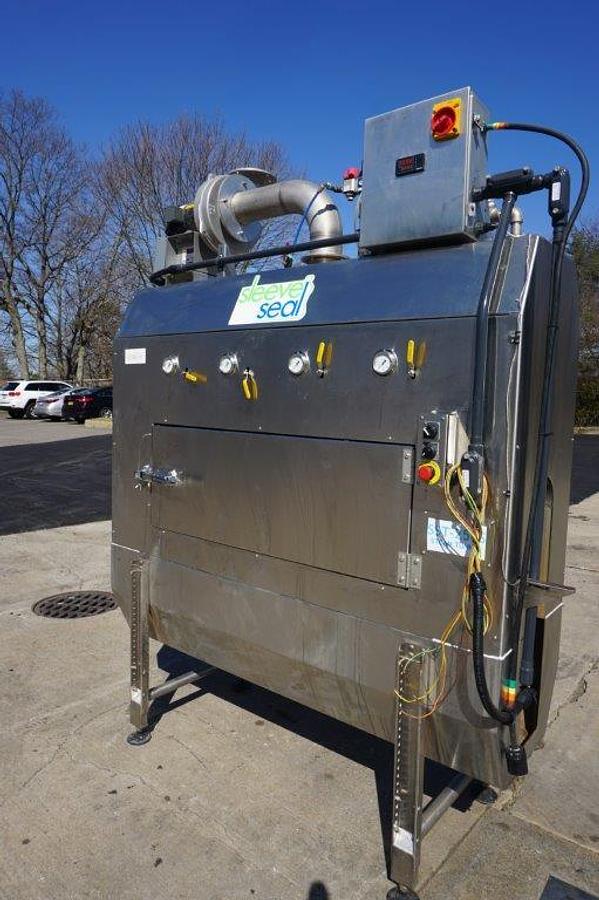
Sleeveseal
Sleeveseal specializes in shrink sleeve labeling and packaging equipment, primarily serving the beverage and food industries. Their machines are designed for high-speed production and offer flexibility in packaging options. Sleeveseal’s technology helps manufacturers achieve eye-catching packaging while maintaining efficiency.
FAQ:
What industries typically use Sleeveseal shrink sleeve labeling equipment?
Sleeveseal shrink sleeve labeling machines are most commonly found in beverage and food production facilities, where high-speed labeling and shelf appeal are both critical. The 360-degree coverage that shrink sleeves provide makes them a practical choice for products that need to stand out on retail shelves, and the tamper-evidence capability adds a functional layer that many food and beverage brands require.
Beyond food and beverage, Sleeveseal equipment also sees regular use in pharmaceutical, personal care, and household chemical manufacturing. Any industry where containers come in irregular shapes, or where full-body label coverage is preferred over pressure-sensitive labels, tends to be a good fit for shrink sleeve technology. The flexibility of the equipment across different container profiles is a large part of why it has broad appeal across multiple production sectors.
What types of containers can shrink sleeve labeling machines handle?
Shrink sleeve labeling equipment is designed to work with a wide variety of container shapes and materials, which is one of its main advantages over traditional label formats. Round bottles, tapered containers, square or rectangular packages, and even irregularly shaped vessels can all be labeled effectively because the sleeve conforms to the container's profile when heat is applied. Common container materials include glass, PET plastic, HDPE, and aluminum.
The specific range of container diameters and heights a given machine can accommodate will vary by model and configuration. When evaluating used Sleeveseal equipment, buyers should confirm the minimum and maximum container dimensions the machine supports and verify whether the existing tooling or mandrel set is included with the purchase. Changeover between different container sizes is a practical consideration as well, and understanding how that process works on a specific model can significantly affect production planning.
What sleeve label materials are compatible with Sleeveseal shrink sleeve applicators?
The most widely used sleeve label materials in the industry are PVC (polyvinyl chloride), PETG (polyethylene terephthalate glycol), and OPS (oriented polystyrene). Each material has different shrink characteristics, temperature requirements, and environmental profiles. PVC has historically been the most common due to its low cost and high shrink ratio, while PETG has grown in popularity because it is more environmentally friendly and compatible with PET recycling streams. OPS offers good clarity and shrinks at lower temperatures, making it suitable for heat-sensitive products.
Compatibility between a specific Sleeveseal machine and a given film material depends on the heat or steam tunnel configuration, the speed settings, and the label applicator mechanics. When purchasing used shrink sleeve equipment, it is worth confirming which materials the machine was previously running and consulting with a film supplier about compatibility before committing to a particular label substrate. Mismatches between equipment settings and film material can result in poor shrink quality, so this is a detail worth verifying during the inspection process.
Does shrink sleeve labeling equipment require a separate heat tunnel or steam tunnel?
Yes, a shrink tunnel is a required component in any shrink sleeve labeling line. The applicator machine places the sleeve label around the container, but the sleeve does not conform to the container's shape until it passes through a heat source that activates the shrink properties of the film. The two main tunnel types are hot air tunnels and steam tunnels, and each has trade-offs. Hot air tunnels are generally simpler to operate and maintain, while steam tunnels tend to produce a more uniform, wrinkle-free shrink result, particularly on complex container shapes.
When sourcing used shrink sleeve labeling equipment, buyers should determine whether a tunnel is included in the listing or whether it needs to be sourced separately. The Sleeve Seal SST-250S, for example, is a stainless steel shrink tunnel designed to work as part of a complete shrink sleeve line. Matching the tunnel's capacity and throughput speed to the applicator's output rate is important for maintaining line efficiency. A tunnel that is undersized relative to the applicator will create a bottleneck, while an oversized tunnel adds unnecessary energy costs.
What production speeds can Sleeveseal shrink sleeve labeling machines achieve?
Throughput speed, typically measured in containers per minute (CPM), is one of the primary factors buyers evaluate when selecting shrink sleeve labeling equipment. Sleeveseal machines are designed for high-speed production environments, making them a common choice for mid-to-large scale manufacturing operations. Specific CPM ratings vary by model, the size of the containers being labeled, and the complexity of the sleeve application.
For used equipment, the rated production speed is a useful reference point, but actual achievable speeds in a buyer's specific application may differ based on container geometry, film material, line configuration, and the condition of the machine. During an inspection of used Sleeveseal equipment, asking about the speeds at which the machine was actually running in production gives a more realistic picture than the nameplate specification alone. Buyers with high-volume requirements should also factor in the tunnel's throughput capacity to ensure the full line can sustain the desired output.
Is used Sleeveseal equipment suitable for smaller production operations, or is it designed only for high-volume manufacturing?
Shrink sleeve labeling equipment, including Sleeveseal machines, is available in both semi-automatic and fully automatic configurations. Fully automatic systems are built for continuous, high-speed production lines and are most common in large beverage or food manufacturing facilities. Semi-automatic configurations require more operator involvement but come at a lower cost and a smaller footprint, making them more accessible to craft producers, contract packagers, or businesses with moderate production volumes.
For a small or growing operation purchasing used equipment, the key is matching the machine's configuration and speed range to realistic production needs. Buying a high-speed fully automatic system without the line infrastructure or volume to support it adds complexity without proportional benefit. Conversely, a well-maintained semi-automatic Sleeveseal machine purchased through a reputable used equipment dealer can be a cost-effective way for a smaller producer to add shrink sleeve labeling capability without the capital outlay of purchasing the same equipment at full price.
What should buyers inspect when evaluating used Sleeveseal shrink sleeve labeling equipment?
Inspecting used shrink sleeve labeling equipment requires attention to both mechanical condition and operational history. Key areas to examine include the condition of the applicator head and mandrel, the integrity of the cutting mechanism (which separates individual sleeves from the roll), the drive and conveyor systems, and the electrical and control components. On tunnel units like the SST-250S, the heating elements, blower motors, and conveyor belt condition are all worth close scrutiny.
Reputable used equipment dealers will typically accommodate in-person inspections, virtual walkthroughs, or video captures of the machine to give buyers an accurate picture of its current condition. Some machines may still be installed and running at a production facility, which provides an opportunity to observe the equipment in operation. Keep in mind that most dealers do not have the permits or infrastructure to run full production tests with actual product, so buyers should plan accordingly and factor that limitation into their evaluation. Consulting the manufacturer about the specific model's age, parts availability, and support options is also a practical step before finalizing a purchase.
How does changeover work between different container sizes on shrink sleeve labeling equipment?
Changeover on shrink sleeve labeling equipment involves adjusting or swapping out components to accommodate different container diameters, heights, or sleeve dimensions. On most machines, this includes changing the mandrel (the form over which the sleeve is placed before application), adjusting guide rails and conveyor spacing, and updating the cut-length settings to match the new sleeve size. The time required for changeover varies significantly by machine design, ranging from under 30 minutes on well-designed quick-change systems to several hours on older or more complex configurations.
For operations that run multiple SKUs or container formats, changeover time is a meaningful factor in overall equipment efficiency. When evaluating a used Sleeveseal machine, it is worth asking how many container formats it was set up to run and whether the associated tooling and mandrel sets are included in the sale. Missing tooling can add unexpected cost after purchase, and sourcing replacement or additional mandrels for older models may require working directly with the manufacturer or a qualified fabricator. Understanding the full scope of what is included in a used equipment listing helps avoid surprises during commissioning.
What are the key advantages of shrink sleeve labels compared to pressure-sensitive or paper labels?
Shrink sleeve labels offer full 360-degree coverage of a container's surface, which pressure-sensitive and paper labels cannot match without multiple label panels. This makes shrink sleeves particularly well-suited for products where maximum branding real estate matters, or where the container shape is irregular and a flat label would not conform properly. The labels also provide inherent tamper-evidence when applied over caps or closures, which is a regulatory or consumer-confidence requirement in many product categories.
From a production standpoint, shrink sleeves can be applied to containers made from a wide range of materials without the surface preparation that some adhesive labels require. They are also moisture-resistant, which is valuable for refrigerated or ice-bathed products like beverages. The trade-off is that the labeling line requires both an applicator and a shrink tunnel, adding equipment cost and floor space compared to a pressure-sensitive label applicator. For high-volume operations or products where label appearance is a competitive differentiator, the investment in shrink sleeve labeling equipment is generally considered worthwhile.
What should buyers understand about shipping and payment when purchasing used shrink sleeve labeling equipment?
Used shrink sleeve labeling machines, particularly complete tunnel units, can be substantial in size and weight. Proper packaging is critical to prevent damage in transit, and costs will vary based on whether the equipment is palletized, crated, or requires custom packaging. Larger or heavier machines may need professional rigging services for loading and unloading, which adds to the total landed cost. Buyers should request a detailed breakdown of packaging, rigging, and freight charges from the dealer before finalizing a purchase to understand the full cost of getting the equipment to their facility.
On payment terms, most used equipment dealers require full payment before the machine ships. Some dealers extend terms to repeat customers, but that is not a standard practice across the industry. Buyers should confirm the accepted payment methods and the dealer's specific terms early in the process. Because used equipment is typically sold as-is, the inspection phase carries significant weight in the buying decision. Taking the time to conduct a thorough inspection, whether in person, virtually, or through detailed video, is the most practical way to reduce risk when purchasing used shrink sleeve labeling equipment.