Category
Manufacturer
Model
FAQ:
What is Skanem, and why does their labeling equipment appear on the used machinery market?
Skanem is a large-scale industrial label manufacturer and converter, operating production facilities across multiple countries. Their core business is producing labels for consumer goods, food and beverage, pharmaceutical, and personal care companies. Because Skanem runs high-volume label printing and converting operations, they periodically decommission or upgrade production equipment as their facilities evolve. That surplus machinery then becomes available through used equipment dealers.
This is an important distinction for buyers: Skanem is not a labeling equipment manufacturer in the traditional sense. The machines that surface on the secondary market are equipment that was previously used within Skanem's own production environment. Buyers searching for Skanem labeling equipment are typically finding industrial-grade print and apply labelers, label applicators, or converting machinery that came out of a Skanem facility, rather than a product line that Skanem designed and sold to the market. Understanding this background helps buyers set accurate expectations about machine specs, age, and available documentation.
What is a print and apply labeler, and how does it work?
A print and apply labeler is an automated machine that prints variable data onto a label and then applies that label to a product or package in a single continuous motion. The print engine, typically thermal transfer or direct thermal, generates the label content in real time. This can include barcodes, lot numbers, expiration dates, shipping addresses, or any other variable information. Once printed, a mechanical applicator arm or air-jet system places the label precisely onto the target surface.
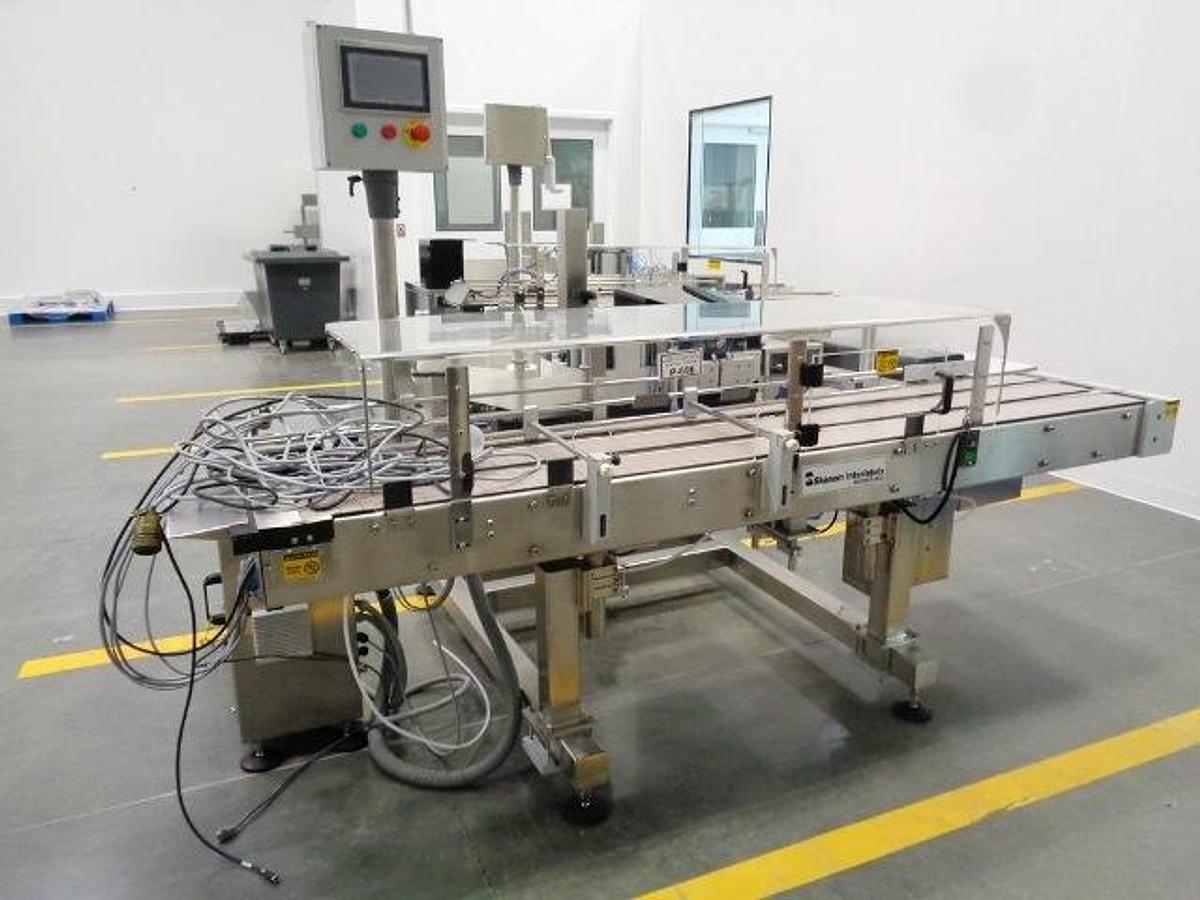
These machines are widely used in distribution centers, manufacturing lines, and packaging operations where high throughput and accurate label placement are critical. They can be configured to apply labels to the top, side, front, back, or corner of a product. Print and apply systems reduce manual labor, minimize labeling errors, and allow for last-minute data changes without stopping the line. The Skanem Interlabels print and apply labeler is one example of this type of equipment that has appeared on the used machinery market, suited for operations that require consistent, automated label application at production speeds.
What industries typically use the type of labeling equipment found in Skanem production facilities?
The labeling equipment used in large-scale label converting and manufacturing facilities like Skanem's serves a broad range of industries. Food and beverage companies rely on high-speed label applicators for bottles, cans, jars, and flexible packaging. Pharmaceutical manufacturers require precision labeling systems that meet strict regulatory standards for traceability and legibility. Personal care and household products companies use similar equipment for applying pressure-sensitive labels to containers of varying shapes and sizes.
Beyond those core sectors, logistics and distribution operations use print and apply labelers extensively for shipping and compliance labels. Chemical manufacturers, electronics producers, and agricultural product companies also depend on industrial labeling equipment for product identification and regulatory compliance. Because Skanem produced labels for many of these end markets, the equipment that comes out of their facilities is generally built to handle the demanding throughput and precision standards those industries require. Buyers from any of these sectors may find that surplus Skanem facility equipment is well-matched to their production environment.
What should buyers know about purchasing used labeling equipment compared to buying from a manufacturer?
Buying used labeling equipment offers significant cost advantages over sourcing directly from a manufacturer, but it comes with a different set of considerations. Used machines are sold as-is, meaning the buyer takes on responsibility for understanding the current condition of the equipment. There are no manufacturer warranties on used machinery, so the inspection process becomes the buyer's primary tool for assessing risk. A reputable used equipment dealer with a long track record in the packaging or labeling industry is an important safeguard, as they will typically provide accurate descriptions of the machine's condition and accommodate inspection requests.
Buyers should also contact the equipment's manufacturer directly to understand what level of support is available for a particular model and age of machine. Parts availability, technical documentation, and service support can vary significantly depending on how old the machine is and whether the manufacturer still actively supports that model. Older machines may have limited parts availability, while more recent models may still be fully supported. Getting clarity on these points before purchase helps avoid situations where a buyer acquires a machine they cannot maintain or repair.
How should buyers inspect used labeling equipment before committing to a purchase?
Inspection is one of the most critical steps in buying used industrial labeling equipment. Reputable dealers typically offer in-person inspections, virtual walkthroughs via video call, or recorded video captures of the machine so buyers can assess its condition remotely. For equipment that is still installed at a production facility, it may be possible to arrange an inspection at the actual plant where the machine is currently or was recently in operation, which gives buyers the best possible view of how the equipment has been used and maintained.
Buyers should look at the mechanical condition of the applicator heads, print engine components, sensors, and drive systems. Asking for maintenance records, if available, can provide useful context. One thing to keep in mind is that most used equipment dealers do not have the permits or production setups required to run actual product through the machine during an inspection. Testing is generally limited to dry runs or mechanical checks rather than full production trials. This makes it even more important to work with a dealer who is transparent about what they know regarding the machine's history and current operational status.
What factors affect the price of used labeling equipment?
Several variables drive pricing on the used labeling equipment market. The age and model of the machine play a significant role, as newer models with more advanced features and better parts availability tend to command higher prices. The overall mechanical condition, including wear on applicator components, the print engine, and any automation controls, also directly affects value. A machine that has been well-maintained in a clean production environment will typically be priced higher than one that shows heavy wear or has been sitting idle for an extended period.
Application speed, label size range, and the level of automation built into the system also influence price. High-speed print and apply systems capable of handling large volumes per shift are generally more valuable than slower, lower-capacity units. Brand reputation matters as well, since equipment from well-known manufacturers tends to retain value better due to parts availability and industry familiarity. Buyers should factor in not just the purchase price but also shipping, rigging, installation, and any reconditioning costs to get a realistic picture of the total investment required to get the machine running in their facility.
What label materials and substrates are industrial labeling machines typically compatible with?
Industrial labeling machines designed for high-volume production environments are generally built to handle a wide range of label materials. Pressure-sensitive paper labels are the most common, used across food, beverage, and general consumer goods applications. Film-based labels made from polypropylene, polyethylene, or polyester are widely used in personal care and chemical applications because of their moisture resistance and durability. Foil labels, which are often used for premium products, require applicators with the right tension control and handling systems to prevent tearing or misapplication.
Compatibility with specific substrates depends on the machine's design, including the type of applicator, the dispensing mechanism, and the print engine if the machine is a print and apply system. Buyers should verify that the equipment they are considering is compatible with the label materials they intend to use. Consulting with the equipment manufacturer or a knowledgeable dealer about substrate compatibility is a good practice, especially when dealing with thinner or more delicate label materials that can be sensitive to applicator pressure and speed settings.
What are typical label application speeds for industrial print and apply labeling equipment?
Industrial print and apply labelers cover a wide range of throughput capabilities depending on their design and intended application. Entry-level or older systems may apply labels at speeds ranging from 20 to 60 labels per minute, which suits lower-volume or semi-automated production lines. Mid-range systems commonly operate between 60 and 150 labels per minute, covering the needs of most standard packaging and distribution operations. High-speed systems used in large-scale manufacturing or fulfillment environments can exceed 200 labels per minute, though performance at those speeds depends heavily on label size, product spacing, and line configuration.
For used equipment, actual achievable speeds may differ from the machine's rated specifications due to wear on mechanical components or changes in the control systems over time. Buyers evaluating used labeling equipment should ask the dealer for the machine's rated speed and, where possible, get information about the speeds at which it was actually running in its previous production environment. This gives a more realistic baseline for what to expect after the machine is integrated into a new facility.
What are the typical shipping and logistics considerations when buying used labeling equipment?
Shipping used industrial labeling equipment involves more planning than standard freight. Labeling machines contain precision mechanical components, print heads, and electronic controls that can be damaged if not properly secured during transit. Dealers typically handle palletization or crating of the equipment before shipment, and the level of packaging required will affect the overall shipping cost. Larger or heavier machines may require custom crating and specialized rigging for both loading at the origin and unloading at the buyer's facility.
Buyers should ask the dealer for a full breakdown of packaging, rigging, and freight costs before finalizing a purchase. These costs can vary significantly based on machine size, the distance being shipped, and whether the buyer needs liftgate delivery, inside delivery, or crane service for unloading. Getting a clear picture of the total landed cost, meaning the purchase price plus all shipping and handling expenses, is essential for accurate budgeting. In some cases, buyers arrange their own freight through a third-party carrier, which can offer cost savings but also shifts responsibility for transit damage to the buyer.
What payment terms should buyers expect when purchasing used labeling equipment?
Used equipment transactions are structured differently from purchases made directly through a manufacturer or authorized distributor. Most used equipment dealers require payment in full before the machine is released for shipment. This is standard practice in the industry and reflects the nature of secondary market transactions, where dealers need to confirm cleared funds before transferring ownership and arranging logistics. Wire transfer is the most common payment method for transactions of this size, though other arrangements may be available depending on the dealer.
Some dealers extend payment terms to repeat customers or established buyers with a prior transaction history, but this is not the norm for first-time purchases. Buyers who need financing should arrange it independently through their bank or an equipment financing company before committing to a purchase, since most used equipment dealers do not offer in-house financing. Confirming payment expectations early in the buying process helps avoid delays and ensures a smoother transaction once a machine is selected.