Category
Manufacturer
Model
FAQ:
What types of popcorn equipment does Sinopuff manufacture?
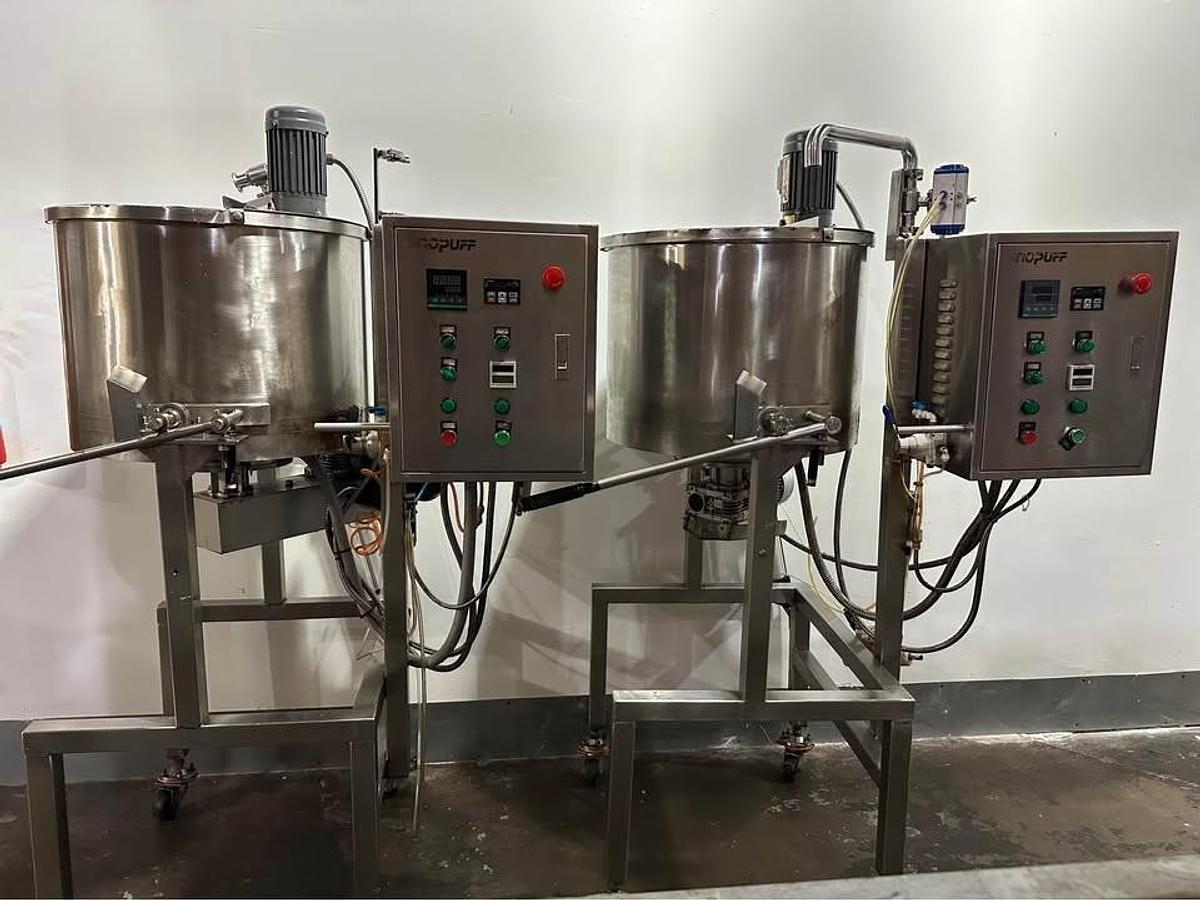
Sinopuff is a Chinese-based manufacturer that specializes in extruded snack food production equipment, with product lines covering both popcorn and broader puffed snack applications. Their equipment catalog typically includes single-screw and twin-screw extruders, caramel popcorn production lines, coating and seasoning systems, and full turnkey production lines designed for medium to large-scale food manufacturers. The machinery is built for commercial and industrial buyers who need consistent, high-volume output rather than small-batch or retail-scale production.
Because Sinopuff equipment is designed around extrusion technology, many of their machines can produce a range of puffed snack products beyond popcorn alone, including corn puffs, cheese curls, and other expanded grain snacks. This versatility makes their production lines appealing to snack food companies looking to run multiple SKUs on a single line. Used Sinopuff equipment that comes to market tends to reflect this industrial focus, with machines that were originally installed in commercial food processing facilities.
What is the production capacity of Sinopuff popcorn machines?
Sinopuff popcorn and puffed snack machines are built for meaningful commercial output. Depending on the model and configuration, production capacities generally range from around 50 kg per hour on the lower end to well over 500 kg per hour for larger, fully integrated production lines. The specific output of any given machine depends on factors like the extruder screw diameter, motor horsepower, die configuration, and the type of product being produced, since denser products run at different rates than lighter puffed items.
When evaluating a used Sinopuff machine, it is worth asking the seller for documentation or nameplate specifications that confirm the rated capacity of that particular model. Keep in mind that actual throughput in a real production environment can vary based on raw material moisture content, operator settings, and the condition of wear parts like screws and barrels. A thorough inspection, either in person or via video, is the best way to assess whether a specific used machine is still capable of meeting your target output.
What should buyers know about purchasing used Sinopuff equipment instead of buying directly from the manufacturer?
Buying used Sinopuff equipment from a secondary market dealer is a fundamentally different transaction than ordering directly from the manufacturer. Used machines are sold as-is, meaning there are no manufacturer warranties attached to the sale. The responsibility for evaluating the condition of the equipment falls squarely on the buyer, which is why selecting a reputable used machinery dealer with a demonstrated history in the food processing equipment sector matters so much. Dealers who specialize in snack and food production equipment will have a better understanding of what to look for and how to accurately represent a machine's condition.
Before committing to a purchase, buyers should request an inspection, either on-site at the dealer's facility or at the plant where the equipment is currently located if it has not yet been decommissioned. Video inspections are also commonly offered and can give a clear picture of the machine's physical condition, control systems, and any visible wear. It is also worth contacting Sinopuff directly to understand what level of technical support, parts availability, and documentation they can provide for the specific model and age of machine you are considering, since older models may have limited parts support.
What is a caramel popcorn production line and what equipment does it typically include?
A caramel popcorn production line is an integrated system of machines designed to take raw corn kernels through the full process of popping, coating with caramel or other sugar-based glazes, cooling, and packaging. Rather than relying on a single piece of equipment, a complete line typically includes a popping unit or extruder, a continuous coating drum or enrober, a caramel cooking and application system, a cooling conveyor, and downstream packaging equipment. Each stage is sized to match the throughput of the others so that the line runs without bottlenecks.
Sinopuff has produced caramel popcorn production lines designed for commercial-scale output, and these lines occasionally appear on the used equipment market when food manufacturers upgrade their facilities or shift product focus. Evaluating a used caramel popcorn line requires looking at each component individually since wear rates can differ across the line. The coating drum and caramel system in particular tend to accumulate residue and should be inspected carefully for corrosion or buildup. Buyers should ask dealers whether the line is available as a complete set or whether individual components are being sold separately.
Is Sinopuff popcorn equipment suitable for small businesses or startups?
Sinopuff equipment is designed and scaled for commercial and industrial food production environments. Even their smaller models are built for continuous-duty operation at output levels that would far exceed the needs of a small retail popcorn shop or a startup doing farmers market volumes. The infrastructure requirements alone, including three-phase electrical service, compressed air, adequate floor space, and food-grade facility compliance, put this category of equipment out of reach for most early-stage businesses.
That said, a growing snack food company that has already validated its product and is ready to scale production meaningfully might find a used Sinopuff machine to be a cost-effective entry into industrial-scale manufacturing compared to buying comparable equipment at full price. The key is being realistic about whether your current production volume and facility can actually support the machine. Buying more capacity than you can use is a common and expensive mistake in food manufacturing. Talking to equipment dealers who understand the food processing sector can help you match the right machine size to your actual needs.
What materials are Sinopuff popcorn machines typically constructed from?
Sinopuff popcorn and snack food equipment is generally constructed using food-grade stainless steel for all surfaces that come into contact with product. Stainless steel is the standard material in commercial food processing equipment because it resists corrosion, does not react with food ingredients, and can withstand the high-temperature cleaning and sanitizing protocols required in licensed food production facilities. Structural frames and non-contact components may use carbon steel or other materials depending on the specific machine.
On a used machine, the condition of the stainless steel surfaces is one of the most important things to evaluate during an inspection. Look for signs of pitting, deep scratching, or corrosion, particularly around welds and in areas where caramel or other sugary coatings may have been applied repeatedly over time. Wear on the internal screw and barrel components of extruders is also a critical factor, as these parts directly affect output quality and capacity. Dealers should be able to provide close-up photos or video of these areas, and buyers should not hesitate to ask for them before making a purchasing decision.
How does the inspection process work when buying used Sinopuff equipment?
Used equipment dealers typically offer buyers the option to inspect machinery in person, through a live video call, or by reviewing recorded video footage of the machine. The goal of any inspection is to get an accurate, honest picture of the equipment's current condition, including its mechanical and electrical systems, visible wear, and overall cleanliness. For Sinopuff equipment that is still installed in an active production facility, it may be possible to arrange a viewing while the machine is running, which gives the most useful information about its operational state. Equipment that has already been decommissioned and moved to a dealer's warehouse can still be inspected visually, though testing it under production conditions is generally not possible in that setting.
It is worth understanding that most used equipment dealers are not licensed food production facilities, so they cannot run actual product through the machine as part of a demonstration. What they can do is power up the machine, show that controls and motors respond correctly, and document any known issues. Buyers with specific technical questions about Sinopuff machinery, such as how to interpret wear patterns on extrusion screws or what a healthy barrel clearance looks like, may want to bring in a third-party equipment technician or consult directly with Sinopuff's technical team before finalizing a purchase.
What are typical shipping and logistics considerations for used Sinopuff popcorn equipment?
Sinopuff popcorn and snack production equipment ranges from moderately sized standalone machines to full multi-component production lines, and the logistics involved in moving them reflect that range. Smaller machines may ship on standard pallets, while larger extruders or complete production lines require custom crating, heavy-duty rigging for loading and unloading, and flatbed or specialized freight services. The cost of shipping is not a flat fee and will vary significantly based on the size and weight of the equipment, the origin and destination, and the level of packaging required to protect the machine in transit.
Buyers should ask dealers for a detailed breakdown of all costs involved before committing to a purchase, including rigging, crating or palletization, freight, and any destination charges like lift gate delivery or inside placement. For international shipments, import duties, customs brokerage fees, and compliance with destination country import regulations add another layer of cost and complexity. Getting a full landed cost estimate, meaning the total cost to get the machine to your facility and ready for installation, is essential for making an accurate comparison between different machines or sourcing options.
What payment terms are typical when purchasing used popcorn equipment from a dealer?
Most used equipment dealers require full payment before a machine is released for shipping. This is standard practice in the secondary machinery market and applies regardless of the equipment type or price point. The reasoning is straightforward: once a machine leaves a dealer's facility, their ability to recover it in the event of a payment dispute is extremely limited. Some dealers may extend payment terms to established customers with a history of repeat purchases, but first-time buyers should expect to pay in full upfront.
Accepted payment methods vary by dealer but commonly include wire transfer, ACH, and in some cases credit card for smaller transactions. Buyers should be cautious about any dealer who requests unusual payment methods or is unwilling to provide a clear invoice and receipt. For larger purchases, it is also reasonable to ask whether an escrow arrangement is available, particularly for international transactions where added layers of protection can reduce risk for both parties. Taking time to verify the dealer's reputation and track record before sending payment is one of the most important steps in any used equipment purchase.
What certifications should buyers look for when evaluating used Sinopuff popcorn equipment?
Sinopuff equipment produced for export markets has historically been marketed with CE certification, which is required for equipment sold into the European Union and signals that the machine meets certain safety and electromagnetic compatibility standards. ISO certification at the manufacturing level is also commonly referenced, indicating that the manufacturer follows documented quality management processes. For buyers in the United States, FDA compliance of the materials used in food-contact surfaces is a relevant consideration, though FDA does not certify equipment in the same way CE marking works.
For used equipment, the original certification documentation may or may not transfer with the machine, and buyers should ask dealers whether any certification paperwork is available. Keep in mind that certifications reflect the machine's design and materials at the time it was built, not necessarily its current condition after years of use. Local health department and food safety authorities in your jurisdiction will have their own requirements for equipment used in licensed food production, and it is worth confirming with those agencies what documentation they require before you complete a purchase. Consulting with Sinopuff directly about a specific model can also help clarify what certifications were originally issued and what technical documentation is still available.