Category
Subcategory
Manufacturer
Model
Sine
Sine specializes in manufacturing packaging solutions, particularly for the food and beverage industry. They are known for their innovative designs in flexible packaging and labeling machines. Sine’s products help enhance product shelf life and presentation, making them a popular choice among manufacturers.
FAQ:
What types of packaging equipment does Sine manufacture?
Sine is a manufacturer known primarily for packaging solutions aimed at the food and beverage industry, though their equipment also sees use in pharmaceutical and consumer goods production. Their product line includes flexible packaging machines, labeling equipment, and positive displacement pumps, all designed to improve product shelf life, presentation consistency, and throughput efficiency. The 3-inch by 3-inch stainless steel positive displacement pump, for example, reflects their focus on sanitary, food-grade construction that meets the demands of liquid and semi-liquid product handling.
Beyond pumps, Sine's broader packaging lineup is built around the idea that manufacturers need reliable, repeatable results across high-volume runs. Their machines tend to be well-regarded for handling a variety of packaging materials, including plastic films, foil, and paper-based substrates. Buyers sourcing used Sine equipment should identify the specific model and configuration to confirm it suits their product type, since packaging machines are often spec'd for particular fill weights, container formats, or material thicknesses.
What should buyers know before purchasing used Sine packaging equipment?
Buying used packaging equipment requires a different level of diligence than purchasing from a manufacturer. Since used machines are sold as-is, the condition of the equipment at the time of sale is what the buyer receives. That makes inspection a critical step. Buyers should request an in-person visit or, at minimum, a detailed video walkthrough of the machine in its current state. If the equipment is still installed at a production facility, some dealers can arrange an inspection at the plant, which gives buyers the opportunity to see the machine either running or recently decommissioned.
It is also worth consulting directly with Sine or an authorized service provider before committing to a purchase. The age and model of the machine will determine what level of manufacturer support, spare parts availability, and technical documentation is still accessible. Older models may have limited parts support, which affects long-term maintenance costs. Selecting a used equipment dealer with a strong track record in the packaging industry reduces the risk considerably, since experienced dealers are better positioned to accurately represent the machine's condition and help buyers understand what they are getting.
What industries commonly use Sine packaging equipment?
Sine packaging equipment has the strongest footprint in the food and beverage sector, where consistent fill accuracy, hygienic construction, and high-throughput capability are non-negotiable. Their stainless steel pump designs, for instance, are well-suited for handling sauces, dairy products, beverages, and other liquid or semi-viscous products that require sanitary contact surfaces and easy cleandown between runs. The food industry's strict hygiene standards make Sine's stainless steel construction a practical fit rather than just a premium option.
Beyond food and beverage, Sine equipment is also found in pharmaceutical packaging operations and consumer goods manufacturing, where similar demands for cleanliness, precision, and repeatability apply. Pharmaceutical applications in particular place a premium on equipment that can be validated and cleaned to regulatory standards. Buyers from any of these industries sourcing used Sine machines should verify that the specific model they are considering meets the sanitation and compliance requirements for their application, since equipment originally configured for one industry may need modification or re-certification before use in another.
How is the price of used Sine packaging equipment determined?
Pricing for used packaging equipment like Sine machines depends on several intersecting factors: the model and age of the machine, its mechanical condition, how recently it was last in production, and current market demand for that type of equipment. A positive displacement pump in good working order with documented maintenance history will typically command a higher price than a comparable unit with unknown service records. Configuration also matters, since machines with specialized tooling, upgraded controls, or stainless steel construction for food-grade use tend to hold value better than standard models.
Beyond the sticker price, buyers should factor in the total landed cost of the equipment. Shipping, rigging, crating, and any refurbishment or parts replacement needed after delivery can add meaningfully to the overall investment. Buyers should ask dealers for a clear breakdown of these costs upfront. In some cases, a slightly higher-priced machine in better condition will result in lower total cost of ownership than a cheaper unit that requires significant work to bring back to production-ready status.
What is a Sine positive displacement pump and what is it used for?
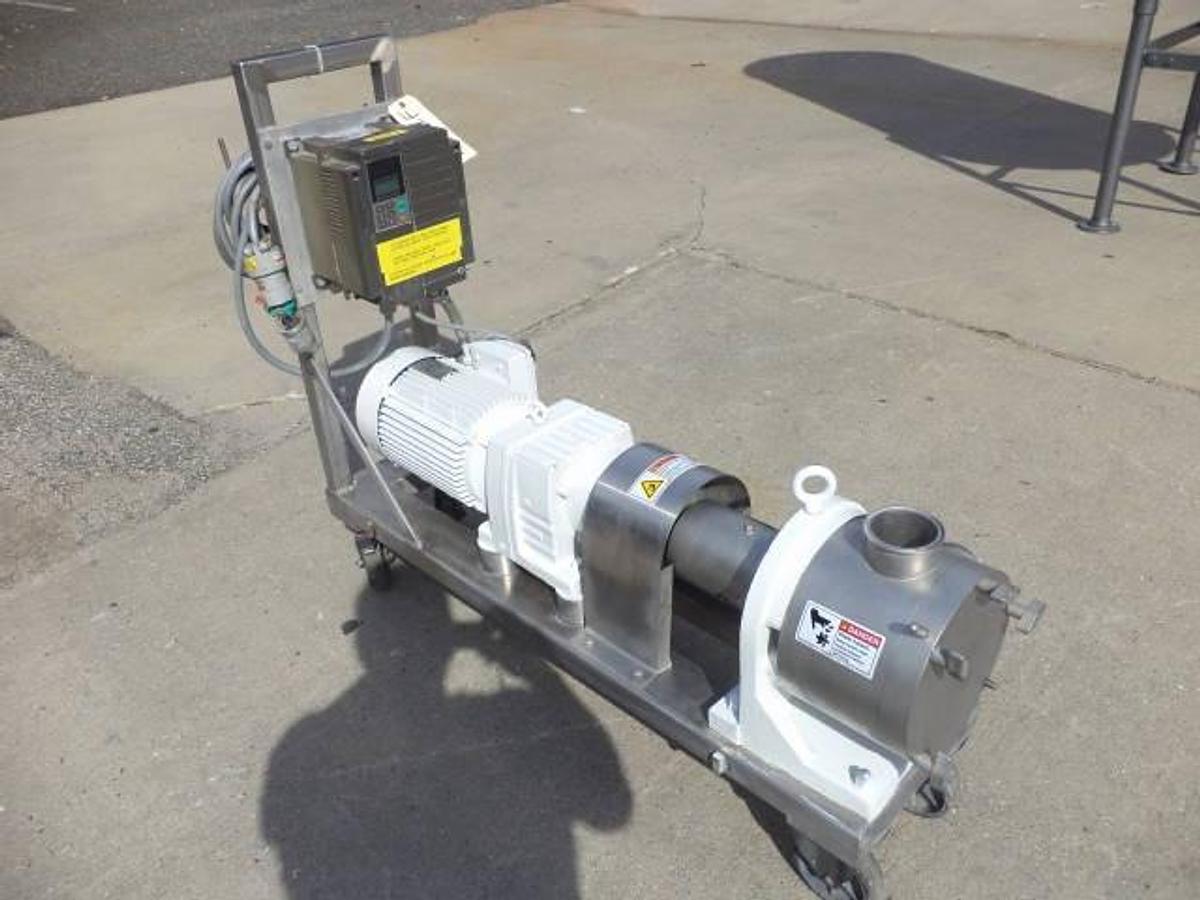
A positive displacement pump moves fluid by trapping a fixed volume and forcing it through the discharge. Unlike centrifugal pumps, which rely on velocity, positive displacement pumps deliver a consistent, measured flow regardless of pressure variations downstream. This makes them particularly well-suited for viscous products, shear-sensitive materials, and applications where accurate dosing or fill volume is important. Sine's stainless steel positive displacement pumps, such as the 3-inch by 3-inch model with a 7.5 HP motor, are designed with food-grade construction in mind, making them a common choice in food processing, beverage production, and similar industries.
In a packaging line context, positive displacement pumps are often used to transfer product from bulk storage into filling equipment, or to meter product directly into containers. Their ability to handle thick, chunky, or delicate products without excessive mechanical stress on the material is a key advantage over other pump types. When evaluating a used Sine positive displacement pump, buyers should pay close attention to the condition of the internal rotor and housing, as wear in these components directly affects flow accuracy and sanitary integrity.
How can buyers inspect used Sine packaging equipment before purchasing?
Reputable used equipment dealers typically offer buyers several options for inspecting machinery before committing to a purchase. In-person inspections are the most thorough approach, allowing buyers or their technicians to physically examine the machine, check for wear, review any available maintenance records, and assess the overall condition firsthand. Virtual inspections via video call are a practical alternative when travel is not feasible, and many dealers will also provide recorded video walkthroughs that capture the machine's current state in detail.
One important caveat for used packaging equipment: most dealers do not have the permits or production infrastructure to run actual product through a machine during an inspection. What buyers can typically expect is a mechanical run of the equipment to confirm that motors, drives, and controls are functional, but a full production test with live product is generally not possible at a dealer's facility. If the machine is still installed at a manufacturing plant, some dealers can coordinate an inspection at that location, where the equipment may still be in active use. Buyers should clarify inspection options with the dealer early in the process, and consider having a qualified equipment technician or engineer present during any inspection to assess condition accurately.
Are replacement parts and technical support available for used Sine packaging machines?
Parts and support availability for used Sine equipment depends largely on the age and model of the machine. Sine, like most packaging equipment manufacturers, supports their product lines for a defined period after manufacture, but older or discontinued models may have limited or no factory support remaining. Before purchasing a used Sine machine, it is worth contacting the manufacturer directly to ask about parts availability, service documentation, and whether technical support is still offered for that specific model. This step can prevent costly surprises down the road.
For machines where factory support is limited, buyers often turn to third-party parts suppliers or have components machined to spec. Stainless steel pumps and mechanical packaging components tend to be more serviceable in this regard than machines with proprietary electronic controls or software, since mechanical parts can often be sourced or fabricated independently. Buyers should also ask the selling dealer whether any spare parts or documentation are included with the machine, as this can significantly reduce the risk of downtime after installation.
What are the typical shipping and logistics considerations for used Sine packaging equipment?
Shipping used packaging equipment involves more complexity than standard freight, particularly for larger or heavier machines. Proper packaging is essential to prevent damage in transit. Depending on the size and fragility of the equipment, this can range from basic palletization to custom wooden crating. The level of packaging required will affect shipping costs, and buyers should ask dealers to provide a clear breakdown of crating, rigging, and freight charges so the full landed cost is understood before the sale is finalized.
Larger machines like industrial packaging lines or heavy pump assemblies may require specialized rigging for both loading at the dealer's location and unloading at the buyer's facility. Forklift access, overhead crane availability, and dock height are all factors that can affect unloading logistics and cost. Buyers should assess their receiving facility's capabilities in advance and communicate any limitations to the dealer. For international shipments, additional considerations such as customs documentation, import duties, and compliance with destination country regulations will also apply.
What payment terms should buyers expect when purchasing used Sine packaging equipment?
Used equipment dealers typically require full payment before a machine is released for shipment. This is standard practice across the industry and reflects the nature of used equipment transactions, where machines are often one-of-a-kind inventory that cannot easily be resold if a buyer backs out after shipping arrangements have been made. Buyers should be prepared to complete payment in full prior to the machine leaving the dealer's facility.
Some dealers may offer payment terms to established repeat customers with a prior transaction history, but this is not the norm for first-time buyers. Buyers who need financing should explore equipment financing options through third-party lenders before approaching a dealer, as having financing pre-arranged simplifies the transaction. It is also worth confirming acceptable payment methods with the dealer early in the process, since wire transfers are common for larger transactions and some dealers may not accept credit cards for high-value purchases.
How does used Sine packaging equipment compare to buying from a manufacturer?
Purchasing used Sine packaging equipment rather than sourcing directly from a manufacturer carries a different set of tradeoffs. The most obvious advantage of buying used is cost: used machines are typically available at a fraction of the price of a comparable machine purchased through a manufacturer's sales channel. For businesses looking to add capacity, replace aging equipment, or test a new packaging format without a large capital commitment, used equipment can be a practical path. Lead times are also generally shorter, since used machines are available immediately rather than subject to manufacturing and delivery schedules.
The tradeoffs are real, however. Used machines are sold as-is, without the protections that come with a manufacturer purchase. There is no factory commissioning, no standard warranty period, and the buyer assumes responsibility for verifying the machine's condition through inspection. The age of the equipment also affects what manufacturer support is available going forward. Buyers who do their homework, work with reputable dealers, and conduct thorough inspections before purchasing can manage these risks effectively and often end up with capable, production-ready equipment at a significant cost savings.