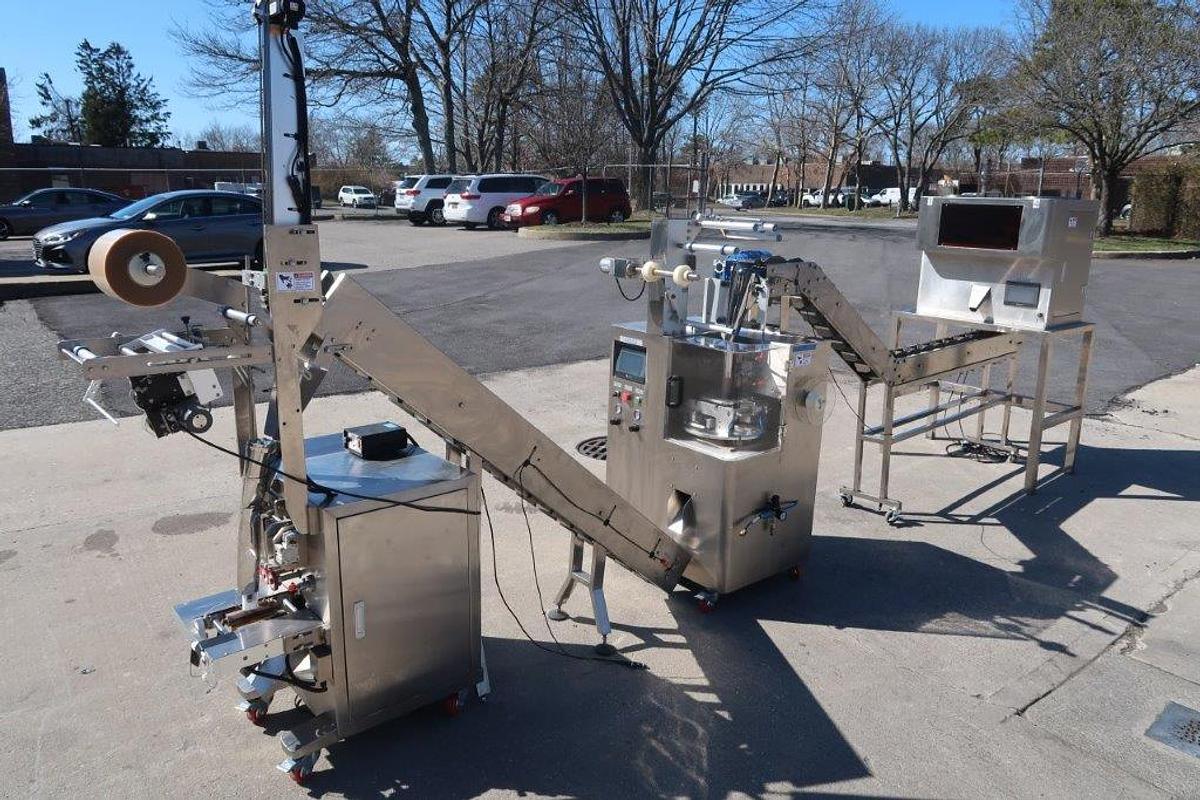
Category
Manufacturer
Model
FAQ:
What types of tea bags can Sichuan Mingdian tea bagging machines produce?
Sichuan Mingdian tea bagging machines are designed to produce multiple tea bag formats, with key models covering pyramid-style bags and flat heat-seal bags. Pyramid bags are particularly popular in premium tea markets because the three-dimensional shape gives loose-leaf tea more room to expand during steeping, which is important for larger-cut teas like whole-leaf green or oolong. Flat tea bags remain the standard format for most commercial tea brands and are widely used for finely cut black teas, herbal blends, and flavored teas.
Some Mingdian models also support string-and-tag configurations, which add a thread and paper tag to each bag for consumer convenience. The specific formats a given machine supports depend on the model, so buyers evaluating used Mingdian equipment should confirm which bag styles the particular unit was configured for. A used machine that was running pyramid bags may require tooling changes or adjustments to switch to flat-bag production, and this is worth clarifying with the seller before purchase.
What is the typical production speed of a Mingdian tea bagging machine?
Production speed is one of the most important specs buyers look at when evaluating tea bagging equipment, and Mingdian machines generally fall in a range of roughly 30 to 100 or more bags per minute depending on the model and bag format. That translates to approximately 1,800 to 6,000 bags per hour under normal operating conditions. The specific unit currently available through used equipment channels is rated at 3,000 bags per hour, which places it in the mid-range and makes it a practical fit for mid-scale tea producers, contract packagers, or private-label brands running multiple SKUs.
Actual throughput on a used machine can vary from its rated capacity depending on factors like the condition of the filling mechanism, the material being packaged, and how well the machine has been maintained. Buyers should ask sellers for documentation on the machine's recent production history or request a video inspection showing the machine running at speed. This gives a much clearer picture of real-world output than the nameplate rating alone.
What tea types and blends are Mingdian tea bagging machines compatible with?
Sichuan Mingdian equipment is built with the full range of Chinese and international tea categories in mind. Machines from this manufacturer are commonly used to package green tea, black tea, pu-erh, white tea, oolong, and herbal or floral blends. The fill system is designed to handle the varying particle sizes and densities that come with different tea types, from finely ground fannings used in standard black tea bags to larger, more irregular cuts found in herbal and specialty blends.
One thing buyers should pay attention to with used equipment is whether the machine was previously running a very specific product type. For example, a machine that spent years running fine-cut CTC black tea may have wear patterns or calibration settings that are not ideal for coarser herbal blends right out of the gate. Discussing the machine's production history with the seller and arranging a thorough inspection helps buyers understand what, if any, adjustments will be needed before running a different product.
What bag materials are compatible with Mingdian tea bagging machines?
The material compatibility of a Mingdian tea bagging machine depends on the specific model and how it was configured. Common bag materials used in tea packaging include filter paper, non-woven fabric, nylon mesh, and corn fiber (PLA), each of which has different sealing requirements. Heat-seal machines are typically set up for thermoplastic materials like nylon or PLA pyramid bags and heat-sealable filter paper, while some models handle non-woven materials used in more economical flat bags.
For buyers considering a used Mingdian machine, confirming material compatibility is critical before purchase. A machine configured for nylon pyramid bags, for instance, uses different sealing temperatures and tooling than one set up for paper flat bags. If a buyer intends to run a different material than the machine was previously using, they should ask the seller whether the sealing heads and forming tools can be adjusted or swapped. Some material conversions are straightforward; others may require sourcing parts from the manufacturer or a qualified technician.
Is a Mingdian tea bagging machine suitable for small tea businesses?
At a rated capacity of around 3,000 bags per hour, Mingdian tea bagging equipment is generally better suited to mid-scale to large tea producers rather than very small artisan operations. A small tea shop producing a few hundred bags a week would likely find a machine at this output level to be more capacity than they need, and the capital cost, floor space, and maintenance requirements may not make economic sense at low volumes. That said, a growing small business that is scaling toward contract packaging or private-label production could find a used Mingdian machine to be a cost-effective entry point into automated production.
Used equipment tends to carry a significantly lower price point than comparable machines purchased directly from a manufacturer, which can make automation accessible to businesses that are not yet at full industrial scale. The key is matching the machine's realistic daily or weekly output to actual production demand. Buyers should also factor in the cost of operator training, routine maintenance, and any spare parts that may be needed, since these ongoing costs are part of the total picture when assessing whether the investment makes sense for their business size.
What should buyers inspect when evaluating a used Mingdian tea bagging machine?
Buying used tea packaging equipment requires a more hands-on evaluation approach than purchasing directly from a manufacturer. The most important areas to inspect on a Mingdian bagging machine include the forming and sealing heads, the filling auger or volumetric dosing system, the drive mechanisms, and the control panel. Sealing components are subject to significant wear over time, and worn or damaged sealing heads can result in inconsistent bag quality. The filling system should be checked for accuracy, as dosing consistency directly affects product quality and regulatory compliance.
Most reputable used equipment dealers will accommodate in-person inspections or, where that is not practical, will provide video walkthroughs showing the machine in its current condition. Some machines may still be in active production at their current facility, which can actually be an advantage since it allows buyers to see the equipment running live. Keep in mind that dealers typically do not have the permitting required to run food production, so testing the machine with actual tea product is generally not possible at a dealer's facility. Buyers should also contact Sichuan Mingdian directly to ask about parts availability and technical support for the specific model they are considering, since support levels can vary based on the machine's age.
How does buying a used Mingdian tea bagging machine differ from buying one directly from the manufacturer?
Purchasing a used Mingdian machine through a secondary market dealer is a fundamentally different transaction than buying directly from the manufacturer. Used machines are sold as-is, meaning there is no manufacturer warranty covering the equipment, and the buyer takes on responsibility for verifying the machine's condition before completing the purchase. This puts a premium on the buyer's due diligence, including thorough inspections, reviewing the machine's service history if available, and understanding what parts or repairs may be needed.
On the other hand, used equipment typically comes at a substantially lower cost, which can make it an attractive option for businesses that need proven, industrial-grade automation without the capital outlay of a brand-new machine. The trade-off is that buyers need to work with dealers who have a solid track record in the packaging and food equipment space, since the quality of the inspection process and the accuracy of the machine's description depend heavily on the dealer's expertise. Choosing a dealer who specializes in food and beverage processing equipment, rather than a general machinery reseller, reduces the risk of surprises after delivery.
What are typical shipping and logistics considerations for a Mingdian tea bagging machine?
Tea bagging machines are industrial equipment and require careful handling throughout the shipping process. Proper packaging is essential to prevent damage in transit, and depending on the size and weight of the machine, this can mean heavy-duty wooden crating rather than simple palletization. Larger Mingdian models may also require specialized rigging equipment for loading at the origin point and unloading at the buyer's facility, which adds to the overall logistics cost. Buyers should ask sellers to provide a detailed breakdown of packaging, rigging, and freight charges so they have a clear picture of the total landed cost before committing to a purchase.
For buyers outside the seller's immediate region, freight costs can be a significant line item, particularly for machines being shipped internationally. Buyers should also consider whether their facility has the equipment and access needed to receive a large machine, including adequate dock height, forklift capacity, and clear pathways to the installation area. Confirming these details in advance prevents delays and additional costs at the receiving end. Getting quotes from multiple freight carriers and discussing crating options with the seller before finalizing the purchase is a practical step that experienced buyers typically take.
What are typical payment terms for purchasing used tea bagging equipment?
Used equipment dealers in the packaging and food processing machinery space most commonly require full payment before a machine ships. This is standard practice in the industry and reflects the fact that used equipment transactions are typically final sales without return provisions. Buyers should factor this into their cash flow planning and ensure funds are available to complete the transaction before shipping arrangements are made. Some dealers may offer payment terms or installment arrangements to buyers with whom they have an established purchasing history, but this is generally the exception rather than the rule for first-time buyers.
Buyers who are making a significant investment in used equipment should also consider the practical steps that protect their interests within this structure. Completing a thorough inspection before payment, reviewing any available documentation on the machine's condition and history, and confirming all shipping and delivery details in writing are all reasonable steps. Working with a dealer who has a verifiable track record in the industry and a history of selling food and beverage processing equipment provides an additional layer of confidence, since their reputation depends on accurately representing the machines they sell.
What fill weight range can a Mingdian tea bagging machine typically handle?
Fill weight flexibility is an important spec for tea producers who run multiple products or need to adjust portion sizes for different markets. Mingdian tea bagging machines are generally capable of handling a range of fill weights, with typical configurations covering somewhere between 1 gram and 5 grams per bag for standard tea bag formats. Pyramid bags for premium loose-leaf teas often use fill weights in the 2 to 3 gram range, while flat paper bags for standard black tea commonly run around 2 grams. Some machines can be adjusted to handle weights outside this range, but the dosing system's accuracy tends to be optimized for a specific window.
On a used machine, the dosing and filling mechanism should be carefully evaluated as part of any pre-purchase inspection. Augers and volumetric fillers can wear over time, which affects fill accuracy and consistency. If a buyer plans to run a different fill weight than the machine was previously calibrated for, they should ask the seller whether the adjustment is straightforward or whether it requires technical support. Confirming that the machine can reliably hit the target fill weight for the intended product is a critical step before committing to the purchase.