Category
Manufacturer
Model
Shriver
Shriver specializes in manufacturing equipment for the food and beverage industries, particularly in the area of mixing and blending. They are known for their high-efficiency mixers that ensure product consistency and quality. Their solutions cater to a wide range of food applications.
FAQ:
What types of Shriver industrial filters are available on the used equipment market?
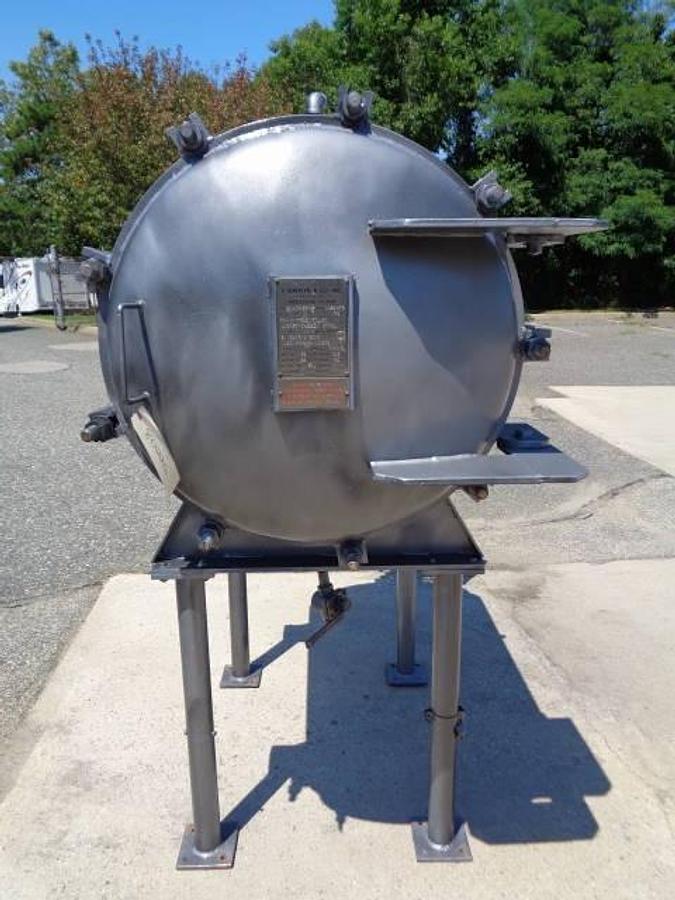
Shriver produces a range of industrial filtration equipment, with filter presses being among the most commonly traded units on the used market. These include horizontal tray pressure filters, plate-and-frame filter presses, and recessed chamber filter presses in a variety of configurations. A specific example of what surfaces on the used market is the Shriver 30-inch diameter horizontal tray pressure filter constructed in 316 stainless steel, which is well-suited for corrosive or sanitary processing environments. Plate sizes, chamber counts, and material specifications vary considerably from unit to unit, so buyers should review individual listings carefully to match the equipment to their process requirements.
Beyond the press itself, Shriver filter configurations differ in how solids are discharged, how filtrate is collected, and what operating pressures they are rated for. Some units are designed for batch processing while others support semi-continuous operation. Used Shriver filters appear in a range of sizes, from smaller pilot-scale units to large industrial configurations capable of handling thousands of gallons per cycle. Buyers looking for a specific plate size, pressure rating, or material of construction should communicate those requirements clearly to the dealer so the right unit can be identified from available inventory.
What industries commonly use Shriver filter presses?
Shriver filter presses have a broad application base across several process-intensive industries. Mining and mineral processing operations rely on them heavily for dewatering slurries and recovering solids from leach solutions. Wastewater treatment facilities use them to reduce sludge volume before disposal. Chemical processing plants use Shriver presses for clarification and solids separation in both aqueous and solvent-based systems. The food and beverage industry is another major user, particularly for applications like edible oil clarification, juice processing, and sugar refining, where sanitary construction materials like 316 stainless steel are often required.
Pharmaceutical manufacturers use filter presses for API isolation and process liquid clarification, where consistent cake formation and cleanability are critical. Power generation facilities, particularly those managing fly ash or cooling water treatment, also deploy filter presses for dewatering duties. The versatility of Shriver equipment across these sectors is one reason used units retain demand on the secondary market. When evaluating a used Shriver press for a specific application, buyers should confirm that the plate material, gasket type, and pressure rating are appropriate for the process chemistry and temperature involved.
What should buyers know about purchasing a used Shriver filter press versus buying one directly from a manufacturer?
Buying a used Shriver filter press can offer significant cost savings compared to purchasing a comparable unit through a manufacturer's standard lead time and pricing structure. Used equipment dealers specializing in industrial filtration typically carry units that have been decommissioned from active production facilities, which means the machines have a documented operating history. For buyers with established process requirements and engineering teams capable of evaluating equipment condition, used filter presses can represent strong value. The trade-off is that used equipment is sold as-is, meaning the buyer takes on the responsibility of thoroughly inspecting the unit before committing to a purchase.
One practical consideration is parts and support availability. Before purchasing a used Shriver press, buyers should contact the manufacturer to understand what level of support, replacement parts, and technical documentation is available for that specific model and age. Older units may have limited parts availability, which can affect long-term operating costs. Reputable used equipment dealers will typically facilitate in-person or video inspections so buyers can assess the condition of filter plates, frames, cloths, seals, and the hydraulic closing system before finalizing the transaction. Choosing a dealer with a long track record in industrial filtration equipment is an important factor in managing the risks associated with used machinery purchases.
What sizes and pressure ratings are typical for Shriver filter presses?
Shriver filter presses are manufactured across a wide range of sizes to accommodate different production scales. Plate sizes commonly seen in industrial configurations range from around 18 inches square on smaller units up to 48 inches or larger on high-capacity presses. The number of chambers in a press directly affects its total cake volume per cycle, and industrial units can range from a handful of chambers to well over a hundred, depending on the throughput required. Some Shriver presses are specifically designed as horizontal tray units, like the 30-inch diameter horizontal tray pressure filter that appears on the used market, while others use the more conventional vertical plate stack configuration.
Operating pressure is another key specification. Shriver filter presses are generally rated for pressures ranging from approximately 100 PSI on standard units up to 225 PSI on higher-performance models designed for demanding dewatering tasks. Higher pressure ratings allow for drier filter cakes and faster cycle times, which matters in applications where throughput and downstream drying costs are important. When evaluating a used unit, buyers should verify the rated operating pressure against their process feed pressure requirements and confirm that the hydraulic closing system and plate pack are in acceptable condition to operate safely at the rated pressure.
What materials are Shriver filter plates made from, and why does it matter?
Shriver filter press plates are produced in several materials, each suited to different process environments. Polypropylene is the most common plate material in general industrial use because it is lightweight, chemically resistant to a wide range of acids and bases, and relatively affordable to replace. Cast iron plates are found on older units and in applications where structural rigidity under high pressure is a priority, though they are susceptible to corrosion in aggressive chemical environments. Stainless steel plates and frames, including 316 stainless, are used in food-grade, pharmaceutical, and highly corrosive applications where cleanability and resistance to chemical attack are essential.
The plate material has a direct impact on what processes the filter press can handle safely and effectively. A press with polypropylene plates may be entirely appropriate for a wastewater treatment application but unsuitable for a high-temperature chemical process. Similarly, a stainless steel unit like the 30-inch horizontal tray pressure filter in 316 construction is a strong candidate for food and beverage or pharmaceutical use, where sanitary standards apply. Buyers purchasing used Shriver presses should inspect the plate material closely, check for cracks, warping, or chemical degradation, and confirm that the existing plates are compatible with their intended process before finalizing a purchase.
What ongoing maintenance do Shriver filter presses require, and are replacement parts readily available?
Filter presses in general require regular attention to several wear components to maintain reliable operation. Filter cloths are the most frequently replaced item, as they are subject to blinding, tearing, and chemical degradation over time. Gaskets and seals between plates also wear and should be inspected regularly to prevent leaks at operating pressure. The hydraulic closing system, including the pump, cylinder, and hoses, requires periodic fluid checks and seal replacements. On older units, the plate pack itself may need individual plates replaced if cracking or warping is found during inspection.
For used Shriver equipment specifically, parts availability is an important factor to research before committing to a purchase. Buyers should contact the manufacturer directly to determine whether replacement plates, cloths, frames, and hydraulic components are still stocked or can be fabricated for the specific model in question. Third-party filter cloth suppliers can often provide compatible cloths for standard plate sizes, which broadens sourcing options. Dealers selling used Shriver equipment can sometimes provide documentation or model information that helps buyers assess parts availability. Verifying this before purchase, rather than after, is a practical step that experienced buyers consistently recommend.
How should buyers inspect a used Shriver filter press before purchasing?
A thorough inspection of a used Shriver filter press should cover both the mechanical and process-contact components of the machine. On the mechanical side, buyers should examine the hydraulic closing system for leaks, check the condition of the press frame and side rails for cracks or deformation, and verify that the plate-shifting mechanism operates smoothly. The hydraulic pump and cylinder should be tested under pressure if possible. For the plate pack, each plate should be inspected for cracks, warping, and surface damage, and the filter cloths should be checked for tears, blinding, or chemical degradation that would require immediate replacement.
Reputable used equipment dealers will accommodate in-person inspections at the storage facility, or in some cases at the production facility where the equipment is still installed and potentially still in operation. Virtual inspections via video call or detailed video recordings are also a common alternative for buyers who cannot travel. It is worth noting that most equipment dealers do not have the permitting or infrastructure to run actual product through a filter press during an inspection, so functional testing is typically limited to mechanical operation rather than full production simulation. Buyers should ask detailed questions about the machine's operating history, the reason for decommissioning, and whether any repairs or modifications were made during its service life.
What are typical shipping and logistics considerations when buying a used Shriver industrial filter?
Shipping a used industrial filter press involves more logistical planning than most equipment purchases. Filter presses can be heavy and dimensionally large, particularly units with full plate packs installed, and they require proper packaging to prevent damage in transit. Depending on the size of the unit, shipping costs will vary based on whether the equipment is palletized, crated, or requires custom packaging. Buyers should ask the dealer specifically what packaging is included in the quoted price and what additional crating or bracing may be recommended for longer-distance shipments.
For larger Shriver press configurations, loading and unloading at both ends of the shipment may require rigging equipment such as forklifts or cranes, which adds to the landed cost of the machine. Buyers should factor these rigging costs into their total acquisition budget and confirm in advance whether the receiving facility has the appropriate equipment to unload the press safely. Most used equipment dealers require full payment before a machine ships. Getting a complete picture of packaging, freight, and rigging costs upfront avoids surprises and allows for accurate project budgeting before the purchase is finalized.
What payment terms are typical when buying used industrial filtration equipment?
The standard practice in the used industrial equipment market is for dealers to require full payment before a machine is released for shipping. This applies broadly across the industry and is not specific to any one dealer or equipment type. The rationale is straightforward: used equipment transactions involve significant asset values, and dealers need payment confirmed before committing to packaging, rigging, and freight scheduling. For first-time buyers working with a particular dealer, full prepayment should be expected as the default arrangement.
Some dealers extend payment terms to established repeat customers with a track record of prior transactions, but this is at the dealer's discretion and is not a standard offering for buyers making their first purchase. Wire transfer is the most common payment method for used industrial equipment transactions of significant value. Buyers should also confirm whether the quoted price is inclusive of any applicable taxes, export documentation fees, or handling charges, as these can vary depending on the buyer's location and the nature of the transaction. Clarifying all cost components before issuing payment prevents misunderstandings and keeps the transaction moving efficiently.
How does a Shriver horizontal tray pressure filter differ from a standard plate-and-frame filter press?
A horizontal tray pressure filter operates on a different mechanical principle than a conventional vertical plate-and-frame press. In a horizontal tray design, the filter elements are arranged horizontally, which allows for gravity-assisted cake discharge and can simplify solids handling in certain applications. The horizontal orientation also tends to produce more uniform cake formation across the filter surface compared to some vertical configurations, which can be an advantage in applications where consistent cake moisture content matters. The 30-inch diameter horizontal tray pressure filter in 316 stainless steel is an example of this style and is particularly well-suited to food-grade or corrosion-sensitive processes.
A plate-and-frame press, by contrast, uses a vertical stack of alternating plates and frames clamped together under hydraulic pressure. Feed slurry is pumped into the frames, filtrate passes through the cloth and exits through the plates, and solids build up as a cake within the frame cavity. Plate-and-frame presses are widely used across industries and are available in a broader range of sizes and materials. The choice between the two designs depends on the specific process requirements, including the nature of the solids, the required cake dryness, how the solids will be discharged, and the production throughput needed. Buyers evaluating used Shriver equipment should understand which design best fits their application before selecting a unit.