Category
Manufacturer
Model
Sharples
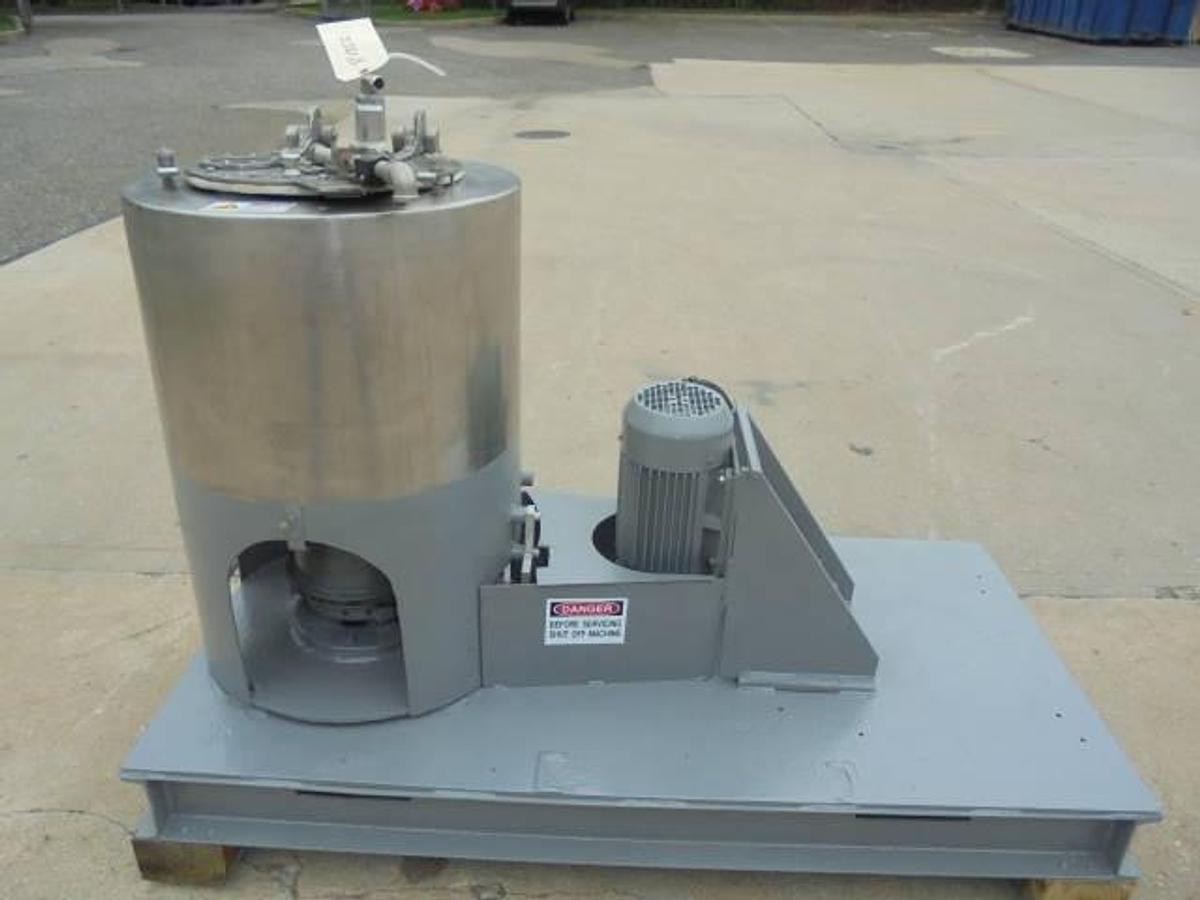
Sharples is known for its separation and filtration equipment used in various industries, including food and beverage, pharmaceuticals, and chemicals. They specialize in centrifuges and filters that enhance product purity and quality. Their technology is essential for efficient manufacturing processes.
FAQ:
What industries commonly use Sharples centrifuges?
Sharples centrifuges have earned a strong reputation across a wide range of process industries, largely because of their ability to handle demanding separation tasks at scale. The most common applications include oil and gas processing, chemical manufacturing, food and beverage production, pharmaceutical processing, wastewater treatment, and mining operations. In pharmaceuticals, for example, Sharples centrifuges are used to separate solids from liquids during active ingredient production, where product purity is critical. In food and beverage, they handle everything from clarifying edible oils to processing dairy products.
The reason Sharples equipment shows up across so many sectors comes down to the fundamental versatility of centrifugal separation technology. Whether a facility needs to clarify a liquid, dewater a solid cake, or recover a valuable product from a slurry, a properly sized Sharples unit can often do the job efficiently. This cross-industry demand also means used Sharples centrifuges tend to retain value reasonably well, since a machine coming out of a chemical plant may be a viable candidate for a food processing application after proper cleaning and inspection.
What is the difference between a Sharples Super-D-Canter and a standard decanter centrifuge?
The Sharples Super-D-Canter is a specific product line within the broader category of horizontal decanter centrifuges, and it was considered a benchmark design for continuous, high-throughput solid-liquid separation when it was introduced. The key distinction between the Super-D-Canter and a more basic decanter centrifuge lies in its engineering refinements: the Super-D-Canter was designed for higher bowl speeds, more precise differential scroll control, and greater mechanical durability under continuous operation. These characteristics made it especially well-suited for applications involving large feed volumes or abrasive slurries, such as those found in wastewater treatment and chemical processing.
A standard decanter centrifuge operates on the same principle, using a rotating bowl and an internal screw conveyor (scroll) to continuously discharge separated solids while the clarified liquid overflows at the other end. The Super-D-Canter refined this design with features aimed at reducing maintenance intervals and improving separation efficiency at higher feed rates. When evaluating a used Super-D-Canter versus a more basic decanter model, buyers should consider the intended feed material, required throughput, and the availability of spare parts for the specific model, since older Super-D-Canter units may require sourcing components through Alfa Laval (the current brand owner) or specialized third-party suppliers.
What should I inspect when buying a used Sharples centrifuge?
Buying a used centrifuge requires a more disciplined inspection approach than buying most other types of process equipment, because the components most prone to wear are also the most expensive to replace. The four areas that deserve the closest attention are bowl condition, scroll (conveyor) wear, bearing condition, and motor hours. The bowl is the heart of the machine, and any signs of erosion, corrosion pitting, or out-of-balance wear can signal either a costly repair or a machine that will not perform to spec. The scroll flights, which move solids through the bowl, are subject to abrasive wear and should be examined carefully for thinning or uneven wear patterns.
Beyond the mechanical components, buyers should ask about the machine's service history, the last application it ran, and whether any major rebuilds have been performed. A centrifuge that processed abrasive mining slurry will have different wear characteristics than one used for pharmaceutical filtration. Reputable used equipment dealers will typically accommodate in-person inspections or provide detailed video walkthroughs of the machine so buyers can assess its condition before committing. Some machines may still be installed and running at a facility, which can allow for a live operational inspection arranged through the dealer. Keep in mind that most dealers do not have the production permits or facilities to run test batches, so functional testing in the dealer's possession is generally limited to mechanical checks rather than full process trials.
What is the typical price range for a used Sharples centrifuge?
Pricing for used Sharples centrifuges varies considerably based on model, size, age, condition, and what ancillary components are included with the sale. On the lower end, smaller basket centrifuges or older units in as-is condition may be available for a few thousand dollars. Mid-range units, such as a well-maintained decanter centrifuge with documented service history, typically fall somewhere between $20,000 and $60,000. Larger, higher-capacity models like the Super-D-Canter series in good working condition can exceed $100,000, particularly when the sale includes the drive system, control panel, and associated piping or skid components.
Beyond the purchase price, buyers should factor in the full landed cost of the equipment. Shipping a centrifuge, which is a heavy, precision-balanced machine, requires careful packaging and in many cases specialized rigging for loading and unloading. Crating, freight, and rigging costs can add meaningfully to the total investment, especially for larger units being shipped long distances. Asking the dealer for a detailed breakdown of packaging, freight, and rigging costs before finalizing a purchase is a straightforward way to avoid surprises and make an accurate cost comparison between available units.
What sizes and models of used Sharples centrifuges are typically available on the market?
The used market for Sharples centrifuges includes a fairly broad range of equipment, reflecting the company's long history of manufacturing separation equipment for multiple industries. Basket centrifuges, which operate in batch mode and are common in pharmaceutical and chemical applications, are available in various basket diameters, with 12-inch diameter units being a common size found on the secondary market. Horizontal decanter centrifuges, including models from the Super-D-Canter line, appear regularly in used equipment inventories and span a range of bowl diameters and throughput capacities suited to everything from small pilot-scale operations to large industrial installations.
Availability at any given time depends on what has recently been decommissioned from industrial facilities, so the selection shifts over time. Buyers with specific process requirements, such as a particular bowl diameter, speed rating, or material of construction, may need to monitor listings over a period of weeks or months to find a unit that fits their needs. Consulting directly with a used equipment dealer that specializes in separation and filtration equipment is often the most efficient path, since these dealers tend to have visibility into upcoming decommissions and can source specific models that may not yet be publicly listed.
Where can I source spare parts for a used Sharples centrifuge?
Spare parts for Sharples centrifuges are available through several channels, and the right source often depends on the age and model of the machine. Alfa Laval, which acquired the Sharples brand, is the primary manufacturer-level source for parts and can supply components for many models still within their supported range. However, for older machines, Alfa Laval's parts availability may be limited, and buyers should contact them directly to confirm what support is available for a specific model before purchasing a used unit. This step is worth doing early in the evaluation process, since parts availability directly affects the long-term operating cost of the machine.
Beyond the manufacturer, a number of specialized industrial spare parts suppliers and third-party refurbishers stock or can fabricate components for Sharples centrifuges, including scroll assemblies, bowl components, bearings, and seals. Some dealers in the used centrifuge market also carry a stock of common wear parts. Buyers should ask any prospective seller about parts availability for the specific unit they are considering, as this is a practical indicator of how supportable the machine will be over its working life. Establishing a relationship with a parts supplier before the machine arrives on-site is a sensible precaution, particularly for critical production applications.
How does centrifugal separation work, and why is it used in industrial processing?
Centrifugal separation works by spinning a mixture at high speed, which amplifies the effect of gravity and causes components of different densities to separate more rapidly than they would under normal gravitational conditions. In a centrifuge, the denser solid particles or heavier liquid phase are forced outward toward the bowl wall, while the lighter liquid phase remains closer to the center and can be drawn off separately. Depending on the centrifuge design, this process can operate in batch mode (as with a basket centrifuge) or continuously (as with a decanter or disc centrifuge). The separation factor, expressed as a multiple of gravitational force (G-force), is a key performance parameter and varies significantly across different centrifuge designs and operating speeds.
Industrial processes rely on centrifugal separation because it is dramatically faster and more space-efficient than gravity settling or filtration alone. In pharmaceutical manufacturing, for example, centrifugation can reduce a separation step that might take hours in a settling tank to a matter of minutes. In wastewater treatment, decanter centrifuges can dewater large volumes of sludge continuously without the land area required for drying beds. The ability to handle viscous feeds, abrasive solids, and temperature-sensitive products across a range of scales makes centrifugation a preferred technology in many process industries, which is why well-maintained used centrifuges from established manufacturers continue to hold practical value long after their initial production runs.
What compliance standards or certifications should I look for on a used Sharples centrifuge?
The relevant certifications for a used Sharples centrifuge depend heavily on the application and facility where it will be installed. For operations in potentially explosive atmospheres, such as solvent-based chemical processing or certain pharmaceutical applications, ATEX certification (in Europe) or NEC/NFPA hazardous location ratings (in North America) are important considerations. These designations indicate that the electrical components and construction of the machine meet standards for use in environments where flammable vapors or dust may be present. Buyers should verify that any claimed certifications on a used machine are still valid for the specific configuration being sold, since modifications or component replacements over the machine's life can affect compliance status.
For pharmaceutical and food processing applications, buyers should also consider whether the machine's materials of construction and surface finishes meet the requirements of their regulatory environment, such as FDA regulations in the United States or equivalent standards in other jurisdictions. Stainless steel contact surfaces, sanitary fittings, and cleanability are typical requirements in these sectors. When evaluating a used machine, asking for any available documentation, including the original manufacturer's data sheet, prior compliance records, and maintenance logs, gives the buyer the best basis for assessing whether the unit can be brought into compliance for their intended use. Consulting with the relevant regulatory body or an equipment compliance specialist before purchase is advisable when the application is regulated.
How is a used Sharples centrifuge typically shipped, and what should buyers expect for freight costs?
Shipping a centrifuge requires more planning than most industrial equipment purchases because these machines contain precision-balanced rotating assemblies that can be damaged by improper handling in transit. Reputable dealers will package the machine appropriately for the mode of transport, which typically means securing the bowl and scroll assembly to prevent movement, and either palletizing or crating the unit depending on its size and the distance it needs to travel. Larger machines generally require custom crating and specialized rigging equipment for loading at the origin and unloading at the destination. Buyers should ask the dealer specifically what packaging is included in the quoted price and whether rigging services are available at both ends of the shipment.
Freight costs for centrifuges vary widely based on machine weight, dimensions, the level of packaging required, and the shipping distance. A smaller basket centrifuge might ship on a standard pallet via LTL freight at a relatively modest cost, while a large decanter centrifuge on a skid could require a flatbed truck and a crane or forklift with significant capacity at both origin and destination. Getting a firm freight quote that includes all rigging, packaging, and delivery charges before finalizing a purchase is the best way to understand the true landed cost of the equipment. Some dealers will arrange freight on the buyer's behalf, while others quote the machine ex-works, leaving the buyer responsible for arranging transport.
What payment terms do used centrifuge dealers typically offer, and what should buyers know before purchasing?
Most used equipment dealers require full payment prior to releasing a machine for shipment. This is standard practice in the industry and reflects the nature of the secondary market, where machines are often one-of-a-kind items that cannot be easily resold if a transaction falls through after the equipment has been staged for shipping. Payment is typically accepted by wire transfer, and buyers should confirm the dealer's accepted payment methods early in the process. Some dealers may extend payment terms to established repeat customers, but first-time buyers should plan on full payment upfront as the default expectation.
Before making payment, buyers are strongly advised to complete their inspection of the machine, whether in person, by video, or through detailed photographs provided by the dealer. Once payment is made and the machine ships, the ability to negotiate condition-related adjustments is limited. Selecting a dealer with a long track record in the separation equipment sector is one of the most practical ways to reduce purchasing risk, since established dealers have reputational incentives to represent their equipment accurately. Asking for references from prior customers and reviewing the dealer's history in the industry are reasonable due diligence steps, particularly for higher-value purchases.