Category
Manufacturer
Model
Shanghai Dong Hua
Shanghai Dong Hua is a prominent manufacturer of packaging machinery for the food and pharmaceutical industries. They are known for their advanced bottling and labeling systems, which help streamline production lines. Their equipment is designed to meet the high standards of these regulated industries.
FAQ:
What types of packaging machinery does Shanghai Dong Hua manufacture?
Shanghai Dong Hua produces a range of packaging equipment with a strong focus on the food and pharmaceutical industries. Their product line includes bottling systems, labeling machines, filling machines, sealing machines, and homogenizers, among other production line equipment. The company has built a reputation for engineering machinery that meets the demanding quality and safety standards common in regulated industries, where consistency and precision are non-negotiable.
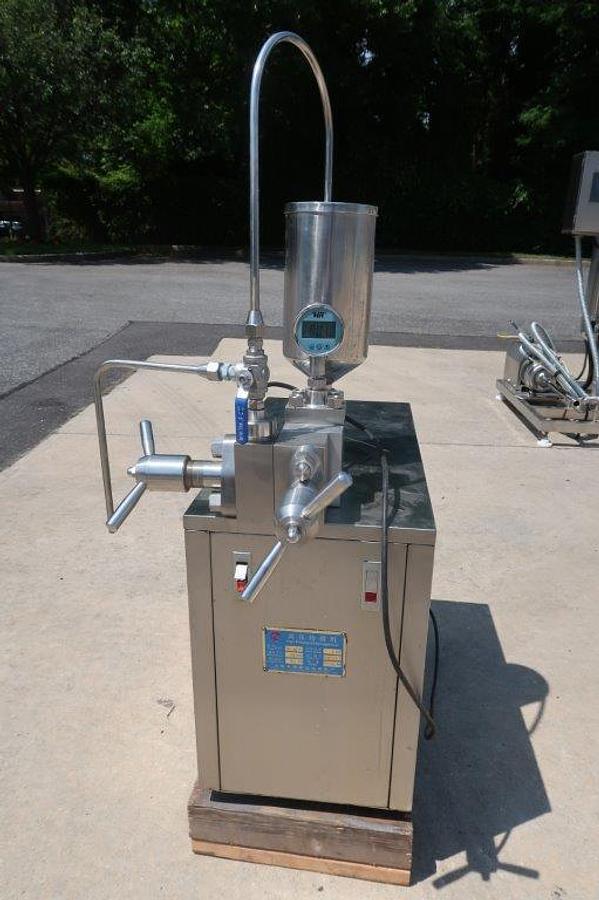
One specific example of their equipment is the two-stage homogenizer, which is used in food and pharmaceutical processing to achieve uniform particle size and product consistency. Their bottling and labeling systems are particularly well-regarded for helping manufacturers streamline high-volume production lines. Buyers looking at used Shanghai Dong Hua equipment will typically find machines suited for liquid filling, product homogenization, and automated labeling applications.
What should buyers know about purchasing used Shanghai Dong Hua packaging machinery?
Buying used packaging machinery from any manufacturer, including Shanghai Dong Hua, requires a different level of diligence than purchasing directly from a factory. Used machines are sold as-is, meaning the responsibility for verifying condition, functionality, and suitability falls on the buyer. This makes it critical to work with reputable used equipment dealers who have a documented history of selling industrial machinery and who specialize in packaging or food and pharmaceutical equipment specifically.
Before committing to a purchase, buyers should request an inspection, either in person or via video, to get an accurate picture of the machine's current working condition. It is also worth contacting Shanghai Dong Hua directly to understand what level of technical support, parts availability, and documentation they can provide for a specific model and production year, since older machines may have limited manufacturer support. Understanding these factors upfront helps avoid surprises after the equipment arrives.
How can buyers inspect used Shanghai Dong Hua equipment before purchasing?
Reputable used equipment dealers typically offer several inspection options to help buyers evaluate machinery before committing to a purchase. These include in-person visits to the dealer's facility, live video walkthroughs, and pre-recorded video captures of the machine. In some cases, a machine may still be installed and operating at the facility where it was originally used, allowing for an inspection at the actual production site, arranged between the dealer and the current equipment owner.
It is important to understand that most used equipment dealers are not set up to run full production tests with actual product, since that requires different operational permits and facility configurations. The goal of an inspection is to assess the machine's mechanical condition, completeness of components, signs of wear, and overall state of maintenance. Buyers should prepare a checklist of specific components to verify, and if possible, consult with a qualified packaging machinery technician who can evaluate what they are seeing during a video or in-person inspection.
What industries commonly use Shanghai Dong Hua packaging machinery?
Shanghai Dong Hua has historically focused its equipment design on two heavily regulated sectors: food processing and pharmaceuticals. In food production, their machinery is used for liquid filling, homogenization, and bottling of products like sauces, beverages, dairy items, and other consumables that require precise volumetric control and hygienic processing. The pharmaceutical side demands even tighter tolerances, and Dong Hua's equipment is engineered to meet those standards for liquid medications, supplements, and related products.
Beyond these two primary industries, packaging machinery of this type can also find application in cosmetics manufacturing, chemical processing, and nutraceuticals, anywhere that bottling, labeling, or homogenization is part of the production workflow. Buyers from these adjacent industries often find that used Shanghai Dong Hua equipment transfers well to their processes, particularly when the machine's specifications align with their viscosity, output volume, and container format requirements.
What is a two-stage homogenizer and what is it used for in packaging or processing?
A two-stage homogenizer is a piece of processing equipment that forces a liquid product through two sets of high-pressure valves in sequence, reducing particle size and creating a uniform, stable mixture. The first stage does the primary work of breaking down particles, while the second stage further refines the result, improving consistency and preventing separation over time. This type of equipment is common in dairy processing, pharmaceutical manufacturing, and food production where product stability and texture are critical quality factors.
Shanghai Dong Hua produces two-stage homogenizers designed for industrial production environments. A used unit, such as a 15 GPH (gallons per hour) model, would be suited for smaller-scale or pilot production operations where that throughput capacity meets the facility's output requirements. When evaluating a used homogenizer, buyers should pay close attention to the condition of the high-pressure valves and seals, as these are the components most subject to wear and most directly affect performance. Replacement part availability from the manufacturer or third-party suppliers is worth confirming before purchase.
What certifications should buyers look for when evaluating Shanghai Dong Hua packaging machines?
For buyers in export markets, CE certification is one of the most relevant credentials to look for on Shanghai Dong Hua packaging equipment. CE marking indicates that a machine has been assessed against European Union safety, health, and environmental protection standards, which is a legal requirement for machinery sold within the EU. Even for buyers outside Europe, CE certification is often used as a general benchmark for build quality and electrical safety compliance, making it a useful indicator regardless of geography.
Beyond CE, buyers in regulated industries like pharmaceuticals and food processing should also consider whether the equipment was originally built to comply with standards like FDA guidelines in the United States, or GMP (Good Manufacturing Practice) requirements that govern hygienic design and cleanability. When purchasing used equipment, original documentation, manuals, and any certification paperwork that came with the machine add significant value, as they provide a clearer picture of what standards the equipment was built to meet and how it was intended to be operated and maintained.
How does pricing for used Shanghai Dong Hua machinery compare to other packaging equipment options?
Shanghai Dong Hua equipment sits in the mid-range category of Chinese packaging machinery, which means it tends to offer a more accessible price point compared to European or North American brands with equivalent capabilities. For small and medium-sized manufacturers, this price positioning has historically made Dong Hua equipment an attractive option when building or expanding a production line without the capital outlay required for premium Western-made machinery. Used units carry an additional price reduction on top of that, making them a cost-effective choice for buyers with tighter budgets.
That said, the total cost of acquiring used packaging machinery goes beyond the listed sale price. Buyers need to factor in inspection costs, any refurbishment or part replacement needed to bring the machine to their required operating standard, shipping and rigging expenses, import duties if purchasing internationally, and the cost of installation and commissioning at their facility. Getting a clear picture of all these landed costs before finalizing a purchase decision is essential to accurately comparing used equipment options against each other or against purchasing different equipment entirely.
What are typical shipping and logistics considerations when buying used packaging machinery?
Shipping used industrial packaging machinery involves more complexity than standard freight. Machines need to be properly prepared for transit, which typically means palletizing, crating, or custom packaging depending on the size, weight, and fragility of the equipment. The level of packaging required directly affects shipping costs, so buyers should ask the dealer specifically how the machine will be prepared and what those preparation charges include. Inadequate packaging can result in damage during transit, which is a significant risk with precision equipment like filling systems or homogenizers.
Larger or heavier machines may also require specialized rigging for loading at the origin point and unloading at the destination. Rigging services, which involve cranes or forklifts operated by trained riggers, are typically an added cost not included in standard freight quotes. For international purchases, buyers also need to account for customs clearance, import duties, and any compliance documentation required by their country's import regulations. Asking the dealer for a fully itemized landed cost estimate, covering packaging, rigging, freight, and any applicable duties, is the best way to avoid unexpected expenses.
What payment terms do used equipment dealers typically offer for packaging machinery purchases?
The standard practice among used equipment dealers is to require full payment before a machine is released for shipping. This applies to most transactions, particularly for first-time buyers with no established relationship with the dealer. The reasoning is straightforward: once a machine leaves a dealer's facility, their ability to recover it in the event of a payment dispute is limited, so payment in advance protects both parties from that risk. Buyers should factor this into their cash flow planning before initiating a purchase.
For buyers who have an ongoing relationship with a dealer and a history of repeat transactions, some dealers may offer extended payment terms as a courtesy. These arrangements are typically negotiated on a case-by-case basis and are not a standard offering. Buyers should also confirm accepted payment methods early in the process, as wire transfers are the most common form of payment for large equipment purchases, and processing times can affect the overall transaction timeline. Clarifying all payment expectations before signing any purchase agreement avoids misunderstandings at the point of closing.
How should buyers evaluate whether a used Shanghai Dong Hua machine is the right fit for their production line?
The first step is matching the machine's specifications to the actual production requirements. For a homogenizer, that means confirming that the unit's throughput capacity (measured in GPH or liters per hour), pressure ratings, and compatible viscosity ranges align with the product being processed. For bottling or labeling equipment, buyers need to verify container size compatibility, output speed, and whether the machine's configuration supports the specific cap types, label formats, or fill volumes used in their operation. A machine that is mechanically sound but mismatched to the application will create production problems regardless of its condition.
Beyond specifications, buyers should assess the availability of spare parts and technical documentation for the specific model. Older machines or less common models may have limited support from the manufacturer, making it harder to source replacement components or troubleshoot issues down the road. Consulting with a packaging machinery technician familiar with Chinese-manufactured equipment can help identify potential maintenance concerns before purchase. It is also worth asking the dealer about the machine's production history, how long it was in service, what it was used to process, and how it was maintained, since this context adds meaningful detail to what an inspection alone can reveal.