Category
Manufacturer
Model
FAQ:
What types of industrial tanks does SFI manufacture?
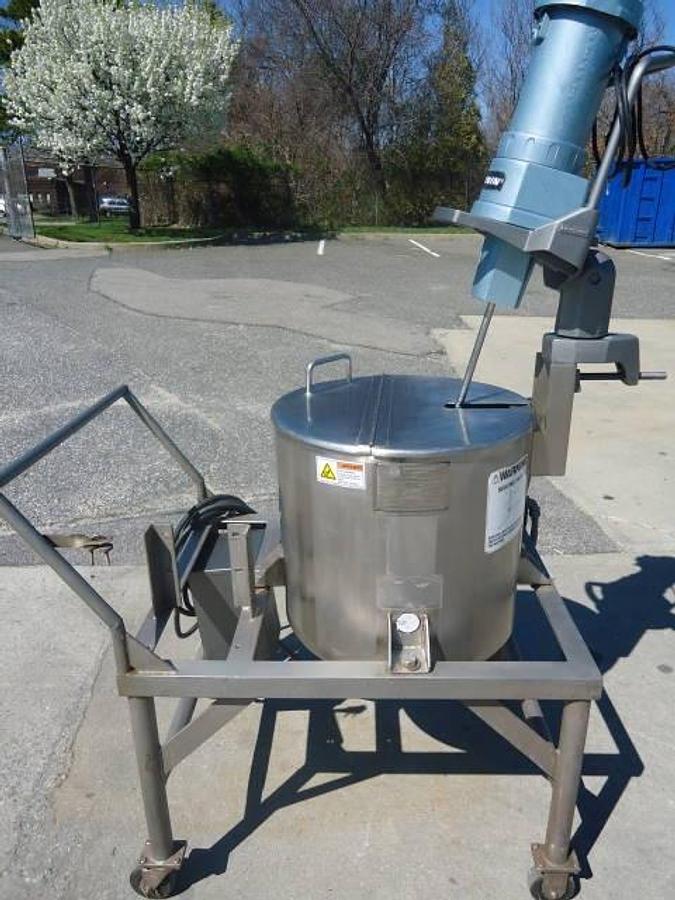
SFI produces a range of industrial tanks designed for demanding process and storage applications across multiple industries. Their equipment is commonly found in chemical processing, food and beverage production, water treatment, agriculture, and oil and gas operations. Tank configurations typically include self-contained jacketed vessels, agitated mixing tanks, and standard storage tanks built to handle both heated and ambient-temperature processes. The jacketed design, seen on models like the 20-gallon self-contained electric jacketed tank, allows for precise temperature control of the contents, which is critical in applications where viscosity, reaction rates, or product integrity depend on maintaining a specific heat range.
SFI tanks are often paired with agitation equipment. The Lightnin agitator, for example, is a well-regarded mixing drive used across the process industries for blending, suspending solids, and maintaining product uniformity. Finding an SFI tank already fitted with a quality agitator can significantly reduce the cost and complexity of setting up a process line, since the mechanical compatibility has already been established by the manufacturer.
What is a jacketed industrial tank and why is it used?
A jacketed tank is a vessel constructed with a double-wall design, where the outer layer (the jacket) forms a sealed chamber surrounding the inner tank. A heating or cooling medium, typically steam, hot water, glycol, or chilled water, circulates through this jacket to transfer heat to or from the product inside. This indirect heating method is widely preferred in industries where direct flame or immersion heaters would be impractical, unsafe, or damaging to the product. Common applications include heating viscous materials like adhesives, waxes, syrups, and resins, as well as maintaining fermentation temperatures in food and beverage production.
Electric jacketed tanks, like the SFI 20-gallon model, use an electric heating element to warm the jacketing fluid rather than relying on a steam boiler or external heat source. This makes them well-suited for smaller batch operations, laboratories, pilot plants, and facilities where steam infrastructure is not available. The self-contained design means the heating system is integrated into the unit, reducing installation complexity and allowing the tank to operate as a standalone piece of equipment.
What should buyers know about purchasing used SFI industrial tanks?
Used SFI industrial tanks offer a practical way to acquire quality process equipment at a fraction of the cost of buying comparable equipment elsewhere. Because these are pre-owned machines, buyers take on the responsibility of assessing condition before purchase. Reputable used equipment dealers will accommodate in-person inspections, virtual walkthroughs, or detailed video documentation of the tank so buyers can evaluate welds, jacket integrity, fittings, agitator condition, and any signs of corrosion or wear. It is worth asking the dealer specifically about the tank's service history, what materials it previously held, and whether any repairs or modifications were made during its working life.
Selecting a dealer who specializes in industrial process equipment, and who has a long track record in the industry, is one of the most important steps a buyer can take. Used equipment is sold as-is, so the dealer's expertise and transparency directly affect how well-informed a purchasing decision can be. Consulting with the equipment manufacturer about parts availability and technical support for a specific model and age is also advisable, since older units may have limited service support depending on the product line's current status.
What sizes and capacities are available for used SFI industrial tanks?
SFI has produced tanks across a fairly wide range of capacities, from small bench-scale and pilot vessels in the 5 to 50-gallon range up to larger production-scale tanks measured in hundreds or thousands of gallons. The specific inventory available at any given time through used equipment dealers will vary based on what has come off production floors or been decommissioned from industrial facilities. Smaller tanks, like the 20-gallon jacketed unit, are common in specialty chemical, cosmetic, pharmaceutical, and food processing operations where batch sizes are modest and precision matters more than volume.
When evaluating capacity, buyers should think beyond the nominal gallon rating. Working volume is often lower than total capacity, especially in agitated tanks where the impeller placement and jacket geometry reduce usable fill height. Dimensions such as diameter, straight shell height, and overall height including the agitator drive are equally important, particularly for buyers working within a fixed floor plan or with overhead clearance constraints. Asking the dealer for full dimensional drawings or specifications before committing to a purchase saves significant time and avoids logistical complications on delivery day.
What materials are SFI industrial tanks typically constructed from?
SFI tanks have been built in several materials depending on the intended service. Carbon steel is common for general-purpose storage and process applications where the contents are not highly corrosive and food-grade contact is not required. Stainless steel, particularly 304 and 316 grades, is the standard choice for food, beverage, pharmaceutical, and chemical applications where corrosion resistance, cleanability, and product purity are priorities. 316 stainless offers better resistance to chlorides and certain acids, making it the preferred option for more aggressive chemical environments. The construction material is one of the first things a buyer should confirm, since it directly determines whether a used tank is compatible with the intended application.
For buyers acquiring used tanks, understanding the previous service history is closely tied to material condition. A stainless steel tank that held a compatible product and was properly cleaned and maintained will typically be in much better shape than one that held abrasive slurries or was exposed to chemicals outside its rated compatibility range. Visual inspection of interior surfaces, welds, and any polished or sanitary finishes can reveal pitting, discoloration, or mechanical damage that would affect suitability for a new application. Dealers specializing in process equipment can help buyers interpret what they are seeing during an inspection.
What is a Lightnin agitator and why does it matter when buying a used tank?
Lightnin is a well-established brand of industrial mixing equipment, producing agitator drives, impellers, and complete mixing systems used across the chemical, food, pharmaceutical, and water treatment industries. A Lightnin agitator mounted on a tank indicates that the mixing system was specified and installed at a professional level, using equipment with known performance characteristics and available replacement parts. The brand has been in continuous production for decades, which means that even older Lightnin units often have documented specifications and, depending on the model, serviceable components still available through the manufacturer or aftermarket suppliers.
For buyers evaluating a used agitated tank, the condition of the agitator drive is just as important as the tank vessel itself. Key things to assess include the gearbox condition (listening for unusual noise during operation if the unit can be run), shaft seal integrity, impeller condition, and whether the drive is properly sized for the tank volume and fluid viscosity. A tank sold as a complete unit with its agitator already mounted and matched saves the buyer the time and expense of sourcing a separate drive, sizing it correctly, and arranging installation. Confirming the agitator model number with the dealer allows buyers to look up the original performance data and verify suitability for their process.
How does the inspection process work when buying a used industrial tank?
Inspections are a standard part of purchasing used industrial equipment and are typically offered by dealers in several formats. In-person inspections allow the buyer or their representative to physically examine the tank, check welds and surfaces, review any attached components like agitators or heating elements, and ask questions directly. Virtual inspections conducted via video call give buyers a real-time look at the equipment when travel is not practical. Dealers can also provide detailed video walkthroughs or photo documentation that buyers can review at their own pace and share with engineers or maintenance staff for evaluation.
One important nuance with used process equipment is that most dealers are not set up to run full production tests. An equipment dealer's facility operates under different permitting conditions than a manufacturing plant, so testing a tank with actual product under process conditions is generally not feasible at the dealer's location. Some tanks may still be installed and in use at the facility where they originated, in which case an inspection can sometimes be arranged at the actual plant site, giving buyers a chance to see the equipment running. Buyers should clarify with the dealer what type of inspection is available for a specific tank before making a purchase decision.
What are the typical shipping and logistics considerations for used industrial tanks?
Shipping a used industrial tank involves more planning than standard freight because of the weight, size, and fragility of certain components. Tanks need to be properly secured and, in many cases, crated or palletized to prevent damage during transit. The level of packaging required depends on the tank's size, construction, and any attached equipment like agitator drives or fittings that could be damaged if not properly protected. Dealers will typically outline the packaging approach and associated costs, which can vary considerably based on whether basic palletization or full custom crating is needed.
Larger tanks often require specialized rigging for loading at the dealer's facility and unloading at the buyer's location. This can include forklifts, cranes, or flatbed transport depending on the tank's dimensions and weight. These rigging costs are separate from freight charges and should be factored into the total landed cost of the equipment. Buyers should ask dealers for a complete breakdown of packaging, rigging, and freight costs before finalizing a purchase, since the difference between the listed price and the actual cost delivered to a facility can be significant for larger pieces of equipment.
What compliance standards or certifications are relevant for industrial tanks?
Industrial tanks used in the United States are subject to a range of standards depending on their application, contents, and installation type. Common certifications include UL 142 and UL 2085 for above-ground flammable liquid storage tanks, API 650 for large welded steel storage tanks used in the oil and gas industry, and ASME standards for pressure vessels. Tanks used in food, beverage, or pharmaceutical production often need to meet 3-A Sanitary Standards or FDA material compliance requirements. The applicable standard depends heavily on what the tank is storing, at what pressure and temperature, and in what regulatory environment it will operate.
For buyers purchasing used tanks, it is important to verify whether the tank was originally built to a specific standard and whether that certification is still documentable. Original certification plates or data plates are typically stamped or affixed to the vessel and provide information about the design pressure, temperature rating, and the standard under which the tank was constructed. If a tank will be placed into a regulated application, buyers should consult with their safety or compliance team and, if necessary, have the vessel re-inspected by a qualified inspector before putting it back into service. Age, repairs, and changes in service conditions can all affect whether a previously certified tank meets current requirements.
What are the payment terms typically used when purchasing used industrial equipment?
Most used equipment dealers require payment in full before a machine is released for shipping. This is standard practice across the industry and reflects the nature of used equipment transactions, where machines are often unique items that cannot simply be restocked if a buyer backs out after shipping arrangements have been made. Payment methods commonly accepted include wire transfer, ACH, and in some cases credit cards, though dealers may charge a processing fee for card transactions on larger purchases. Buyers should confirm accepted payment methods with the dealer early in the process to avoid delays.
For buyers with established relationships with a dealer, some flexibility on payment terms may be available, though this varies by dealer and is not a universal practice. First-time buyers should generally expect to pay in full prior to shipment. It is also worth confirming exactly when title to the equipment transfers and what the process is if damage occurs during shipping, since these details affect how buyers should handle freight insurance and claims. Getting clarity on these points before payment is made prevents misunderstandings and protects both parties in the transaction.