Category
Manufacturer
Model
FAQ:
What is a Serpa cartoner and what industries use it?
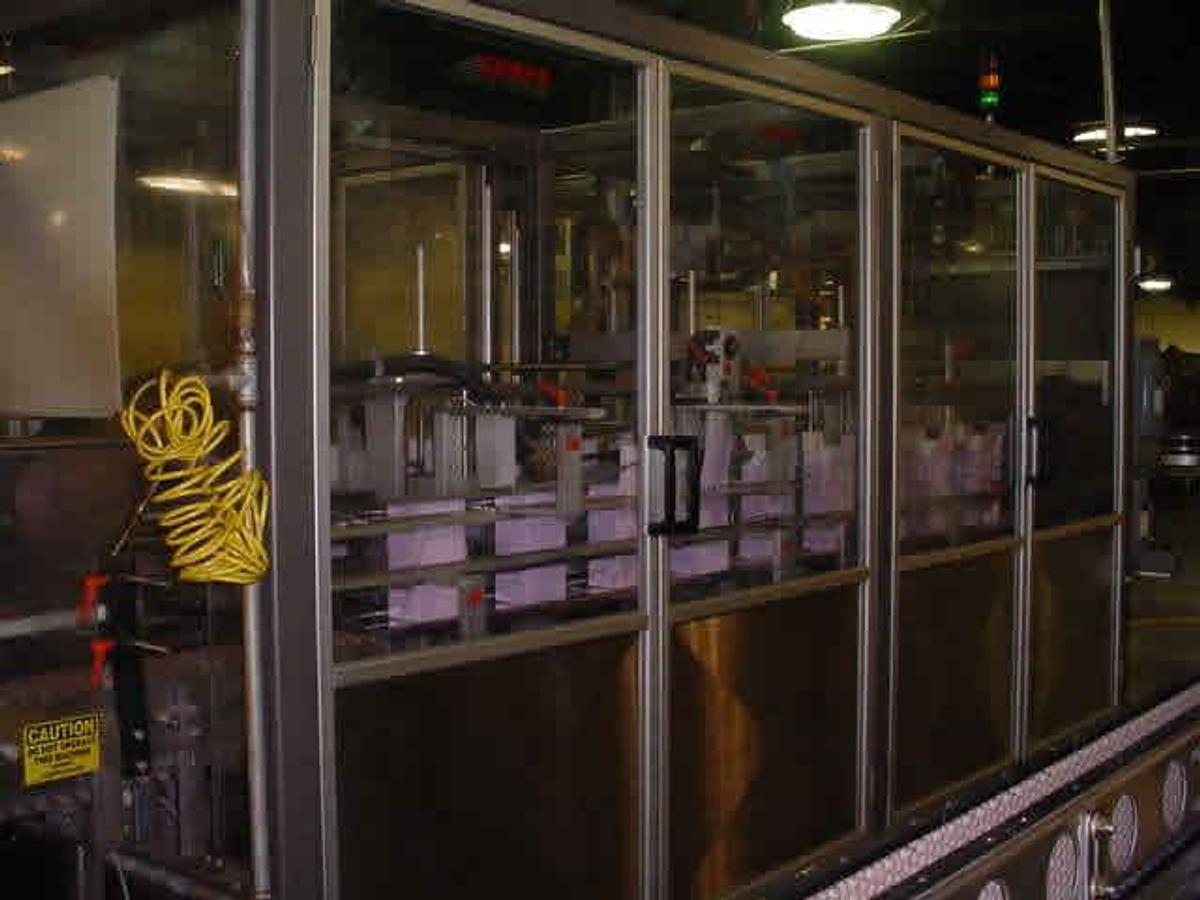
A Serpa cartoner is a packaging machine designed to automatically erect, load, and close folding cartons around a product or group of products. Serpa Packaging Solutions built a strong reputation for producing both intermittent and continuous motion cartoners that handle a wide range of carton styles and product types. The machines are known for their solid construction, relatively straightforward changeover procedures, and consistent output at high production speeds, which is why they became a staple in so many facilities.
The industries that rely on Serpa cartoners span a broad range. Pharmaceutical and nutraceutical manufacturers have historically been among the heaviest users, given the need for precise, repeatable carton handling in regulated environments. Food, beverage, and consumer goods producers also adopted Serpa equipment widely, particularly where high-speed secondary packaging was needed. The machines' flexibility across carton sizes and product configurations made them a practical choice for contract packagers as well, where a single line might run dozens of different SKUs over the course of a year.
What Serpa cartoner models are commonly available on the used equipment market?
The Serpa model lineup covers a range of production scales and motion types. Among the most frequently encountered models on the secondary market are the P200, P225, P325, and P400 series. These differ primarily in their speed capabilities and the range of carton sizes they can accommodate. The P200 and P225 are often found in mid-speed pharmaceutical and nutraceutical applications, while the P325 and P400 series tend to appear in higher-throughput food and consumer goods lines. The Serpa 2600 Vim is another model that surfaces in the used market and is recognized as a high-speed cartoner suited for demanding production environments.
Because Serpa machines were manufactured over a long production run and sold into a wide variety of industries, the secondary market tends to have reasonable availability across multiple model families. Condition, age, and included tooling or change parts vary significantly from listing to listing, so buyers should review specifications carefully and request detailed photos or video of any machine they are considering. Confirming which carton size range a specific unit was configured for is also important, since tooling is not always included with the machine.
What is the difference between intermittent and continuous motion Serpa cartoners?
The distinction between intermittent and continuous motion refers to how the carton and product move through the machine during the loading process. On an intermittent motion cartoner, the carton indexes forward in discrete steps, stopping briefly so the product can be inserted and the carton can be closed. This stop-and-go action makes intermittent machines generally more forgiving with fragile or irregularly shaped products, and they tend to be simpler to set up and maintain. Trade-off is that top-end speeds are lower compared to continuous motion equipment.
Continuous motion cartoners keep both the carton and the product moving at the same speed through the loading zone, which allows for significantly higher output rates. These machines are better suited for high-volume production environments where throughput is a priority and the product is stable enough to be loaded while in motion. Serpa manufactured both types across their model range, so buyers shopping the used market should confirm which motion type a specific machine uses and whether that matches their production requirements. Intermittent motion models tend to be more common in pharmaceutical applications, while continuous motion machines appear more often in food and beverage settings.
What production speeds can a used Serpa cartoner achieve?
Production speed varies considerably depending on the specific Serpa model, its motion type, and the carton and product configuration being run. Entry-level and mid-range Serpa models typically operate in the range of 60 to 150 cartons per minute under normal production conditions. Higher-end models, including continuous motion configurations and machines like the Serpa 2600 Vim, are designed for significantly faster throughput and can reach speeds well above that range when properly set up and maintained.
It is worth keeping in mind that the rated speed of a machine and its actual achievable speed in a given application are not always the same number. Carton size, product weight and fragility, the complexity of the loading pattern, and the condition of the machine all influence real-world output. When evaluating a used Serpa cartoner, buyers should ask the dealer about the speeds the machine was running at in its previous application, not just the nameplate specification. If the machine is still in production at a facility, arranging an inspection during an active run is one of the best ways to assess actual performance.
What carton styles and sizes can a Serpa cartoner handle?
Serpa cartoners are designed to work with folding paperboard cartons, which are the standard style used in pharmaceutical, nutraceutical, food, and consumer goods packaging. The machines can typically handle both end-load and top-load carton configurations depending on the model and how it was set up. End-load cartoners insert the product through the open end of the carton before tucking or gluing the flaps closed, while top-load machines drop or place the product into an open-top carton that is then sealed. Serpa built equipment covering both styles, so buyers should confirm which loading style a specific used machine supports.
Carton size ranges vary by model and by the tooling and change parts that come with the machine. A given Serpa cartoner will have a minimum and maximum carton dimension range for length, width, and height, and operating outside those ranges requires different tooling. When purchasing a used machine, it is important to verify that the carton dimensions required for your product fall within the machine's adjustable range and that the appropriate change parts are either included or available. Some used listings include full sets of change parts for multiple carton sizes, which can add meaningful value to the purchase.
Are replacement parts and technical support still available for Serpa cartoners?
Serpa Packaging Solutions was acquired by Bosch Packaging Technology, which was subsequently divested and rebranded as Syntegon Technology. As a result, parts and technical support for Serpa-branded equipment now route through Syntegon or through authorized third-party service providers rather than through Serpa directly. Buyers considering a used Serpa cartoner should contact Syntegon before purchasing to understand what level of support is available for the specific model and serial number they are evaluating, since parts availability and engineering support can vary based on the age of the machine.
For older models where OEM parts may be limited, the aftermarket parts ecosystem for Serpa cartoners is reasonably developed given how widely these machines were deployed. Many components, including drive systems, sensors, and mechanical assemblies, can be sourced through third-party parts suppliers or fabricated by qualified machine shops. Experienced packaging equipment technicians who have worked on Serpa machines are also available through independent service channels. Buyers should factor parts availability into their purchasing decision and ask the selling dealer what they know about the machine's service history and any components that may need attention.
What should buyers inspect when evaluating a used Serpa cartoner?
A thorough inspection is one of the most important steps in purchasing any used cartoner. Reputable used equipment dealers typically offer in-person inspections, virtual walkthroughs, or detailed video captures of the machine so buyers can assess its condition before committing to a purchase. For machines that are still installed and running at a production facility, some dealers can arrange an inspection during an active production run, which gives the clearest picture of how the machine actually performs. Keep in mind that most equipment dealers are not set up to run actual production at their facilities, so testing with a buyer's specific product and carton is generally not possible in a dealer environment.
Key areas to examine on a used Serpa cartoner include the condition of the drive systems, the state of the carton magazine and erecting section, the loading and closing mechanisms, and the overall cleanliness and maintenance history of the machine. Worn tooling, damaged carton guides, and electronic control components are common areas where older machines show their age. Buyers should also confirm which change parts are included, whether the machine's documentation and electrical schematics are available, and what carton size ranges the current tooling supports. Asking for the machine's production history, including how many shifts it ran and what products it handled, provides useful context for assessing remaining service life.
What does a used Serpa cartoner typically cost?
Pricing for used Serpa cartoners varies widely based on model, age, condition, included change parts, and current market supply. Smaller or older intermittent motion models in average condition can be found at lower price points, while high-speed continuous motion machines in good working order with full tooling sets command significantly higher prices. The strong reputation Serpa built for reliability and build quality means these machines tend to hold their resale value better than some competing brands, so buyers should not necessarily expect deep discounts just because a machine is used.
Beyond the purchase price, buyers should account for the full landed cost of the equipment. Shipping charges depend on the machine's size and weight, the packaging and crating required to protect it in transit, and whether specialized rigging is needed for loading and unloading at either end. Larger cartoners may require crane service or heavy-duty forklifts, which adds to the logistics cost. Reconditioning, installation, and any needed parts replacement are additional expenses to factor in. Getting a clear picture of total acquisition cost before committing to a purchase helps avoid surprises after the machine arrives.
What are typical payment and shipping terms when buying a used Serpa cartoner?
Most used equipment dealers require full payment before a machine ships. Some dealers extend payment terms to repeat customers or buyers with established relationships, but this is the exception rather than the rule for first-time transactions. Buyers should clarify payment expectations early in the process and confirm what forms of payment the dealer accepts, since wire transfers are the most common method for machinery purchases of this size.
Shipping costs and logistics for a used cartoner depend on several factors. The machine needs to be properly packaged or crated to prevent damage in transit, and the level of packaging required affects the cost. Larger Serpa models may need heavy-duty rigging for loading at the dealer's location and unloading at the buyer's facility, which is typically an added expense not included in a base shipping quote. Buyers should ask the dealer for a detailed breakdown of packaging, rigging, freight, and any other logistics costs so they understand the full landed price of the equipment before finalizing the purchase.
Why do used Serpa cartoners retain strong resale value compared to other cartoner brands?
Several factors contribute to Serpa cartoners holding their value on the secondary market. The machines were built with heavy-gauge components and engineered for demanding production environments, which means they tend to remain functional and serviceable well beyond the typical equipment lifecycle. Ease of changeover was also a design priority across the Serpa line, which makes the machines attractive to buyers running multiple carton sizes or SKUs. A cartoner that is faster to set up and adjust saves labor time and reduces downtime, and that practical advantage carries over into the used market.
The broad industry adoption of Serpa equipment also plays a role. Because these machines were deployed across pharmaceutical, food, nutraceutical, and consumer goods facilities in large numbers, there is an established base of operators and technicians who are familiar with them. That familiarity reduces the learning curve when integrating a used Serpa machine into a new facility. The wide deployment also supports a more active aftermarket for parts and service compared to brands with smaller installed bases. Together, these factors make used Serpa cartoners a consistently sought-after option for buyers looking for proven secondary packaging equipment.