Category
Manufacturer
Model
FAQ:
What types of liquids can Serac filling machines handle?
Serac filling machines are engineered to handle a wide spectrum of liquid and viscous products, making them a versatile choice across multiple industries. Their equipment can process free-flowing liquids like water, juices, and dairy products, as well as thicker, more viscous materials such as creams, sauces, lotions, and household cleaning products. Certain models are also designed for aggressive industrial chemicals, which requires specialized materials in the contact parts to resist corrosion and chemical degradation.
The fill type and machine configuration determine what a specific Serac unit can handle. Weigh-type fillers, for example, measure product by mass rather than volume, which makes them particularly well-suited for products where density can vary or where high fill accuracy is critical. Buyers sourcing a used Serac machine should confirm the contact materials (stainless steel grade, seal types, and valve configuration) match the viscosity and chemical properties of their intended product before purchase.
What industries use Serac liquid filling machines?
Serac has built its reputation primarily in the food and beverage, dairy, cosmetics, personal care, household products, and industrial chemical sectors. In the dairy industry specifically, Serac equipment is widely recognized for its precision and hygienic design, handling products like milk, yogurt, cream, and flavored beverages. The cosmetics and personal care sector uses Serac machines for filling shampoos, conditioners, lotions, and liquid soaps, where fill accuracy directly affects product consistency and packaging aesthetics.
Beyond food-grade applications, Serac machines are also found in facilities producing detergents, lubricants, and other industrial liquids. Because many of their machines are built with Clean-In-Place (CIP) and Sterilize-In-Place (SIP) capabilities, they are particularly attractive to operations that must meet strict hygiene and sanitation standards. A used Serac machine purchased from a specialized dealer can often be adapted to a new production environment, provided the contact parts and configuration align with the intended product category.
What fill volume ranges do Serac filling machines support?
Serac offers filling equipment across a broad range of fill volumes, from small-format containers used in personal care and pharmaceutical-adjacent applications up to large industrial containers holding several liters. Many of their rotary and linear fillers are designed to accommodate multiple container sizes on a single machine through changeover adjustments, which makes them practical for operations that run several SKUs on the same line. Specific volume ranges vary significantly by model, so buyers should review the machine specifications carefully.
For used Serac machines, the fill range listed in the machine specifications reflects the configuration at the time of decommissioning, but some adjustments may be possible depending on the model and available tooling. Buyers should ask the selling dealer for detailed specifications including minimum and maximum fill volumes, fill accuracy tolerances, and whether any tooling or change parts are included with the machine. Confirming these details upfront prevents costly surprises after delivery.
What is the price range for used Serac liquid filling machines?
Pricing for used Serac filling machines varies considerably based on the machine type, age, condition, configuration, and fill speed. Entry-level semi-automatic models designed for lower-volume production typically sell for less than high-speed rotary fillers built for large-scale industrial output. A semi-automatic weigh-type filler, for instance, will generally be priced well below a fully automated rotary aseptic filler, which is a significantly more complex piece of equipment.
Because these are used machines, condition plays a major role in pricing. Machines that are recently decommissioned from active production, with all original components intact, tend to command higher prices than older units that have been in storage. Buyers should factor in additional costs beyond the machine price itself, including freight, rigging, installation, and any refurbishment or parts replacement needed to bring the machine to their production standards. Contacting a dealer directly for a current price and a full breakdown of landed costs is the most reliable way to budget for a used Serac purchase.
Are used Serac filling machines suitable for small businesses or only large-scale production?
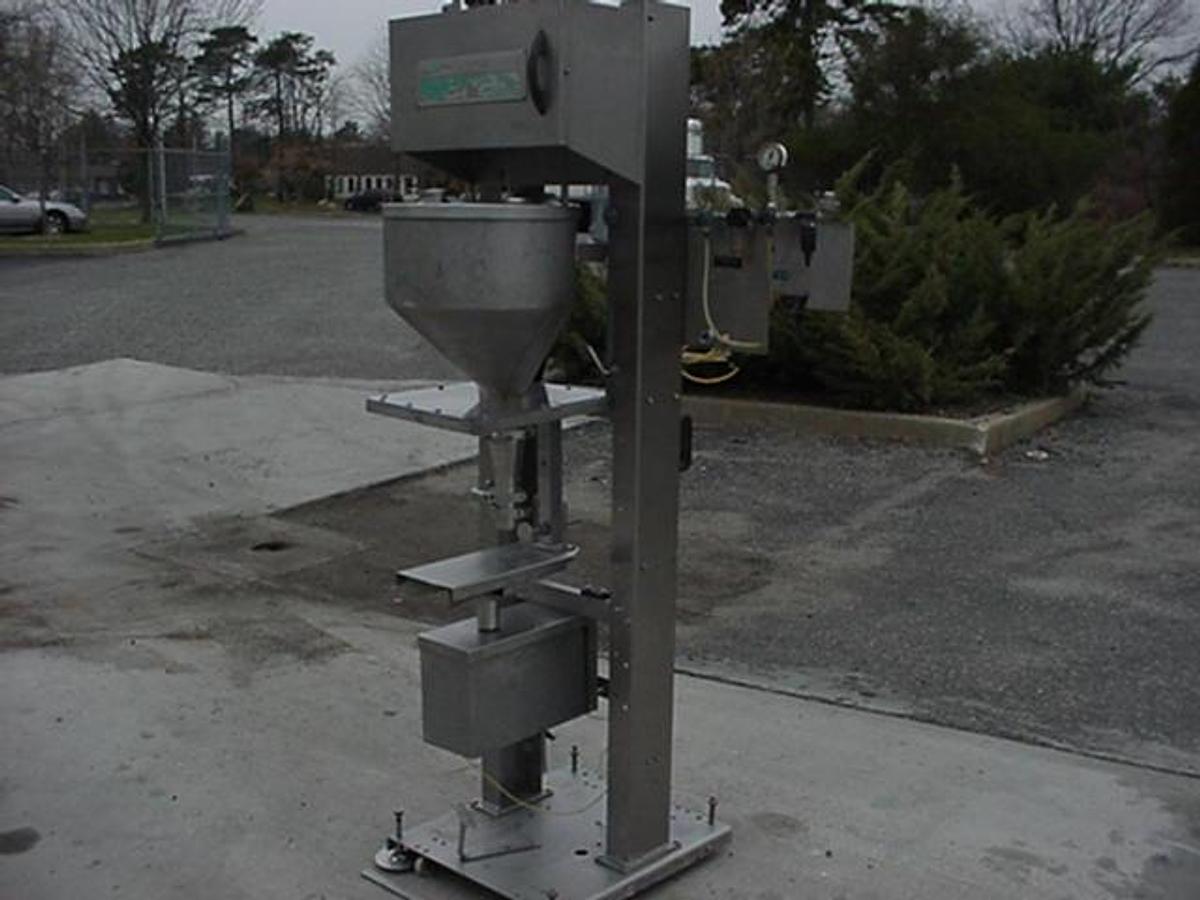
Used Serac machines span a range of production scales, so small and mid-sized operations are not automatically priced out or outmatched by the equipment. Semi-automatic models, like weigh-type fillers, require an operator to position and remove containers but handle the fill cycle automatically. These machines are well-suited for smaller production runs where a full automation investment is not justified, and they can offer the same fill accuracy as larger automated systems at a fraction of the cost.
For a small business, the used equipment market is often the most practical way to access high-quality filling technology that would otherwise be cost-prohibitive if purchased from the manufacturer. The key is matching the machine's throughput capacity and container compatibility to actual production needs. A dealer specializing in liquid filling equipment can help buyers identify which Serac models are realistic fits for their volume requirements, and many dealers can provide video or in-person inspections so buyers can assess the machine's condition before committing.
What should buyers look for when inspecting a used Serac filling machine?
A thorough inspection of a used Serac filling machine should cover both the mechanical condition and the completeness of the machine's components. Key areas to examine include the condition of the filling valves and nozzles, the integrity of all seals and gaskets, the state of the conveyor or indexing system (if applicable), and the control panel and electrical components. Worn or damaged filling valves are one of the most common issues on used liquid fillers, and replacement parts can add meaningful cost to the overall purchase.
Buyers should also confirm whether all change parts for different container sizes are included, since these are frequently lost or sold separately when a machine is decommissioned. Most reputable dealers will accommodate in-person inspections at their facility or, if the machine is still located at the production site, arrange access through the equipment owner. Video inspections are also commonly available and can give buyers a clear view of the machine's current state. It is worth consulting directly with Serac or an authorized service provider to understand parts availability and support for the specific model and age of machine being considered, as older models may have limited parts availability.
How does Serac's weigh-type filling technology work and why does it matter?
Weigh-type filling technology determines the correct fill amount by measuring the weight of product dispensed into a container rather than measuring by volume or timed flow. A load cell or scale beneath or integrated into the filling station continuously monitors the fill weight in real time and closes the fill valve once the target weight is reached. This approach is particularly accurate because it accounts for variations in product density, temperature fluctuations, and changes in line pressure that would otherwise cause volume-based fillers to overfill or underfill.
For buyers, the practical benefit is reduced product giveaway and more consistent fills across a production run. In industries like dairy, food, and personal care where product costs are significant and regulatory fill requirements are strict, this level of precision has direct financial implications. Used weigh-type Serac fillers retain this accuracy advantage provided the load cells and control systems are in good working order, which is one reason why the inspection process is so important when purchasing a used machine.
What are CIP and SIP capabilities, and why are they important in a Serac filling machine?
Clean-In-Place (CIP) refers to a system that allows the internal product-contact surfaces of a filling machine to be cleaned using circulated cleaning solutions without fully disassembling the machine. Sterilize-In-Place (SIP) goes a step further by using steam or chemical sterilants to sanitize those same surfaces after cleaning. Together, these capabilities significantly reduce the time and labor required between production runs, which is critical in food, dairy, and pharmaceutical-adjacent environments where contamination risks must be tightly controlled.
Many Serac filling machines are built with CIP and SIP compatibility as a core design feature, which reflects the company's strong roots in the dairy and food processing sectors. For buyers of used Serac equipment, the presence of CIP/SIP capability can be a significant operational advantage, but it is important to verify that all associated plumbing, spray balls, and control logic are intact and functional. Machines that have had these systems partially removed or modified during a previous installation may require additional investment to restore full CIP/SIP functionality.
How should a used Serac filling machine be shipped, and what costs should buyers anticipate?
Shipping a used Serac filling machine requires careful preparation to prevent damage in transit. Depending on the size and weight of the machine, it may need to be secured to a heavy-duty pallet, placed in a custom crate, or partially disassembled for transport. Larger rotary fillers and fully automated systems are substantially heavier than semi-automatic units and may require professional rigging equipment for loading and unloading, which adds to the overall shipping cost.
Buyers should request a full breakdown of packaging, rigging, and freight costs from the dealer before finalizing a purchase. These costs can vary significantly based on the machine's dimensions and weight, the shipping distance, and the level of crating required. Understanding the total landed cost, which includes the machine price plus all shipping and handling expenses, is essential for accurate budgeting. Most used equipment dealers require full payment before a machine is released for shipping.
What should buyers know about parts availability and support for used Serac machines?
Parts availability for used Serac machines depends heavily on the model and the age of the equipment. Serac is a long-established manufacturer with a global service network, and for relatively recent models, parts and technical support are generally accessible through the manufacturer or authorized service centers. Older or discontinued models may have more limited support, and some components may need to be sourced from third-party suppliers or fabricated to spec.
Before purchasing a used Serac machine, buyers are strongly encouraged to contact Serac directly to confirm what level of support is available for the specific model they are considering. This step can reveal whether critical wear parts like filling valves, seals, or electronic components are still in production or have been discontinued. A dealer who specializes in liquid filling equipment can also be a valuable resource for identifying common wear items and estimating what a buyer might need to stock as spare parts after installation. Taking this step upfront avoids the frustration of discovering parts shortages after the machine is already in production.