Category
Manufacturer
Model
Scott Turbon
Scott Turbon is known for its advanced mixing and processing equipment, particularly for the food and beverage industries. They offer a range of machines designed to improve product consistency and quality. Scott Turbon’s technology helps manufacturers achieve optimal results in their production processes.
FAQ:
What types of Scott Turbon mixing equipment are available on the used market?
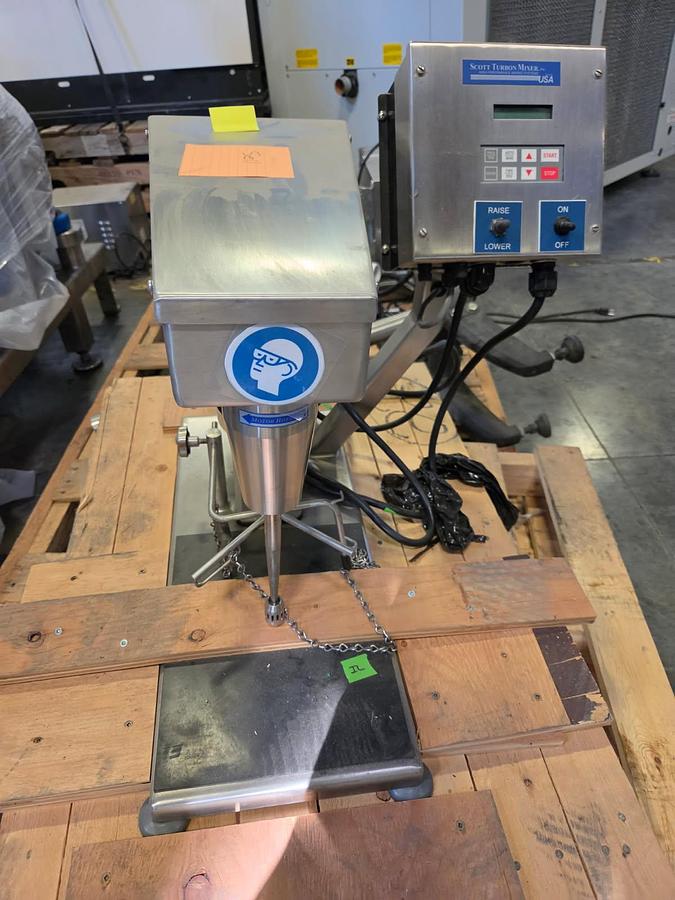
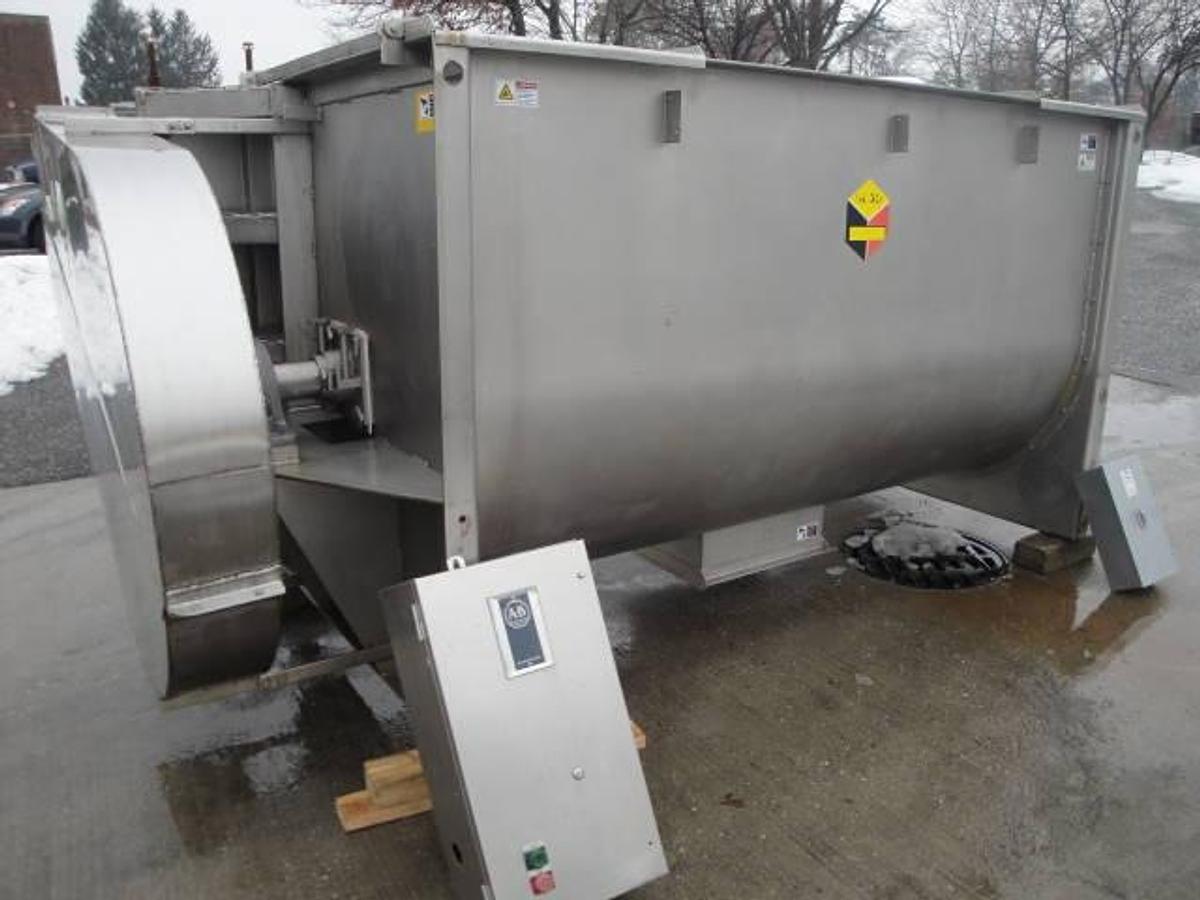
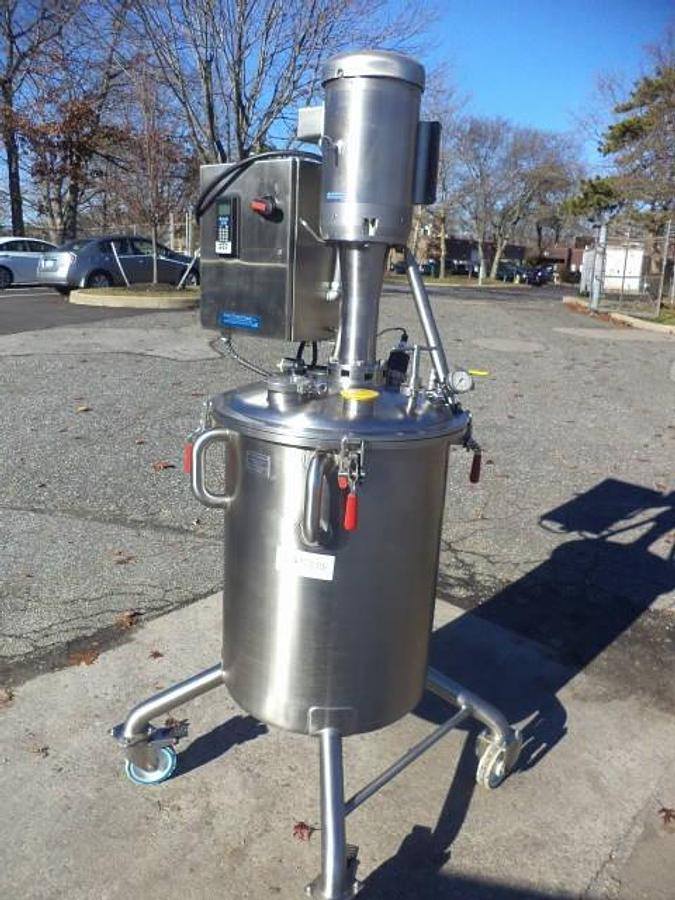
Used Scott Turbon equipment spans several mixer categories, reflecting the brand's broad product line. The most commonly available types include high-shear batch mixers, double ribbon blenders, portable vertical tank mixers, and inline continuous-flow mixing systems. Stainless steel construction is a consistent feature across most models, which is part of why this equipment holds its value and remains sought after on the secondary market. Specific configurations that appear regularly include sanitary-finish ribbon blenders in sizes ranging from around 30 gallons up to 100 cubic feet or more, as well as high-shear tank mixers with motor ratings from a few horsepower up to 10 HP and beyond.
The variety available at any given time depends on what industrial facilities are decommissioning or upgrading. Food processors, pharmaceutical manufacturers, and chemical producers all use Scott Turbon equipment, so the used inventory tends to reflect those industries. Buyers looking for a specific capacity or mixer type should check listings frequently, since used industrial equipment turns over at irregular intervals. It is also worth contacting dealers directly, as some machines may not yet be listed publicly but are available for inquiry.
What industries use Scott Turbon mixers?
Scott Turbon mixers have a strong presence in the food and beverage industry, where their high-shear rotor-stator technology is used for emulsification, homogenization, and achieving consistent product texture across large batch volumes. Salad dressings, sauces, dairy products, and beverage concentrates are common applications. The stainless steel construction and sanitary finishes on many models make them compatible with food-grade processing standards, which is a major reason food manufacturers favor this equipment.
Beyond food and beverage, Scott Turbon equipment is widely used in pharmaceutical manufacturing, cosmetics production, and specialty chemical processing. In pharmaceuticals, the ability to produce uniform particle size and stable emulsions is critical, and Scott Turbon's high-shear technology delivers that consistency. Cosmetic manufacturers use these mixers for creams, lotions, and gels that require thorough blending of ingredients with varying viscosities. Chemical processors value the equipment for its durability and ability to handle aggressive formulations. This cross-industry versatility is one reason used Scott Turbon machines remain in demand long after their initial production runs.
What mixing capacities are available in Scott Turbon equipment?
Scott Turbon equipment covers a wide capacity range, from small-scale units suited to pilot production or laboratory work all the way up to large industrial systems capable of handling thousands of gallons per batch or continuous flow. On the used market, batch mixer tank sizes commonly seen include 30-gallon portable units, mid-range tanks in the 65-gallon range with high-shear mixing heads, and large ribbon blenders at 100 cubic feet and above. These capacity differences reflect the range of production scales across the industries that use this equipment.
When selecting a capacity, buyers should account for both the working volume of a typical batch and any headspace requirements for the specific mixing application. High-viscosity products, for example, often require additional headspace to allow for proper agitation without overflow. Motor horsepower also scales with tank size, so a 65-gallon high-shear mixer will typically carry a 10 HP motor or similar to generate the shear forces needed at that volume. Reviewing the full specifications of any used unit, including tank dimensions, motor rating, and impeller or rotor configuration, helps ensure the machine will match actual production requirements.
What is the difference between a Scott Turbon high-shear mixer and a ribbon blender?
A high-shear mixer uses a rotor-stator assembly that spins at high speed to generate intense mechanical and hydraulic shear forces within the product. This action breaks down particle agglomerates, reduces droplet size, and creates stable emulsions or dispersions. Scott Turbon high-shear mixers are particularly effective for liquid-liquid emulsification, solid-liquid dispersion, and applications where a fine, uniform particle size is critical. They are common in food, pharmaceutical, and cosmetic manufacturing for exactly this reason.
A ribbon blender operates on a different principle. It uses a double-helical ribbon agitator that moves material in opposing directions simultaneously, creating a gentle but thorough blending action. This makes ribbon blenders well suited for dry or semi-dry ingredients, powders, granules, and applications where the goal is uniform distribution of components rather than particle size reduction. Scott Turbon's double ribbon blenders with sanitary finishes are used in food processing for blending spice mixes, dry beverage powders, and similar products. Choosing between the two types depends entirely on the material properties and the desired end result, and both types appear regularly on the used equipment market.
Can Scott Turbon mixers handle high-viscosity materials?
Scott Turbon mixers are designed to handle a broad range of material viscosities, and many models are specifically built for high-viscosity applications. The high-shear rotor-stator design generates significant mechanical energy, which allows it to process thick emulsions, pastes, and gels that would be difficult or impossible to mix adequately with low-shear agitators. Motor horsepower, impeller geometry, and tank configuration all play a role in determining how effectively a given unit handles viscous products.
When evaluating a used Scott Turbon mixer for high-viscosity work, buyers should pay close attention to the motor rating and the condition of the mixing head, rotor, and stator. Wear on these components directly affects mixing efficiency, and high-viscosity applications tend to accelerate that wear over time. It is reasonable to request a detailed inspection, including photos or video of the mixing head components, before purchasing. Consulting with the manufacturer about the specific model's rated viscosity range can also help confirm whether a particular used unit is appropriate for the intended application, since older models may have different specifications than current production versions.
What should buyers look for when inspecting used Scott Turbon mixing equipment?
A thorough inspection of used Scott Turbon equipment should cover both mechanical and sanitary condition. On the mechanical side, key areas include the motor (checking for unusual noise, heat, or vibration), the drive assembly, seals, and the condition of the mixing element itself, whether that is a rotor-stator head, ribbon agitator, or impeller. Worn or damaged mixing components affect performance and can be costly to replace, so understanding their condition before purchase is important. Asking for operational video or requesting a live demonstration, if the machine is still in service at a facility, gives the most accurate picture of how the unit runs.
For sanitary applications, inspect the interior surfaces of the tank and any product-contact components for pitting, cracks, or weld repairs that could harbor contamination. Stainless steel finishes should be intact, and gaskets or seals in contact with product should be evaluated for condition and compatibility with the intended materials. Most reputable used equipment dealers can accommodate in-person inspections or provide detailed video walkthroughs of the machine. Keep in mind that dealers typically do not have the permits or facilities to run actual production tests, so the inspection focuses on mechanical condition and visual assessment rather than live product trials.
What is the typical price range for used Scott Turbon mixing equipment?
Pricing for used Scott Turbon mixers varies considerably based on capacity, mixer type, condition, and age of the equipment. Small portable units in the 30-gallon range tend to be less expensive than large-capacity ribbon blenders or high-shear tank systems with significant horsepower. On the used market, prices can range from a few thousand dollars for smaller or older units to well over twenty thousand dollars for larger, well-maintained systems with sanitary finishes and higher motor ratings. Auction results for Scott Turbon equipment reflect this range, with competitive bidding sometimes pushing prices higher for models in good condition.
Buyers should factor in more than the purchase price when calculating total cost. Shipping, rigging, and any required crating or palletization add to the landed cost of the machine. Larger mixers may require specialized rigging equipment for loading and unloading, which is an additional expense. If the equipment needs refurbishment, replacement seals, or new mixing components after purchase, those costs should be estimated before committing to a price. Getting a clear picture of the machine's condition through inspection, combined with a full accounting of freight and handling costs, is the best way to evaluate whether a particular listing represents fair value.
Are replacement parts available for used Scott Turbon mixers?
Parts availability for Scott Turbon equipment depends largely on the age and model of the machine. For relatively recent models, the manufacturer may still support the equipment with spare parts, wear components, and technical documentation. Contacting Scott Turbon directly before purchasing a used unit is a practical step, as they can confirm what level of parts support exists for that specific model and serial number. This is especially relevant for high-wear components like rotor-stator assemblies, seals, and gaskets, which will eventually need replacement regardless of how well the machine was maintained.
For older or discontinued models, parts sourcing becomes more challenging. In those cases, buyers often rely on aftermarket suppliers, other used equipment sources for compatible components, or fabrication of certain parts by machine shops. The sanitary stainless steel construction common to Scott Turbon equipment means some components, like tank fittings or standard tri-clamp connections, are available from general industrial suppliers regardless of equipment age. Evaluating parts availability before purchase, rather than after, is a sound approach that experienced used equipment buyers consistently recommend.
What does 'sanitary finish' mean on a used Scott Turbon mixer, and why does it matter?
A sanitary finish refers to the surface treatment applied to the interior wetted surfaces of the mixer, typically a smooth, polished stainless steel finish that minimizes surface irregularities where bacteria or product residue could accumulate. On Scott Turbon equipment, sanitary finishes are associated with models designed for food, pharmaceutical, or cosmetic applications where cleanliness and compliance with regulatory standards are required. The finish is typically measured in Ra (roughness average) values, with finer finishes having lower Ra numbers and being better suited to strict hygienic standards.
For buyers purchasing used equipment intended for sanitary applications, the condition of the interior finish is a critical inspection point. Scratches, pitting, or surface corrosion on stainless steel can compromise the sanitary integrity of the mixer and make it harder to clean effectively. During an inspection, buyers should ask specifically about the condition of the tank interior, welds, and any product-contact fittings. A machine that has been well maintained and cleaned properly throughout its service life will typically show a much better interior finish than one that was used with aggressive chemicals or inadequately cleaned. The sanitary finish is one of the key value indicators for used Scott Turbon equipment going into regulated production environments.
How does the purchasing process work when buying used Scott Turbon equipment from a dealer?
The process typically begins with identifying a specific listing and requesting detailed information about the machine's condition, specifications, and history. Reputable used equipment dealers will provide photos, video walkthroughs, or arrange in-person inspections so buyers can assess the equipment accurately before committing to a purchase. Some machines may still be installed at the facility where they were used, in which case the dealer can coordinate an inspection at that location. Buyers should use the inspection phase to ask detailed questions about the machine's operational history, any known repairs, and the condition of key components.
Payment terms for used industrial equipment are generally straightforward. Most dealers require full payment prior to shipping, with some extending terms to established repeat customers. Once payment is confirmed, the dealer arranges packaging, rigging, and freight. Buyers should request a full breakdown of shipping costs upfront, including any crating or palletization required and rigging fees for loading. Larger mixers may need crane or forklift services for both loading at the seller's location and unloading at the destination. Understanding the complete landed cost, including freight and any handling charges, before finalizing the purchase avoids surprises and allows for accurate budget planning.