Category
Manufacturer
Model
Scott Equipment
Scott Equipment is recognized for providing bulk material handling equipment across various industries, including food and chemicals. They specialize in designing and manufacturing conveyors and mixers that enhance operational efficiency. Scott Equipment’s solutions are tailored to meet the specific needs of their clients.
FAQ:
What types of used bulk material handling equipment are commonly available from industrial machinery dealers?
Used bulk material handling equipment covers a broad range of machinery designed to move, blend, and process dry or semi-dry materials across industries like food processing, chemicals, plastics, and pharmaceuticals. Common equipment types include paddle blenders, ribbon mixers, screw conveyors, belt conveyors, bucket elevators, and vibratory feeders. Paddle blenders, for example, are frequently sold in stainless steel construction in capacities ranging from a few cubic feet up to several hundred cubic feet, making them suitable for sanitary food-grade applications as well as industrial chemical blending.
When buying used, buyers typically find equipment that was previously installed in production facilities and has been decommissioned due to plant upgrades, product line changes, or facility closures. This means the machines often have documented production histories and can be inspected in their current state. Stainless steel construction is a particularly sought-after specification in used paddle blenders and mixers because it holds its value well, resists corrosion, and meets food and pharmaceutical sanitation standards. Buyers should confirm the specific cubic footage, motor horsepower, material construction, and any included accessories like discharge valves or drive guards when evaluating a listing.
What should I look for when buying a used paddle blender or industrial mixer?
A used paddle blender or industrial mixer should be evaluated on several fronts before purchase. The most critical factors are the condition of the mixing chamber and paddles themselves, the integrity of welds and seams (especially on stainless steel units), the condition of shaft seals and bearings, and the operational status of the drive motor and gearbox. For a unit like a 30 cubic foot stainless steel paddle blender with a 10HP motor, buyers should confirm the motor runs smoothly without unusual vibration or noise, and that the paddle configuration is intact with no significant wear, warping, or missing components.
Beyond mechanical condition, buyers should ask about the machine's prior application. A blender used for food-grade dry ingredients will have different wear patterns and cleaning histories than one used for abrasive chemical powders. Discharge valve condition is another area to inspect carefully, as these components see heavy cycling and can be expensive to replace. If an in-person inspection is not possible, requesting detailed video footage of the machine at rest and, where available, under power is a reasonable alternative. Asking the dealer for any available service records, prior application details, or hour meter data (where applicable) helps paint a more complete picture of what you are buying.
How does buying used industrial equipment from a dealer differ from buying through a private seller or auction?
Purchasing used industrial equipment through an established dealer generally offers more transparency and accountability than buying from a private seller or through an online auction. Reputable dealers typically photograph equipment thoroughly, provide detailed specifications, and can arrange inspections either in person or via video. They also tend to specialize in particular equipment categories, which means their staff can answer technical questions about the machines they carry and help buyers identify whether a specific unit fits their application. Private sellers, by contrast, may have limited technical knowledge about the equipment and fewer resources to facilitate a proper pre-purchase inspection.
Auctions can offer competitive pricing but often come with strict as-is, no-inspection conditions and compressed decision timelines that make it difficult to perform adequate due diligence. Dealer listings, on the other hand, typically remain available long enough for buyers to research comparable machines, consult with their engineering teams, and arrange inspections before committing. The tradeoff is that dealer pricing may be somewhat higher than auction pricing, but for buyers who need confidence in what they are receiving, the additional transparency is usually worth it. Selecting a dealer with a long track record in the specific equipment category you need is one of the best ways to reduce risk in a used equipment purchase.
Can I inspect used industrial equipment before purchasing it?
Inspections are standard practice in used industrial equipment transactions and should be considered essential, not optional. Most reputable dealers will accommodate in-person inspections at the location where the equipment is stored or still installed. In cases where equipment is still in production at a customer's facility, the dealer can often coordinate access between the buyer and the facility owner, though scheduling may require some lead time. Equipment that is still running in a production environment can sometimes be observed under operating conditions, which is the most informative inspection scenario possible.
For buyers who cannot travel, virtual inspections via video call or pre-recorded video walkthroughs are a widely accepted alternative. A thorough video inspection should cover all major mechanical components, visible wear areas, nameplates and serial numbers, motor and drive condition, and any areas of corrosion, damage, or prior repair. Keep in mind that most dealers do not have the permitting or production infrastructure to run actual product through a machine during an inspection, so functional testing is generally limited to confirming that motors, drives, and moving components operate correctly under no-load conditions. Buyers with specific testing requirements should discuss those expectations with the dealer before scheduling an inspection.
What warranty or protection should buyers expect when purchasing used industrial machinery?
Used industrial equipment is almost universally sold on an as-is basis, meaning no warranty is provided by the dealer. Manufacturer warranties are tied to the sale of new equipment and do not transfer to subsequent used sales in most cases. This puts the responsibility of evaluating equipment condition squarely on the buyer, which is why thorough pre-purchase inspection is so critical. Buyers should not assume any implied protection and should treat the inspection process as their primary risk management tool.
The best protection a buyer has is choosing a dealer with a strong, verifiable track record in the specific type of equipment being purchased. A dealer who has been selling industrial mixers and bulk handling equipment for many years will have the product knowledge to describe condition accurately and the reputation to protect by doing so honestly. Buyers should also contact the original equipment manufacturer directly to understand what parts and technical support are still available for a given model and age of machine. Older or discontinued models may have limited parts availability, which is an important factor in total cost of ownership. Taking these steps before purchase is far more effective than relying on any post-sale recourse.
What are typical shipping and freight considerations for used industrial machinery?
Shipping used industrial equipment involves more planning than standard freight because of the size, weight, and fragility of mechanical components. Proper packaging is critical to preventing damage in transit. Smaller machines may ship on pallets with protective wrapping, while larger or more complex equipment often requires custom crating to protect exposed components like shafts, drives, and control panels. The level of packaging required directly affects shipping costs, so buyers should ask dealers for a detailed breakdown of palletization or crating charges before finalizing a purchase.
Larger machines frequently require specialized rigging for loading at the origin and unloading at the destination. This can include forklifts, cranes, or other heavy lifting equipment, and the cost of rigging is typically separate from freight charges. Buyers should factor in both the freight rate and rigging costs to understand the true landed cost of the equipment. For international shipments, additional considerations like export documentation, customs duties, and port handling fees apply. Getting a complete landed cost estimate before committing to a purchase helps avoid unexpected expenses that can significantly affect the overall value of the transaction.
What payment terms are typical when purchasing used industrial equipment from a dealer?
The standard practice in the used industrial equipment industry is full payment prior to shipment. This applies to most transactions regardless of equipment type or purchase price. Dealers carry the risk of holding inventory and coordinating logistics, and requiring payment upfront before releasing equipment for shipping is the norm across the industry. Buyers should plan their procurement timelines accordingly, as equipment will not typically be released for freight until payment has cleared.
Some dealers extend credit terms or deferred payment arrangements to established customers with a prior purchase history, but this is the exception rather than the rule for first-time buyers. Buyers looking for financing options may need to arrange third-party equipment financing independently through a bank or equipment leasing company, then use those funds to complete the purchase with the dealer. Wire transfer is the most common payment method for larger transactions, though dealers may also accept certified funds. Buyers should confirm accepted payment methods and any associated processing timelines directly with the dealer before finalizing a purchase agreement.
How is Scott Equipment used in industrial mixing and blending applications?
Scott Equipment is a manufacturer known for bulk material handling solutions, with particular strength in conveying and mixing equipment used across food processing, chemical, and related industries. Their paddle blenders are designed to gently mix dry or semi-dry bulk materials without degrading particle structure, making them well suited for applications where product integrity matters. The paddle blender design uses a horizontal trough with counter-rotating paddles that move material in overlapping patterns, producing a thorough mix in relatively short cycle times compared to tumble-style blenders.
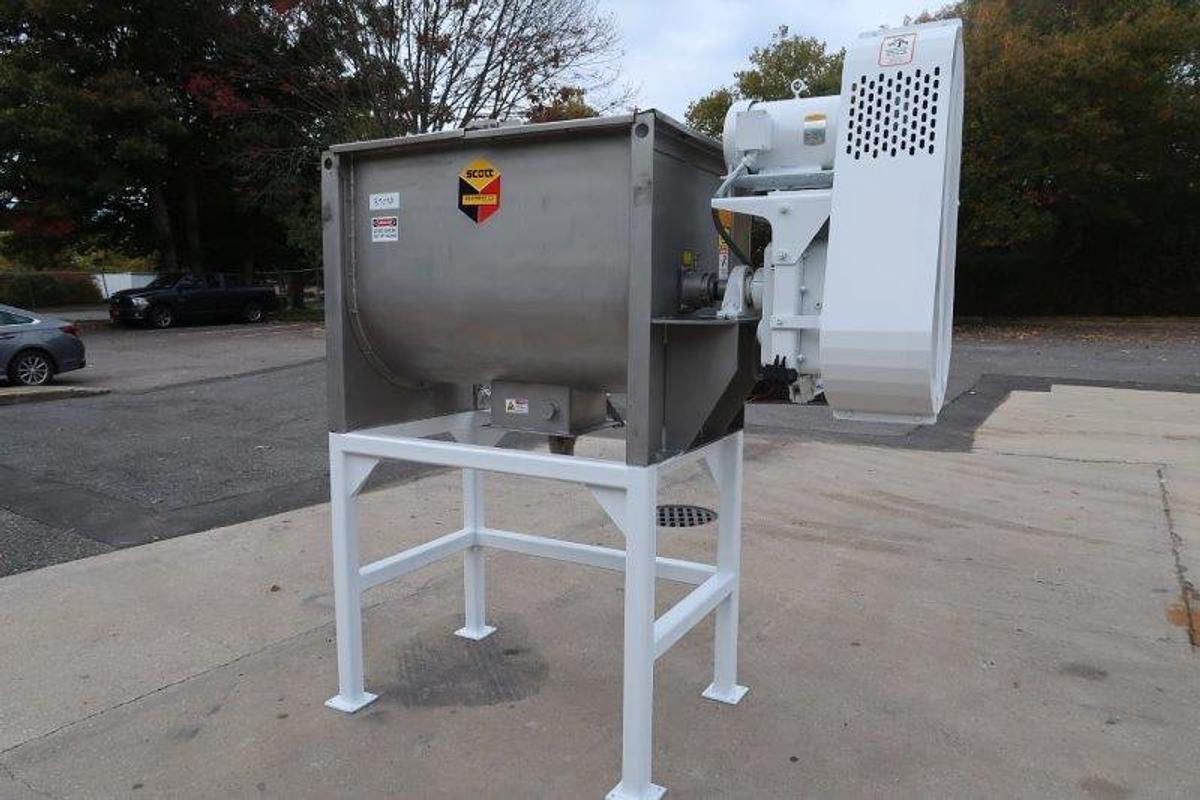
Scott paddle blenders are available in a range of capacities and are frequently constructed in stainless steel for sanitary applications. A unit like a 30 cubic foot stainless steel paddle blender with a 10HP motor represents a mid-range capacity machine appropriate for batch processing operations in food ingredient blending, spice mixing, chemical powder blending, and similar applications. Used Scott Equipment units are sought after in the secondary market because of the brand's reputation for durable construction and the continued availability of the equipment type across multiple industries. Buyers evaluating a used Scott blender should verify the paddle and trough condition, drive and motor specifications, and whether the unit includes a discharge valve and any ancillary components.
What industries commonly use paddle blenders and bulk material handling equipment?
Paddle blenders and bulk material handling equipment serve a wide range of industries that process dry or semi-dry particulate materials. Food and beverage manufacturing is one of the largest end markets, with applications including spice blending, flour mixing, dry ingredient batching, pet food production, and ready-mix food product manufacturing. Chemical processing is another major sector, where paddle blenders handle products like fertilizers, detergent powders, pigments, and specialty chemical compounds. Pharmaceutical and nutraceutical manufacturers also use paddle blenders for mixing active ingredients with excipients in tablet and capsule production.
Beyond these primary markets, paddle blenders and related conveying equipment appear in plastics compounding, mineral processing, animal feed production, and building materials manufacturing. The common thread across all these applications is the need to combine multiple dry components into a homogeneous mixture without introducing moisture, heat, or excessive mechanical stress to the product. Stainless steel construction is standard in food, pharmaceutical, and sanitary chemical applications, while carbon steel construction is common in less regulated industrial settings. Buyers sourcing used equipment should confirm that the construction materials and prior application history of a specific machine are compatible with their intended use.
How do I evaluate whether a used industrial machine is priced fairly?
Pricing for used industrial equipment depends on several variables including the machine's age, condition, brand reputation, original list price, current parts availability, and demand within the relevant industry. A useful starting point is researching what comparable machines have sold for on dealer listing sites and at industrial auctions. Comparing multiple listings for similar equipment in terms of capacity, construction material, and motor size gives a reasonable market range. For a stainless steel paddle blender in the 25 to 35 cubic foot range, for example, pricing can vary significantly based on condition, included components, and whether the unit has been cleaned and inspected.
Beyond the asking price, buyers should calculate the total cost of ownership, which includes freight and rigging, any refurbishment or parts replacement needed after purchase, installation costs, and the cost of any missing components like discharge valves, control panels, or drive guards. A machine listed at a lower price that requires significant refurbishment may end up costing more than a higher-priced unit in better condition. Consulting with a maintenance technician or process engineer familiar with the equipment type before purchasing can help identify hidden costs and confirm whether the asking price reflects fair market value for the specific condition and configuration being offered.