Category
Manufacturer
Model
Schebler
Schebler is recognized for providing advanced equipment for the food processing sector, particularly in thermal processing. They specialize in designing and manufacturing systems for pasteurization and sterilization, ensuring the safety and quality of food products. Schebler’s technology is widely adopted for its efficiency and reliability.
FAQ:
What types of food processing equipment does Schebler manufacture?
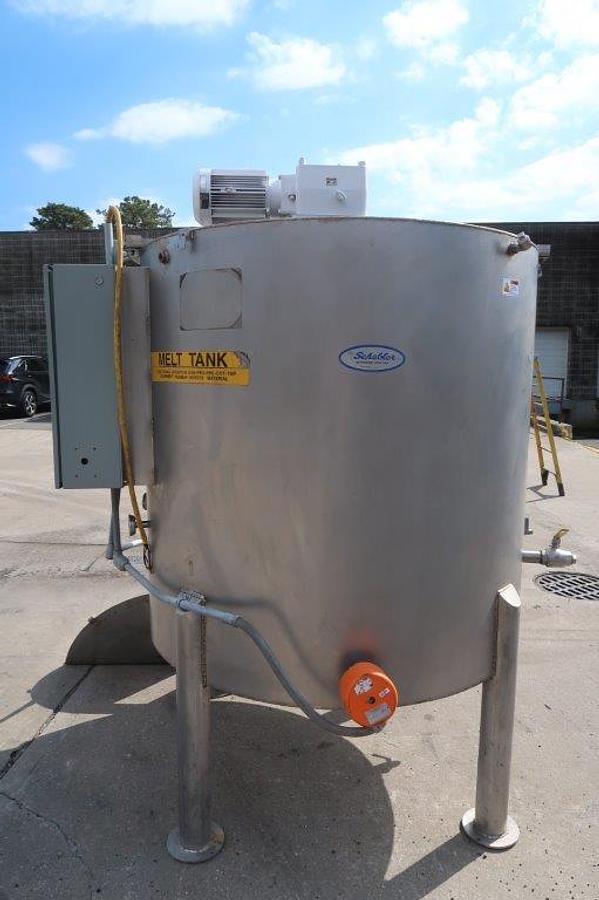
Schebler is recognized in the food processing industry for its focus on thermal processing systems. Their equipment portfolio centers on pasteurization and sterilization machinery, which are critical steps in ensuring food safety and extending shelf life across a wide range of products. Schebler also produces stainless steel jacketed agitated tanks and kettles, which are used for cooking, blending, and heating food products under controlled temperature conditions. These tanks are commonly found in dairy, sauce, beverage, and specialty food production environments.
The jacketed design allows for precise temperature control by circulating a heating or cooling medium through the outer jacket, while the agitator keeps the product moving to prevent scorching and ensure uniform processing. Schebler's equipment is built for heavy-duty commercial and industrial use, and its reputation for durability has made it a long-standing choice among food manufacturers. Because of this longevity, used Schebler machines remain in circulation and continue to serve production facilities well after their initial installation.
What should I inspect before buying used Schebler food processing equipment?
Before purchasing any used Schebler machine, a thorough inspection is essential since used equipment is sold as-is and the condition can vary considerably from one unit to the next. Start with the mechanical and structural components: check the integrity of the stainless steel vessel for dents, cracks, weld repairs, or corrosion, particularly around the jacket welds and any fittings. For agitated tanks and kettles, examine the agitator shaft, seals, and drive motor for wear. Ask about the age of the unit, its maintenance history, and how many hours it has logged in production.
For thermal processing equipment like pasteurizers or sterilizers, pay close attention to the heat exchange components, gaskets, pumps, and control systems. Dealers will typically accommodate in-person inspections or provide video walkthroughs of the equipment. Some machines may still be installed at an active production facility, where an inspection can be arranged on-site. Keep in mind that most equipment dealers are not set up to run actual food production tests, so buyers should evaluate condition carefully and, when possible, consult with a qualified technician or the equipment manufacturer to assess the machine's current state before committing to a purchase.
What industries and food products is Schebler equipment best suited for?
Schebler equipment is particularly well suited for food manufacturers that rely on thermal processing to ensure product safety and consistency. Dairy processors, beverage producers, canneries, and prepared food manufacturers are among the most common users of Schebler pasteurization and sterilization systems. The jacketed agitated tanks and kettles are versatile enough to handle soups, sauces, jams, confections, and other heat-sensitive products that require precise temperature management during cooking or blending.
Beyond food, Schebler thermal processing equipment has also found use in pharmaceutical and nutraceutical manufacturing, where similar sterilization and temperature control requirements apply. The stainless steel construction makes the equipment compatible with sanitary processing standards, and the heavy-duty build quality means these machines can handle continuous production cycles across multiple shifts. Facilities producing high-volume, heat-processed goods tend to get the most value from Schebler equipment, whether acquired directly or through the used equipment market.
What is the typical price range for used Schebler food processing equipment?
Pricing for used Schebler food processing equipment varies considerably depending on the type of machine, its age, capacity, and overall condition. Smaller units such as jacketed agitated tanks in the 500-gallon range may be priced anywhere from a few thousand dollars on the lower end to significantly more for units in excellent working condition with recent maintenance records. Larger or more complex systems like full pasteurization or sterilization lines can run into the tens of thousands of dollars, particularly if they include automation controls, heat exchangers, and ancillary components.
Buyers should also factor in costs beyond the purchase price. Rigging, crating, freight, and any reconditioning work needed after delivery can add meaningfully to the total landed cost. It is worth requesting a detailed breakdown of these charges from the seller before finalizing any deal. Given the variability in pricing, comparing multiple listings and working with dealers who specialize in food processing equipment tends to produce better outcomes than purchasing through general auction platforms where condition details may be limited.
Are replacement parts still available for older Schebler food processing machines?
Parts availability for older Schebler equipment depends on the age and model of the machine, and buyers should investigate this before committing to a purchase. For some components, particularly standard fittings, seals, gaskets, motors, and drive components, replacement parts can often be sourced through industrial supply channels regardless of the original manufacturer. These commodity components are frequently interchangeable across brands and are relatively easy to find through industrial distributors.
For proprietary components specific to Schebler machinery, the situation can be more complex. Buyers should contact the manufacturer directly to determine what level of support and parts availability they can expect for a particular model and vintage. In some cases, specialty fabricators or machine shops can reproduce custom parts when factory sources are no longer an option. Understanding parts availability upfront helps avoid unexpected downtime costs after the equipment is installed. This is one reason why working with a dealer who has deep experience in food processing equipment is valuable, as they can often provide guidance on parts sourcing and long-term serviceability.
Does used Schebler equipment meet current FDA and USDA food safety standards?
Schebler equipment was designed with food-grade sanitary construction in mind, incorporating stainless steel contact surfaces and configurations that align with food safety requirements in place at the time of manufacture. However, whether a specific used unit meets current FDA, USDA, or 3-A Sanitary Standards depends on the age of the machine, any modifications made during its service life, and the current regulatory requirements applicable to the buyer's specific production environment.
Buyers should have any used food processing equipment reviewed by a qualified sanitation engineer or regulatory consultant before putting it into production. Gaskets, seals, and other consumable components that come into direct contact with food products should be inspected and replaced as needed to meet current standards. Additionally, control systems and instrumentation on older machines may need to be upgraded to satisfy modern recordkeeping and process verification requirements under FSMA (the Food Safety Modernization Act). Confirming compliance is the responsibility of the purchasing facility, and due diligence during the inspection phase is the most effective way to identify any gaps before the equipment goes into service.
How does buying used Schebler equipment compare to purchasing other used food processing machinery?
Schebler has a well-established reputation for heavy-duty construction and reliable performance in thermal processing applications. This build quality is one reason used Schebler equipment tends to hold its value reasonably well and remains sought after in the secondary market. Compared to lesser-known brands, buyers often find that Schebler machines have longer operational lifespans when properly maintained, which can make them a sound investment even at a higher used price point.
That said, all used food processing equipment purchases carry inherent risk, and Schebler is no exception. The key differentiators when evaluating any used machine are condition, maintenance history, parts availability, and the reputation of the dealer selling it. Buyers who prioritize working with dealers that specialize in food processing equipment, rather than general industrial resellers, tend to get more accurate condition assessments and better support through the purchasing process. Schebler's track record in the industry means there is a reasonable base of technical knowledge available for these machines, which can be an advantage when sourcing service support after purchase.
What should buyers know about shipping and rigging used Schebler food processing equipment?
Shipping used food processing equipment like Schebler tanks, kettles, and thermal processing systems requires more planning than standard freight. These machines are heavy, often require custom crating or palletization, and may need specialized rigging equipment for loading and unloading. The cost of shipping will depend on the size and weight of the unit, the distance involved, and the level of packaging required to protect the machine in transit. Buyers should request a full breakdown of rigging, crating, and freight costs from the seller before finalizing a purchase, since these expenses can add significantly to the total cost of acquisition.
For larger systems, a rigging company experienced in industrial machinery will typically be needed at both the origin and destination. Buyers should confirm whether the seller handles rigging at the point of origin or whether that is the buyer's responsibility to arrange. It is also worth discussing the condition of the equipment's mounting points and any disassembly required before the machine can be safely moved. Getting clarity on all of these logistics upfront helps avoid surprises and ensures the machine arrives in the same condition it was inspected in.
What payment terms should buyers expect when purchasing used Schebler food processing equipment?
Most used equipment dealers require payment in full before a machine is released for shipping. This is standard practice in the industry and applies to the majority of transactions, particularly for buyers who are purchasing from a dealer for the first time. Payment is typically accepted by wire transfer, and some dealers may accept other forms depending on the transaction size and their internal policies. Buyers should confirm accepted payment methods early in the process to avoid delays.
For established customers with a prior purchase history, some dealers may offer payment terms, though this is less common and handled on a case-by-case basis. It is worth asking about any available options, especially for higher-value equipment purchases. Regardless of payment structure, buyers should ensure that all terms, including the condition of the equipment as described, the included components, and any agreed-upon inspection arrangements, are clearly documented before funds are transferred. This protects both parties and sets clear expectations for the transaction.
How can buyers verify the condition of used Schebler equipment before purchasing?
Reputable used equipment dealers will typically offer multiple ways to inspect a machine before purchase. In-person inspections are the most thorough option and allow a buyer or their technician to physically examine the equipment, check for wear, test electrical components where possible, and get a direct sense of the machine's condition. When travel is not practical, many dealers can provide detailed video walkthroughs or recorded footage of the equipment, which can reveal a great deal about its current state.
In some cases, the equipment may still be installed at a production facility and operational, which allows for an inspection while the machine is running. This is particularly valuable for thermal processing equipment where seeing the unit in operation provides real insight into its performance. Keep in mind that dealers generally cannot run actual food production tests, as that requires production permitting and facilities beyond the scope of an equipment resale operation. Buyers should come prepared with a list of specific questions about the machine's service history, any known repairs, and the reason for decommissioning, as this background context is often as informative as the physical inspection itself.