Category
Manufacturer
Model
FAQ:
What types of used pharmaceutical equipment are typically available for sale?
The used pharmaceutical equipment market covers a wide range of machinery across virtually every stage of drug manufacturing and packaging. Common categories include high-speed mixer/granulators, tablet press machines, capsule fillers, fluid bed dryers, ribbon blenders, coating machines, sterilizers, filling and sealing lines, and laboratory instruments. Stainless steel sanitary construction is standard across most pharmaceutical-grade machinery, as it supports cleanability and contamination control requirements.
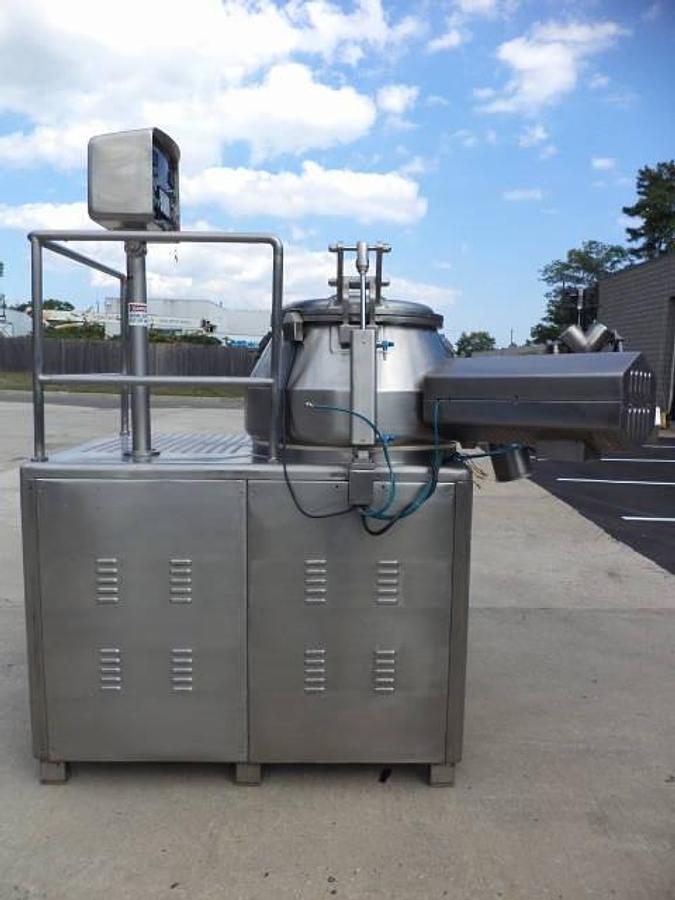
Granulators in particular are among the more sought-after pieces of equipment, used to convert powder blends into granules that compress more uniformly into tablets. Units like the Sams Techno Mech high-speed mixer/granulator, available in sizes such as 150 liters, represent the kind of mid-to-large capacity machinery that contract manufacturers and pharmaceutical companies frequently seek on the used market. Buyers often look for equipment that covers multiple unit operations so they can consolidate procurement from fewer sources.
What should buyers know about purchasing used pharmaceutical equipment versus buying from a manufacturer?
Buying used pharmaceutical equipment offers significant cost advantages compared to purchasing brand-new machinery, often at a fraction of the price for equipment that still has many productive years remaining. The trade-off is that used equipment is sold as-is, meaning the buyer takes on the responsibility of verifying the machine's condition, history, and suitability for their process. This makes the inspection and due diligence phase far more critical than it would be with a direct manufacturer purchase.
Reputable used equipment dealers who specialize in pharmaceutical machinery are the safest route, since they understand the specific construction standards, materials of contact, and documentation expectations that regulated industries require. Buyers should factor in the cost of any reconditioning, re-validation, and spare parts sourcing when calculating the true cost of acquisition. Unlike buying directly from a manufacturer, used equipment transactions do not come with factory warranties, so selecting a dealer with a long track record in the pharmaceutical sector is one of the most important decisions a buyer can make.
Do used pharmaceutical equipment dealers provide FDA or GMP compliance documentation?
Used equipment dealers generally do not issue compliance certifications themselves, since FDA and GMP compliance is tied to how the equipment is installed, operated, and maintained within a specific facility rather than to the machine in isolation. What a dealer can typically provide is the original manufacturer documentation that accompanied the equipment, such as manuals, material certifications, and in some cases prior validation records, if those documents were retained by the previous owner.
Buyers who operate in regulated environments should plan to conduct their own qualification activities after acquisition. This typically means completing Installation Qualification (IQ), Operational Qualification (OQ), and Performance Qualification (PQ) protocols to demonstrate that the equipment performs as required within their specific process and facility. Consulting with the original manufacturer before purchasing a used unit is also advisable, as the manufacturer can clarify whether the model is still supported, whether spare parts remain available, and whether they can assist with revalidation. Age and model generation can significantly affect the level of support a manufacturer is willing to provide.
How does the inspection process work for used pharmaceutical equipment?
Most reputable used equipment dealers offer buyers the opportunity to inspect machinery before committing to a purchase, and this step should never be skipped for high-value pharmaceutical equipment. Inspections can take several forms: an in-person visit to the dealer's facility, a live video walkthrough conducted via video call, or pre-recorded video footage showing the machine's current condition, key components, and any visible wear. The goal of any inspection is to get an accurate picture of the machine's working order so there are no surprises after purchase.
In some cases, equipment may still be installed and running at an active manufacturing facility, where the dealer has arranged a sale on behalf of the plant. When that is the situation, an in-person inspection can sometimes be arranged at the production site itself, and the buyer may even be able to observe the machine running under actual production conditions. It is worth noting that most equipment dealers do not have the permits or facilities to run actual pharmaceutical production, so a full product trial is rarely possible at the dealer's warehouse. Buyers should come prepared with a checklist covering contact surfaces, drive components, control systems, and any tooling or change parts included with the unit.
What is a pharmaceutical high-speed mixer/granulator and what is it used for?
A high-speed mixer/granulator is a piece of pharmaceutical processing equipment that combines dry powder blending and wet granulation into a single enclosed vessel. The machine uses a high-speed impeller at the base of the bowl to mix powders rapidly and evenly, while a side-mounted chopper breaks up wet mass clumps formed during the addition of a granulating liquid. The result is a granulated material with more consistent particle size, improved flow properties, and better compressibility for downstream tablet compression.
These units are widely used in solid dosage manufacturing, particularly for tablets and capsules where powder blends need to be converted into granules before pressing. Bowl capacities vary considerably, with lab-scale units running as small as 1 to 10 liters and production-scale machines reaching 150 liters or more. The Sams Techno Mech brand produces stainless steel sanitary mixer/granulators built to pharmaceutical construction standards, and 150-liter units from this manufacturer appear in the used equipment market and are suited for mid-to-large batch production environments.
What validation documentation should buyers request when purchasing used pharmaceutical equipment?
Validation documentation is a critical consideration for any pharmaceutical manufacturer operating under regulatory oversight. When purchasing used equipment, buyers should request any existing documentation the seller has on hand, which may include the original factory acceptance test (FAT) records, installation manuals, calibration certificates, prior IQ/OQ/PQ protocols and summary reports, and material certificates of construction (confirming the grade of stainless steel and elastomers used in product-contact areas). Not all sellers will have complete documentation, especially if the equipment changed hands multiple times or was decommissioned years ago.
Even when prior validation records exist, most quality assurance teams at regulated facilities will require a fresh qualification cycle after the equipment is moved and reinstalled, since a change in location, utilities, and operating environment can affect how the machine performs. Buyers should budget time and resources for this process. Engaging a validation specialist or consulting with the equipment manufacturer directly can help define the scope of requalification needed. The manufacturer can also confirm whether the specific model and serial number is still within a supported product generation, which affects the availability of spare parts and technical guidance.
How is used pharmaceutical equipment typically shipped, and what costs should buyers anticipate?
Shipping pharmaceutical equipment involves considerably more planning than standard freight, particularly for heavy or precision machinery like granulators, tablet presses, and coating pans. Dealers will typically arrange for the equipment to be cleaned, disassembled where appropriate, and packaged on pallets or in custom crates depending on the fragility and dimensions of the unit. The level of packaging required directly affects the shipping cost, so buyers should ask the dealer specifically what palletization or crating is included in the quoted price.
Larger machines often require specialized rigging for both loading at the dealer's location and unloading at the buyer's facility. Rigging services, which may involve forklifts, cranes, or hydraulic lift equipment, are typically quoted separately and can add meaningful cost to the total landed price. Buyers should request a full breakdown of packaging, rigging, and freight charges before finalizing a purchase so there are no unexpected expenses upon delivery. For international shipments, import duties, customs clearance fees, and compliance with local import regulations add another layer of cost and lead time that should be factored into the budget.
What are the standard payment terms for purchasing used pharmaceutical equipment?
Payment practices in the used equipment industry are fairly consistent across most dealers. The standard expectation is full payment prior to shipment, which protects the seller from non-payment after the equipment has left their facility. Buyers who are new to a particular dealer should plan for this requirement and arrange financing or internal purchase order approvals well in advance of the expected ship date.
Some dealers extend more flexible terms to repeat customers with whom they have an established relationship and payment history, but this is at the dealer's discretion rather than a standard offering. Wire transfer is the most common payment method for transactions of this size. Buyers should also confirm whether the quoted price is inclusive of any applicable taxes or fees, and clarify the process for what happens if equipment is found to be significantly different from its described condition upon arrival, since used equipment is generally sold as-is without the return policies that typically accompany retail purchases.
Are spare parts and technical support available for used pharmaceutical equipment?
Parts availability is one of the most practical concerns when buying used pharmaceutical equipment, and it varies considerably depending on the manufacturer, the age of the machine, and the model generation. For well-established equipment brands that are still in active production, original spare parts are often available directly from the manufacturer or through authorized service networks. Buyers should contact the manufacturer before purchasing a used unit to confirm whether parts are still stocked and whether field service technicians are available to support the model in question.
For older or discontinued models, buyers may need to rely on third-party machined parts, refurbished components, or parts cannibalized from other units of the same model. This is worth investigating before purchase rather than after, since a machine that cannot be readily serviced will have limited useful life regardless of how good its condition appears at the time of sale. Some pharmaceutical equipment manufacturers also offer paid technical support, remote diagnostics, or service contracts even for machines that were not purchased directly from them, which can be a valuable resource for buyers who lack in-house engineering expertise.
What should pharmaceutical manufacturers consider when evaluating a used equipment dealer?
Selecting the right dealer is arguably as important as selecting the right machine. Because used pharmaceutical equipment is sold without manufacturer warranties, the buyer's protection comes primarily from the dealer's reputation, transparency, and willingness to facilitate a thorough inspection. A dealer who has been operating in the pharmaceutical equipment sector for many years will have a track record that can be evaluated through references, industry contacts, and the depth of their current inventory. Specialization matters: a dealer who focuses specifically on pharmaceutical and life sciences equipment will understand GMP construction requirements, documentation expectations, and the nuances of equipment like granulators, tablet presses, and filling lines far better than a general industrial machinery dealer.
Buyers should also consider the dealer's ability to accommodate inspection requests, the accuracy and completeness of their equipment listings, and their responsiveness to technical questions. A dealer who can provide detailed photographs, video walkthroughs, available documentation, and clear answers about a machine's history is demonstrating the kind of transparency that reduces risk in an as-is transaction. Asking how long the dealer has held a particular piece of equipment and what they know about its operating history can also reveal useful information about condition and provenance.