Category
Manufacturer
Model
Saiman
Saiman focuses on providing advanced manufacturing solutions for the confectionery and bakery industries. Their equipment is known for its precision and reliability, particularly in processes like mixing and shaping. Saiman’s technology helps manufacturers streamline production while maintaining high quality standards.
FAQ:
What types of mixing equipment does Saiman manufacture?
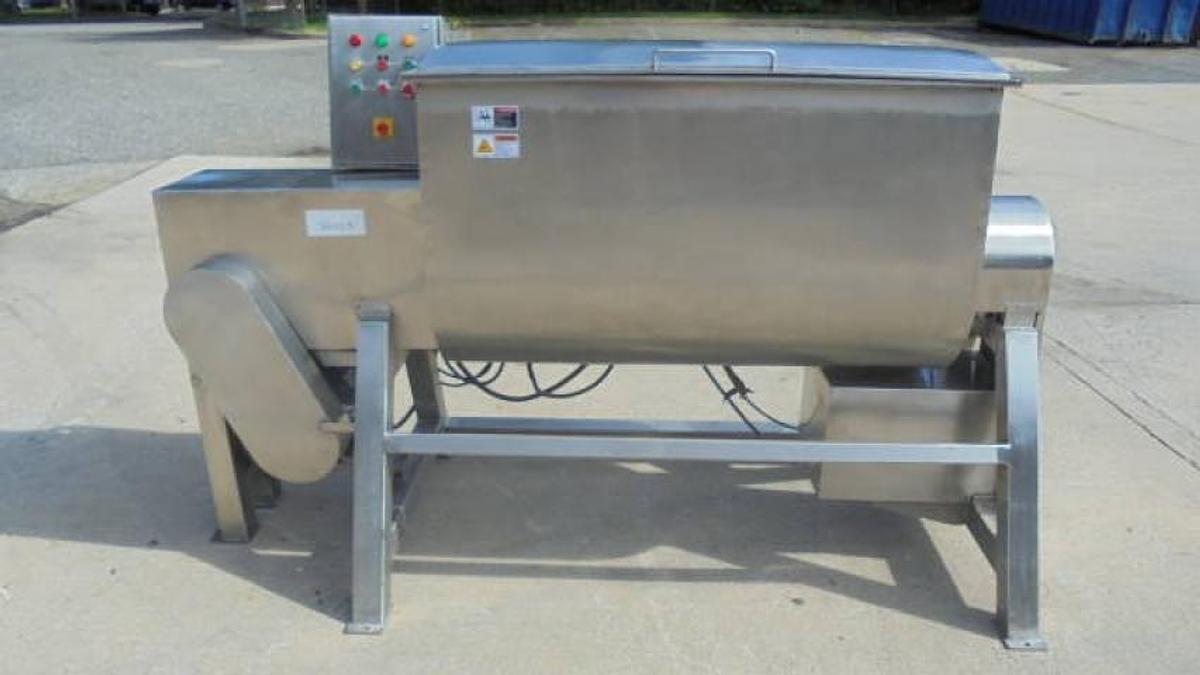
Saiman specializes in mixing and blending equipment designed primarily for the confectionery and bakery industries, though their machines see use across a broader range of food processing applications. Their product line includes ribbon blenders, which are among the most common configurations available on the used market. Ribbon blenders use a double helical ribbon agitator inside a horizontal trough to move material both radially and laterally, producing a thorough, consistent blend. The 15 cubic foot stainless steel double ribbon blender with tilt discharge is a representative example of the kind of Saiman equipment that surfaces in the used machinery market.
Beyond ribbon blenders, Saiman's manufacturing focus has historically covered mixing and shaping equipment built for precision and reliability in production environments. Buyers looking at used Saiman equipment should pay close attention to the specific model configuration, including trough volume, discharge style, and agitator design, since these factors directly affect whether a machine fits a given production process. Used equipment dealers who specialize in food processing and bakery machinery tend to be the most reliable sources for locating available Saiman units, and they can often provide detailed specifications and condition reports to help buyers evaluate a machine before purchasing.
What industries commonly use Saiman industrial mixing equipment?
Saiman equipment was built with the confectionery and bakery industries in mind, making it a natural fit for manufacturers producing baked goods, candy, chocolate coatings, dry mixes, and similar products. The precision-oriented design of their mixers suits applications where consistent blending of dry or semi-dry ingredients is critical to product quality. Ribbon blenders in particular are widely used across cookie, cracker, cake mix, and snack food production lines.
Beyond confectionery and baking, the stainless steel construction common on Saiman equipment makes it adaptable to other food-adjacent industries including spice blending, nutraceuticals, and certain pharmaceutical dry blending applications where sanitary construction is a baseline requirement. Buyers from chemical processing or cosmetics backgrounds also occasionally source ribbon blenders for dry powder applications, provided the machine's construction materials are compatible with their specific ingredients. When evaluating a used Saiman mixer for a new application, it is worth consulting with the equipment dealer about the machine's history, any residual product contamination concerns, and whether the materials of construction meet the regulatory or sanitary standards of the intended use.
What should buyers know about stainless steel construction on used Saiman mixers?
Stainless steel is the standard construction material for Saiman mixing equipment, which is a significant factor in their appeal to food processing buyers. Stainless steel resists corrosion, tolerates repeated cleaning cycles, and does not impart flavor or contamination to food products. On a used machine, the grade of stainless steel matters. Food contact surfaces are commonly constructed from 304 or 316L stainless steel, with 316L offering superior resistance to chloride-based cleaning agents and mildly acidic environments. Buyers should ask the dealer to confirm the steel grade used on product-contact surfaces before purchasing.
With used equipment, the condition of the stainless steel is just as important as the grade. Buyers should inspect for pitting, cracks at welds, worn surface finishes, or signs of previous repairs that could harbor bacteria or compromise structural integrity. A thorough inspection, either in person or through a detailed video walkthrough provided by the dealer, should specifically examine the ribbon agitator, trough interior, discharge valve, and any seals or gaskets. Surface finish, measured in Ra (roughness average), is particularly important for sanitary applications, so buyers with strict hygienic requirements should confirm that the machine's interior finish meets their standards before committing to a purchase.
What mixing capacities are typical for used Saiman ribbon blenders?
Ribbon blenders are rated by working volume, which refers to the usable capacity of the trough during normal operation rather than the total geometric volume of the vessel. A 15 cubic foot double ribbon blender, for example, represents a mid-range production capacity suitable for batch processing in small to medium manufacturing operations. To put that in perspective, 15 cubic feet translates to roughly 425 liters, which is a practical size for specialty food producers, contract manufacturers, or operations running multiple smaller batches per shift.
Capacity selection is one of the most critical decisions in buying a used mixer. Running a ribbon blender at too low a fill level can result in poor blending performance because the ribbon agitator needs sufficient material contact to function correctly. Most ribbon blenders perform best when loaded to between 40% and 70% of their rated capacity. Buyers should match the machine's working volume to their actual batch sizes rather than simply buying the largest available unit. Used equipment dealers specializing in food processing machinery can often help buyers think through capacity requirements based on the specifications of the machines they have in inventory.
How does a double ribbon blender work, and why is tilt discharge important?
A double ribbon blender uses two helical ribbons mounted on a central shaft inside a horizontal cylindrical or U-shaped trough. The outer ribbon moves material toward the center of the trough, while the inner ribbon moves it toward the ends. This opposing action creates a continuous folding and recirculating motion that blends dry powders, granules, or semi-moist materials efficiently and evenly. The double ribbon configuration is particularly effective for free-flowing dry ingredients and is a standard design in bakery, spice, and dry food mix production.
Tilt discharge is a feature that significantly improves cleanability and product recovery. Rather than relying solely on a bottom discharge valve, a tilt-discharge blender tips the entire trough to pour the blended product out through the open end or a discharge port, which reduces residual product left in the trough after each batch. This matters in food production for two reasons: it minimizes ingredient waste, and it makes cleaning between batches faster and more thorough. For operations running multiple SKUs or allergen-sensitive products, tilt discharge is a meaningful practical advantage. When evaluating a used tilt-discharge blender, buyers should inspect the tilting mechanism, hydraulic or mechanical actuators, and the discharge end for wear or seal degradation.
What is the typical price range for used industrial ribbon blenders?
Pricing on used ribbon blenders varies considerably based on capacity, construction material, brand reputation, age, and overall condition. Small to mid-size stainless steel ribbon blenders in the 5 to 20 cubic foot range typically sell in the range of a few thousand to tens of thousands of dollars on the used market, depending on condition and configuration. Machines with features like tilt discharge, jacketed troughs for heating or cooling, or variable speed drives tend to command higher prices than basic configurations. A well-maintained stainless steel unit from a reputable manufacturer in good working condition will generally hold its value better than carbon steel or older machines with significant wear.
Buyers should factor in more than just the purchase price. Shipping, rigging, and any reconditioning work needed before the machine goes into production are real costs that affect the total investment. Large ribbon blenders require forklift or crane handling, and the weight of a stainless steel unit can make freight costs substantial depending on distance. Asking the dealer for a full landed cost estimate, including packaging, rigging, and freight to the destination, gives a much clearer picture of the actual cost of acquisition. Used equipment purchased in good condition from a reputable dealer can represent significant savings compared to purchasing comparable capacity equipment elsewhere.
How should buyers inspect a used Saiman mixer before purchasing?
Inspecting used mixing equipment before purchase is one of the most important steps a buyer can take to avoid costly surprises after delivery. Reputable used equipment dealers typically offer in-person inspections at their facility, or they can arrange access to equipment that is still located at the facility where it was last used. For buyers who cannot travel, video inspections have become a widely accepted alternative, where the dealer or a representative walks through the machine on a live video call or provides a detailed recorded walkthrough covering the condition of all major components.
A thorough inspection of a ribbon blender should cover the condition of the ribbon agitator and shaft, the integrity of welds on the trough interior, the function of the discharge valve or tilt mechanism, the condition of shaft seals, and the state of the drive motor and gearbox. Buyers should ask whether the machine was in active production before decommissioning, and if possible, request that the dealer run the motor and agitator during the inspection so they can observe operation firsthand. Keep in mind that most used equipment dealers are not set up to run actual product through a machine, as production operations require different permitting and infrastructure than a resale facility. The inspection is about confirming mechanical condition, not validating product output.
What should buyers understand about warranties on used industrial mixing equipment?
Used industrial mixing equipment is almost universally sold on an as-is basis, meaning there is no manufacturer warranty attached to the transaction. Manufacturer warranties are tied to the original sale of equipment and do not transfer through subsequent resale. This places the responsibility for evaluating the machine's condition squarely on the buyer, which is why thorough pre-purchase inspection is so important. Buyers should treat the inspection process as their primary protection against purchasing equipment with undisclosed mechanical problems.
Choosing a reputable used equipment dealer with a long track record in the industry is one of the most practical ways to reduce risk when buying as-is machinery. Dealers who specialize in food processing or industrial mixing equipment understand the machines they sell and are better positioned to accurately represent condition and provide meaningful documentation. Buyers should also contact the equipment manufacturer directly to understand what level of technical support, spare parts availability, and service documentation they can expect for a specific model and age of machine. Older or discontinued models may have limited parts availability, which is a factor worth weighing before committing to a purchase.
What are the typical shipping and logistics considerations for used industrial mixers?
Shipping a used industrial mixer involves more planning than standard freight because of the size, weight, and fragility of certain components. Most used equipment dealers will arrange packaging that may include palletization, crating, or custom blocking and bracing depending on the machine's dimensions and the distance it needs to travel. The level of packaging required directly affects freight cost, so buyers should ask for a detailed breakdown of what packaging is included and whether additional crating is recommended for long-distance or international shipments.
Larger ribbon blenders, particularly those with tilt-discharge mechanisms or jacketed troughs, may require crane or heavy forklift rigging for both loading at the dealer's facility and unloading at the buyer's location. Rigging services are typically an added cost and should be confirmed in advance. Buyers should verify that their receiving facility has the appropriate equipment and floor space to accept a large machine safely. Getting a full landed cost estimate from the dealer before finalizing a purchase, covering freight, rigging, and packaging, helps avoid budget surprises and gives a more accurate picture of the total investment.
Are replacement parts and technical support available for used Saiman mixing equipment?
Parts availability for used mixing equipment depends largely on the age of the machine, the specific model, and whether the manufacturer continues to support that product line. For commonly used components like ribbon agitators, shaft seals, discharge valves, and drive components, there is often a reasonable supply of either manufacturer-sourced or third-party compatible parts available through industrial suppliers. Standard components like motors, gearboxes, and bearings are frequently sourced from major industrial suppliers regardless of the original equipment brand, which makes maintenance more straightforward.
Buyers considering a used Saiman mixer should contact the manufacturer directly before purchasing to ask specifically about parts availability and technical documentation for the model in question. This conversation will reveal whether the manufacturer still supports the machine with parts, whether service manuals are available, and what level of technical assistance a buyer can expect. Older or less common models may have limited factory support, in which case buyers should factor the cost and difficulty of future maintenance into their purchasing decision. A used equipment dealer with deep experience in food processing machinery can sometimes also point buyers toward qualified service technicians or parts sources based on their familiarity with the equipment they sell.