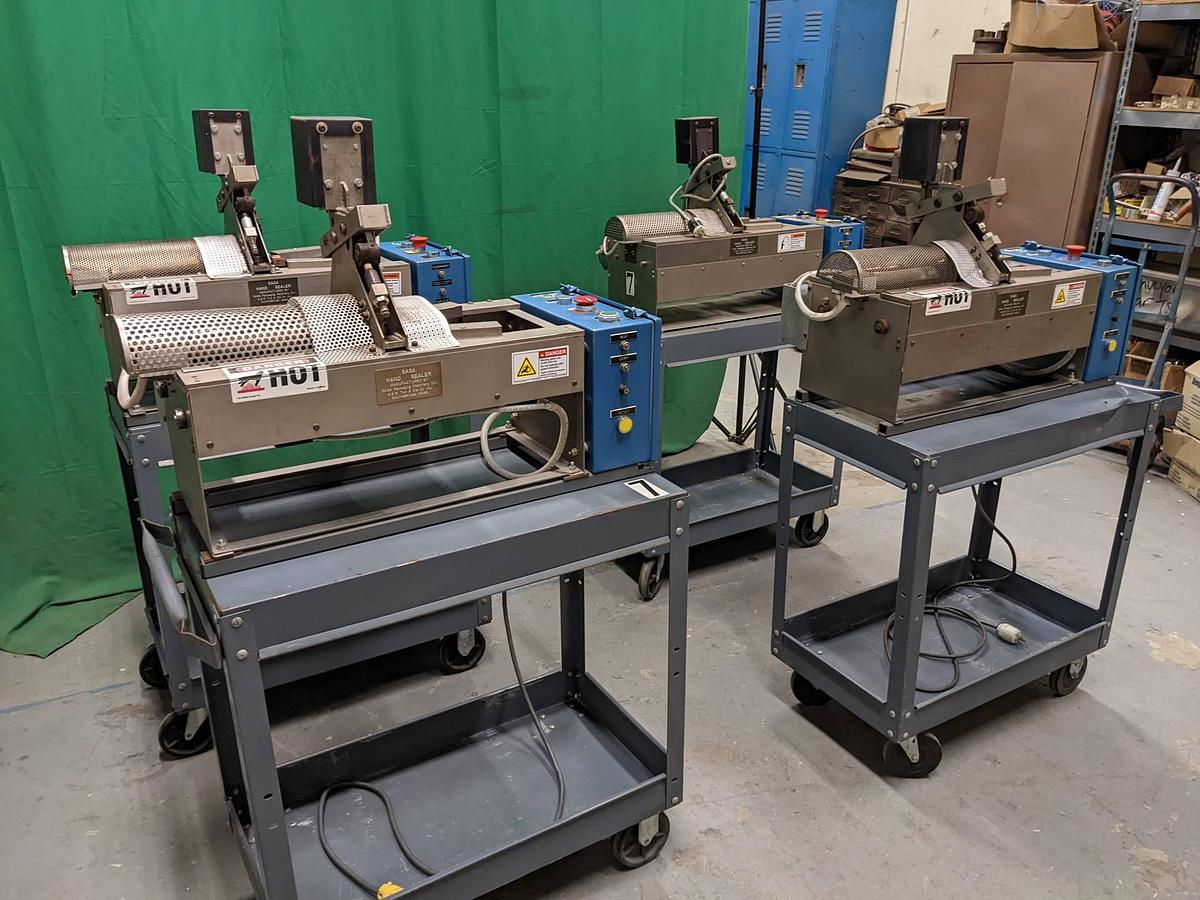
Category
Manufacturer
Model
Saga
Saga specializes in manufacturing equipment for the packaging industry, particularly for food and consumer goods. They are known for their automated packaging systems that enhance efficiency and reduce labor costs. Their innovative solutions cater to a variety of packaging formats, making them a versatile choice for manufacturers.
FAQ:
What types of packaging equipment does Saga manufacture?
Saga specializes in equipment for the packaging industry, with a particular focus on food and consumer goods applications. Their product line includes automated packaging systems designed to improve line efficiency and reduce labor dependency. One well-known example from their catalog is the Saga HS Tabletop Plastic Tube Sealer, which reflects their range across both benchtop and larger production-scale formats.
Beyond tube sealing, Saga is recognized for producing machinery that handles a variety of packaging formats, making their equipment a practical choice for manufacturers who need flexibility across different SKUs or product lines. Their machines are built around automation, which is a key reason they appear frequently in food processing and consumer goods facilities looking to streamline packaging operations without sacrificing output consistency.
What industries commonly use Saga packaging equipment?
Saga packaging machines are most commonly found in food and beverage production environments, where speed, hygiene, and consistent seal quality are non-negotiable. Consumer goods manufacturers also rely on Saga equipment, particularly for products packaged in tubes, pouches, or similar flexible formats. The brand's emphasis on automated systems makes their machines well-suited for any facility running medium to high-volume production.
Pharmaceutical and personal care manufacturers have also adopted Saga equipment, especially for tube sealing applications where precise, repeatable seals are critical to product integrity. The versatility of their machinery across these sectors is one reason used Saga equipment holds its appeal on the secondary market. Buyers from a wide range of industries look for Saga machines specifically because the equipment translates well across different product types without requiring a complete line overhaul.
What should buyers know about purchasing used Saga packaging equipment?
Buying used Saga packaging machinery is a practical way to access proven industrial equipment at a fraction of the cost of sourcing comparable machines elsewhere. That said, used equipment is sold as-is, which means the responsibility for verifying the machine's condition falls squarely on the buyer. This makes the inspection process one of the most important steps in any used equipment transaction. Reputable dealers will offer in-person inspections, virtual walkthroughs, or detailed video documentation of the machine's current condition and, where possible, its operating state.
Buyers should also contact Saga or an authorized service provider before completing a purchase to understand what level of technical support, parts availability, and documentation can be expected for the specific model and age of the machine. Older models may have limited parts availability, which directly affects long-term total cost of ownership. Choosing a dealer with a long track record in packaging machinery specifically, rather than a generalist reseller, gives buyers a better foundation for making an informed decision.
How do you inspect a used Saga packaging machine before buying?
A thorough inspection of a used Saga machine should cover mechanical condition, electrical components, seal quality (for sealing equipment), and the overall state of wear on high-contact parts like jaws, belts, and guides. Dealers will typically accommodate in-person visits, live video calls, or recorded video demonstrations of the machine running. If the equipment is still installed at a production facility, some dealers can arrange a viewing while the machine is in active use, which gives the clearest picture of its real-world performance.
It is worth noting that most equipment dealers are not set up for full product testing, since running actual production requires permits and infrastructure that go beyond a standard resale operation. The goal of the inspection is to get an accurate read on the machine's mechanical and electrical health, not necessarily a full production trial. Buyers should prepare a checklist of critical components to review and ask the dealer specific questions about the machine's service history, known issues, and any repairs that have been made prior to the sale.
Can Saga packaging machines handle multiple packaging formats?
One of the strengths associated with Saga's equipment line is its adaptability across different packaging formats. Their systems are designed with manufacturers in mind who may need to run different product sizes, tube diameters, or seal configurations without investing in entirely separate machinery for each SKU. This kind of changeover flexibility is a major factor buyers evaluate, particularly in contract packaging environments or facilities with diverse product catalogs.
That said, the specific formats a given machine can handle depend on the model and how it was configured during its production life. When evaluating a used Saga machine, buyers should confirm with the dealer exactly which tooling, dies, or format parts are included with the sale, and whether those components cover the packaging formats they intend to run. Missing tooling can add cost and lead time after purchase, so clarifying this upfront is an important part of the due diligence process.
What is the typical production speed of Saga packaging equipment?
Production speed varies considerably depending on the specific Saga model, the packaging format being run, and the condition of the machine. Tube sealing equipment, like the Saga HS Tabletop model, is generally positioned for lower to mid-volume applications, making it a fit for smaller runs or facilities that do not require the throughput of a fully automated inline system. Larger Saga machines designed for continuous production lines will have significantly higher output capacities, often measured in units per minute or cycles per hour.
When reviewing used equipment listings, buyers should look for the machine's rated speed specifications and cross-reference them against their own production targets. Keep in mind that a used machine running at its rated speed under current conditions is a better indicator of real-world performance than the manufacturer's published specs alone. This is another reason why a live or video inspection is valuable, since it allows buyers to observe the machine cycling and get a practical sense of its current output capability.
What factors affect the price of used Saga packaging equipment?
Several variables influence what a used Saga machine sells for on the secondary market. Age and model are the most obvious factors, with newer models in good working condition commanding higher prices. The machine's production history also matters, since a lightly used machine from a low-volume facility will typically be priced higher than one that ran three shifts a day for years. Included accessories, spare parts, tooling, and documentation all add value and can meaningfully affect the final price.
Market demand plays a role as well. Saga equipment used in food and consumer goods packaging tends to see consistent demand because those industries are always active. Buyers should also factor in the total landed cost of the machine, not just the listed price. Shipping, rigging, crating, and any reconditioning work needed after delivery can add substantially to the overall investment. Getting a clear picture of all-in costs before committing to a purchase is a standard part of evaluating any used machinery acquisition.
What are the shipping and logistics considerations for used Saga packaging equipment?
Shipping used packaging machinery requires more planning than a standard freight shipment. Machines need to be properly palletized or crated to prevent damage during transit, and the level of packaging required will affect the shipping cost. Smaller tabletop units like a tube sealer are relatively straightforward to prepare for shipment, while larger automated systems may require custom crating and heavier-duty rigging for both loading at the origin and unloading at the destination.
Buyers should ask dealers for a detailed breakdown of packaging, rigging, and freight costs before finalizing a purchase, since these charges can vary significantly based on machine size, weight, destination, and the carrier used. For larger equipment, a forklift or crane may be required at the receiving facility, which is an added logistical consideration. Understanding the full landed cost of the equipment, including all shipping and handling charges, gives buyers a more accurate picture of the true investment involved.
What payment terms are standard when buying used packaging equipment?
Most used equipment dealers require full payment prior to releasing a machine for shipment. This is standard practice across the industry and reflects the nature of used machinery transactions, where the dealer needs payment confirmation before committing to the logistics of preparing and shipping the equipment. Buyers should expect to wire funds or arrange another confirmed payment method before a ship date is scheduled.
Some dealers will extend payment terms to repeat customers or buyers with an established relationship, but this is the exception rather than the rule for first-time transactions. Buyers who are new to a particular dealer should plan for full upfront payment and build that into their purchasing timeline. It is also worth confirming the payment process and any associated fees or requirements early in the negotiation, so there are no surprises when it comes time to close the deal.
Are Saga packaging machines a practical option for smaller manufacturing operations?
Saga's product range includes equipment that scales down to smaller production environments. The Saga HS Tabletop Plastic Tube Sealer is a clear example of a machine built for lower-volume or space-constrained operations, making it accessible to small manufacturers, contract packagers, or specialty producers who need reliable tube sealing without the footprint or cost of a full inline system. The tabletop form factor also makes it easier to integrate into an existing facility without significant infrastructure changes.
For small businesses evaluating used Saga equipment, the key is matching the machine's output capacity and format capabilities to actual production needs. Overpaying for throughput that will never be used is a common mistake in used equipment purchasing. Conversely, buying a machine that cannot keep pace with demand creates its own set of problems. Reviewing the specifications carefully and, where possible, speaking with the dealer about typical use cases for the specific model will help smaller operations make a well-matched purchase.