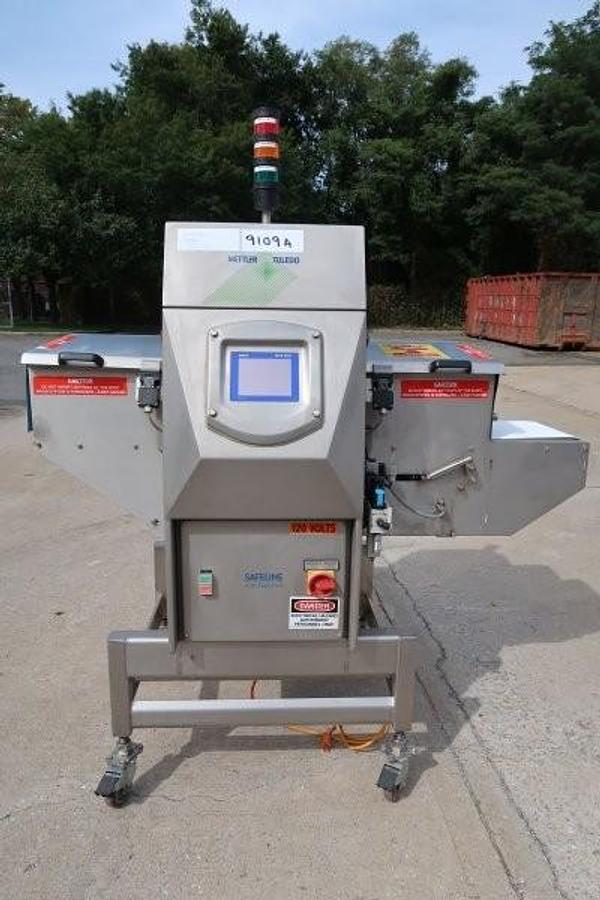
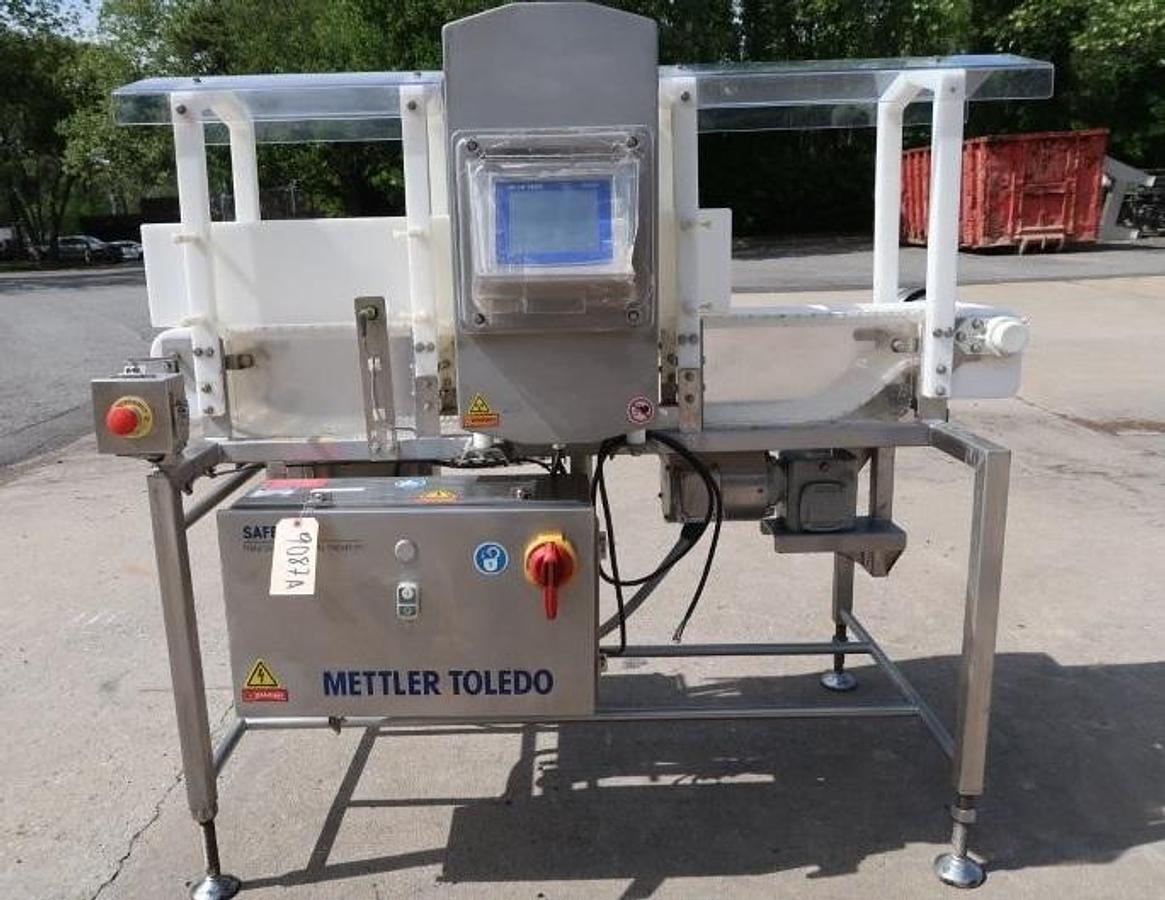
Category
Manufacturer
Model
FAQ:
What industries are Safeline Mettler Toledo metal detectors designed for?
Safeline metal detectors, produced under the Mettler Toledo product inspection umbrella, are engineered primarily for food processing, pharmaceutical manufacturing, and general industrial production environments. In food processing, they are used across a wide range of applications including fresh meat and poultry, bakery and confectionery, dairy, frozen foods, and packaged goods. Pharmaceutical manufacturers rely on them to detect metallic contamination in tablets, capsules, and bulk powders, where product integrity and patient safety are non-negotiable. Industrial sectors such as textiles, rubber, and plastics also use these systems to protect downstream equipment from damage caused by tramp metal.
The food industry represents the largest user base, largely because major grocery retailers and food safety governing bodies require suppliers to implement validated metal detection programs as part of their quality management systems. Safeline systems are built to satisfy those requirements, making them a practical choice for any food manufacturer supplying to large retail chains or export markets. The detectors are available in configurations suited to different production formats, from small-batch artisan operations to high-speed conveyor lines processing hundreds of units per minute.
What types of metals can Safeline Mettler Toledo metal detectors detect?
Safeline metal detectors are capable of detecting three primary categories of metallic contaminants: ferrous metals (such as iron and carbon steel), non-ferrous metals (such as aluminum, copper, and brass), and stainless steel. Ferrous metals are the easiest to detect because they are both magnetic and electrically conductive, which produces a strong signal in the detector's electromagnetic field. Non-ferrous metals are conductive but not magnetic, and are also reliably detected. Stainless steel, particularly 316-grade surgical stainless steel, is the most difficult to detect because it has low magnetic permeability and relatively poor conductivity, yet it is also one of the most common sources of contamination in food and pharmaceutical processing environments where stainless steel equipment is standard.
To address the challenge of stainless steel detection, Safeline systems employ Multi-Simultaneous Frequency (MSF) technology, which operates at multiple frequencies at the same time rather than cycling through them sequentially. This approach improves sensitivity across all metal types and is particularly effective at distinguishing genuine metal signals from background noise created by wet, salty, or conductive product. The result is better detection of small stainless steel fragments without a corresponding increase in false reject rates, which is a significant operational concern for high-volume production facilities.
What is Multi-Simultaneous Frequency (MSF) technology in Safeline metal detectors?
Multi-Simultaneous Frequency (MSF) technology is a detection method used in Safeline metal detectors that allows the system to transmit and process multiple electromagnetic frequencies at the same time. Traditional metal detectors typically operate at a single fixed frequency or switch between frequencies sequentially, which can create gaps in sensitivity or require trade-offs between detecting different metal types. MSF eliminates this limitation by continuously analyzing the product signal across several frequencies simultaneously, giving the detector a more complete picture of what is passing through the aperture.
The practical benefit of MSF is most evident with products that are inherently challenging to inspect, such as fresh meat, cheese, bread, and other foods with high moisture or salt content. These products generate their own electromagnetic signal (often called the product effect), which can mask or mimic metal signals and lead to false rejects. By processing multiple frequencies at once, MSF technology can more accurately separate the product effect from a genuine metal contaminant signal. This improves detection sensitivity, particularly for stainless steel, while also reducing unnecessary line stoppages caused by false alarms. For high-throughput operations where downtime is costly, this is a meaningful engineering advantage.
Do Safeline Mettler Toledo metal detectors meet food safety compliance standards like HACCP and BRC?
Safeline metal detectors are engineered to support compliance with the major food safety frameworks that govern the global food supply chain. These include Hazard Analysis and Critical Control Points (HACCP), the British Retail Consortium (BRC) Global Standard for Food Safety, the International Featured Standards (IFS), Safe Quality Food (SQF), and in the United States, FDA 21 CFR Part 11 for electronic records and signatures. Metal detection is typically identified as a Critical Control Point (CCP) within a HACCP plan, and the equipment used at that point must be capable of validated, documented performance to satisfy auditors and certification bodies.
Safeline systems are built with features that directly support audit readiness, including data logging, automatic performance verification, and reject confirmation mechanisms that provide evidence that contaminated product was actually removed from the line. Many major grocery retailers in the UK, Europe, and North America publish their own codes of practice that specify minimum metal detection performance levels, and Safeline detectors are a commonly accepted solution for suppliers working to meet those retailer-specific requirements. For food manufacturers purchasing used Safeline equipment, it is advisable to verify with the manufacturer or a qualified technician that the specific model and software version support the data capture and validation features required by their particular certification standard.
What are the main Safeline Mettler Toledo metal detector product lines?
Safeline has produced several distinct product lines over the years, each designed to address different production environments and sensitivity requirements. The Profile Advantage series is one of the more widely recognized lines, offering high sensitivity across all metal types and strong performance with difficult wet or conductive products through MSF technology. The Profile RS is a more streamlined version suited to applications where budget or space constraints are a factor but reliable detection is still required. The APEX series targets high-speed applications and environments where the aperture size or conveyor configuration needs to accommodate larger or irregularly shaped products.
For buyers looking at used Safeline equipment, the SL1500 is another model that appears in the market, with configurations available in various aperture sizes. The SL1500, for example, has been sold in aperture sizes such as 9 x 12 inches, making it suitable for mid-range conveyor applications in food or industrial settings. Understanding which product line a particular unit belongs to matters because it affects the availability of replacement parts, the level of technical support the manufacturer may still offer, and the compatibility of the detector with current software and network integration standards. Buyers should consult Mettler Toledo directly to confirm support status for any specific model before purchasing.
What should buyers consider when purchasing a used Safeline Mettler Toledo metal detector?
Buying used Safeline metal detection equipment requires a more deliberate evaluation process than purchasing from a manufacturer's current lineup. The most important starting point is understanding the age and model of the unit, since both factors directly influence whether replacement parts are still available and whether the manufacturer can still provide technical support or calibration assistance. Older models may have been discontinued, which does not necessarily make them unsuitable for use, but it does mean buyers should stock critical wear components and plan for the possibility of sourcing parts through third-party channels. Contacting Mettler Toledo with the model number and serial number before committing to a purchase is a practical step that can save significant headaches later.
Beyond parts availability, buyers should request an inspection of the machine before purchase. Reputable used equipment dealers will typically accommodate in-person inspections, video calls, or recorded video walkthroughs of the machine in its current condition. If the unit is still installed at a production facility, it may be possible to observe it operating on a live line, which provides the most reliable picture of its working order. Keep in mind that most equipment dealers are not set up to run actual product through the detector during an inspection, since that requires production permits and food-safe environments they do not maintain. Used metal detectors are sold as-is, so the inspection process is the buyer's primary tool for assessing condition and making an informed decision.
What is the typical detection sensitivity of Safeline metal detectors?
Detection sensitivity in Safeline metal detectors is expressed as the minimum sphere diameter of a given metal type that the system can reliably detect, and it varies based on the aperture size, the product being inspected, and the specific model and technology generation. As a general reference, a mid-range Safeline conveyor system with a standard aperture might achieve ferrous sensitivity in the range of 0.5 to 1.5 mm sphere equivalent, non-ferrous sensitivity of 0.8 to 2.0 mm, and stainless steel sensitivity of 1.0 to 2.5 mm. Smaller apertures produce better sensitivity because the product passes closer to the detector coils, while larger apertures designed for bulkier products will have correspondingly wider detection thresholds.
For dry, non-conductive products, sensitivity figures are generally at their best because there is minimal product effect to contend with. Wet, salty, or high-moisture products create a more complex electromagnetic environment, and sensitivity figures for those applications will be less aggressive. This is precisely the scenario where MSF technology provides the most tangible benefit, allowing the detector to maintain tighter sensitivity specifications on challenging products without generating excessive false rejects. Buyers evaluating used Safeline equipment for a specific application should confirm the aperture dimensions and, where possible, obtain the original factory test data or ask the seller about the conditions under which the machine was last validated.
Can a used Safeline Mettler Toledo metal detector be integrated into an existing production line?
Used Safeline metal detectors can generally be integrated into existing conveyor-based production lines, but the compatibility assessment requires attention to several practical details. The aperture dimensions are the starting point: the detector's opening must be large enough to accommodate the product and any packaging, conveyor belt, and clearance required for smooth passage. The SL1500, for example, is available in aperture sizes such as 9 x 12 inches, which suits a range of mid-sized conveyor applications. Beyond the aperture, the conveyor speed, belt height, and physical footprint of the detector head and reject mechanism need to align with the existing line layout.
Electrical and control system integration is the other major consideration. Safeline detectors communicate with line control systems, reject mechanisms, and data logging platforms through various signal outputs and, on more recent models, network interfaces. Buyers should confirm that the used unit's output configuration is compatible with their reject device (air blast, pusher arm, drop flap, etc.) and that any required software or interface modules are included with the purchase. If the machine is intended for use in a certified food safety environment, the buyer should also verify that the unit's data logging and audit trail functions are intact and operational, since these features are often scrutinized during third-party audits. A qualified technician or the manufacturer's service team can assist with the integration assessment.
How do Safeline metal detectors handle wet or conductive products?
Wet and conductive products are among the most challenging applications in metal detection because the product itself generates an electromagnetic signal as it passes through the detector's field. Fresh meat, poultry, seafood, cheese, bread dough, and pickled or brined products all fall into this category. The product effect they create can interfere with the detector's ability to distinguish between the background signal of the product and the signal produced by a genuine metal contaminant. On older or single-frequency systems, the typical response to this challenge is to reduce sensitivity settings to avoid false rejects, which creates a trade-off between line efficiency and detection performance.
Safeline addresses this through MSF technology, which processes multiple frequencies simultaneously and applies signal processing algorithms to separate the product effect from a metal signal more accurately than single-frequency approaches allow. This means the detector can maintain tighter sensitivity thresholds on wet or conductive products without a proportional increase in false reject rates. For buyers evaluating used Safeline equipment for a wet product application, the key question is whether the specific model includes MSF capability, since not all generations of Safeline hardware support it. The model designation and software version will determine this, and confirming with the manufacturer or a knowledgeable dealer before purchase is worth the effort.
What should buyers know about shipping and payment when purchasing used Safeline metal detection equipment?
Used Safeline metal detectors vary considerably in size and weight depending on the model, aperture configuration, and whether a conveyor frame is included. Smaller tabletop or gravity-feed units may ship on a standard pallet with adequate bracing and wrapping, while larger conveyor-integrated systems require custom crating or heavy-duty rigging for safe transit. The cost of packaging, crating, and freight is typically separate from the equipment price and will depend on the destination, the carrier selected, and the level of protection required. Buyers should ask the dealer for a detailed breakdown of landed costs, including any rigging fees for loading at the origin and unloading at the destination, before finalizing a purchase.
On payment terms, most used equipment dealers require full payment before a machine is released for shipping. Some dealers extend credit terms to established repeat customers, but this is not standard practice for first-time buyers. Wire transfer is the most common payment method for machinery transactions at this price level. Buyers should also factor in any costs associated with reinstallation, calibration, and validation at their facility, since these are not typically included in the purchase price. Confirming all of these details in writing with the dealer before committing to the purchase protects both parties and prevents surprises once the equipment arrives.