Category
Manufacturer
Model
FAQ:
What is a Safeline Ishida combination metal detector checkweigher and how does it work?
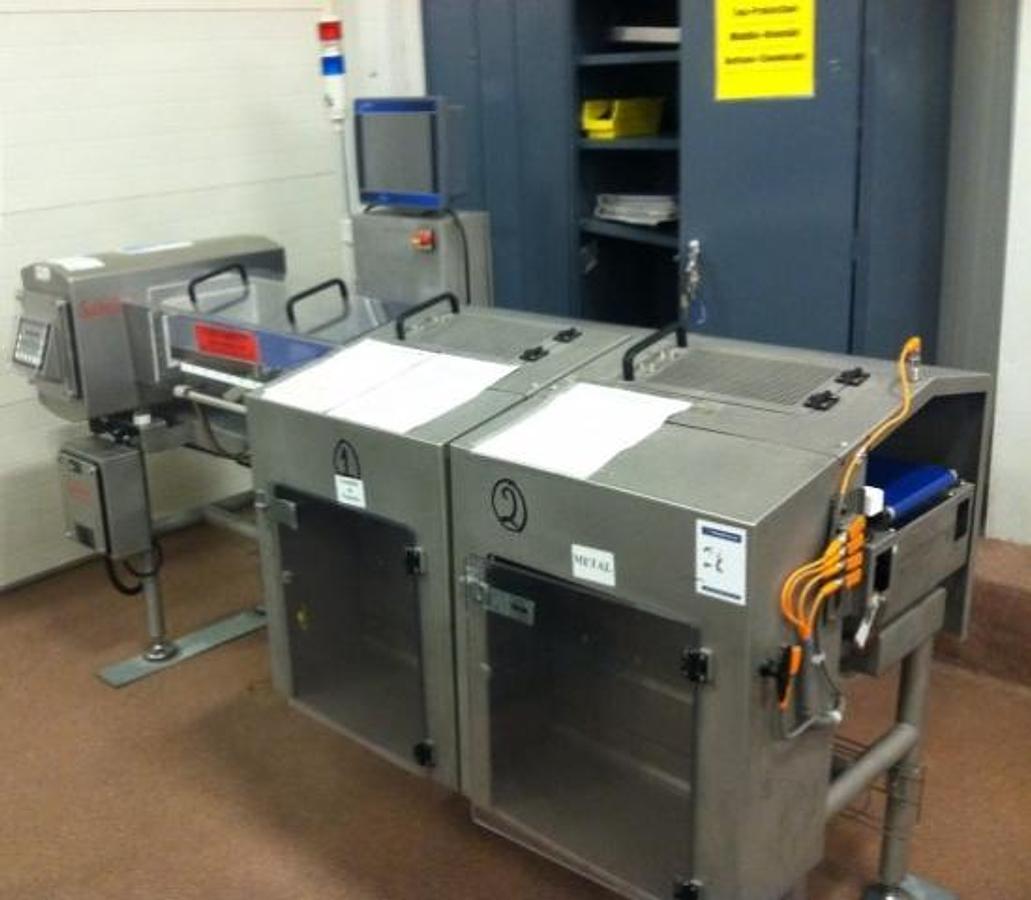
A Safeline Ishida combination unit integrates two separate inspection functions into a single inline machine: a metal detector and a checkweigher. As a product travels along the conveyor, the checkweigher section measures its weight against preset tolerances and flags anything that falls outside the acceptable range. The product then passes through the metal detector aperture, which generates an electromagnetic field and triggers a rejection mechanism if it senses metallic contamination. Both functions happen in a single pass, which is the core appeal of a combo unit.
Safeline is a brand under the Mettler-Toledo group and has a long track record in food and pharmaceutical inspection equipment. Ishida is a Japanese manufacturer known for precision checkweighers and multihead weighers. Combo units combining these technologies are built for high-throughput production lines where both weight verification and contamination detection are required at the same critical control point. Running both inspections simultaneously on one machine reduces labor, simplifies data logging, and cuts the footprint compared to placing two separate machines in series on a production line.
What throughput speed can a used Safeline Ishida combo unit handle?
The specific used Safeline Ishida combination metal detector and checkweigher units available on the market are rated at up to 120 products per minute. That throughput puts them solidly in the mid-to-high range for inline inspection equipment and makes them a practical fit for snack food, bakery, meat portioning, and packaged goods lines where production speeds are demanding.
When evaluating a used machine at this speed rating, buyers should ask the seller whether the unit was actually running at or near that capacity in its previous application, since a machine that spent years running at 40 products per minute has a different wear profile than one that was consistently pushed to its rated maximum. Inspection of the conveyor belt, rejection mechanism, and load cell condition is especially important on high-cycle-count units. A video inspection or in-person review of the machine can help clarify its actual production history before purchase.
What types of metal contamination can a Safeline Ishida system detect?
Safeline metal detectors are designed to detect all three primary categories of metallic contamination: ferrous metals (such as iron and steel), non-ferrous metals (such as aluminum, copper, and brass), and stainless steel. Stainless steel is consistently the hardest to detect because its magnetic and conductive properties are relatively weak, which is why it is used as the benchmark sensitivity specification when comparing metal detector performance. In food-grade applications, buyers typically look for ferrous detection down to around 0.5mm sphere equivalent, non-ferrous to approximately 0.6mm, and stainless steel to 1.0mm or better.
Actual detection sensitivity on a used machine can be affected by several factors including aperture size, product effect (the electromagnetic signature of the product itself, especially wet or conductive foods), and the condition of the detector coils and electronics. Before purchasing a used Safeline Ishida unit, buyers should ask the seller about the aperture dimensions and any available sensitivity test records. Consulting with Mettler-Toledo directly about support availability for the specific model and age of the machine is also a practical step, since older models may have limited calibration support or replacement parts availability.
What industries commonly use Safeline Ishida metal detector checkweigher combo units?
These combination units are most widely used in food manufacturing, where both weight accuracy and metal-free product verification are required simultaneously. Specific segments include meat and poultry processing, seafood, bakery and snack foods, dairy, confectionery, and ready meals. The food industry drives the majority of demand because major retail supply chain standards including BRC, IFS, and SQF require both weight verification and contamination detection at defined critical control points in the production process. A single combo machine satisfies both requirements at one station.
Beyond food, these units are also found in pharmaceutical packaging lines where tablet counts, blister packs, or bottled products need to meet weight specifications while also being screened for metallic contamination from processing equipment. The packaging industry more broadly uses them for filled pouches, cartons, and canned goods. For any buyer evaluating a used unit, understanding the previous application matters because a machine that ran wet, high-salt seafood products will have had different stress on its seals and electronics than one used in a dry bakery environment.
Why does IP rating matter when buying a used Safeline Ishida metal detector checkweigher?
IP ratings define how well a machine is protected against water ingress, which directly determines whether it can survive the cleaning regimes used in food processing facilities. IP65 protection means the unit can withstand low-pressure water jets from any direction, which suits most dry and semi-moist food environments. IP69K is a higher standard designed for high-pressure, high-temperature washdowns, which is the norm in meat, poultry, seafood, and dairy plants where sanitation protocols are aggressive and frequent.
On a used machine, the practical concern is whether the seals, gaskets, and enclosure integrity are still intact after years of washdown exposure. Deteriorated seals allow moisture into electronics and load cell assemblies, which can cause erratic readings or outright failures. Buyers purchasing used equipment should ask for any available maintenance records and request an inspection that specifically examines seal condition around the detector head, junction boxes, and conveyor frame. If the machine is being sold without documentation of its cleaning environment history, that is an important factor to weigh when assessing the asking price and the risk of post-purchase repairs.
What weight accuracy and range should buyers expect from a used Safeline Ishida checkweigher?
Ishida checkweighers are generally regarded as precision instruments, with static accuracy often rated at plus or minus 0.1 grams under controlled conditions, though dynamic accuracy on a moving production line is typically in the range of plus or minus 0.5 to 2 grams depending on product weight, conveyor speed, and environmental vibration. The weight range a given unit can handle depends on the specific model and load cell configuration, with food-line units commonly covering products from a few grams up to several kilograms.
For a used machine, actual accuracy at the time of purchase may differ from the factory specification depending on load cell condition, calibration history, and any mechanical wear on the conveyor and weigh platform. Buyers should ask whether the unit can be powered on for a demonstration and whether calibration weights are available to verify performance. If an in-person inspection is not possible, a detailed video showing a live weighing test with known reference weights is the next best option. Mettler-Toledo or an authorized service technician can often advise on recalibration costs and parts availability for a specific model before the purchase is finalized.
What is the typical price range for a used Safeline Ishida metal detector checkweigher?
Used Safeline Ishida combination metal detector checkweigher units vary considerably in price depending on model generation, aperture size, condition, age, and included accessories. Entry-level used units in older configurations or with higher wear can be found in the range of a few thousand dollars, while well-maintained, more recent models with larger apertures and documented service history can command prices in the range of $15,000 to $40,000 or more. The combination of two inspection technologies in one frame generally puts combo units at a premium compared to standalone metal detectors or checkweighers sold separately.
Buyers should factor in more than just the listed price. Shipping, rigging, and any required recalibration or servicing after installation add to the total landed cost. It is worth contacting the seller directly to get a clear picture of packaging requirements, freight costs, and whether the machine has been tested recently. Comparing the cost of a used combo unit against the price of buying a used metal detector and used checkweigher separately often confirms the value of the integrated approach, especially when floor space is limited.
How should buyers approach inspecting a used Safeline Ishida combo unit before purchasing?
Reputable used equipment dealers will typically accommodate in-person inspections, virtual video calls, or recorded video walkthroughs of the machine. The goal is to get an accurate picture of the unit's current condition and working order. For a combo unit like the Safeline Ishida, a thorough inspection should cover the conveyor belt and frame for wear or corrosion, the reject mechanism for proper operation, the load cell and weigh platform for physical damage, and the detector head for any signs of seal failure or moisture intrusion. If the machine is still installed at a production facility, it may be possible to observe it running live product, which gives the clearest indication of real-world performance.
Keep in mind that most used equipment dealers do not have the permits or infrastructure to run actual food or pharmaceutical products through a machine for testing purposes. What they can typically demonstrate is that the machine powers on, that the conveyor runs, that the detector generates a signal, and that the rejection mechanism actuates. Buyers should also consult with Mettler-Toledo about the specific model to understand what level of technical support, software updates, and replacement parts are available for that age and configuration. Older models may have limited manufacturer support, which is a practical consideration when planning for long-term maintenance.
What are the space and installation advantages of a combo metal detector checkweigher versus two separate machines?
Running a standalone metal detector and a standalone checkweigher in series on a production line requires two separate machine footprints, two sets of electrical connections, two control interfaces, and the physical line space to accommodate both units with appropriate product transfer between them. Integrated combo units consolidate all of that into a single frame, which can reduce the floor space required by a meaningful amount. In facilities where production line real estate is tight, that reduction can make the difference between a practical installation and one that requires costly line reconfiguration.
Beyond floor space, a combo unit simplifies operator training since staff interact with one control system rather than two. Data logging for compliance purposes is also consolidated, which matters for food manufacturers who need to document both weight and contamination check results for retailer audits under standards like BRC or SQF. For a used unit purchase, the integration also means there is one machine to inspect, one set of service history to evaluate, and one shipping and installation cost rather than two. That operational simplicity is a consistent reason buyers in the food and pharmaceutical sectors seek out combo units specifically.
What should buyers understand about payment and shipping when purchasing a used Safeline Ishida metal detector checkweigher?
Most used equipment dealers require full payment prior to shipping the machine. Some dealers extend payment terms to repeat customers, but for first-time buyers, payment in full before the unit leaves the seller's facility is the standard arrangement. Buyers should clarify payment methods accepted and confirm the exact process before committing to a purchase.
Shipping costs for a machine of this type depend on its weight and dimensions, the destination, and the level of packaging required to protect it in transit. Combo units are substantial pieces of equipment and typically need to be palletized or crated before transport. Larger or heavier configurations may require specialized rigging for loading and unloading, which adds to the total cost. Buyers should ask the seller for a detailed breakdown of packaging, rigging, and freight charges so the full landed cost is clear before the purchase is finalized. Damage during shipping is a real risk with precision inspection equipment, so understanding how the machine will be packaged and who is responsible for transit damage is an important part of the buying conversation.