Category
Manufacturer
Model
FAQ:
What is the Surekap SK6000-BF6 and how does it work?
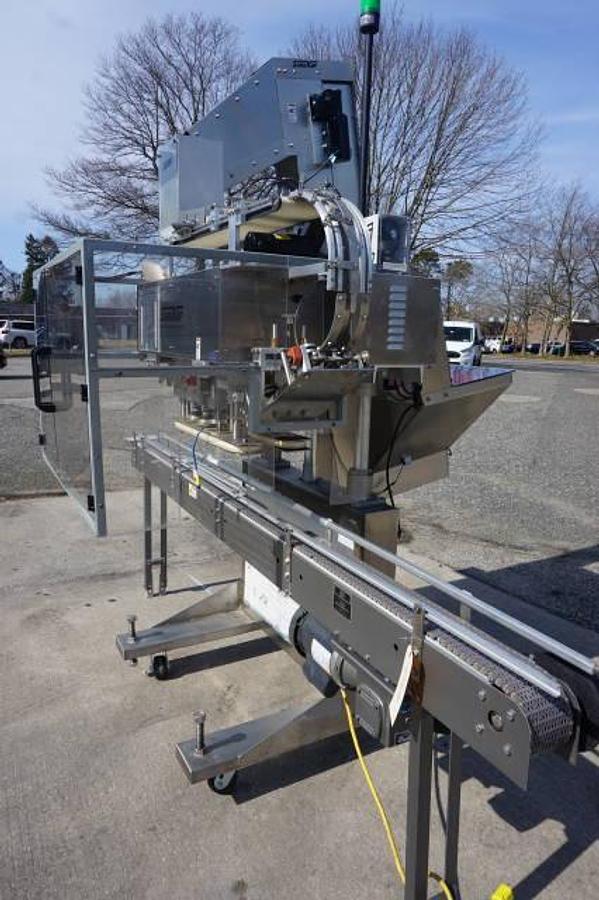
The Surekap SK6000-BF6 is a six-spindle inline capper designed for mid-to-high volume liquid packaging lines. It uses multiple spindle heads to apply caps to bottles as they travel along a conveyor, applying consistent rotational torque to seat each cap securely. The six-spindle configuration allows the machine to handle a wide range of cap sizes while maintaining throughput speeds suitable for production-scale operations. The BF6 designation refers to a specific cap format configuration, which buyers should verify against their own cap and bottle specifications before purchasing.
The SK6000-BF6 also includes an elevator, which is a mechanical component that helps guide bottles and caps into the capping heads at the correct height. This makes the machine adaptable to different bottle heights within a certain range, reducing the need for extensive changeover tooling when switching between products. Spindle cappers like this model are favored in packaging lines because they apply torque gradually across multiple contact points rather than all at once, which reduces the risk of cross-threading or cap damage compared to chuck-style alternatives.
What types of caps is the Surekap SK6000-BF6 designed to handle?
The SK6000-BF6 is configured to handle flat screw caps and trigger sprayer caps, which are among the most common cap styles used in household chemical, cleaning product, and personal care packaging lines. The BF designation in the model name is understood in the industry to reference a specific cap format, and buyers should confirm with the seller exactly which cap styles and diameter ranges the machine is set up for, since spindle cappers can be tooled differently depending on the application.
Trigger sprayer caps in particular require precise torque control because over-tightening can damage the sprayer mechanism while under-tightening leads to leakage. The six-spindle design of the SK6000-BF6 helps address this by distributing the capping force evenly. If a buyer's production line uses a cap style outside the machine's current configuration, it may be possible to retool or adjust the spindle heads, though this should be discussed with a qualified packaging machinery technician before purchase to understand the scope of any required modifications.
What industries and applications is the Surekap SK6000-BF6 best suited for?
The SK6000-BF6 is well suited for mid-to-high volume production environments in industries such as household cleaning products, personal care, industrial chemicals, automotive fluids, and similar liquid product categories. These industries commonly use trigger sprayer and flat screw cap formats on bottles ranging from small consumer sizes up to larger commercial containers, which aligns with the machine's design parameters. Its inline, conveyor-integrated design makes it a practical fit for facilities running continuous packaging lines rather than batch or manual operations.
Smaller contract packagers and private label manufacturers also use machines in this class when they need reliable capping throughput without investing in a full-scale high-speed line. The six-spindle configuration gives the machine flexibility across different cap diameters, which is useful for facilities that run multiple SKUs. Buyers in food and beverage should verify whether the machine's materials of construction meet any applicable sanitary or food-contact standards relevant to their specific application, as this class of capper is more commonly associated with non-food liquid products.
Is the Surekap SK6000-BF6 a semi-automatic or fully automatic capper?
The SK6000-BF6 is a fully automatic inline capper. It is designed to integrate directly into a conveyor-based packaging line, where bottles are fed into the machine, capped, and discharged without requiring an operator to manually position each bottle or cap. The included elevator assists with aligning bottles and caps at the correct height as they pass through the capping zone, which is a feature associated with automated production rather than semi-automatic benchtop equipment.
This distinction matters significantly for buyers evaluating the machine's fit for their facility. Fully automatic cappers require a functioning conveyor system and typically need to be synchronized with upstream and downstream equipment such as fillers, cap feeders, and labelers. Buyers purchasing a used SK6000-BF6 should account for the cost and complexity of integrating the machine into their existing line, including any controls integration, cap delivery system, and conveyor compatibility. A qualified packaging machinery integrator or technician can help assess what additional components may be needed.
What should buyers look for when purchasing a used Surekap SK6000-BF6?
Buying a used SK6000-BF6 requires careful attention to the machine's mechanical condition, particularly the spindle heads and drive belts, which are the components most subject to wear in high-cycle capping applications. Buyers should request detailed photos or video of the machine running, paying close attention to spindle rotation consistency, belt condition, and the elevator mechanism. Any signs of uneven wear on the spindle heads or irregularities in how the belts grip caps could indicate the need for replacement parts before the machine is production-ready. Asking the seller about the machine's service history and the last time spindle heads were replaced is a reasonable starting point.
Used packaging machinery is typically sold as-is, so the responsibility for evaluating condition falls on the buyer. Reputable used equipment dealers will generally accommodate in-person or video inspections, and in some cases the machine may still be installed at a facility where a live demonstration can be arranged. Buyers should also contact Surekap directly to understand parts availability and technical support for this specific model, since the level of manufacturer support can vary based on the age of the machine. Factoring in the cost of any needed parts, tooling adjustments, and integration work gives a more accurate picture of the total investment.
What are the torque control capabilities of the SK6000-BF6, and why does torque consistency matter?
Torque consistency is one of the most critical performance factors in any spindle capper, including the SK6000-BF6. Insufficient torque results in caps that are loose enough to leak or back off during shipping and handling, while excessive torque can strip cap threads, deform the cap, or in the case of trigger sprayers, damage the internal mechanism. For products in regulated categories such as child-resistant closures or tamper-evident caps, torque specifications may also be tied to compliance requirements, making accurate and repeatable torque application a non-negotiable aspect of the machine's performance.
The six-spindle design of the SK6000-BF6 applies torque progressively as the bottle passes through the capping zone, which generally produces more consistent results than single-point chuck cappers on certain cap styles. Buyers evaluating a used unit should ask whether the machine can be tested with their actual cap and bottle combination before finalizing a purchase. Keep in mind that most used equipment dealers do not have the permitting or production setup to run actual product through a machine during inspection, but a functional test of the spindles and drive system can still provide useful information about the machine's mechanical condition.
Can the Surekap SK6000-BF6 be integrated with an existing conveyor and packaging line?
The SK6000-BF6 is designed for inline conveyor integration, meaning it is built to be connected to an existing packaging line rather than operated as a standalone station. The machine accepts bottles from an upstream conveyor, applies caps, and discharges capped bottles to the next stage of the line. The elevator component helps accommodate different bottle heights within the machine's range, which gives the system some flexibility across different container formats without requiring a complete mechanical overhaul for each product changeover.
Successful integration depends on matching the machine's conveyor height, speed, and timing with the rest of the line. Buyers should obtain the machine's dimensional specifications and conveyor interface details before planning an installation. A cap delivery system, such as a cap sorter or vibratory bowl feeder, is also typically required to feed caps to the machine automatically. If the existing line already has these components, compatibility should be verified. If not, sourcing and integrating them adds to the overall project cost. Consulting with a packaging line integrator who has experience with Surekap equipment is advisable, especially for used machines where documentation may be incomplete.
What bottle sizes is the Surekap SK6000-BF6 compatible with?
Spindle cappers in the SK6000 class are generally capable of handling a range of bottle heights and diameters, with adjustments made through the elevator height setting and guide rail width. The specific bottle size range for the SK6000-BF6 depends on the machine's current tooling and configuration, which can vary from one unit to the next, particularly with used equipment that may have been set up for a specific customer's product line. Buyers should ask the seller for the machine's current setup specifications, including the cap diameter range it is tooled for and the bottle height range the elevator accommodates.
Changing bottle or cap sizes typically involves adjusting the guide rails, elevator height, and in some cases the spindle head spacing or tooling. These changeovers can range from simple adjustments to more involved retooling depending on how different the new format is from the current setup. For buyers running multiple SKUs with varying bottle sizes, confirming the machine's changeover capability and the availability of any additional tooling is an important part of the purchasing decision. If the seller has documentation on the machine's format range or changeover parts, requesting that information before purchase is worthwhile.
What are the power requirements for the Surekap SK6000-BF6?
Industrial inline cappers in the SK6000 class typically operate on single-phase or three-phase electrical power, with three-phase being more common for machines with multiple motor-driven components such as the conveyor drive, spindle drive, and elevator. The exact voltage and amperage requirements for the SK6000-BF6 should be confirmed with the seller or through the machine's electrical documentation, as used equipment may have been wired to a specific facility's power supply that differs from a buyer's setup. Mismatched power requirements can require additional electrical work before the machine can be put into service.
Buyers should also ask about the machine's compressed air requirements if any pneumatic components are present, as some capper configurations use air-actuated components for cap handling or reject systems. Getting the full utility requirements, including electrical specifications, air pressure, and flow rate if applicable, before finalizing a purchase helps avoid surprises during installation. If the machine's original documentation is unavailable, a qualified electrician or packaging machinery technician can assess the machine's power draw and wiring configuration during an inspection.
What should buyers understand about shipping and payment when purchasing a used capper like the SK6000-BF6?
Used packaging machinery like the SK6000-BF6 requires careful preparation for transit to prevent damage to sensitive mechanical components such as spindle heads, belts, and the elevator assembly. Shipping costs vary depending on the level of packaging required, whether standard palletization is sufficient or whether a custom crate is needed, and the distance and freight class involved. Larger inline cappers may also require professional rigging for loading and unloading, which adds to the overall cost. Buyers should ask the seller for a detailed breakdown of packaging, rigging, and freight charges to understand the full landed cost before committing to a purchase.
Payment terms for used equipment purchases typically require full payment prior to shipment. Some dealers may offer extended terms to repeat customers, but this is not standard practice. Buyers should clarify payment expectations with the seller early in the process. It is also worth confirming how the machine will be prepared for shipment, whether any fluids need to be drained, and whether any components need to be removed or secured for transport. Getting this information in writing before payment is made protects both parties and reduces the risk of disputes if the machine arrives in a condition different from what was expected.