Category
Manufacturer
Model
FAQ:
What types of used industrial equipment does RPS Company manufacture, and what should buyers know about purchasing it on the secondary market?
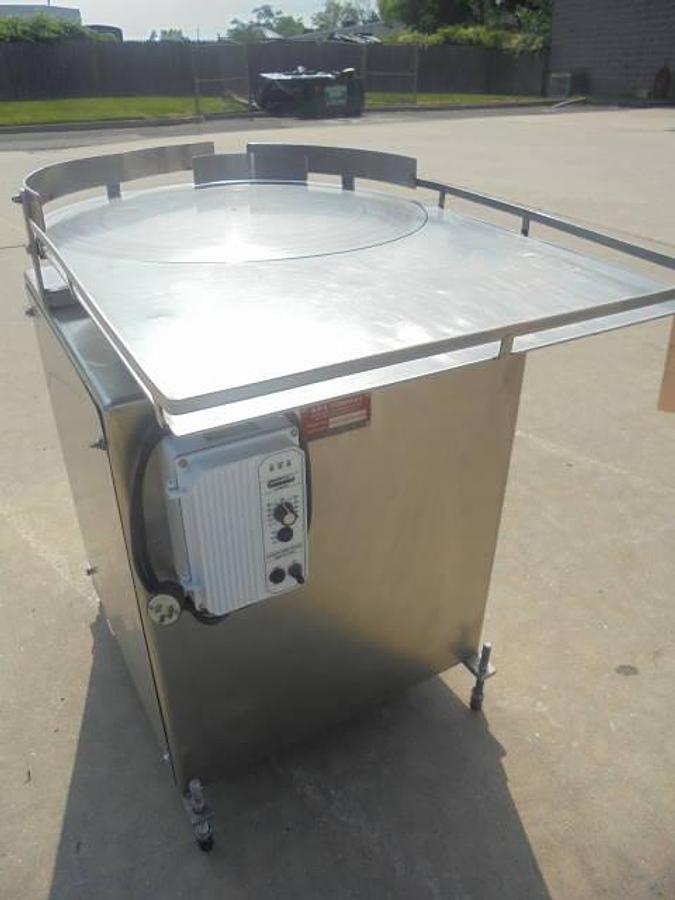
RPS Company produces industrial packaging and material handling equipment, including rotary unscrambling and accumulating tables, which are commonly used in bottling, pharmaceutical, food and beverage, and consumer goods production lines. These machines manage container flow, orient products for downstream filling or labeling operations, and help regulate line speed. On the secondary market, used RPS equipment appears regularly because production facilities upgrade lines, consolidate operations, or shift product formats, freeing up machines that still have substantial working life remaining.
Buyers sourcing used RPS equipment should pay close attention to model specifications, particularly table diameter, drive type, and speed range, since these directly affect compatibility with existing line configurations. Variable-speed models, such as rotary accumulating tables with adjustable drive systems, offer more flexibility across different container sizes and production rates. Used equipment dealers who specialize in packaging machinery are the most reliable source for this type of equipment, as they tend to have deeper knowledge of the machines and better access to inspection records or prior operating history than general auction platforms.
How is used industrial equipment typically inspected before being listed for sale?
Reputable used equipment dealers generally offer buyers several inspection options before a purchase is finalized. In-person inspections are the most thorough, allowing a buyer or their technician to physically examine the machine, check for wear on drive components, inspect electrical panels, and assess the overall mechanical condition. Virtual inspections via video call are also common, where a dealer walks through the machine in real time and answers questions as they go. Some dealers also provide recorded video walkthroughs that can be reviewed at any time.
One practical consideration is that some machines are still installed and running at a facility when they come up for sale. In those cases, the dealer can often coordinate access to the plant so the buyer can see the equipment in actual production, which provides a much clearer picture of its working condition than a static inspection alone. However, most equipment dealers are not set up to run production tests themselves, as that requires different permitting and facility capabilities. Buyers should focus their inspection on mechanical integrity, electrical functionality, and the condition of wear parts like belts, bearings, and drive motors, and consult with a qualified technician if they have any doubts about what they are looking at.
What warranty coverage should buyers expect when purchasing used industrial equipment?
Used industrial equipment is almost universally sold on an as-is basis, meaning the buyer accepts the machine in its current condition at the time of sale. Warranties in the traditional sense are generally only offered by original equipment manufacturers on machines sold directly from their facilities. Once a machine enters the secondary market, that manufacturer coverage has typically expired or does not transfer, and used equipment dealers rarely provide warranty protection beyond what is explicitly stated in writing at the time of sale.
This places a real responsibility on the buyer to do thorough due diligence before committing to a purchase. Selecting a dealer with a long track record in the specific equipment category, taking full advantage of available inspection options, and consulting with the manufacturer about parts availability and technical support for that particular model and age of machine are all steps that significantly reduce risk. Buyers should also ask dealers directly about any known issues with the equipment and request any documentation that exists, such as prior service records or maintenance logs, to build as complete a picture as possible of the machine's history.
How do shipping and logistics work for large used industrial equipment purchases?
Shipping heavy industrial equipment is meaningfully more involved than standard freight, and the costs can vary widely depending on the size and weight of the machine, the distance it needs to travel, and the level of packaging or crating required to protect it in transit. Smaller machines may ship on standard pallets, while larger or more fragile equipment often requires custom wooden crating to prevent damage during loading, transport, and unloading. Buyers should ask dealers specifically about how a machine will be packaged before agreeing to a purchase, since inadequate packaging is one of the more common causes of transit damage.
For heavy machines, rigging is typically required at both ends of the shipment. This means a forklift or crane operator is needed to safely load the equipment at the dealer's facility and to unload it at the buyer's location. Rigging costs are generally the buyer's responsibility and should be factored into the total landed cost of the equipment. Buyers who do not have rigging capabilities at their facility will need to arrange for a local rigging company in advance. Getting a clear breakdown of packaging, freight, and rigging costs from the dealer before finalizing a purchase avoids surprises and helps with accurate budgeting.
What are the standard payment terms for used industrial equipment purchases?
The standard practice among used equipment dealers is to require full payment before a machine ships. This applies to the large majority of transactions, particularly with buyers who are purchasing from a dealer for the first time. The reasoning is straightforward: once a machine leaves the dealer's facility, the ability to verify its condition or resolve disputes becomes much more complicated, so dealers protect themselves by securing payment in advance.
Some dealers do extend payment terms to established customers with whom they have a prior purchasing relationship, but this is handled on a case-by-case basis and is not something buyers should assume will be available. Buyers who need financing for a larger equipment purchase should explore third-party equipment financing companies, which specialize in lending against used machinery and can sometimes move quickly when a buyer needs to act on an available piece of equipment. It is worth clarifying payment expectations with the dealer early in the conversation to avoid delays once a deal is agreed upon.
How do rotary unscrambling and accumulating tables work in a production line?
Rotary unscrambling tables are used to take randomly oriented containers, typically bottles or jars, and feed them into a single-file line for downstream processing such as filling, capping, or labeling. Containers are loaded onto the rotating table surface in bulk, and a combination of centrifugal force, guide rails, and the table's rotation moves them toward an exit lane where they line up in the correct orientation. The speed at which the table rotates directly affects throughput, and variable-speed models allow operators to tune the feed rate to match the speed of downstream equipment.
Accumulating tables serve a related but slightly different function. They act as a buffer in the production line, holding containers when a downstream machine slows down or stops temporarily, then releasing them when the line is ready to accept product again. This prevents backups and reduces the risk of jams or spillage. Some machines combine both functions, handling unscrambling and accumulation in a single unit, which is efficient for facilities with limited floor space. Used versions of this type of equipment are a practical choice for operations that need reliable container handling without the cost of purchasing a machine directly from a manufacturer.
What factors most affect the price of used industrial packaging equipment?
Several variables drive pricing on the secondary market for industrial packaging machinery. Age is a factor, but it is not always the most important one. A well-maintained machine from a decade ago can be worth more than a poorly maintained one that is only a few years old. Brand reputation plays a role as well, since equipment from manufacturers known for durability and parts availability tends to hold its value better. Condition, obviously, is central to pricing, and machines that have been recently serviced or rebuilt will typically command a premium over those sold strictly as-is with no recent maintenance.
Specifications also matter considerably. Equipment with variable-speed drives, larger capacity, or broader compatibility across container sizes tends to be priced higher because it is more versatile and useful to a wider range of buyers. Market demand at any given time affects pricing too. If a particular type of machine is in short supply on the secondary market, prices rise accordingly. Buyers who are flexible on timing and willing to wait for the right piece of equipment often get better value than those who need to source something quickly under deadline pressure.
How can a buyer verify the condition and history of used industrial equipment before purchasing?
The most reliable way to assess a used machine is a direct inspection, either in person or through a live video session with the dealer. During an inspection, a buyer or their technician should examine drive components for wear, check that electrical systems power up and function correctly, look for signs of prior repairs or modifications, and assess the condition of any wear parts like belts, chains, bearings, and rollers. Asking the dealer about the machine's operating history, including how many shifts per day it ran and what products it handled, provides useful context that physical inspection alone cannot always reveal.
Buyers should also contact the equipment manufacturer directly to ask about support availability for that specific model. Older machines or discontinued models may have limited parts availability, which affects long-term operating cost and should be weighed against the purchase price. If a machine is still installed and running at a production facility, arranging to observe it under actual operating conditions is the best possible verification of its working order. Documentation such as maintenance logs, prior service invoices, or operator manuals, when available, adds another layer of confidence and should always be requested from the dealer.
What should buyers consider regarding parts availability and long-term support for used industrial equipment?
Parts availability is one of the more practical concerns when buying used industrial equipment, and it deserves serious attention before a purchase is made. Machines from established manufacturers with active product lines generally have better parts support than equipment from companies that have since been acquired, merged, or discontinued certain product lines. Calling the manufacturer directly and providing the model number and approximate age of the machine is the most direct way to get an honest answer about what parts are still stocked and what lead times look like.
For machines where manufacturer support is limited, the secondary market for spare parts can still be a viable option. Many components on packaging equipment, such as motors, drives, bearings, and belts, are standard industrial parts available from multiple suppliers regardless of the machine brand. Buyers who have in-house maintenance capabilities can often keep older machines running cost-effectively by sourcing these components independently. It helps to get a copy of the machine's parts manual or electrical schematic if one is available, as this makes identifying and sourcing replacement components significantly easier down the road.
How does buying used industrial equipment compare to purchasing directly from a manufacturer?
The most obvious difference is cost. Used industrial equipment typically sells for a fraction of the price of a comparable machine purchased directly from a manufacturer, which makes it an attractive option for operations that need reliable production capacity without a large capital outlay. Lead times are another meaningful difference. Machines ordered directly from a manufacturer can take months to build and deliver, while used equipment is generally available for purchase and shipment within days or weeks of a deal being finalized. For facilities that need to get a line running quickly, the secondary market is often the faster path.
The trade-offs are real, though. A used machine comes without the assurance of a factory warranty, and its condition depends entirely on how well it was maintained by previous owners. Buyers take on more responsibility for due diligence, including inspection, parts assessment, and evaluating long-term support. Choosing a reputable dealer with specific expertise in the relevant equipment category reduces that risk considerably. Dealers who specialize in a particular type of machinery tend to have better knowledge of common wear points, realistic assessments of remaining service life, and more reliable access to machines with known operating histories.